

Having both a gap wedge and a lob wedge can greatly improve your short game by giving you more shot options and better control around the greens. The gap wedge is ideal for mid-range shots, while the lob wedge helps with high, delicate shots. Whether you really need both depends on your skill level, course conditions, and confidence. To learn how choosing the right wedges can boost your game, keep going for helpful tips and insights.
Key Takeaways
- Gap wedges (50-54°) and lob wedges (58-64°) serve different shot types, making both useful for versatile short game options.
- Having both wedges fills distance gaps and allows better control over high, soft landings and delicate shots.
- Your skill level, course conditions, and playing style influence whether one or both wedges improve your performance.
- Custom fitting and practice help determine if carrying both wedges enhances consistency and confidence around the greens.
- For many golfers, owning both wedges provides greater shot versatility, but it depends on individual needs and bag management preferences.

FULL CHOICE Golf Wedge Set, 52/56/60 Degree Golf Sand Wedge, Gap Wedge, Lob Wedge Golf Clubs, Wedges Golf Clubs for Men Women Right Hand, CNC Milled Face for More Spin and Control
- Complete 3-Piece Wedge Set: Includes 52°, 56°, 60° wedges for various shots
- CNC Milled Face for Spin: Enhanced spin and control with precision grooves
- Versatile Wedge Angles: 52° for approach, 56° for bunker, 60° for lob shots
As an affiliate, we earn on qualifying purchases.
As an affiliate, we earn on qualifying purchases.
Understanding the Role of Wedges in Your Bag

Wedges play a essential role in your golf bag because they help you execute a variety of shots around the greens. Understanding how they affect ball flight is key. Different wedges, like a gap wedge or lob wedge, produce varying trajectories, making shot selection easier. Your grip technique also influences control and spin, which are fundamental for precise shots. A secure grip helps you maintain consistency and optimize ball flight, especially when executing delicate chips or high-lofted shots. By mastering your grip and understanding how wedges alter ball flight, you can better position yourself for success around the greens. These tools give you the versatility to navigate bunkers, tight lies, and short-sided shots with confidence. Proper wedge use elevates your short game and overall scoring potential. Additionally, wedge loft options allow you to tailor your club choices to different shot distances and trajectories, further enhancing your game. Recognizing the importance of club technology can help you select wedges that provide optimal spin and control for various conditions.
FULL CHOICE Golf Wedge Set, 52/56/60 Degree Golf Sand Wedge, Gap Wedge, Lob Wedge Golf Clubs, Wedges Golf Clubs for Men Women Right Hand, CNC Milled Face for More Spin and Control
- Complete 3-Piece Wedge Set: Includes 52°, 56°, 60° wedges for various shots
- CNC Milled Face for Spin: Enhanced spin and control with precision grooves
- Versatile Wedge Angles: 52° for approach, 56° for bunker, 60° for lob shots
As an affiliate, we earn on qualifying purchases.
As an affiliate, we earn on qualifying purchases.
Key Differences Between a Gap Wedge and a Lob Wedge

Understanding the differences between a gap wedge and a lob wedge can considerably improve your short game. Wedge lofts are the key factor here: a gap wedge typically has a loft around 50-54 degrees, while a lob wedge ranges from 58-64 degrees. This loft difference affects how high and soft your shots will be. Wedge bounce also varies; lob wedges often have more bounce to help prevent digging into soft ground or sand, making them ideal for delicate shots around the greens. In contrast, gap wedges usually have less bounce, providing greater control for full shots from tighter lies. Recognizing these distinctions helps you choose the right wedge for specific situations, optimizing your short game consistency and shot versatility.
FULL CHOICE Golf Wedge Set, 52/56/60 Degree Golf Sand Wedge, Gap Wedge, Lob Wedge Golf Clubs, Wedges Golf Clubs for Men Women Right Hand, CNC Milled Face for More Spin and Control
- Complete 3-Piece Wedge Set: Includes 52°, 56°, 60° wedges for various shots
- CNC Milled Face for Spin: Enhanced spin and control with precision grooves
- Versatile Wedge Angles: 52° for approach, 56° for bunker, 60° for lob shots
As an affiliate, we earn on qualifying purchases.
As an affiliate, we earn on qualifying purchases.
Typical Yardages and Situational Uses
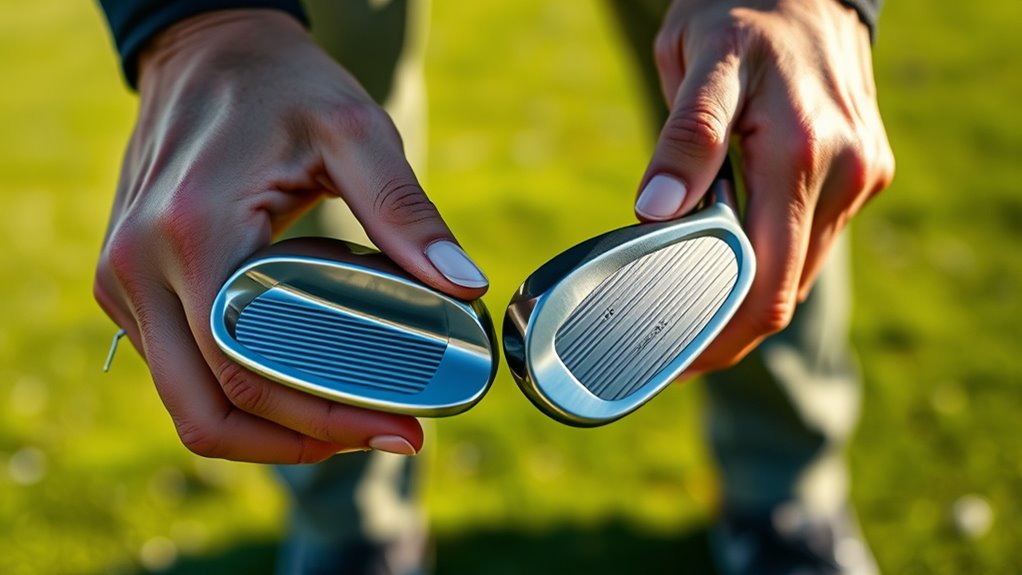
Understanding typical shot distances helps you choose the right wedge for each situation. You’ll find that a gap wedge often covers mid-range shots, while a lob wedge excels in high, soft landings. Recognizing common on-course scenarios guarantees you select the best club to execute your shots effectively. Additionally, knowing the correct loft angles for each wedge can improve your shot precision and consistency.
Typical Shot Distances
Have you ever wondered how far you should expect your gap wedge or lob wedge to carry on the course? Typically, a gap wedge covers about 90 to 110 yards, while a lob wedge usually hits around 50 to 80 yards. Blade design influences these distances, with more progressive bounce and grind options providing better control for specific shots. Your shaft flex also plays a key role; a more flexible shaft can help generate extra distance, especially with a slower swing speed. Understanding these typical shot distances helps you choose the right club for each situation, whether it’s a delicate lob shot over a hazard or a controlled approach to the green. Knowing your yardages ensures more consistent, confident shots. Additionally, the typical shot distances of wedges can vary based on individual skill level and swing mechanics, emphasizing the importance of personalized club fitting. Being aware of your personal swing characteristics allows for better club selection and more accurate shot planning.
Common On-Course Scenarios
On the course, knowing the typical yardages for your gap and lob wedges helps you select the right club for each shot. For short approaches around 80 to 100 yards, your lob wedge provides high, soft landings, especially when you need to clear hazards or stop quickly on the green. The gap wedge is ideal for shots between 100 and 120 yards, filling the distance gap between your pitching wedge and sand wedge. Proper wedge customization guarantees each club fits your swing and course conditions, making shot selection more accurate. Regular wedge maintenance, like cleaning clubfaces and checking lofts, keeps your wedges performing consistently. Recognizing common scenarios helps you choose the right wedge confidently, improving your scoring chances and making club choices more intuitive during play. Additionally, understanding how wedges can be used on different water hazards can help you plan your shots more effectively. Incorporating proper technique when using wedges can further improve shot accuracy and consistency. Developing a consistent grip and stance for wedge shots can also enhance control and precision during critical moments.
FULL CHOICE Golf Wedge Set, 52/56/60 Degree Golf Sand Wedge, Gap Wedge, Lob Wedge Golf Clubs, Wedges Golf Clubs for Men Women Right Hand, CNC Milled Face for More Spin and Control
- Complete 3-Piece Wedge Set: Includes 52°, 56°, 60° wedges for various shots
- CNC Milled Face for Spin: Enhanced spin and control with precision grooves
- Versatile Wedge Angles: 52° for approach, 56° for bunker, 60° for lob shots
As an affiliate, we earn on qualifying purchases.
As an affiliate, we earn on qualifying purchases.
Advantages of Carrying Both Wedges
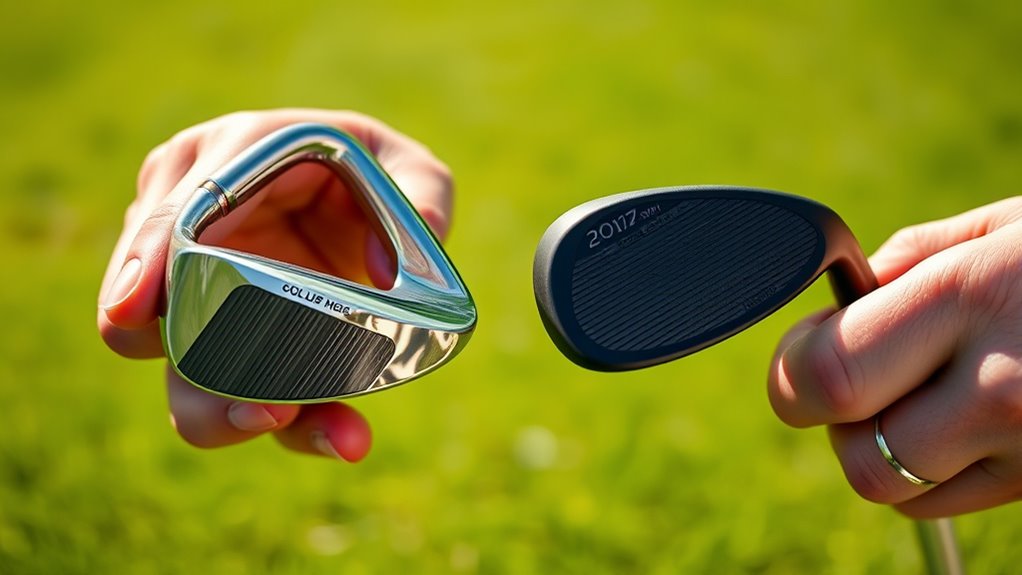
Carrying both a gap wedge and a lob wedge gives you greater versatility around the greens. With the right club fitting and wedge customization, you can fine-tune each wedge for specific shots. This allows you to handle various lies, slopes, and distances more effectively. Having both clubs means you’re prepared for short, high chips and delicate lob shots, reducing the need for risky swings. Additionally, understanding the art of shot selection can help you decide when to use each wedge for optimal results. Consider this table to see how they complement each other:
| Wedge Type | Typical Loft | Common Use |
|---|---|---|
| Gap Wedge | 50-54° | Approach shots from 100 yards or less |
| Lob Wedge | 58-64° | Flop shots and high, soft chips |
| Versatility | Moderate | Better control in different conditions |
| Custom Fit | Yes | Optimizes performance for your game |
| Shot Precision | High | Enhances shot accuracy and consistency |
This combo boosts your greenside game and confidence.
How to Decide if You Need One or Both Wedges

Deciding whether you need just one or both wedges depends on your playing style, course conditions, and confidence around the greens. To make an informed choice, consider a professional custom fitting, which can determine the right wedge lofts and shaft options for your swing. Grip selection also plays a role, as a comfortable, secure grip can improve control and confidence, influencing your wedge needs. If you struggle with distance gaps or feel uncomfortable with certain shots, carrying both a gap and lob wedge may be beneficial. Conversely, if you’re consistent with fewer clubs and confident in your wedge shots, one versatile wedge might suffice. Ultimately, testing different setups during practice rounds helps you decide what combination enhances your performance. Understanding club fitting can also help optimize your wedges for better consistency and accuracy.
Factors to Consider Based on Skill Level and Playing Style
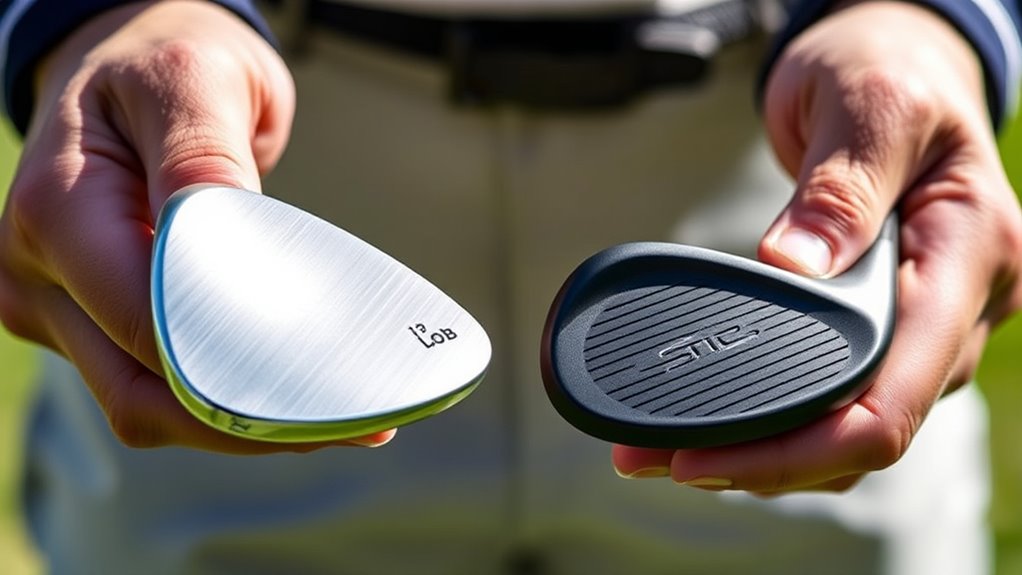
Your skill level and playing style greatly influence which wedge suits you best. If you’re still honing your technique, choosing versatile options might boost your confidence on the course. Advanced players, on the other hand, often select wedges that match their shot preferences and finesse.
Skill Level Adaptation
Choosing the right wedge depends heavily on your skill level and playing style, as these factors influence which club will help you execute shots more effectively. If you’re still refining your swing mechanics, a versatile wedge with forgiving features might suit you better. Conversely, experienced players often prefer specialized wedges for precision shots. Consider how your skill level impacts your club fitting, ensuring the wedge complements your swing. Additionally, understanding local golf traditions and common playing conditions in your area can help tailor your club selection more effectively. Being aware of AI-driven training tools can also provide valuable insights to improve your game. For example, some electric golf carts offer advanced features that can enhance your playing experience and confidence on the course. Picture yourself: – Consistently making clean contact with a smooth, controlled swing – Struggling with open or closed clubface at impact – Needing extra help for delicate flop shots or bunker escapes – Developing confidence in varied lies and distances – Adjusting grip and stance for ideal control. Matching your skill level with the right wedge improves shot consistency and shot accuracy.
Playing Style Preferences
Your playing style heavily influences which wedge will best suit your game, as different shot requirements and course conditions demand varying club characteristics. If you prefer aggressive, high-lob shots over obstacles, a lob wedge with a higher loft might be your best fit. Conversely, if you favor controlled, versatile shots around the green, a gap wedge could serve you better. To optimize your performance, consider a proper club fitting to guarantee the wedges match your swing and stance. Grip techniques also matter—how you hold the club can affect shot trajectory and consistency. Adjusting your grip for different wedges can help you execute shots with greater precision and control. Additionally, understanding how auditory processing impacts communication can be beneficial if you’re working with a coach or instructor. Ultimately, aligning your wedges with your playing style enhances confidence and helps you play more effectively.
Cost and Clutter: Weighing the Investment
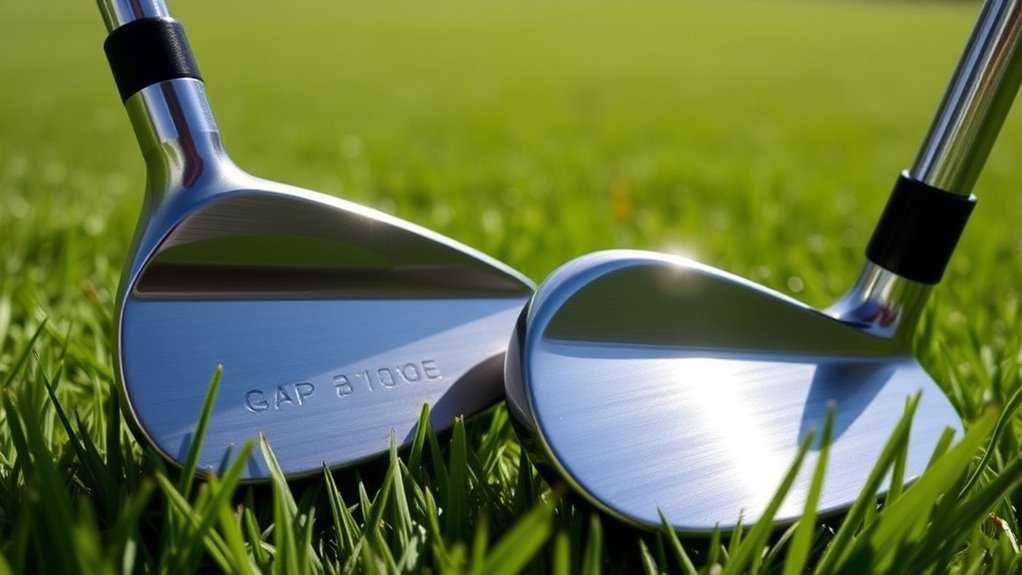
When considering whether to invest in a gap wedge or a lob wedge, it’s important to evaluate both the cost and the potential clutter they add to your golf bag. These wedges can vary in price, especially with options for wedge customization, which can increase your investment. Plus, maintaining multiple wedges means more wedge maintenance to keep them in top shape. Think about how each wedge fits into your game, and whether the extra club is worth the space and expense. Being aware of performance benefits can also help you understand how online resources might track your preferences related to equipment or training tips. Additionally, assessing the cost and clutter involved can help you decide if carrying both wedges aligns with your overall game strategy. Imagine:
- Rummaging through your bag searching for the right wedge
- Wedges with different grinds and finishes cluttering your setup
- Regular wedge maintenance to preserve spin and feel
- Balancing cost with performance benefits
- Simplifying your bag for quicker, more confident shots
To make an informed choice, consider how club versatility impacts your ability to execute various shots efficiently and how understanding equipment options can broaden your strategic choices.
Tips for Optimizing Your Short Game With Wedges
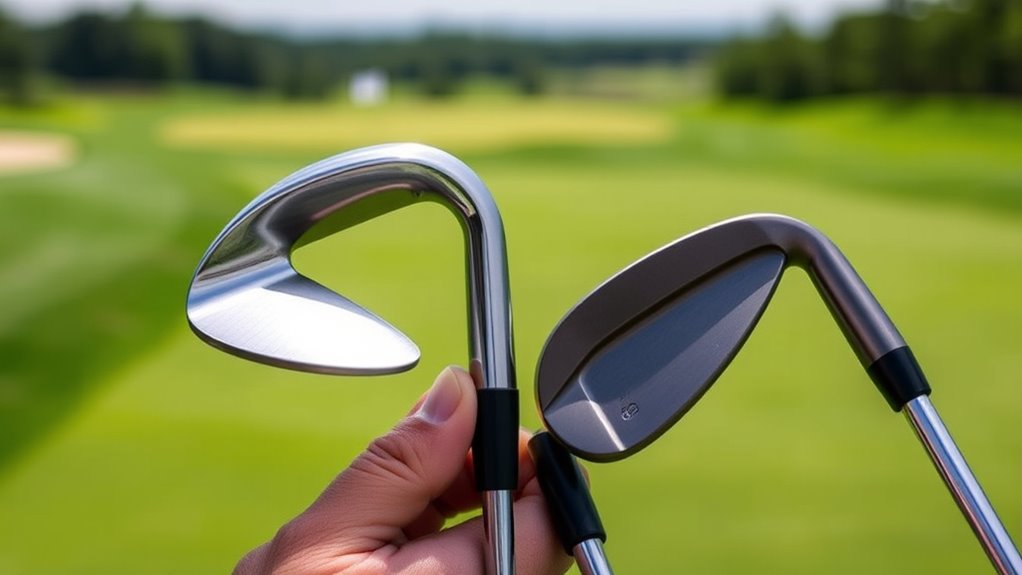
Mastering your short game with wedges requires focus on proper technique and strategic shot selection. Start by ensuring your wedge grip is comfortable and consistent, which helps control the shot trajectory. A secure grip provides stability during your swing and allows for better feel and accuracy. When preparing your shot, visualize the desired trajectory—whether you need a high lob or a low, running shot—and choose your wedge accordingly. Adjust your stance and ball position to influence the shot’s height and roll. Practice varying your swing length and speed to master different distances and trajectories. Remember, deliberate practice with these fundamentals enhances consistency, making it easier to execute precise shots around the greens. Incorporating modern golf training aids can also accelerate your short game improvement. This focused approach boosts your confidence and short game performance.
Making the Most of Your Wedge Selection

Choosing the right wedge for each shot can considerably improve your short game. To maximize your effectiveness, pay attention to both lie angle and bounce angle. Adjust your lie angle so the club sits flush at address, promoting consistent contact. The bounce angle influences how the club interacts with the turf or sand, helping prevent digging or thinning shots. Understanding deep-sky imaging techniques can also enhance your appreciation of the intricate details in celestial objects. Consider these factors when selecting your wedges:
Selecting the right wedge with proper lie and bounce angles ensures better contact and control on every shot.
- Visualize the club’s sole gliding smoothly over different lies
- Imagine how bounce angle prevents excessive digging in soft sand or thick turf
- Picture adjusting lie angle for a comfortable, balanced stance
- Think about how bounce angle affects shots from fluffy or hard ground
- Envision your wedges aligning perfectly with your swing for precise control
- Recognize that consistent setup is key to executing the correct shot and reducing errors
Frequently Asked Questions
Can a Single Wedge Cover All Short Game Shots Effectively?
A single wedge can’t cover all short game shots effectively because of wedge versatility. Different shots, like chips, pitches, and bunker shots, demand specific lofts and bounce angles. Incorporating both a gap wedge and lob wedge into your short game strategy gives you more control and options around the greens. This variety helps you adapt to various lies and distances, ultimately improving your accuracy and confidence on delicate shots.
How Does Bounce Angle Influence Wedge Performance?
Bounce angle considerably influences wedge performance by helping you control the club’s interaction with the turf or sand. A higher bounce reduces chances of digging into soft surfaces, making it ideal for bunker shots or fluffy lies. Conversely, a lower bounce offers more precision on firm ground. Choosing the right bounce angle tailored to your swing and course conditions enhances your short game, ensuring better shot consistency and overall performance.
Are There Specific Brands Known for Versatile Wedge Options?
Some brands are known for versatile wedges and multi-purpose clubs, making them great choices if you want options. Brands like Titleist, Callaway, and Ping offer wedges with adjustable bounce and grind options, providing brand versatility. These companies focus on creating clubs that perform well in various conditions, so you can use them for different shots without switching. If you value flexibility, investing in these brands could be a smart move.
How Often Should Wedges Be Regripped or Replaced?
A stitch in time saves nine, so you should regrip your wedges every 20-30 rounds or when the grip feels worn or slick. Regular grip replacement is key to maintaining control and ensuring wedge longevity. Don’t wait for signs of slipping—proactive regripping keeps your shots consistent and your wedges performing at their best. Staying on top of grip maintenance prolongs your equipment’s life and enhances your game.
Is It Better to Customize Wedges for Personal Swing Characteristics?
Yes, customizing wedges for your swing characteristics offers significant personalization benefits. When you tailor your wedges, they better match your unique swing style, improving consistency and control around the greens. Customization guarantees ideal lie angles, shaft options, and grind preferences, enhancing swing compatibility. This personalized fit helps you execute shots more confidently, making your wedges more effective and enjoyable to use, ultimately boosting your overall game performance.
Conclusion
So, do you really need both wedges? Well, unless you enjoy carrying around a mini arsenal for every tiny shot, it’s worth considering if your game actually benefits. Skip the clutter, save some cash, and maybe just master one wedge instead of collecting a set. After all, if you’re happy hitting that perfect flop or a crisp pitch, who needs the extras? Play smart, save space, and keep your golf bag from turning into a cluttered museum.