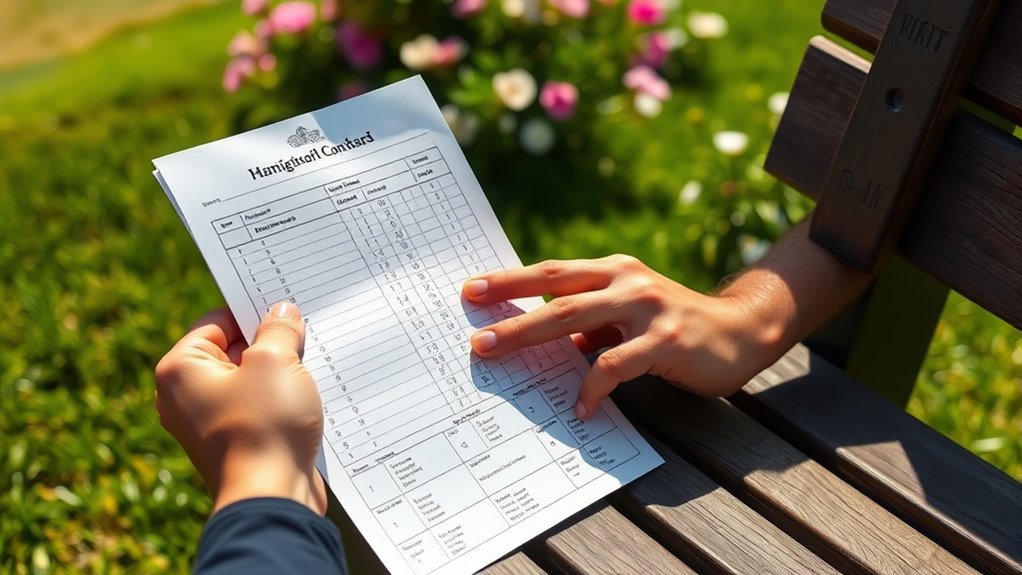

To understand a golf scorecard, start by reviewing the front and back sides that list holes 1 through 18, each with its par and yardage. Track your strokes on the score columns, noting any penalties and symbols like birdies or hazards. Pay attention to handicaps and course ratings for performance comparison. Recognize abbreviations and symbols to quickly analyze your game. Keep exploring the details, and you’ll gain a clearer picture of how to optimize your play.
Key Takeaways
- Understand the layout by identifying holes 1-18, par, yardages, and course diagrams on the front and back of the scorecard.
- Record your scores immediately after each hole, including any penalty strokes, using the provided columns.
- Familiarize yourself with symbols and abbreviations like “FIR,” “GIR,” or penalty markers to interpret performance stats.
- Use the par and yardage info along with the hole layout to plan shot strategies and club choices.
- Track total strokes, compare with par, and note handicaps and course ratings for performance analysis and improvement.

Callaway Leather Golf Scorecard Holder, Black
Leather Golf Card Holder: Constructed from durable synthetic leather, our golf score book comes engraved with the Callaway…
As an affiliate, we earn on qualifying purchases.
As an affiliate, we earn on qualifying purchases.
Understanding the Layout of a Scorecard
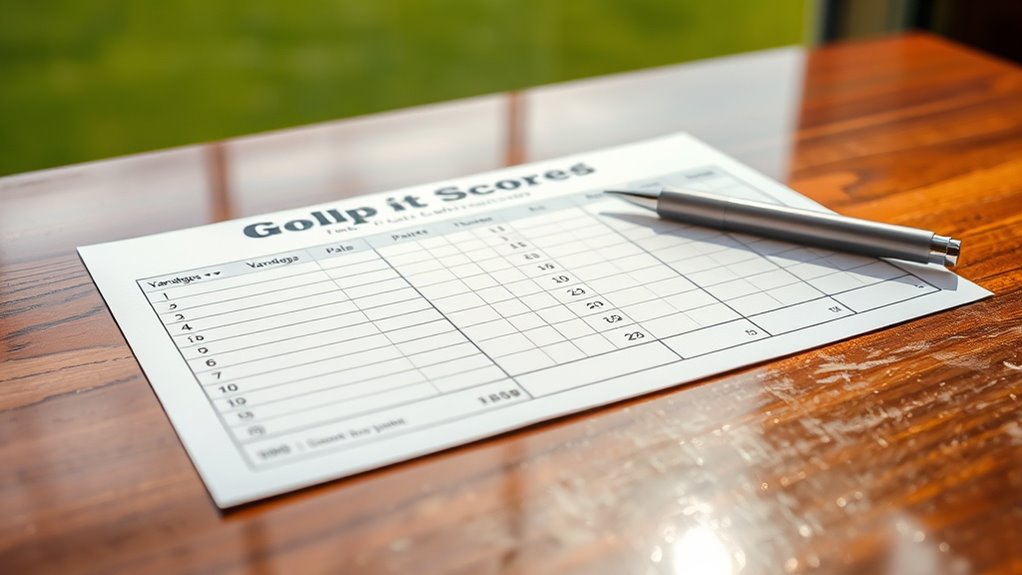
Have you ever looked at a golf scorecard and felt overwhelmed by all the numbers and symbols? Don’t worry—understanding its layout is simpler than it seems. The scorecard is designed to keep track of your game, showing each hole, par, and your score. It also highlights golf etiquette, reminding you to respect the pace of play and fellow golfers. When it comes to equipment selection, the scorecard may include notes on hole distances, helping you choose the right clubs. Typically, the front and back sides list holes 1 through 18, with columns for your scores, pars, and total strokes. Familiarizing yourself with this layout makes it easier to record your game accurately and stay focused on playing your best. Knowing how to read the scorecard layout can improve your overall game understanding and enjoyment. Additionally, understanding the hole distances and par can help you plan your shots more strategically during play. Being aware of the scorecard features can also assist in tracking your progress over multiple rounds and setting goals for improvement. Recognizing how the scorecard design incorporates these elements enables you to interpret the information more effectively. Developing a clear understanding of scorecard symbols and abbreviations can further enhance your ability to record scores efficiently and accurately.

Adhere 25pcs Golf Pencils with eraser Hexagon Wooden Pencils Graphite 2B for Golf Event Scoring,Classroom,Wedding,Company Meetings,Pew, Pocket (Green)
【Adhere Half Pencil】 25pcs value packs, pencil with eraser, convenient for writing, [Pen core hardness] Graphite 2B, [Mold]…
As an affiliate, we earn on qualifying purchases.
As an affiliate, we earn on qualifying purchases.
Familiarizing Yourself With Hole Information
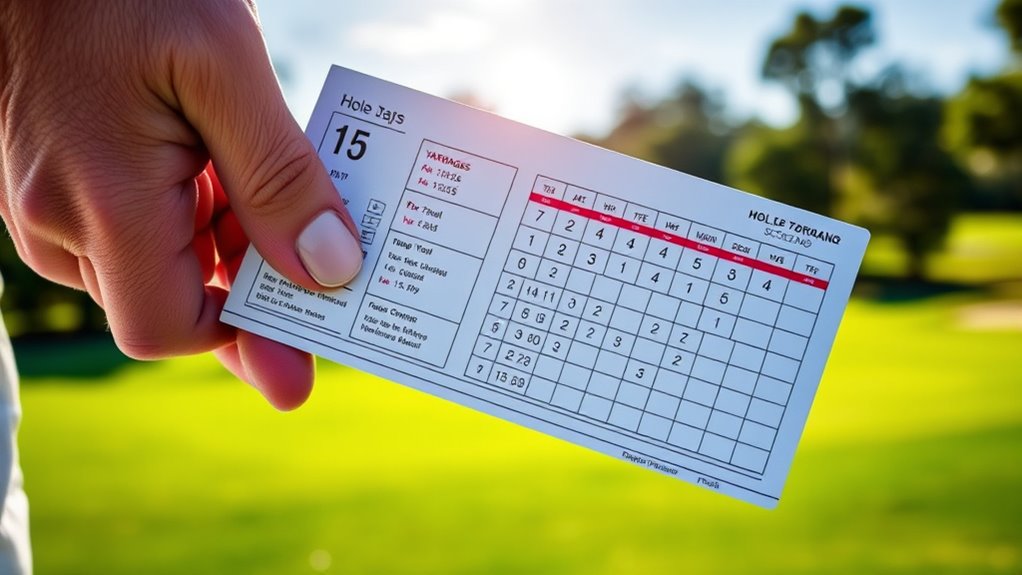
You’ll see each hole listed with its number and par, giving you a quick idea of the expected difficulty. Yardage details tell you how far you need to hit, helping you plan your shots. The hole layout diagram offers a visual guide, making it easier to navigate the course. Additionally, understanding the scorecard symbols can help you interpret scores and penalties more effectively. Recognizing the Free Floating concept behind course design can also enhance your strategic approach during play.
Hole Number and Par
Understanding the hole number and par on a golf scorecard is essential for traversing the course confidently. The hole number helps you stay organized and know your position on the course, while the par indicates the expected number of strokes to complete that hole. Knowing par is vital for applying proper scoring techniques and maintaining good golf etiquette, as it guides your pace and strategy. When you see a hole labeled as par 3, for example, aim to complete it in three strokes or fewer to stay on schedule. Recognizing these details early helps you plan each shot and communicate effectively with your playing partners. Mastering this basic information ensures you’re aligned with standard golf practices and sets a solid foundation for your game. Additionally, understanding how to read a golf scorecard correctly can help track your progress and improve your skills over time. Familiarity with golf scoring can also boost your confidence and enjoyment during play.
Yardage Details Provided
Are you familiar with the yardage numbers on a golf scorecard? These numbers tell you how far each hole is from the designated tee box, which is vital for effective course management. Knowing yardage helps you choose the right golf equipment, like clubs, to optimize your shot selection. Shorter holes might require a pitching wedge or 9-iron, while longer holes call for drivers or long irons. Paying attention to yardage details allows you to plan your strategy, avoid hazards, and manage your shots more confidently. It’s also helpful to compare yardages across different tees, especially if you’re playing from the back or front. Understanding how yardage impacts club selection and shot planning enhances your overall game, and being aware of how different players’ abilities influence club choice can further improve your play. Additionally, understanding yardage variations can help you better evaluate the course layout and adapt your game accordingly. It provides valuable insight into each hole’s challenge, helping you play smarter and improve your scores.
Hole Layout Diagram
Have you ever looked at a hole layout diagram and wondered how it can help your game? The diagram provides a visual map of the hole, showing the positions of the tee box and key features. By studying it, you can plan your shot strategy more effectively. Notice the location of hazard areas, such as bunkers and water hazards, which influence club selection and shot placement. Understanding the layout helps you avoid trouble spots and set realistic goals for each hole. The diagram also shows the shape of the fairway and green, giving insight into the best approach. Familiarizing yourself with these details allows you to play smarter, reducing potential strokes and boosting confidence on the course. Additionally, awareness of natural features and potential obstacles can aid in selecting the appropriate club and shot type. Recognizing the course design can also help you anticipate how different holes may play based on wind and terrain variations. Being aware of factors like terrain variations can further improve your decision-making process during play. It’s also helpful to understand how course layout impacts your overall strategy and scoring potential. Gaining this knowledge can enhance your overall course management skills and lead to better scores.

BACK POCKET GOLF Yardage Book (4 Pack) – USGA Conforming and Made in USA – Essential for Tournament Players. Fits Easily Inside Your Yardage Book or scorecard Holder.
Conforming Design: USGA/R&A Rule Conforming PGA Tour yardage book (rule 4.3) sized at 6.5 x 3.75 inch. The…
As an affiliate, we earn on qualifying purchases.
As an affiliate, we earn on qualifying purchases.
Reading the Par and Yardage Details
Understanding the par values helps you know what score is expected for each hole, giving you a target to aim for. Interpreting yardage numbers reveals the distance you’ll need to cover, which influences club selection. Mastering these details makes reading your scorecard much clearer and more useful during your game. Additionally, recognizing biodiversity hotspots can help you appreciate the importance of conserving natural areas that support diverse ecosystems. Recognizing the magical elements of the Tooth Fairy can deepen your understanding of the enchanting stories that surround her lore. Being aware of ecological significance can also enhance your appreciation for protected areas vital to conservation efforts, which are crucial for sustaining wildlife diversity. Furthermore, understanding the role of AI in healthcare breakthroughs highlights how technological advancements are transforming medical research and treatment options.
Understanding Par Values
Ever wonder what those numbers next to each hole on a scorecard really mean? Those are the par values, indicating the expected number of strokes a skilled golfer should take to complete the hole. Par helps you with club selection and understanding scoring abbreviations like birdie, par, or bogey. For example, a par 4 means you aim to reach the hole in four strokes. Here’s a quick look:
| Hole | Par | Yardage |
|---|---|---|
| 1 | 4 | 400 |
| 2 | 3 | 160 |
| 3 | 5 | 550 |
| 4 | 4 | 420 |
| 5 | 3 | 180 |
Knowing par values helps you gauge your performance and plan your club choices accordingly. Additionally, understanding the yardage of each hole can influence your strategy and shot selection during play. Recognizing the cosmic influences that some believe affect golfer performance can add an interesting dimension to your game, even if scientifically debated. Being aware of the course layout and how it interacts with par values can help you develop more effective playing strategies.
Interpreting Yardage Numbers
Yardage numbers on a golf scorecard show you how long each hole is from the tee to the green, helping you plan your shot selection. Longer holes might require a driver or a longer club, while shorter holes may need a wedge. Keep in mind, weather impact plays a role—wind or rain can shorten or lengthen effective distances, so adjust your club choice accordingly. For windy days, you may need to select a club that compensates for the wind’s effect, ensuring your shot stays on target. By understanding these yardage details, you can better strategize each shot, avoid hazards, and optimize your play. Accurate interpretation of yardage numbers helps you make smarter club decisions and adapt to changing conditions for a better round.
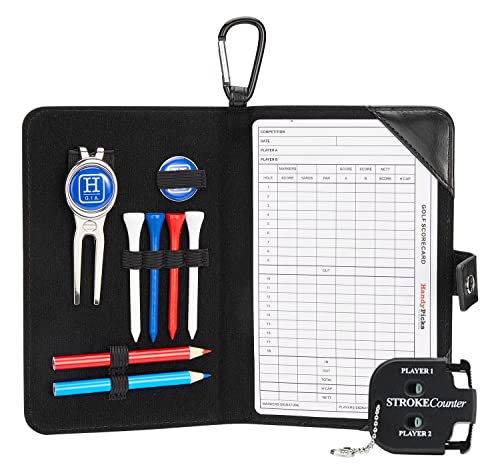
Handy Picks Golf Scorecard Holder n Yardage Book Cover in Genuine Leather – Divot Repair Tool, Ball Marker, Golf Tees, Pencil n Scorecards, Scorer Included, Gift for Golfers
Stylishness: leather with fine stitching craft, this scorecard holder is built to last. Keep track of your score…
As an affiliate, we earn on qualifying purchases.
As an affiliate, we earn on qualifying purchases.
Tracking Your Scores and Strokes
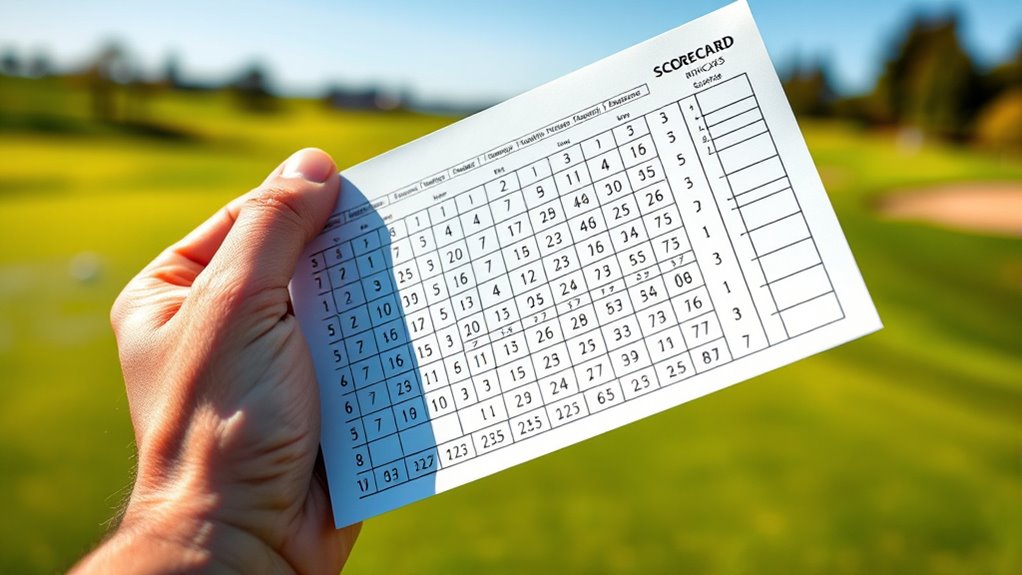
Have you ever wondered if you’re keeping accurate track of your game? Properly tracking your scores and strokes is essential for improving. When recording each hole, do a score entry immediately after finishing to avoid forgetting. Remember to include any penalty strokes, which can add extra strokes to your total. Be precise about counting every shot, including those lost or taken from hazards. Using a pencil helps you make quick adjustments if needed. Keep your focus on staying consistent, so your scorecard reflects your true performance. This practice not only ensures your scores are accurate but also helps you analyze your game later. Regularly updating your scorecard keeps you engaged and aware of your progress, making it easier to identify areas for improvement.
Interpreting Handicaps and Course Ratings
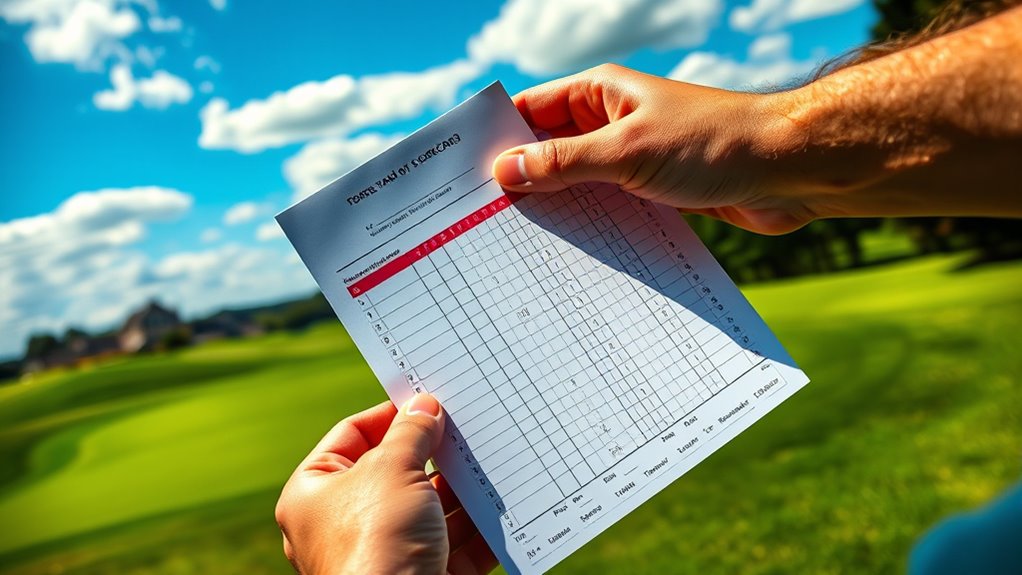
Once you’ve been tracking your scores accurately, understanding how your performance compares to other players involves interpreting handicaps and course ratings. Your handicap adjusts your raw score to account for your skill level, helping you play on a more level field. Course ratings reflect the difficulty of a specific course, considering factors like length and terrain. When you see your handicap, it’s essentially an estimate of your potential performance, which can be adjusted for course difficulty through handicap adjustments. This guarantees fair comparisons regardless of course challenges. Knowing how handicaps and course ratings interact helps you set realistic goals and understand how well you’re doing relative to players of different skill levels and course conditions. It’s a crucial part of making sense of your scores on the scorecard.
Using Symbols and Abbreviations Effectively
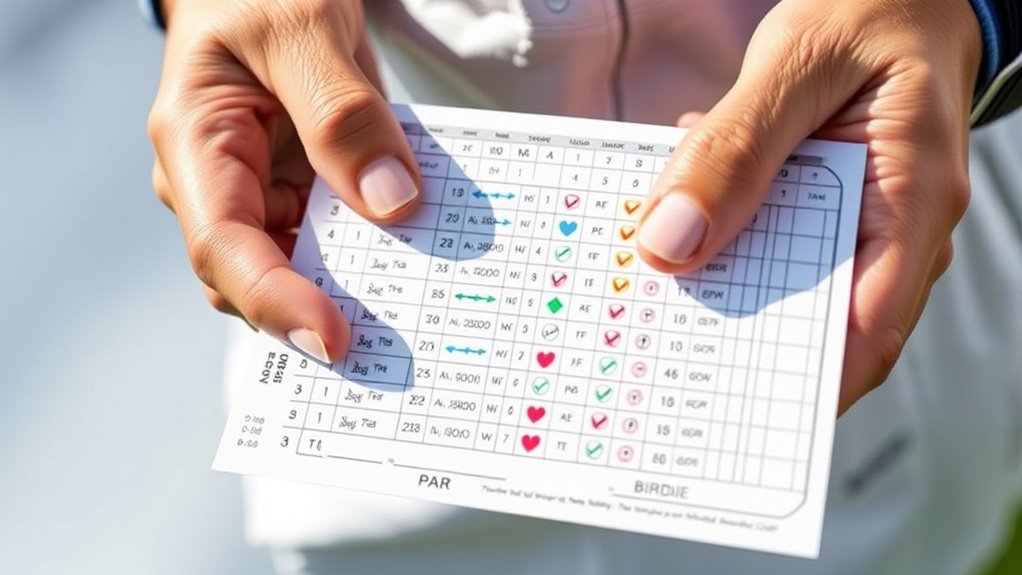
Symbols and abbreviations on a golf scorecard quickly convey important information about your round, so understanding them helps you interpret your scores more accurately. Score abbreviations, like “FIR” for fairways hit or “GIR” for greens in regulation, give quick insights into your performance. Symbol meanings, such as “X” indicating a penalty stroke or a circled number showing a birdie, clarify specific outcomes without cluttering the scorecard. Familiarizing yourself with common symbols and abbreviations guarantees you can read your scorecard efficiently and accurately assess where you excelled or need improvement. Pay attention to these markers as they often summarize key stats and highlight areas for focus, making your review of the round more meaningful and helping you track progress over time.
Analyzing Your Performance and Progress

Ever wondered how to turn your scorecard into a tool for improving your game? Analyzing your performance and progress helps you identify strengths and weaknesses. Focus on your scoring strategies by reviewing where you tend to struggle or excel. Keep your mental focus sharp by noting patterns in your play, such as how well you handle pressure or tricky holes. Use your scorecard to set realistic goals for future rounds. Track your improvement over time to stay motivated and make adjustments. Consider recording your thoughts after each round to reflect on what worked or didn’t. This active review helps you develop smarter strategies, boost confidence, and ultimately lower your scores. Remember, consistent analysis turns raw numbers into valuable insights for growth.
Frequently Asked Questions
How Do I Compare My Score to the Course’s Average?
To compare your score to the course’s average, look at the course rating and slope, which assess difficulty. After your round, compare your total strokes to the course’s par and average scores for players of similar skill levels. If your score is below the average, you played well relative to the course’s difficulty. This comparison helps you assess your performance and identify areas for improvement.
What Should I Do if I Make a Mistake on My Scorecard?
Ever wonder what to do if you make a mistake on your scorecard? Simply notify the scorer or course official, and they’ll handle the score correction and note any penalty notation. This guarantees your score remains accurate and fair. Don’t delay fixing errors, as it could impact your final score and tournament results. Always double-check your entries before submitting to avoid confusion or penalties later on.
How Do Course Ratings Affect My Handicap Calculation?
Course ratings directly impact your handicap calculation because they reflect the difficulty of the course. When you play a course with a higher rating, your score is adjusted to account for its difficulty, leading to a more accurate handicap. You should always consider the course rating when calculating your handicap, as it guarantees your handicap fairly represents your skill level across different courses. This helps maintain a consistent and fair measure of your playing ability.
Can I Use a Scorecard From a Different Course?
Think of a scorecard as your golf diary—each course has its own story, so using a scorecard from a different course is like reading someone else’s diary. While you *can* do it, it might not match the course-specific scoring details or formats, making it harder to track your progress accurately. For the best results, stick with a scorecard that fits the course you’re playing, ensuring your scores truly reflect your game.
What Are Common Symbols Used for Penalties or Special Notes?
Penalty symbols and scoring notations help you understand your score adjustments. Common symbols include a circle or triangle to indicate penalties, like stroke penalties, and notes such as “X” for lost balls or “OB” for out of bounds. You might also see a plus sign (+) to show additional strokes. Familiarize yourself with these symbols so you can accurately interpret your scorecard and track penalties or special notes during your round.
Conclusion
Now that you know how to read a golf scorecard, you’re ready to navigate the course with confidence. Think of it as your personal map, guiding you through each hole and helping you track your progress. With every stroke, you’ll gain insight and improve your game. Embrace the rhythm of the game, and let the scorecard be your trusty compass on this golfing journey, leading you toward better scores and more enjoyment.