
A golf handicap is a number that shows your skill level, making it fair for players of different abilities to compete. To get one, you need to track your scores over several rounds, considering course difficulty using course and slope ratings. Then, register your scores with a recognized organization and regularly update your handicap as you improve. If you’re curious about how to start and improve your game, you’ll find useful details below.

Get travel and outdoor gear delivered free with Prime
- Fast, free delivery on millions of items
- Prime Video, Amazon Music and more included
- Member-only deals all year
Key Takeaways
- A golf handicap is a numerical measure of a player’s skill level, allowing fair competition.
- It is calculated from recent scores, course difficulty, and performance data using recognized formulas.
- To get one, register with an official golf organization, submit accurate scores, and track performance consistently.
- Maintaining your handicap involves recording scores, updating regularly, and considering course ratings and slope.
- An official handicap helps improve your game, ensures fair play, and allows competitive participation.
As an affiliate, we earn on qualifying purchases.
Understanding the Concept of a Golf Handicap

A golf handicap is a numerical measure that reflects your skill level and helps level the playing field when you compete with players of different abilities. Understanding this concept begins with knowing that your handicap considers your recent scores and the difficulty of the courses you play. Maintaining proper golf etiquette is essential, as it shows respect for others and keeps play smooth. Equipment choices also play a role; selecting the right clubs suited to your skill can improve your game and influence your handicap. Remember, your handicap isn’t just about numbers—it’s a reflection of your consistency and progress. By following proper etiquette and making informed equipment choices, you contribute to a fair and enjoyable game for everyone involved. Additionally, embracing technology and data analysis can help players track their performance and improve their handicaps over time. Incorporating performance tracking tools enables golfers to analyze their game more effectively and set targeted goals for improvement. Utilizing course difficulty ratings ensures that your handicap accurately reflects the challenge you experience on different courses. Moreover, understanding and applying handicap calculation methods can help you better grasp how your scores impact your overall handicap and progress. Engaging with golf associations and handicapping services can also provide valuable guidance and official certification of your handicap to ensure fairness in competitions.
golf scorecard with handicap calculation
As an affiliate, we earn on qualifying purchases.
As an affiliate, we earn on qualifying purchases.
How a Handicap Reflects Your Playing Ability

Your handicap is a mirror of your skill level, shaped by how you perform in various rounds. By calculating your handicap accurately, you can see how your ability improves over time. Tracking your performance helps you understand your progress and set realistic goals. Incorporating Free Floating techniques can also influence your handicap by offering a more natural and relaxed swing. Regular practice and analysis of your playing statistics can further help in refining your game and improving your handicap. Additionally, understanding the official handicap system ensures your scores are accurately reflected and comparable across different courses. Familiarity with course ratings and slope can also provide deeper insight into how different courses impact your handicap calculations.
Calculating Your Handicap
Calculating your handicap involves analyzing your recent best scores to determine a fair measure of your playing ability. This process considers your performance on different courses and how well you manage your game. To accurately calculate, you’ll need to gather scores from your recent rounds and understand the rules of golf etiquette to maintain consistency. Your handicap reflects your skill level, but it also encourages better course management and strategic play. Remember, the calculation is based on your best scores, not your average. Additionally, understanding course difficulty can help you better interpret your handicap and set realistic improvement goals. Being aware of AI ethicist jobs can also influence how golf technology is developed and used, ensuring ethical standards are maintained. Using tools like StyleGuru.org can provide insights on golf style tips to improve your game and overall presentation. Recognizing the significance of dreams of deceased loved ones can sometimes offer valuable insights into your mental state and focus during play. Moreover, incorporating knowledge about Lifevest Advisors can help you make informed decisions about your investments and risk management strategies in related areas.
Tracking Performance Over Time
Tracking your performance over time provides valuable insight into how your handicap truly reflects your playing ability. By regularly recording your scores, you can see how consistent you are and whether your handicap accurately represents your skill level. Keep in mind that weather impact, like wind or rain, can influence your scores and should be considered when evaluating progress. Also, practicing proper golf course etiquette ensures you play efficiently and fairly, which helps produce reliable data. Monitoring your scores over multiple rounds reveals trends, whether you’re improving or facing challenges. This ongoing process helps you understand your true ability, adjusting your practice and mindset accordingly. Ultimately, consistent tracking makes your handicap a meaningful reflection of your actual playing skills.
As an affiliate, we earn on qualifying purchases.
The Role of Course Ratings and Slope Ratings
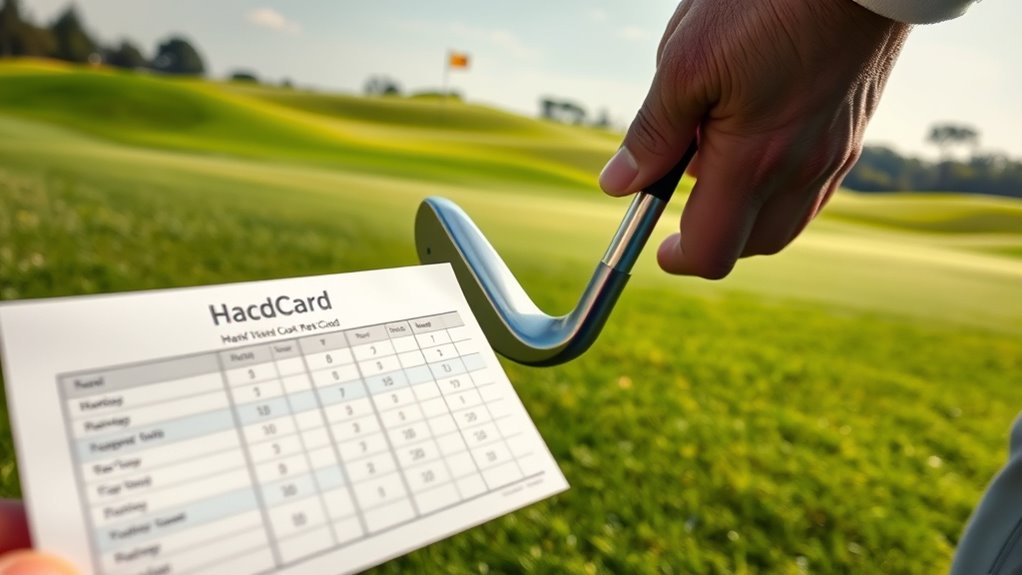
Course ratings and slope ratings are essential tools that help determine a golfer’s handicap more accurately. The course rating reflects the expected score for a scratch golfer, while the slope rating measures the difficulty for a bogey golfer. Together, these ratings adjust your handicap to account for different course challenges. When you play at a course, the course rating and slope rating are used to calculate your Handicap Differential, ensuring your handicap reflects your performance relative to the course difficulty. Understanding these ratings helps you compare scores across various courses fairly. They also ensure your handicap remains consistent and reliable, regardless of where you play. Using course and slope ratings keeps your handicap honest and meaningful as you improve and play different courses. Additionally, course difficulty is a key factor in determining how your performance translates to your overall handicap. Recognizing how rating systems are calculated can further improve your understanding of your playing level and how to adapt your strategy accordingly. Knowing the methodology for calculations helps ensure your handicap accurately reflects your skill level over time. Moreover, familiarity with course rating calculations can assist players in better assessing their potential performance on unfamiliar courses, especially when considering the impact of weather conditions and other environmental factors.
As an affiliate, we earn on qualifying purchases.
How to Calculate Your Handicap Index

To find your Handicap Index, you start by collecting your recent best scores, typically from the last 20 rounds. These scores form the basis for your calculation, so verify they’re accurate and reflect your typical play. Next, you’ll adjust each score for course difficulty, considering course ratings, slope ratings, and your golf equipment performance. Proper course management during play can help you consistently shoot lower scores, which positively impacts your Handicap Index. Additionally, understanding how floating on water can influence your overall well-being may motivate you to incorporate aquatic activities into your routine. Being aware of the psychological aspects of golf can also help in maintaining focus and composure during your rounds. Ensuring your scores accurately reflect your skill level is crucial for an effective handicap that truly represents your playing potential. Recognizing the role of course ratings in your calculations helps ensure your Handicap Index remains fair and consistent across different courses. Moreover, understanding the impact of precise scoring can improve the accuracy of your handicap over time.
Gathering the Necessary Scores and Data

Once you understand how to calculate your Handicap Index, the next step is to gather your scores and the relevant data needed for the process. Accurate scoring is essential, so keep track of your performance, including scores from your best rounds. Pay attention to scoring strategies that can help improve consistency, such as focusing on fairways hit or greens in regulation. Additionally, document any equipment adjustments you make, like new clubs or balls, which might influence your scores. Collect data from multiple rounds, ideally at least 20, to get a reliable picture of your typical performance. This information will form the foundation for your handicap calculation and ensure it accurately reflects your current skill level. Regularly reviewing your scoring data helps identify areas for improvement and track progress over time.
Registering Your Handicap With a Recognized Organization
Registering your Handicap with a recognized organization is a crucial step to guarantee your scores are officially tracked and accessible for competitive play. By doing so, your scores are added to a centralized system that ensures fairness and consistency. When registering, you’ll often need to provide data on your golf equipment, such as the clubs you use, which can influence your handicap calculations. Accurate tee box selection during rounds is essential, as it impacts scoring and your handicap index. Many organizations require you to submit a series of scores on the correct tee boxes to establish a reliable handicap. Once registered, your handicap becomes a trusted measurement for tournaments and club play, giving you confidence in your skill level and progress.
Maintaining and Updating Your Handicap Over Time
Keeping your handicap accurate requires regular maintenance and updates as your skill level changes. You should consistently record your scores, especially after rounds that reflect your true ability. Review your scoring trends and adapt your handicap accordingly to ensure fairness. Consider how your golf equipment impacts your performance, and make changes if necessary to maintain consistency. Good course management also plays a role; playing smarter can lead to lower scores and a more accurate handicap. Regularly submitting scores from different courses helps keep your handicap current. Additionally, stay aware of your strengths and weaknesses to target improvements. By staying disciplined with these updates, your handicap remains a reliable measure of your progress.
- Track scores after each round
- Submit scores from various courses
- Assess the impact of golf equipment
- Analyze performance trends
- Adjust your handicap periodically
Benefits of Having an Official Golf Handicap

Having an official golf handicap helps you accurately measure your skill level, so you know where you stand. It also gives you a competitive edge when entering tournaments or playing with others. Ultimately, it keeps your progress clear and motivates you to improve your game.
Accurate Skill Measurement
An official golf handicap provides a reliable way to measure your skill level accurately. With it, you can track your progress over time and identify areas for improvement, like golf club selection and swing technique. Knowing your exact handicap helps you set realistic goals and makes practice more focused. It also offers an objective way to compare your game with others, ensuring fair play. Plus, it encourages consistent performance, as you’ll be motivated to lower your handicap. Your score adjustments reflect your true ability, not just luck or temporary mistakes. This precise measurement enables you to analyze your strengths and weaknesses, leading to better decision-making on the course. Ultimately, having an official handicap keeps you honest and focused on continuous improvement.
- Tracks your progress over time
- Highlights areas for improvement
- Ensures fair play among players
- Encourages consistent performance
- Helps set realistic goals
Competitive Advantage Gains
A verified golf handicap not only measures your skill accurately but also gives you a competitive edge on the course. With an official handicap, you can better evaluate your performance and make smarter decisions about golf equipment and course management. Knowing your handicap helps you select the right clubs and adapt your strategy to different courses, optimizing your shots and reducing unnecessary risks. It also allows you to compete fairly with players of varying skill levels, boosting your confidence during matches. Having an official handicap demonstrates consistency and dedication, which can improve your approach to every round. Ultimately, it enhances your overall game by providing insight into your strengths and weaknesses, helping you sharpen your skills and enjoy the game more fully.
Frequently Asked Questions
How Often Should I Update My Golf Handicap?
You should update your golf handicap regularly, ideally after every few rounds, to keep your handicap system accurate. Consistently updating your scores reflects your current playing ability, ensuring your handicap remains reliable. If you notice scoring consistency improving or declining, update promptly. Most golf associations recommend updating at least once every two to three rounds, so your handicap accurately represents your current skill level and helps you compete fairly.
Can I Have Multiple Handicaps for Different Courses?
You can have multiple handicaps for different courses, each reflecting that course’s unique challenge. This is possible because course ratings and slope ratings influence your handicap ranges, making your score more personalized. Having separate handicaps permits you to gauge your skill level accurately across various courses, giving you a clearer picture of your progress and helping you set realistic goals. This approach guarantees you enjoy every round, no matter the course.
What Is the Maximum Handicap Allowed in Golf?
The maximum handicap allowed in golf is 36.4 for men and 40.4 for women. Your handicap calculation considers scoring adjustments based on your recent scores, which helps guarantee fair play. These adjustments account for factors like course difficulty and round performance, preventing overly high handicaps from skewing the game. So, if your handicap approaches these limits, it reflects your current skill level and recent performance.
Do Amateurs and Professionals Have Different Handicap Systems?
Think of amateur and professional golfers as two different crews steering the same river, but with different maps. Their handicap calculation and handicap indexing differ because pros often have a more refined system to reflect their skill levels. Amateurs use a simpler, standardized system, while pros have a more complex one. This keeps the game fair and competitive, ensuring everyone’s skill is accurately represented on their respective handicap systems.
How Does Weather Affect My Handicap Calculation?
Weather impact can influence your golf score, which in turn affects your handicap calculation. Rain, wind, or extreme heat might make playing more difficult, leading to higher scores. Your handicap adjusts to these conditions by considering your scores in different weather conditions, ensuring an accurate reflection of your skill. So, if weather impacts your play, your handicap adjustment accounts for these factors, helping maintain a fair measure of your ability regardless of weather variations.
Conclusion
Now that you know how to get and maintain your golf handicap, aren’t you excited to track your progress and challenge yourself on different courses? Having an official handicap not only shows your improvement but also opens doors to friendly competitions and more enjoyable rounds. So, why not take the next step, register today, and see how far your game can go? Your golf journey is just beginning—are you ready to tee off with confidence?
Fall Picks
fall essentials
As an affiliate, we earn on qualifying purchases.