Understanding golf clubs is key to improving your game. Drivers maximize distance off the tee, while fairway woods help with long shots on the fairway. Irons are versatile for approaches and control, and hybrids combine features for easier play. Wedges specialize in short, precise shots near the green and out of bunkers. If you want to master each club’s purpose and how to use them effectively, keep exploring these details further.
Key Takeaways
- Drivers are designed for maximum distance off the tee, while fairway woods help cover long fairway shots.
- Irons are versatile clubs used for approach shots, maneuverability, and variety of lies, requiring proper fitting for optimal control.
- Wedges specialize in short, precise shots around the green, including bunker shots and flop shots for obstacle clearing.
- Hybrids combine features of woods and irons, offering easier shots and versatility on various lies.
- Proper club selection depends on factors like material, loft, shaft flex, and individual swing characteristics for optimal performance.
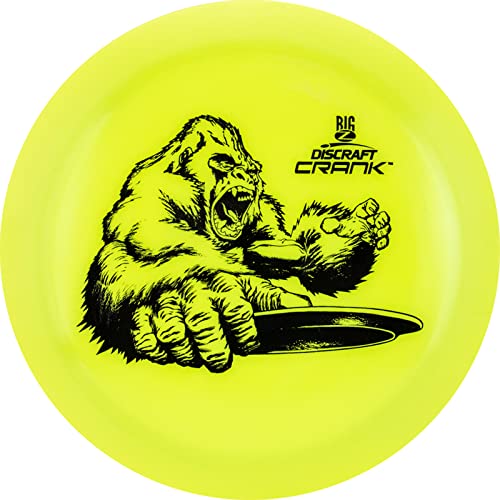
Discraft Big Z Crank 173-174 Gram Distance Driver Golf Disc
Crank – Distance Driver: Speed 13 | Glide 5 | Turn -2 | Fade 2 | Stability 1.3….
As an affiliate, we earn on qualifying purchases.
As an affiliate, we earn on qualifying purchases.
Types of Golf Clubs and Their Main Functions

Understanding the different types of golf clubs is essential to playing the game effectively. When selecting clubs, consider proper club fitting to guarantee they suit your swing and body type. Each club type serves a specific function: drivers are designed for maximum distance off the tee, while fairway woods help you cover long distances on the fairway. Irons, ranging from 3 to 9, are versatile for approach shots and maneuverability around the course. Hybrids combine features of woods and irons, making certain shots easier. Wedges excel at short, precise shots near the green. The materials used in golf clubs, like steel or graphite, influence weight, feel, and performance. Choosing the right club and materials can considerably improve your game and overall experience on the course. Additionally, understanding the different club types and their uses can help you develop a more strategic approach to your game.
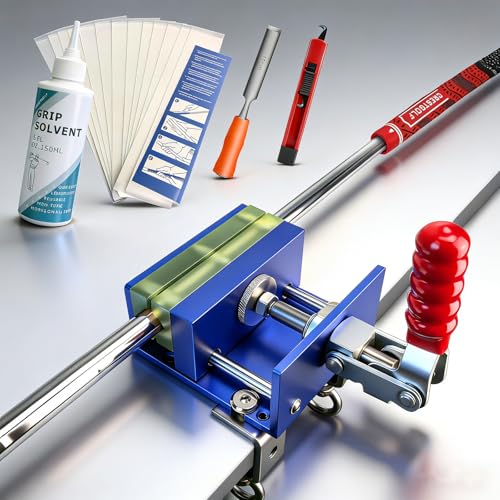
Crestgolf Golf Repair Kit Drill-Free & Drill Installation for Regripping Golf Clubs, Inlcudes 13PCS Grip Tapes, Hook Knife, Solvent, Grip Tape Remover and Aluminum Vise Clamp for Home or Workshop
[Drill or No drill installation Chose]: The golf vise clamp can be installed with or without drilling, both…
As an affiliate, we earn on qualifying purchases.
As an affiliate, we earn on qualifying purchases.
Wedges: Specialized Clubs for Short Shots

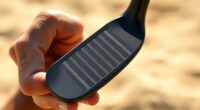
Wedges are specialized golf clubs designed to help you make precise shots around the green and from short distances. They excel in situations like bunker shots, where you need to lift the ball out of sand and land softly on the green. Wedges also allow you to execute flop shots, which are high, soft shots that clear obstacles and stop quickly on the green. Different types of wedges—such as pitching, sand, gap, and lob wedges—offer varying lofts to suit specific shots. By using the right wedge, you gain control and accuracy in tight spaces. Mastering wedge shots boosts your confidence on short approach shots and helps you recover from tricky lies, making them essential tools in your golf bag.

ALVO GOLF Premium Golf Wedges 52/56/60 Sets or Individual Wedges – 52 degree Gap Wedge, 56 degree Sand Wedge, 60 degree lob Wedge Golf Club – Pitching Wedge for Men Right Hand – Wedges Golf – Max spin
FULL-FACE GROOVES FOR ELITE SPIN AT A STEAL: CNC-milled full face golf wedges deliver surgical spin—stick 52, 56,…
As an affiliate, we earn on qualifying purchases.
As an affiliate, we earn on qualifying purchases.
Irons: Versatile Clubs for a Range of Shots

Irons are the most versatile clubs in your bag, capable of handling a wide variety of shots from different lies and distances. Proper club fitting is essential to optimize your iron ball flight and improve consistency. When fitted correctly, you’ll notice better control and accuracy, especially on approach shots. Additionally, the design of irons helps produce a predictable ball flight, giving you confidence whether you’re hitting from the fairway, rough, or tight lies. As you become more familiar with your irons, you’ll learn how to adjust your swing to maximize their versatility, helping you execute everything from precise chips to full swings with accuracy. Recognizing the importance of club fitting ensures you select clubs that complement your swing and physical attributes, leading to better overall performance. Understanding club customization can further enhance your performance by tailoring clubs to your unique swing characteristics, which is especially beneficial when considering the benefits of proper fitting.

LAZRUS GOLF Premium Hybrid Golf Clubs for Men – 2,3,4,5,6,7,8,9,PW Right Hand & Left Hand Single Club, Graphite Shafts, Regular Flex (Men, RHB GW)
GOLF HYBRIDS SOLD AS SINGLES: Thousands of Lazrus Golf clubs sold worldwide! Please choose right or left hand…
As an affiliate, we earn on qualifying purchases.
As an affiliate, we earn on qualifying purchases.
Woods and Drivers: Long-Range Clubs for Power and Distance
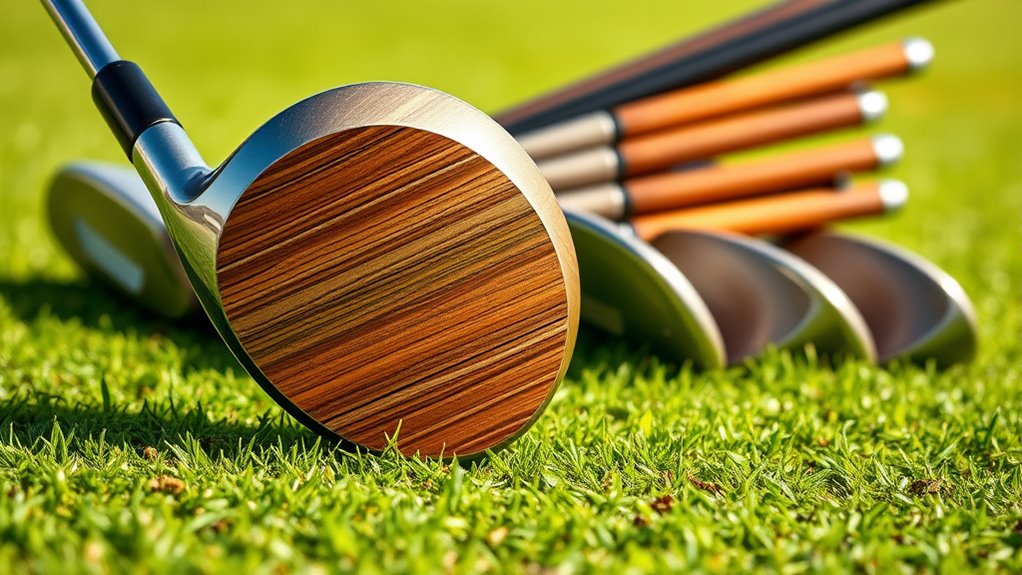
Woods and drivers are designed to maximize your distance off the tee and from the fairway, giving you the power to reach long holes more easily. Their clubhead materials, typically titanium or composite, are lightweight yet durable, enabling faster swings and greater ball speed. The size and shape of the clubhead help create a larger sweet spot, making it easier to hit solid shots consistently. Shaft flex is also vital; a flexible shaft can generate more whip and leverage for added distance, especially for slower swing speeds, while a stiffer shaft offers control for faster swings. Selecting the right combination of clubhead materials and shaft flex ensures you optimize power and accuracy, helping you conquer those long par 4s and par 5s with confidence. Additionally, understanding clubhead design can aid in choosing clubs that best suit your swing style and improve overall performance. Recognizing the manufacturing techniques used in club construction can also influence durability and consistency in your shots. Incorporating knowledge of nanotechnology advancements, such as innovative coatings and materials, can further enhance club performance and longevity. Staying informed about the latest technology innovations in golf club manufacturing can give you a competitive edge on the course.
Frequently Asked Questions
How Should I Choose the Right Golf Club for My Skill Level?
To select the appropriate golf club for your skill level, start with a thorough club fitting and skill evaluation. A professional fitting helps match clubs to your swing, while evaluating your current abilities reveals what you need to improve. Focus on clubs that feel comfortable and improve your consistency. As you advance, revisit your fitting and evaluation to ensure your clubs evolve with your game, boosting confidence and performance.
What Are the Differences Between Men’s and Women’s Golf Clubs?
Men’s and women’s golf clubs differ mainly in club length and grip size; women’s clubs typically have shorter shafts and smaller grips to suit different physical builds. This means you’ll find women’s clubs easier to swing comfortably and generate better control. When choosing, consider your height and hand size to make sure the club length and grip size match your body, helping you play more confidently and improve your game.
How Often Should I Replace or Upgrade My Golf Clubs?
You should consider replacing or upgrading your golf clubs every 5 to 10 years, depending on club maintenance and wear. Regularly assess for signs of damage or loss of performance. Technological advancements also play a role; newer clubs often incorporate innovations that can improve your game. Staying updated guarantees you benefit from the latest features, but if your clubs still perform well with proper care, an upgrade isn’t urgent.
Can I Use One Type of Club for Multiple Shots?
Imagine your club bag as a toolbox; one versatile tool can handle many jobs. Yes, you can use one type of club for multiple shots, thanks to its club versatility and shot adaptation. A 7-iron, for instance, can serve as a chip, pitch, or even a punch shot. Mastering this flexibility lets you adapt to various lies and distances, making your game smoother and more strategic.
What Are Common Mistakes Beginners Make With Different Clubs?
You often make mistakes with club selection and grip errors, which can hinder your game. Avoid using the same club for every shot; instead, choose clubs based on distance and lie. Pay attention to your grip—ensure it’s firm but relaxed—and avoid common grip errors like holding the club too tight or too weak. Practicing proper club selection and grip technique will improve your accuracy and consistency on the course.
Conclusion
Now that you know the different golf clubs and their uses, you’re practically a golfing genius! With the right club in your hands, you can conquer any course, sink impossible putts, and crush drives that leave everyone in awe. Remember, mastering these clubs turns you into a golf wizard—capable of transforming even the trickiest shots into your personal highlight reel. Get out there and unleash your newfound superpowers on the course!