Choosing between a mallet and blade putter depends on your stroke type, green conditions, and personal feel preferences. If you want more stability and forgiveness, especially on fast or uneven greens, a mallet might suit you best. If you prefer finesse, feel, and more control for delicate putts, a blade could be the right choice. For a deeper understanding of how to match your game to the right putter, explore the details below.
Key Takeaways
- Mallet putters offer higher stability and forgiveness, ideal for players with a more sweeping or inconsistent stroke.
- Blade putters provide greater feedback and control, suited for players with a delicate, precise putting style.
- Match putter shape and weight distribution to your stroke length and tempo for optimal accuracy.
- Consider green conditions; mallets excel on fast, hilly greens, while blades suit slower, flatter surfaces.
- Test different putters on actual greens to determine which design enhances your confidence and stroke consistency.
Understanding the Design and Structure of Mallet and Blade Putters
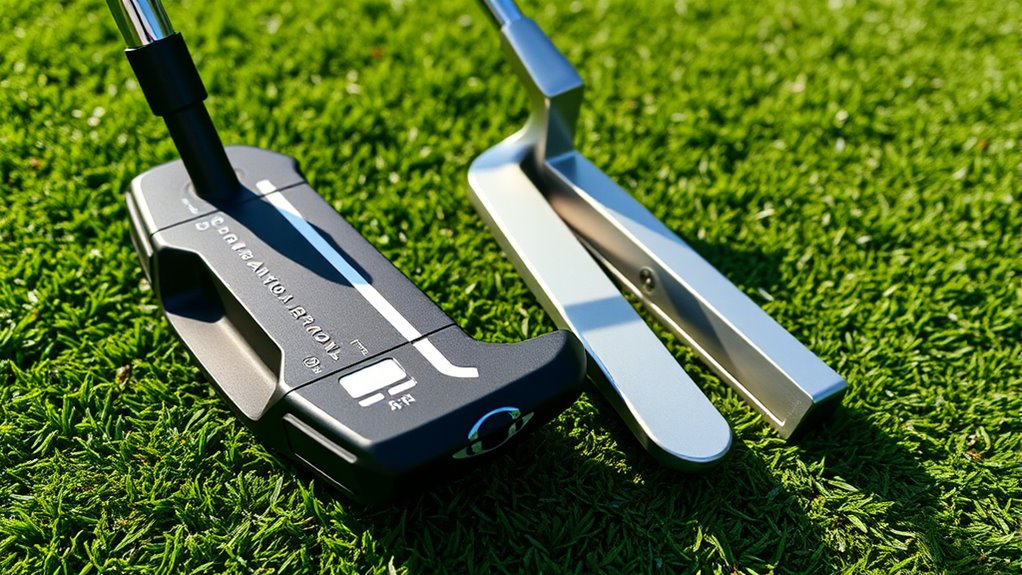
Mallet and blade putters differ substantially in their design and structure, each catering to different putting styles and preferences. The key difference lies in their putter head shapes: mallet putters feature larger, more rounded heads, providing a higher Moment of Inertia (MOI) that helps stabilize your stroke. Blade putters, on the other hand, have a sleek, compact design with a thinner profile, favoring players who prefer a more traditional look. Material selection also varies; mallets often use heavier metals like tungsten for added stability, while blades typically incorporate lightweight materials such as stainless steel or aluminum for better feel. These structural differences influence how each putter feels and performs, allowing you to choose based on your preferred alignment, balance, and overall putting style.
Assessing the Feel and Balance: How Each Putter Type Influences Your Stroke
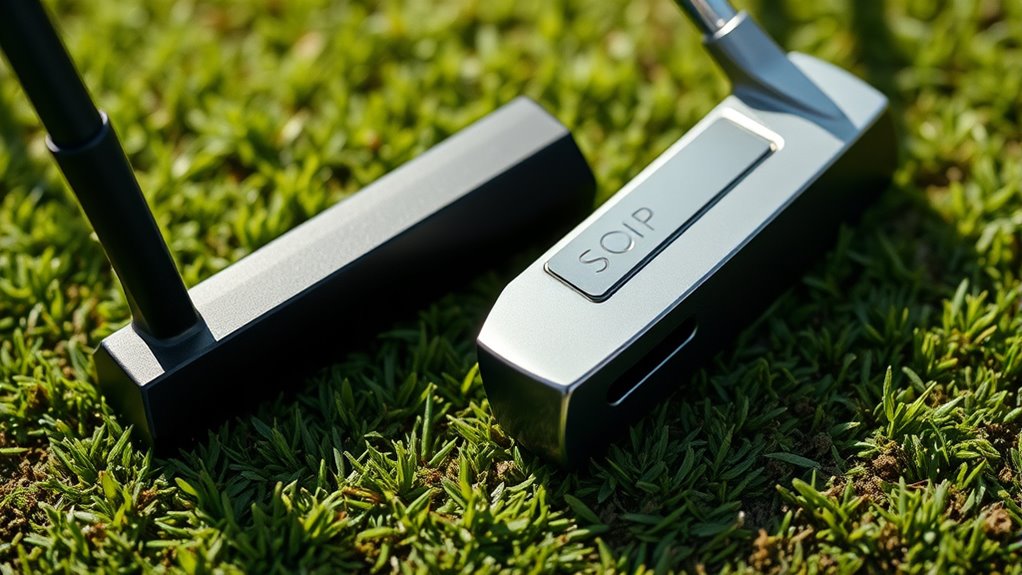
Your feel and balance are shaped by how the weight is distributed across the putter, affecting your stroke consistency. The grip and overall feel also play a vital role in how confident you feel during your putts. Understanding these differences helps you choose a putter that best complements your stroke style. Additionally, considering the type of putter—whether mallet or blade—can influence how well you achieve a smooth, natural stroke aligned with your preferences Free Floating. Recognizing the weight distribution in each putter type helps you better understand how they influence your overall putting performance.
Weight Distribution Impact
The way weight is distributed within a putter considerably affects its feel and balance, shaping how you execute your stroke. A mallet typically has more weight toward the clubhead, providing stability and a solid feel during your stroke. This distribution can help with alignment and confidence, especially if you prefer a heavier head. Blade putters, on the other hand, often have a more balanced or toe-weighted design, offering a different sense of control and finesse. Your shaft length and grip style also influence how weight feels in your hands, impacting swing tempo and consistency. A longer shaft may shift weight distribution slightly, while a grip style can affect how you perceive the putter’s balance, ultimately influencing your stroke’s rhythm and accuracy. weight distribution plays a crucial role in how a golfer perceives and controls their putter, affecting overall performance.
Grip and Feel Dynamics
Because grip and feel are central to how a putter performs, understanding how each type influences your stroke is essential. Mallet and blade putters differ in their feel sensitivity and grip tension response, affecting your control. With a mallet, you may notice increased stability, providing a more consistent feel through larger grips. Blade putters, however, often offer greater feel sensitivity, allowing you to better sense the stroke’s nuances.
Consider these factors:
- Grip tension impacts control—looser grips promote smoother strokes.
- Feel sensitivity helps you judge distance and pace.
- Mallet putters tend to dampen feel, favoring stability.
- Blade putters enhance feedback, improving touch and finesse.
Analyzing Alignment Aids and Visual Cues for Better Accuracy
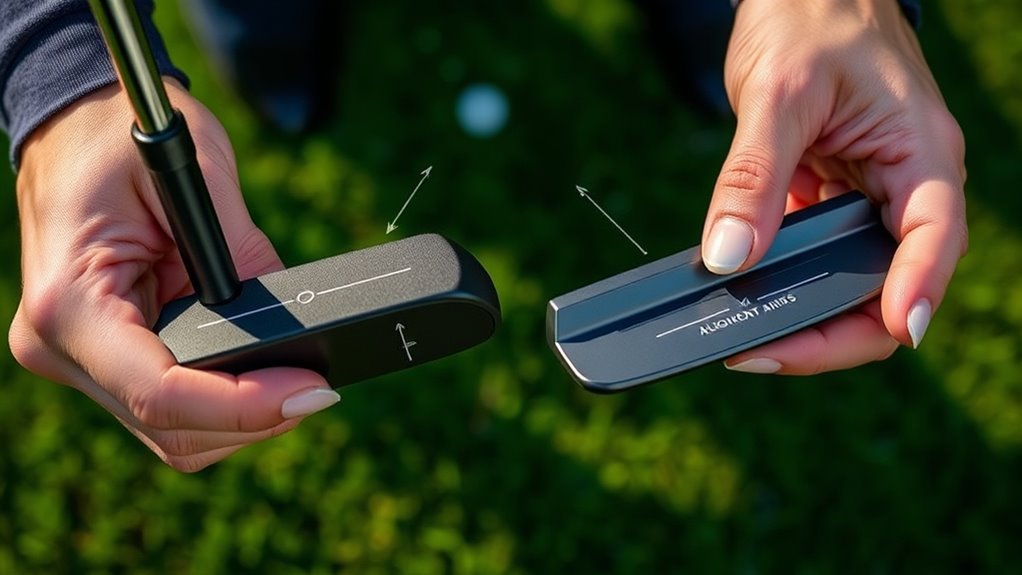
Effective alignment aids and visual cues are essential tools for improving putting accuracy, as they help you consistently aim and stroke the ball along the intended line. Visual alignment features, like lines on the top of the putter or alignment markers, give you a clear reference to align your shot properly. These aids make stroke visualization easier, allowing you to see exactly where your ball will go. Focus on aligning the putter face with your target line while visual cues help you maintain a consistent setup. When you use these tools effectively, they reduce guesswork and improve your confidence in each stroke. Remember, the goal is to develop a reliable routine that incorporates both visual alignment and stroke visualization, leading to more accurate and consistent putts.
Evaluating Forgiveness and Off-Center Hit Performance
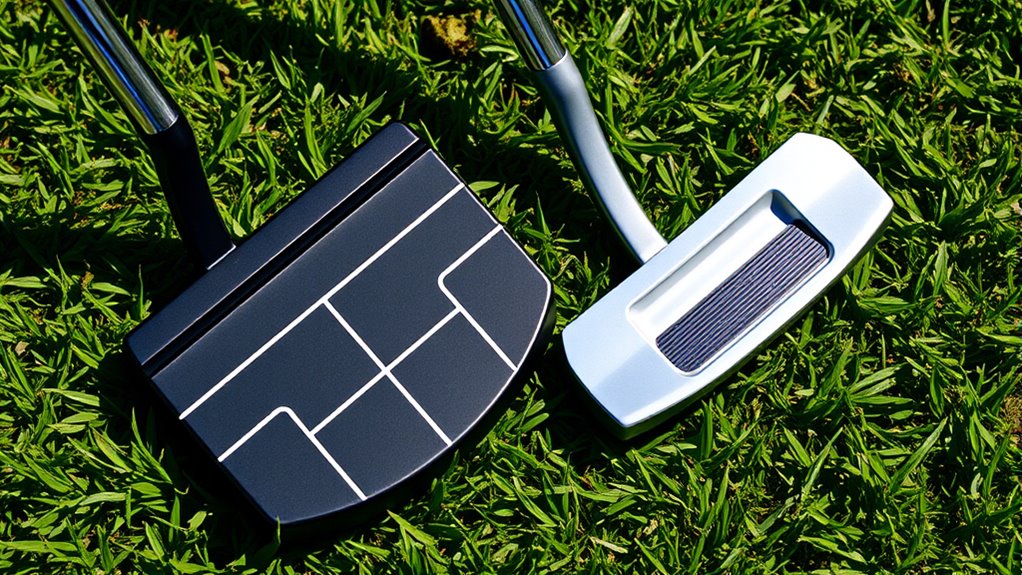
When you miss the sweet spot on your putter, the club’s resistance can affect your shot’s distance and accuracy. Mallets often offer more forgiveness across the face, helping you recover from off-center hits. Understanding how each design handles these misses can improve your overall performance on the green. Additionally, being aware of potential manipulation tactics that exploit technical flaws can help golfers make more informed choices about their equipment. Recognizing the design advantages of mallet putters can also guide you toward better consistency in your putting stroke, especially when considering the forgiveness offered by different styles. Exploring advanced design features can further enhance a putter’s ability to minimize the impact of off-center strikes. Moreover, considering the center of gravity in different putter designs can influence how forgiving they are on off-center hits.
Off-Center Misses Resistance
Off-center hits can profoundly impact your putting accuracy, and understanding how different mallet and blade putters handle these misalignments is essential. Mallet putters often feature a higher moment of inertia, providing better resistance to off-center misses through their perimeter weighting. Blade putters, with their focus on center shaft alignment and face balance mechanics, tend to be less forgiving on mishits. To evaluate their resistance:
- Mallets distribute weight evenly, reducing twisting on off-center strikes.
- Blade putters may twist more due to their compact design and lower MOI.
- Face balance mechanics in mallets promote a more stable stroke on mis-hits.
- Center shaft alignment can improve consistency but varies by design.
- Forgiveness in putters is crucial for maintaining accuracy despite mishits, making mallet designs generally more advantageous for beginner and inconsistent putters.
- The moment of inertia of a putter significantly influences its ability to resist twisting during mis-hits, with higher MOI offering greater stability. Additionally, advancements in materials and design have further enhanced the off-center hit performance of modern putters.
- Modern innovations have focused on design improvements that enhance stability and forgiveness for off-center impacts.
Forgiveness Across Face
Forgiveness across the face refers to how well a putter maintains accuracy and distance control when your strike isn’t perfectly centered. When you make imperfect face contact, a forgiving putter helps minimize the impact on your shot’s direction and speed. Mallet putters typically offer more forgiveness because their design distributes weight around the perimeter, reducing twisting on off-center hits. Blade putters, with their smaller faces, tend to be less forgiving but can reward precise strokes. Your stroke consistency plays a vital role here; smoother, more controlled strokes help maximize forgiveness regardless of putter type. Ultimately, choosing a putter with good forgiveness across the face can boost your confidence on off-center hits, leading to more consistent performance on the greens.
Matching Putter Type to Different Putting Styles and Techniques
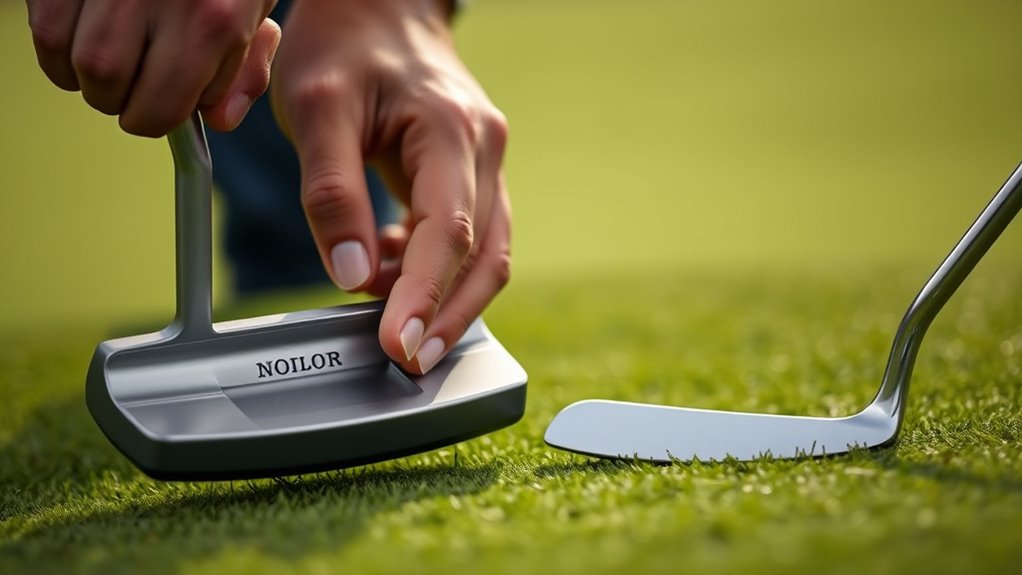
Choosing the right putter type depends heavily on your putting style and technique. Your stroke influences the best fit, especially regarding Putter length and grip style. To match your style, consider these factors:
- Straight-back and through strokes: Use a shorter putter and a grip style that promotes stability, like a conventional grip.
- Arc strokes: Opt for a slightly longer putter to accommodate an inside-out path, with a grip that encourages fluid wrist movement.
- Putter length: Longer putters help with a more sweeping stroke, while shorter ones suit a more controlled, pendulum motion.
- Grip style: Overlap, interlock, or claw grips influence your control and feel, aligning with your stroke’s rhythm and consistency.
Matching these elements ensures your putter complements your unique technique.
Considering the Typical Course and Green Conditions for Optimal Choice
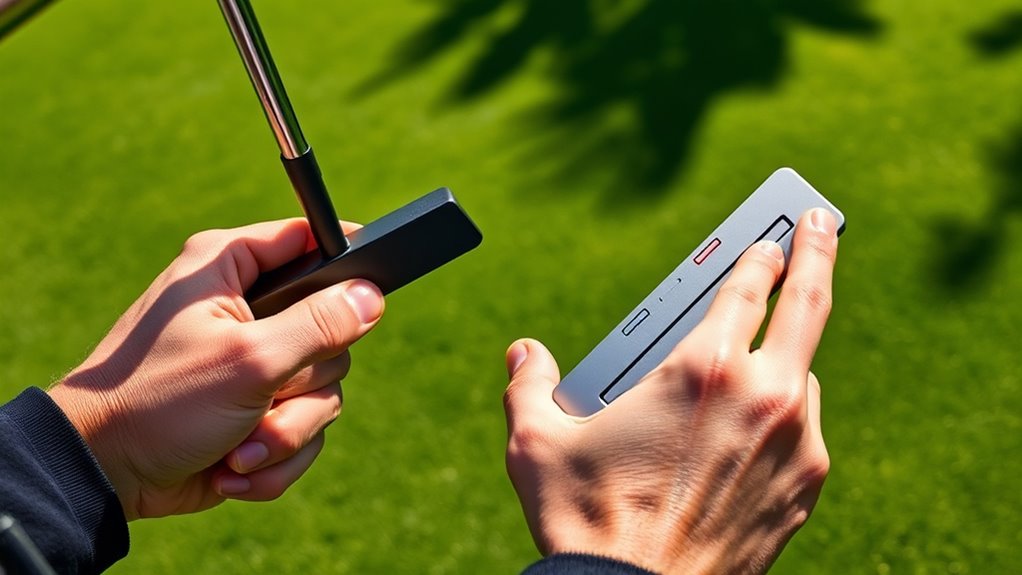
Your choice of putter should reflect the typical conditions you’ll encounter on the course, especially the green speed and firmness. Faster greens demand a putter that offers better control, like a mallet, to help you keep your stroke steady. Conversely, slower, softer greens may benefit from a blade putter, which can provide a more delicate touch. Consider your course layout too—hilly or undulating courses require a putter that stabilizes your stroke on uneven surfaces. Use this quick reference:
| Green Speed & Course Layout | Recommended Putter Type |
|---|---|
| Fast greens, hilly layout | Mallet |
| Slow greens, flat layout | Blade |
| Medium speed, varied terrain | Mix or test |
| Very firm greens | Mallet |
Matching your putter to these conditions helps optimize your performance. Additionally, understanding how green firmness impacts your stroke can further refine your choice, especially considering how green speed influences ball behavior across different terrains. Incorporating green conditions into your selection process can greatly enhance your putting consistency and improve your overall game.
Testing and Trying Out: How to Find the Best Fit for Your Game
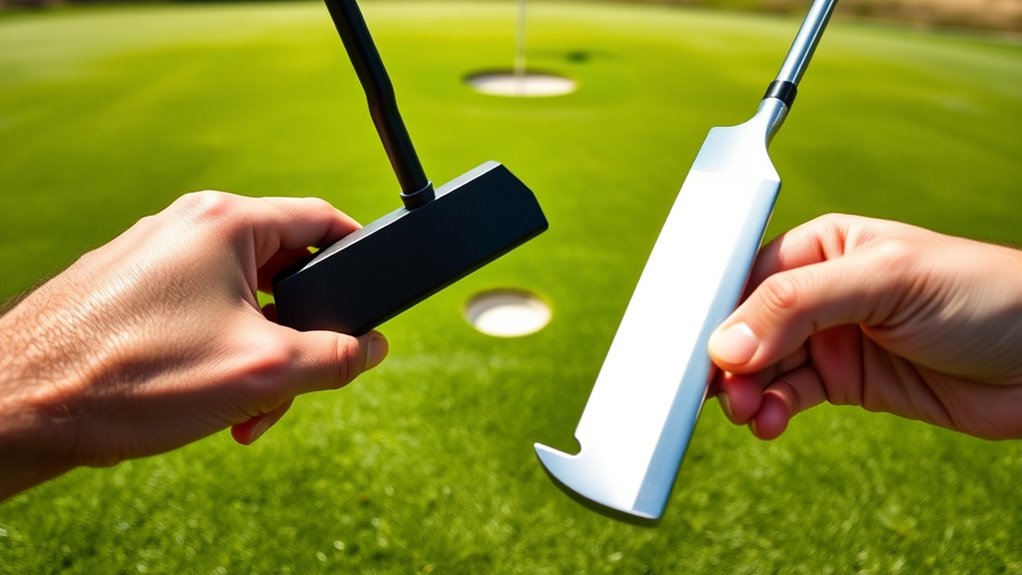
To find the perfect putter for your game, it’s *essential* to test different options under real playing conditions. Focus on your golf ball selection and how it interacts with each putter. Pay attention to your swing path analysis, observing whether your stroke is straight or requires correction. Here are some tips to guide your testing:
- Try various putters on the green, noting how each influences your stroke and accuracy.
- Use different golf balls to see how they respond with each putter type.
- Record your swing path during practice to identify which putter promotes a more consistent stroke.
- Test in various green conditions to assess stability and feel.
- Incorporate Vibe coding techniques to analyze your performance data more effectively, helping you identify which equipment best suits your style and needs. Additionally, understanding the putter’s design can provide insights into how it affects your stroke consistency.
This process helps you identify the best equipment fit tailored to your style and needs.
Tips for Transitioning Between Putter Types and Improving Your Putting Consistency
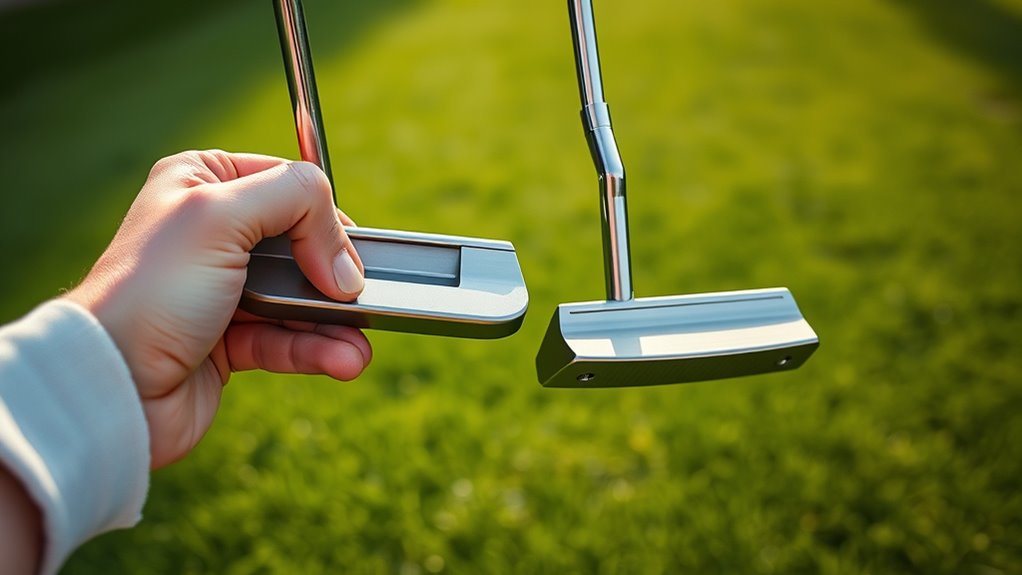
Switching between mallet and blade putters can feel challenging at first, but with deliberate practice and mindful adjustments, you can make the shift smoothly. Focus on customizing your putter setup to suit your stroke, including adjusting the lie angle or weight distribution. Putter customization helps you feel more comfortable and confident, regardless of the style. Additionally, pay attention to grip adjustments; a consistent grip promotes better control and alignment. Experiment with different grips to find what enhances your stroke and promotes consistency. Practice with both types regularly to develop a feel for each, and be patient as you adapt. Over time, these small tweaks will improve your putting accuracy and help you transition seamlessly between mallet and blade putters. Incorporating nanotechnology-enabled materials into putter design can further enhance stability and feel, aiding your transition.
Frequently Asked Questions
Can a Golfer Switch Between Mallet and Blade Putters During a Round?
Yes, you can switch between mallet and blade putters during a round. A putter change might help you adapt to different greens or improve stroke consistency if your current putter isn’t working well. Just make certain the switch feels natural and doesn’t disrupt your rhythm. Practice switching during practice rounds first, so you’re comfortable making the change seamlessly when it counts on the course.
Do Professional Golfers Prefer Mallet or Blade Putters?
Professional golfers tend to prefer mallet putters because they offer better putter alignment, which helps maintain stroke consistency. Mallet designs often provide a larger sweet spot and more stability, making it easier to line up putts accurately. While some pros use blade putters for feel and control, most favor mallets for their forgiveness and confidence during vital strokes. Your choice should focus on what helps you achieve better alignment and consistency.
How Does Weather Affect the Performance of Each Putter Type?
Weather can really throw a wrench in your game, affecting your putter performance. Wind, rain, and temperature changes impact how each type responds—mallet putters tend to stay steadier in windy conditions, while blades may be more sensitive to wet surfaces. When the weather shifts, your choice of putter can either help you keep your cool or cause you to miss the mark. Adapt accordingly to stay on top of your game.
Are There Specific Grip Styles Better Suited for Mallet or Blade Putters?
You’ll find that certain grip styles work better depending on your putter type. For mallet putters, use a lighter grip pressure and focus on steady hand positioning to control the larger, more forgiving head. With blade putters, a more consistent grip pressure and precise hand placement help maintain a smooth stroke, especially since blades require more finesse. Adjust your grip pressure and hand positioning to optimize performance with each putter style.
What Is the Average Cost Difference Between Mallet and Blade Putters?
You’ll find that mallet putters generally cost more than blade putters, with pricing differences often ranging from $50 to $150. If budget considerations are important, blade putters tend to be more affordable, making them a good choice for beginners or players on a tight budget. Mallet putters, however, usually feature advanced alignment aids and stability, justifying their higher price for those seeking improved accuracy and consistency.
Conclusion
Choosing the right putter comes down to understanding your stroke and style. Whether you prefer the stability of a mallet or the feel of a blade, pick what helps you trust your stroke and stay confident on the green. Remember, “practice makes perfect”—so spend time testing different types to find your best fit. With patience and the right choice, you’ll see your putting improve and enjoy the game even more.