
To pick the right shaft flex for your swing speed, start by accurately measuring how fast you swing using a radar or launch monitor. If your swing is faster, a stiffer flex helps you control shots and improve accuracy; if slower, a more flexible flex boosts distance and feel. Pay attention to your swing tempo and consistency, and test different flexes to see what feels best. Keep exploring to find out more about matching your swing for ideal performance.
Key Takeaways
- Match your swing speed with the appropriate shaft flex: slower swings benefit from more flexible shafts, while faster swings require stiffer options.
- Use launch monitors or radar tools to measure your swing speed accurately for precise flex selection.
- Test different flexes during actual swings to assess feel, control, and consistency before making a decision.
- Recognize signs of a flex mismatch, such as inconsistent shots or off-target ball flight, and adjust accordingly.
- Consult with professionals or use fitting services to ensure your shaft flex complements your swing mechanics and improves performance.
Understanding Shaft Flex and Its Role in Your Swing

Understanding shaft flex is essential because it directly influences how your golf swing feels and performs. The shaft material, whether graphite or steel, impacts the overall feel and response during your swing. Flex refers to how much the shaft bends when you apply force, affecting your shot distance and accuracy. A shaft that’s too stiff may feel rigid, making it harder to generate clubhead speed, while a shaft that’s too flexible can cause inconsistent shots. Your swing speed plays a critical role in determining the right flex; faster swings typically benefit from stiffer shafts, while slower swings may require more flexible options. Knowing how shaft material interacts with flex helps you choose equipment that complements your swing mechanics, leading to better control and more consistent results. Additionally, understanding European cloud innovation can inspire more sustainable and secure solutions in your golfing equipment or training technology.
The Different Types of Shaft Flex and What They Mean
Shaft flex categories describe how much a golf shaft bends during your swing, influencing both shot distance and accuracy. Understanding shaft flex types is essential for matching your swing style, as each flex classification offers different performance benefits. The common flex options include Regular, Stiff, and Extra Stiff, with some manufacturers adding categories like Senior and Ladies. Regular flex suits most average swing speeds, offering a balanced combination of control and distance. Stiff flex is better for faster swing speeds, providing more control and stability. Extra Stiff is designed for very fast swingers who need minimal shaft bend. Knowing these flex classifications helps you choose the right shaft to optimize your performance, ensuring your shots are accurate and consistent. Understanding shaft flex is crucial for selecting the optimal equipment for your game.
How Swing Speed Affects Your Choice of Shaft Flex

Your swing speed directly influences the type of shaft flex that will help you hit more accurate and consistent shots. If you have a faster swing, you’ll need a shaft with stiffer shaft stiffness to prevent the club from twisting or tumbling during your swing. Conversely, if your swing speed is slower, a more flexible shaft will help you generate better tempo and transfer energy efficiently. Proper club fitting considers your swing speed to match you with the right flex, ensuring ideal control and distance. Recognizing the importance of body anatomy and flexibility can further improve your overall setup and experience. Additionally, selecting the correct flex can also enhance your shot accuracy, leading to more enjoyable rounds. Choosing the wrong flex can lead to inconsistent shots and less accuracy. By understanding how your swing speed impacts shaft stiffness, you set yourself up for better performance and more enjoyable rounds. Additionally, consulting with a professional or using club fitting tools can help determine the optimal flex for your unique swing characteristics.
Signs You Might Need a Different Flex
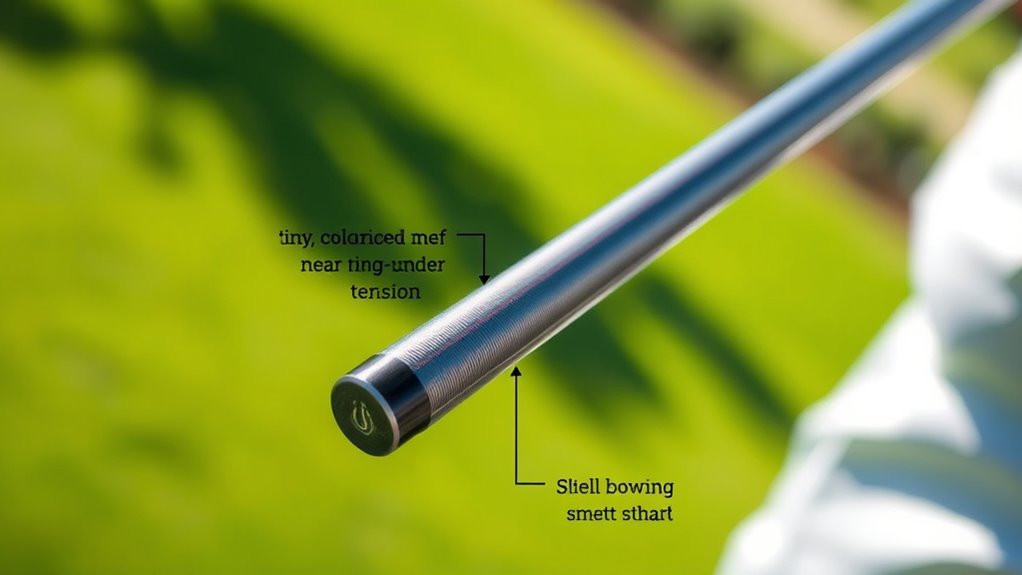
If your shots feel inconsistent or unpredictable, it might be a sign that your current shaft flex isn’t the right fit. Check your golf club aesthetics—dents or misaligned shafts could signal wear or improper flex selection. Conduct a swing tempo analysis; if your swing feels rushed or too slow, your shaft might not be matching your rhythm. A flex that’s too stiff can cause your shots to balloon or slice, while too flexible a shaft can lead to inconsistent contact. You may also notice your ball flight is off, or you struggle to control your shots. These signs indicate it’s time to reassess your shaft flex. Finding the right flex enhances your swing tempo, improves accuracy, and boosts confidence on the course. Additionally, understanding your swing speed can help you select the optimal flex for better performance.
Measuring Your Swing Speed Accurately
To get an accurate measure of your swing speed, using a swing speed radar is the most reliable method. If you don’t have access to one, there are alternative ways to estimate your speed, like using smartphone apps or practicing with a speed stick. Knowing your true swing speed helps you choose the right shaft flex for your game.
Using a Swing Speed Radar
Using a swing speed radar is one of the most straightforward ways to measure your clubhead speed accurately. As you stand on the course or driving range, the radar captures your swing in real time, providing immediate feedback. To get precise readings, confirm your grip size is comfortable, as an improper grip can affect your swing mechanics and speed. Also, consider the golf ball materials you’re using, since softer or harder balls can influence your swing and ball flight, indirectly impacting speed measurements. Position the radar properly, usually about 3-5 feet in front of you, and make sure to hit several shots for consistency. This method allows you to tailor your club flex choice accurately, matching your swing speed with the right shaft for ideal performance.
Alternative Measurement Methods
While swing speed radars are popular, there are several alternative methods to measure your swing speed accurately. One option is using alternative metrics like launch monitors, which provide detailed data on ball speed and clubhead velocity. These devices often incorporate biomechanical analysis, offering insights into your swing mechanics and efficiency. You can also explore video analysis tools that track your swing frame-by-frame, allowing you to estimate swing speed based on club movement over time. Additionally, integrating lush greenery into your practice area can help create a calming environment to improve your focus during swing analysis sessions. Incorporating proper equipment setup can further enhance measurement accuracy by ensuring consistent conditions during testing. These methods help you understand your swing dynamics beyond simple radar readings, giving a more extensive picture of your performance. Whether you choose advanced launch monitors or video analysis, these alternative measurement methods ensure you get precise, actionable data to optimize your shaft flex selection.
Matching Shaft Flex to Your Playing Style and Skill Level
Choosing the right shaft flex depends heavily on your playing style and skill level, as these factors influence how much your swing speed and tempo impact ball control and shot accuracy. A flexible shaft might suit a more aggressive swing, while a stiffer shaft benefits a controlled, consistent tempo. Your preferred shaft material also plays a role, affecting feel and feedback. Additionally, grip size influences your grip pressure, which can alter swing dynamics and control. When matching shaft flex, consider:
- Swing speed and tempo
- Playing style (aggressive vs. controlled)
- Shaft material (graphite or steel)
- Grip size and comfort
- Desired ball flight and control
- Understanding shaft flex can help you make more informed choices tailored to your game.
Aligning these factors ensures better shot consistency and overall performance. Always test different flexes to find what feels most natural for your game.
The Impact of Shaft Flex on Shot Distance and Accuracy

Ever wonder how shaft flex influences your shot distance and accuracy? It all comes down to how the flex affects your swing dynamics. A flexible shaft allows for greater clubhead lag, increasing golf ball compression and potentially boosting distance. However, if your swing is too aggressive, it may lead to inconsistent contact and reduced accuracy. Grip pressure plays a role here, too—squeezing the club too tightly can hinder your swing’s natural flow, decreasing shot control. A stiffer shaft can promote more stable swings, improving accuracy but possibly sacrificing some distance if your swing speed isn’t matched properly. Ultimately, the right shaft flex helps you optimize energy transfer, balancing shot distance with precision. Understanding this impact lets you tailor your equipment for better performance. Additionally, shaft flex options are designed to match different swing speeds, ensuring you get the best fit for your game.
Tips for Testing and Choosing the Right Shaft Flex

Finding the right shaft flex begins with testing how different options feel during your swing. Visit a golf course or practice area where you can try various shafts with your golf accessories. Pay attention to how the shaft responds—whether it feels too stiff or too flexible. To get an accurate sense, consider these tips:
Test different shafts on the course to find the perfect flex for your swing.
- Swing a few shots with each shaft to assess comfort and control
- Use a launch monitor if available for data on ball flight
- Test shafts with similar flex ratings to your current setup
- Observe how the shaft reacts during different swing speeds
- Seek feedback from experienced golfers or PGA professionals
- Incorporating consistent feedback helps track your progress and refine your choice.
Common Mistakes to Avoid When Selecting Shaft Flex
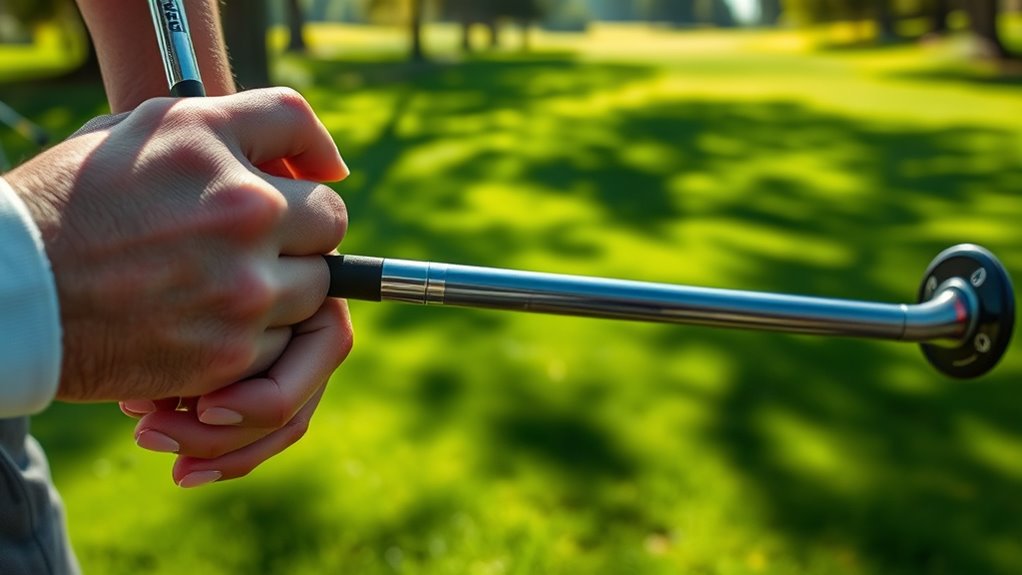
Many golfers make the mistake of selecting shaft flex based solely on their current driver or anecdotal preferences, without properly testing how different options feel during their swing. Relying only on brand comparisons or fitting for your current setup can lead to mismatched flex that hampers performance. Avoid choosing a shaft based on assumptions about golf club maintenance or brand reputation; instead, test various flex options to find what truly suits your swing speed and style. Remember, a shaft that’s too stiff or too flexible can cause inconsistent ball flight and reduced accuracy. Take the time to evaluate your options carefully, and don’t settle for just one brand or model without trying different flexes. This approach helps ensure peak performance and longevity of your clubs.
Frequently Asked Questions
Can Shaft Flex Influence My Golf Swing Tempo?
Yes, shaft flex can influence your golf swing tempo. If your shaft is too stiff, you might feel rigid, affecting your swing consistency and making your stance less fluid. Conversely, a too-flexible shaft can cause a quick, jerky tempo. Finding the right flex helps you maintain a smooth swing tempo, promotes better stance stability, and improves overall swing consistency, leading to more accurate shots.
Does Shaft Flex Impact Ball Spin and Trajectory?
Yes, shaft flex impacts ball spin and trajectory. A flexible shaft can increase ball spin, helping you get more lift and control, especially on shorter shots. Conversely, a stiffer flex reduces spin, promoting a more penetrating trajectory for longer shots. Don’t worry if it feels complex—choosing the right shaft flex aligns with your swing speed, helping you optimize ball flight. Experimenting with different flexes can make a noticeable difference.
How Often Should I Reassess My Shaft Flex Needs?
You should reassess your shaft flex needs during golf club fitting sessions, especially if your swing speed or style changes. Regularly checking guarantees ideal performance. Consider shaft material choices like graphite or steel, which can affect flexibility and feel. If you notice inconsistent shots or reduced distance, it’s a good sign to revisit your shaft flex. Doing this annually or after significant swing adjustments helps keep your game sharp.
Are There Specific Shaft Flex Recommendations for Women Golfers?
Women’s golf requires specific shaft flex suggestions to suit your swing style. Typically, women benefit from softer flex options like Ladies or Senior shafts, which promote smoother swings and better control. Customization is key—visit a professional for shaft customization tailored to your unique swing. By choosing the right flex, you’ll boost your confidence, craft consistent shots, and conquer courses with comfort and clarity.
Can Custom Shaft Flex Options Improve My Overall Game?
Yes, custom shaft flex options can improve your overall game. By choosing a shaft with the right custom shaft material and ensuring shaft flex compatibility with your swing, you’ll experience better control, increased distance, and more consistent shots. Custom options allow you to tailor your clubs to your unique swing style, helping you play more confidently and improve your performance on the course.
Conclusion
Choosing the right shaft flex is like finding the perfect dance partner—when in sync, your swing flows effortlessly, boosting both distance and accuracy. By understanding your swing speed and testing different options, you’ll set yourself up for smoother, more confident shots. Don’t rush the process; think of it as tuning a fine instrument—small adjustments make a world of difference on the course. Get it right, and watch your game hit new heights.