
Using hand-me-down clubs can seem like a good deal, but hidden costs like internal wear, worn shafts, and deteriorated grips could be holding back your game. These issues decrease shot accuracy, reduce distance, and make your swing less consistent. Plus, older clubs may not perform as well as new ones or have the latest technology. Keep exploring to discover how choosing the right clubs can boost your game and what signs to watch for in second-hand gear.
Key Takeaways
- Worn clubs with dents, rust, or damaged shafts can reduce shot accuracy and consistency.
- Hidden internal damage may lead to unpredictable performance and increased frustration.
- Used clubs often lack the latest technological features that improve distance and control.
- Poorly fitted second-hand clubs can hinder your swing and overall game improvement.
- Regular inspection and professional fitting are essential to ensure used clubs support rather than hinder your play.
The Hidden Costs of Buying Used Clubs
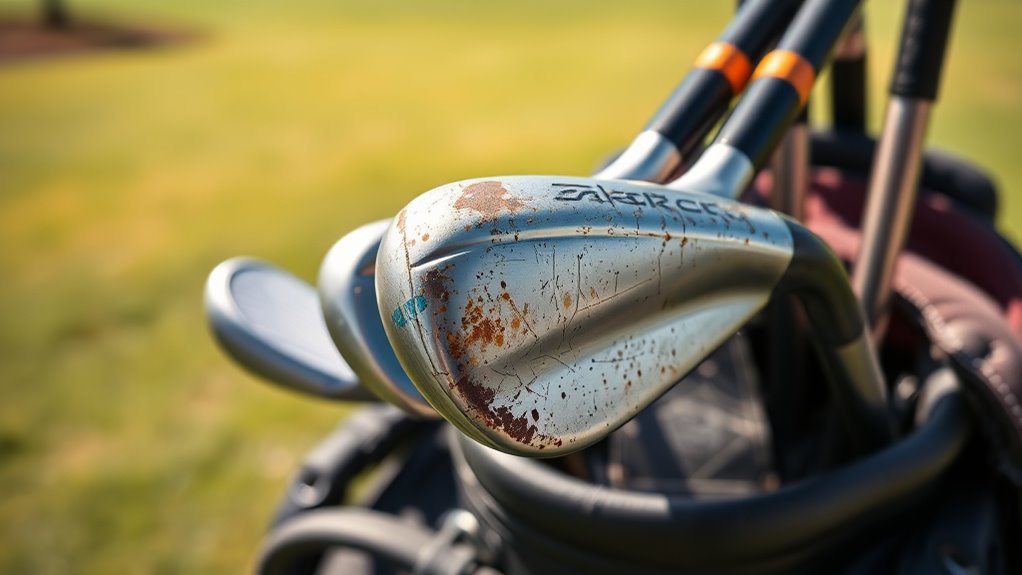
While buying used golf clubs can save you money upfront, it often comes with hidden costs that can affect your game and budget. One major concern is club longevity; older clubs may not last as long as new ones, leading to more frequent replacements. Additionally, used clubs typically have a lower resale value, making it harder to recoup your investment if you decide to upgrade later. Even if a club looks good, internal wear or damage might reduce its effectiveness over time, impacting your performance. These hidden costs can add up, making your initial savings less significant in the long run. Carefully weighing the potential decline in club longevity and resale value can help you determine if buying used is truly cost-effective for your game. Considering club condition and wear is essential when evaluating used clubs’ true value, especially since material durability varies among different club types. Moreover, understanding how technology updates influence the performance gap between used and new clubs can help you make a more informed decision. Additionally, evaluating internal damage or wear can prevent unexpected performance issues that might arise from hidden defects.
How Wear and Tear Affects Performance
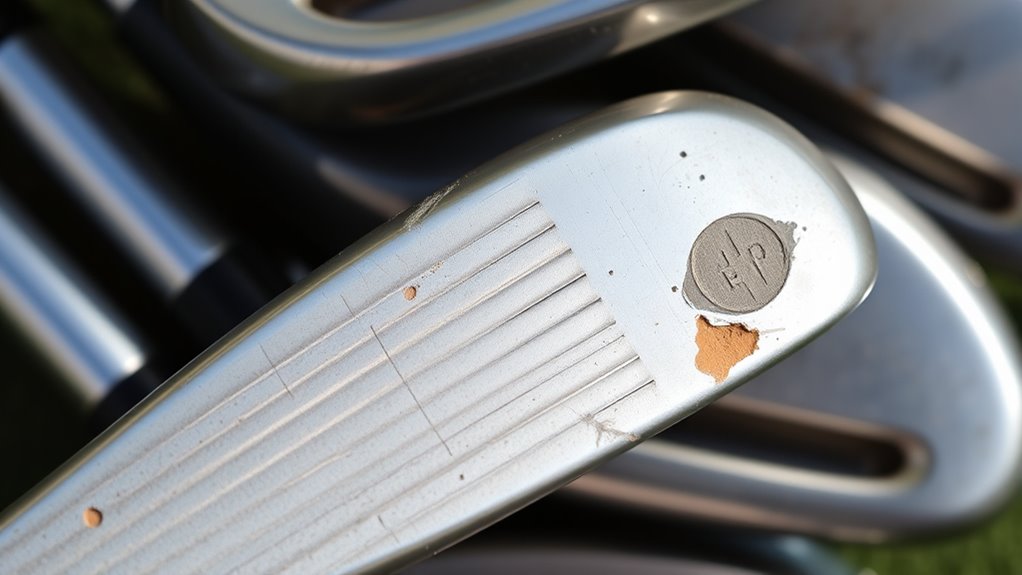
Wear and tear on used golf clubs can considerably diminish your game’s performance by altering key features like clubface integrity, shaft flexibility, and grip condition. Over time, clubface dings or dents reduce shot accuracy, while a worn shaft can lose its responsiveness, affecting your swing consistency. Grip deterioration is particularly impactful, as a worn or slick grip hampers your control and confidence during swings. These issues directly shorten club longevity and compromise your overall performance. Ignoring signs of wear can lead to poor shot results and increased frustration. To maintain peak play, regularly inspect your clubs for signs of wear, especially grips, and consider replacements or refurbishments when necessary. Proper maintenance ensures your clubs perform at their best, helping you get the most out of each round. Additionally, understanding total-cost clarity of your clubs and their maintenance can help you make smarter decisions about when to replace or refurbish them for optimal performance. Keeping an eye on wear indicators can help prevent unexpected failures and extend the lifespan of your clubs. Regularly assessing the impact of wear on your equipment can also inform more cost-effective choices over time. Using proper maintenance techniques can further preserve club condition and performance.
The Benefits of Custom Fitting and New Equipment
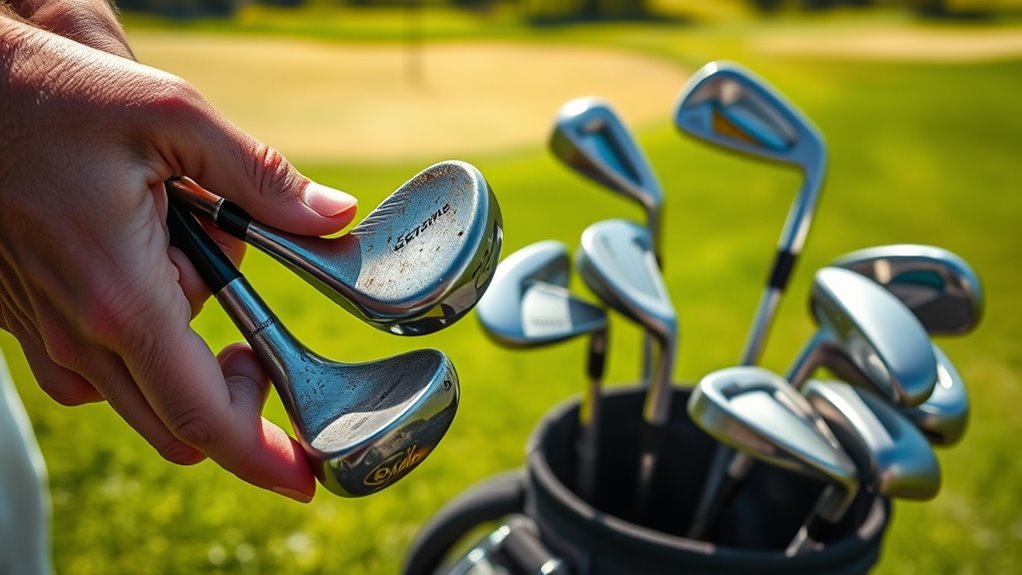
Investing in custom fitting and new equipment can markedly enhance your golf game by ensuring your clubs match your unique swing and body type. Properly fitted clubs optimize your swing mechanics, leading to better accuracy and distance. Additionally, choosing new clubs can improve golf club longevity, as modern technology offers more durable materials. When you invest in quality new equipment, you also boost resale value, should you decide to upgrade later. Advancements in club technology can also motivate you to pursue better equipment options. Moreover, utilizing innovative cloud solutions can streamline your equipment management and improve your overall golf experience.
Identifying Quality Second-Hand Clubs
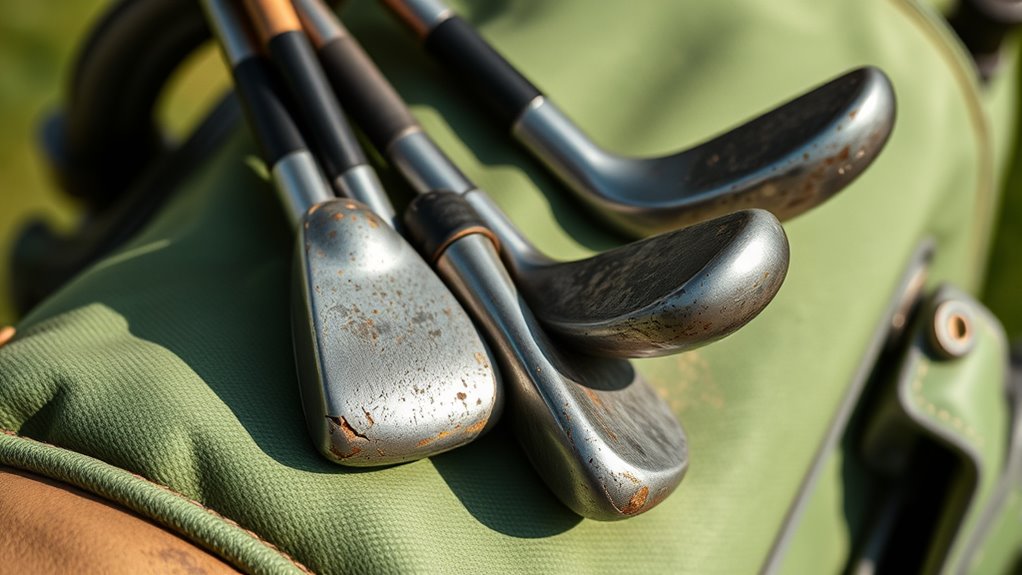
Finding quality second-hand clubs can be a smart way to upgrade your gear without breaking the bank. Start by inspecting vintage shafts, which can be made of steel or graphite. Look for any signs of rust, cracks, or warping, as these indicate weakness. Check the shaft’s flexibility and verify it matches your swing style. Grip deterioration is another key factor; if grips are cracked, slippery, or heavily worn, they’ll need replacing. Feel the club for any looseness or unusual noise, which could signal internal damage. Also, examine the clubhead for dents, rust, or excessive wear, especially around the face and hosel. By carefully evaluating these elements, you’ll better identify clubs that are still in good shape and suitable for your game. Additionally, understanding the quality of materials used in the club’s construction can help determine its durability and overall performance. Paying attention to the material composition can also reveal whether a used club is made from resilient materials that will stand the test of time and provide consistent play. Conducting a comprehensive assessment of wear can further ensure you select clubs that will endure regular use and maintain their effectiveness over time. Regularly checking for corrosion can help prevent unexpected failures during play, especially when considering the impact of body piercing materials on durability and safety.
Tips for Choosing the Right Clubs for Your Game
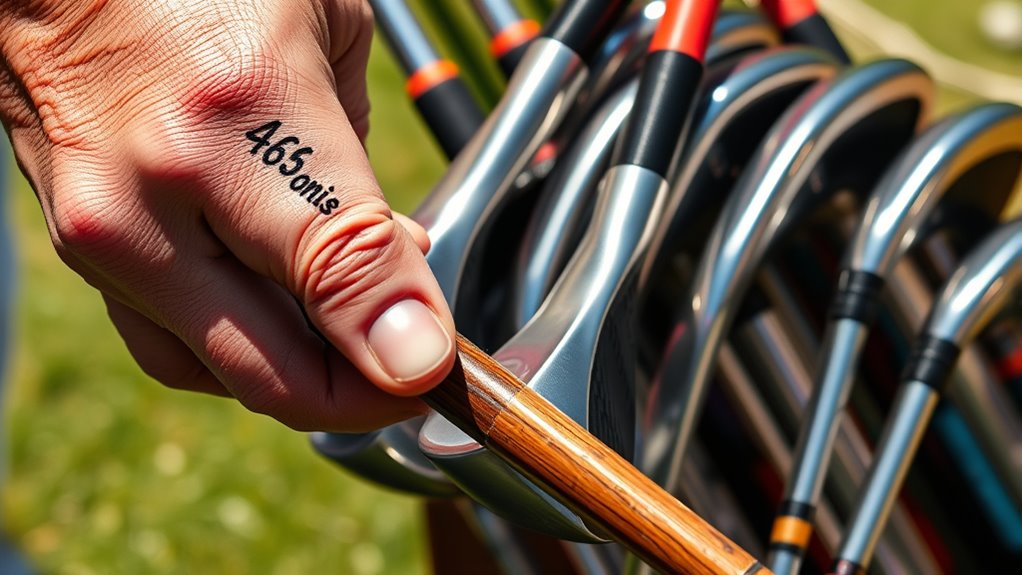
Choosing the right clubs begins with understanding your own game and what you need to improve. A proper club fitting can help identify the best shaft, flex, and length for your swing. Keep budget considerations in mind, as quality doesn’t always mean the most expensive. When selecting clubs, consider these key points:
Choosing clubs that fit your game and budget ensures better performance and enjoyment on the course.
- Focus on clubs that match your skill level and playing style
- Prioritize a professional club fitting for personalized recommendations
- Balance quality with affordability to avoid overspending
- Test different clubs to feel what suits you best
- Remember, well-fitted used clubs can outperform new, ill-suited equipment
- Additionally, understanding club fitting can significantly enhance your performance and enjoyment on the course. As the demand for AI software engineer jobs grows, the importance of selecting equipment that complements your skillset becomes even more crucial to maximize your game.
Frequently Asked Questions
How Can I Tell if Used Clubs Are Right for My Skill Level?
You can tell if used clubs are right for your skill level by considering a proper club fitting, which helps guarantee the clubs match your swing and strength. Try them out first to see how they feel and perform. Also, check the resale value; if they hold value well, it’s a good sign they’re suitable for your game. Avoid clubs that don’t feel comfortable or don’t improve your shot consistency.
Do Used Clubs Limit My Potential Improvement?
A wise golfer once said, “You get what you pay for.” Used clubs can limit your potential improvement if they lack proper club longevity or don’t match your skill level, making it harder to refine your swing. Plus, their resale value might decline if they’re worn or outdated. While affordable, upgrading to new clubs tailored to your game can boost confidence, consistency, and long-term progress.
Are There Specific Brands Better for Second-Hand Golf Clubs?
Yes, some brands are better for second-hand golf clubs due to their reputation for durability and resale value. You should look for trusted names like Titleist, Callaway, and TaylorMade, as they tend to hold their value and perform well even when used. These brands’ strong reputation means you’ll likely find quality clubs that can enhance your game without sacrificing resale value, making your purchase more worthwhile.
How Often Should I Replace My Used Clubs?
You should consider replacing your used clubs every 3 to 5 years, depending on their club longevity and how often you play. Regular use can lead to wear and diminished performance, so tracking signs like loose grips or worn-out shafts helps determine your replacement frequency. Upgrading when your clubs no longer function effectively ensures you maintain a consistent, confident swing and avoid holding back your game.
Can Used Clubs Cause Injury or Discomfort During Play?
Imagine swinging a club with a damaged club head or worn grip; your shot feels off, and discomfort sets in. Used clubs can cause injury or discomfort if they have club head damage or grip wear, leading to poor control and strain. You might experience blisters or joint pain, risking longer-term injury. Always inspect your clubs carefully—replace or repair damaged grips and club heads to protect your game and your health.
Conclusion
Using second-hand clubs might save you money, but it could also hold back your game. Studies show that players using new, properly fitted clubs often see a 20% improvement in accuracy. So, while it’s tempting to buy used, investing in quality, custom-fitted clubs can boost your confidence and performance on the course. Don’t let worn-out gear limit your potential—your best game might just be a new set away.