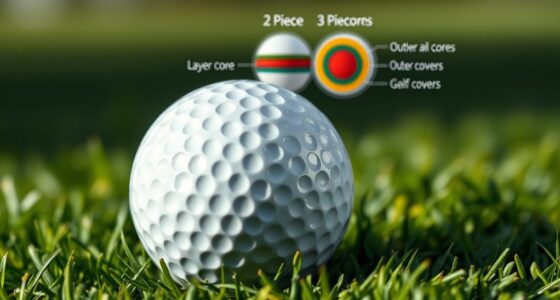

Golf clubs are numbered mainly to indicate their loft and design, helping you understand each club’s purpose and ideal distance. The numbers don’t reflect power or length but show how high the ball will launch. Higher numbers are for shorter, more controlled shots, while lower numbers hit longer distances. Knowing what these numbers mean can improve your club selection. Keep exploring to get a clearer picture of how these numbers influence your game.
Key Takeaways
- Golf club numbers mainly indicate the loft and design of the iron, not its power or distance.
- The numbering system helps golfers identify each club’s purpose and typical shot trajectory.
- Standardized numbering aligns with specific loft angles, aiding consistent club selection.
- Higher numbers generally have more loft, resulting in higher, shorter shots, but do not necessarily hit farther.
- Understanding the numbering helps players choose appropriate clubs based on shot requirements and play style.
The Meaning Behind the Numbers
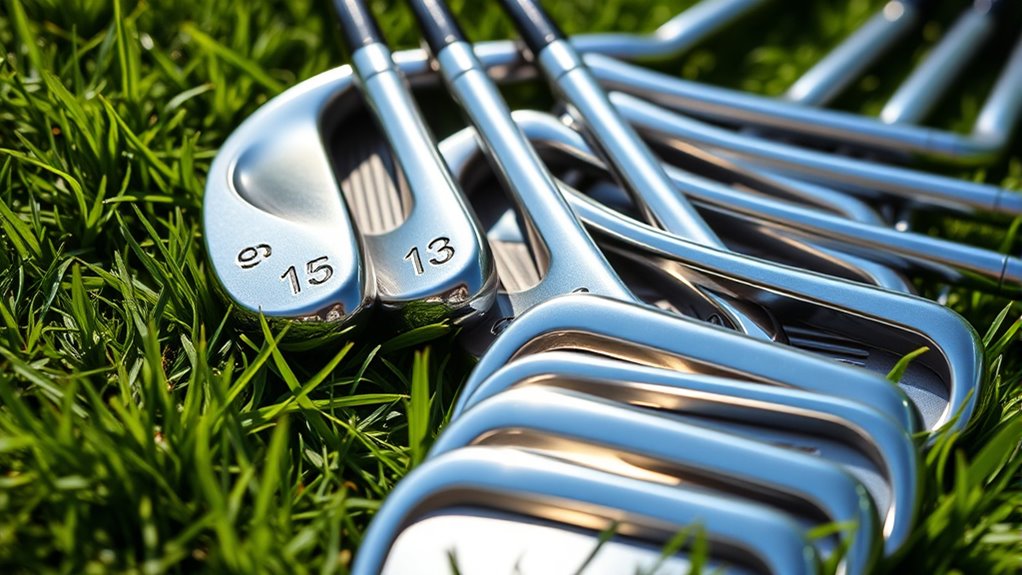
Understanding what the numbers on golf clubs mean can seem confusing at first, but once you know the basics, it becomes much easier to choose the right club for each shot. The numbers usually indicate the loft angle and the club’s purpose, helping you select the right tool for distance and precision. Grip sizes also matter; smaller grips suit players with smaller hands, while larger grips can improve comfort and control. Shaft materials, like steel or graphite, influence performance and feel, with graphite offering lighter weight and better vibration absorption. These factors work together to affect how you handle the club, but the numbers primarily guide you on club type. By understanding these details, you can make smarter choices tailored to your game.
How Club Length Affects Performance
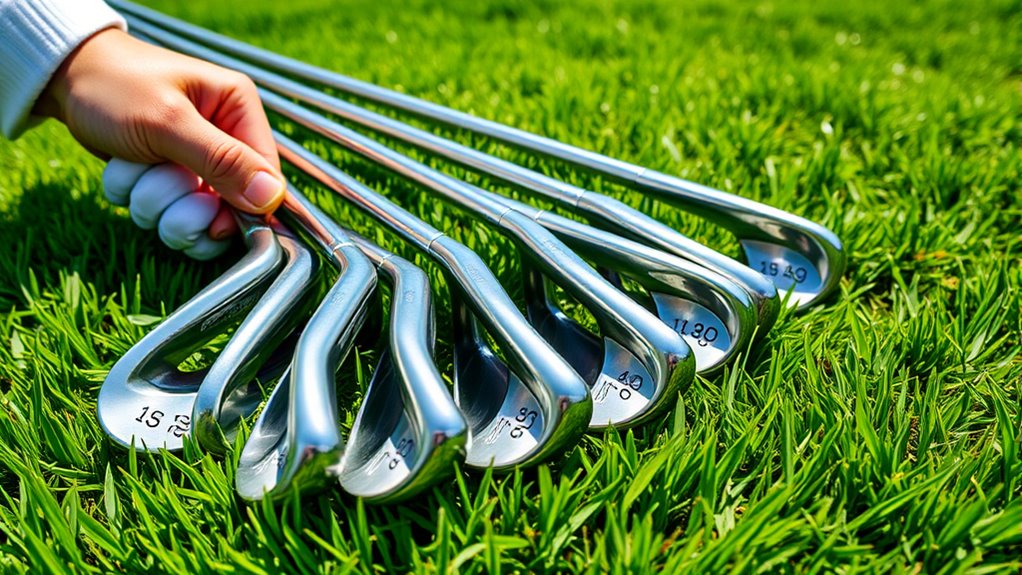
The length of your golf club directly influences your swing and shot accuracy. A longer club can generate more power but may diminish control, while a shorter one offers better precision. The clubhead shape also plays a role; streamlined shapes promote faster swings, impacting distance and accuracy. Additionally, your grip size complements club length; a proper grip ensures better control and reduces strain during swings. If your club is too long, you might struggle with consistency, leading to mishits. Conversely, a shorter club can improve your accuracy but may sacrifice some distance. Understanding how club length affects your performance helps you select the right clubs, optimize your swing mechanics, and ultimately improve your game. Proper fitting is key to tailoring club length to your unique style. Proper fitting ensures that your clubs are matched to your body size and swing, maximizing comfort and effectiveness. Recognizing the importance of club fitting can significantly impact your overall game performance and enjoyment on the course. Additionally, considering body measurements helps in selecting clubs that suit your physical attributes, leading to better control and comfort during play.
The Relationship Between Loft and Distance
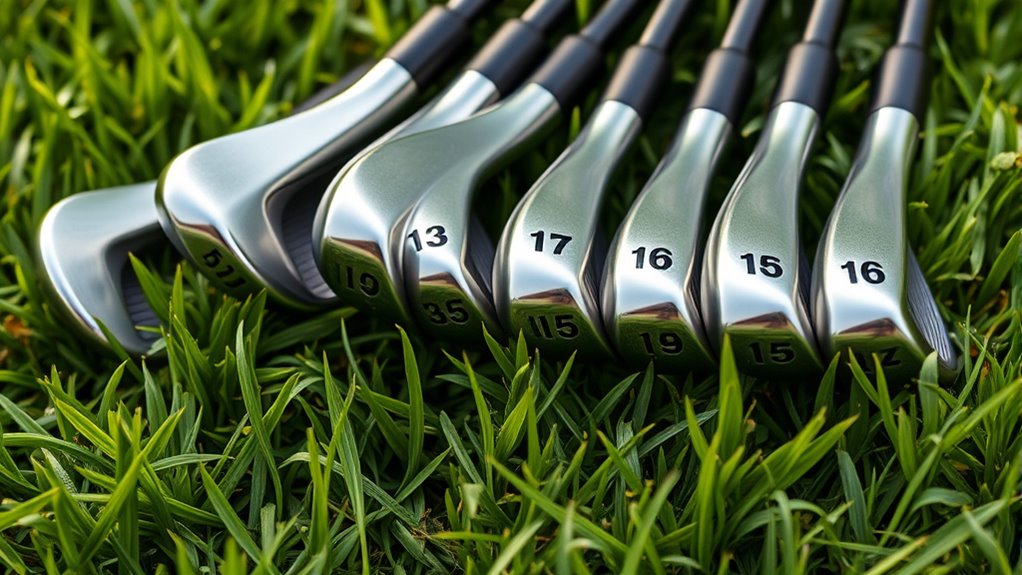
Loft angle plays a crucial role in determining how far your golf ball travels after impact. Higher lofts launch the ball higher and typically result in shorter distances, while lower lofts produce lower, longer shots. This relationship helps you choose the right club for your desired distance and trajectory. Additionally, the aesthetic design of golf clubs, including the loft markings, often align with brand naming conventions, making it easier to identify each club’s purpose. For example, a 7-iron generally has a loft around 34-36 degrees, balancing distance and control. Understanding how loft impacts distance allows you to optimize your club selection on the course, ensuring you hit accurate shots with enough power. Recognizing these subtle differences enhances your overall game and confidence. Moreover, the contrast ratio of your equipment can influence how well you see the ball against different backgrounds, especially in varying lighting conditions. Being aware of the club specifications can further improve your shot accuracy and consistency. Knowing the player’s swing speed can also help tailor club selection to maximize performance.
Understanding Lie Angles and Their Impact
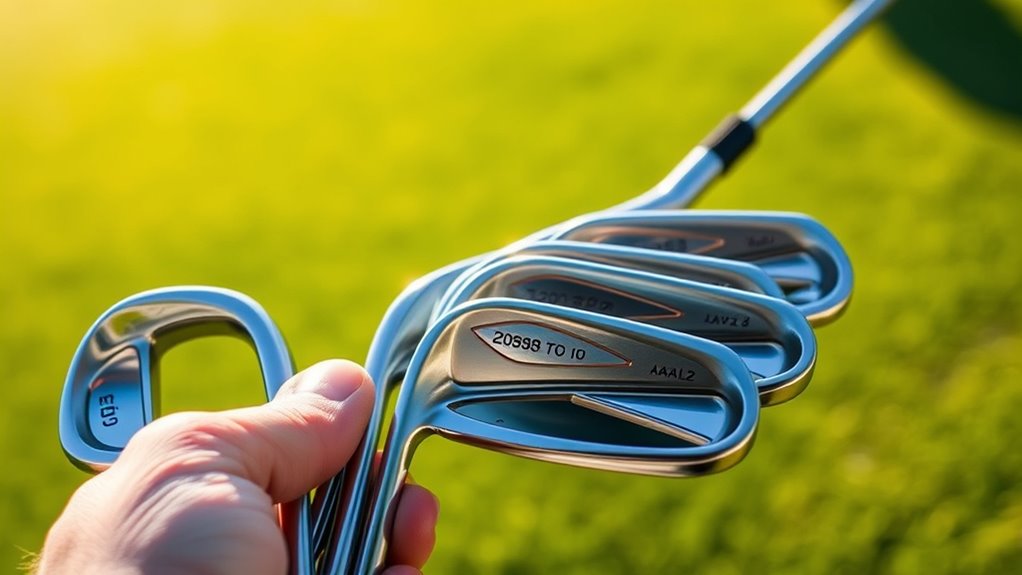
Lie angles are essential because they affect how your club makes contact with the ball and influence shot accuracy. If the lie angle is too upright or flat for your swing, you’ll notice inconsistent strikes and directional issues. Proper club fitting helps determine the ideal lie angle tailored to your stance and swing path. When the lie angle matches your unique posture, your clubhead makes cleaner contact, leading to straighter shots and better control. A misaligned lie angle can cause the clubface to twist at impact, resulting in hooks or slices. Understanding this aspect of club fitting guarantees your clubs are optimized for your game, helping you improve accuracy and consistency. Ultimately, the right lie angle enhances your confidence on the course.
The Evolution of Iron Numbering Systems
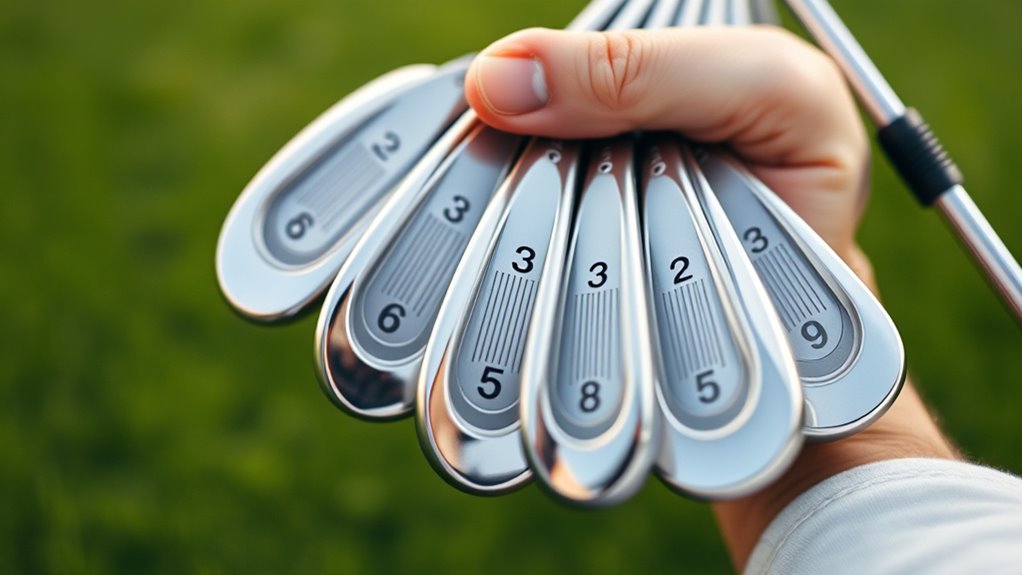
Over time, the way golf clubs are numbered has changed considerably, reflecting advances in club design and player needs. The historical progression shows that early irons used a simple, sequential numbering system but lacked consistency across manufacturers. As manufacturing standards improved, standardized numbering emerged, making it easier for players to comprehend each club’s purpose. In the early 20th century, manufacturers began aligning their systems with functional differences, leading to more uniformity. This evolution allowed for better communication regarding club distances and lofts. Today, modern manufacturing standards ensure that each iron number corresponds to specific loft angles, improving consistency and player confidence. The progression of these systems highlights how technological advances and industry standards shape the way you select and understand your golf clubs. Additionally, understanding club lofts helps players choose the right clubs for their game and optimize their performance, especially as manufacturing standards become more precise.
Choosing the Right Number for Your Game
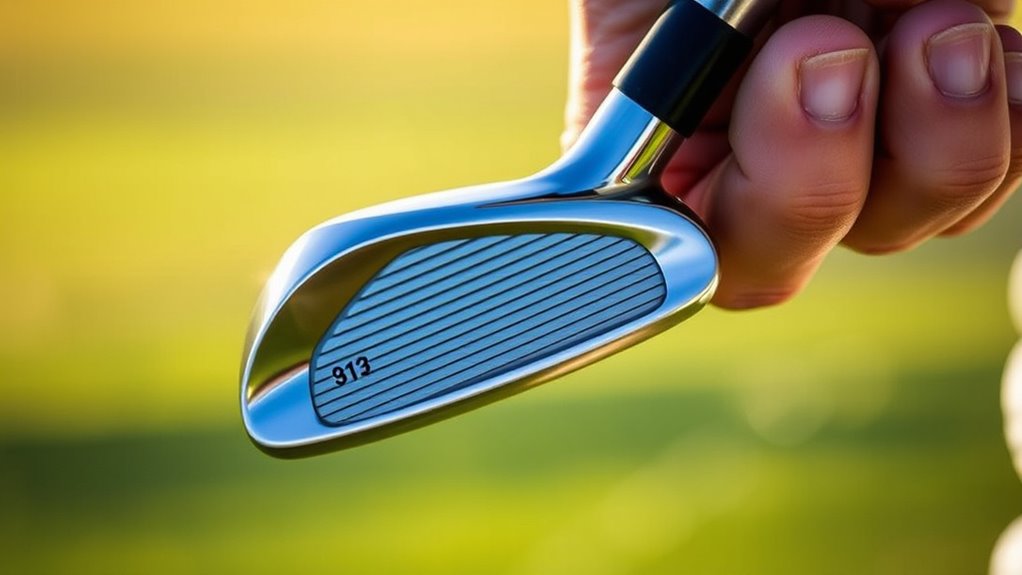
Choosing the right club number depends on your skill level, shot distance, and play style. You need clubs that match how far you can hit and how you prefer to approach the game. When you align these factors, your chances of improving and enjoying each round increase. Additionally, understanding battery performance metrics can help you select equipment that maintains optimal power and efficiency during play. Being aware of your equipment specifications can also contribute to better decision-making on the course. Being mindful of power management ensures your gear functions reliably throughout your game. Recognizing device compatibility can further enhance your overall equipment performance and reliability during play. Moreover, knowing how maintenance and care impact your clubs’ longevity can help you keep your gear in top condition for consistent performance.
Skill Level Considerations
Selecting the right golf club number depends heavily on your skill level, as it influences both your confidence and accuracy on the course. If you’re a beginner, opt for lower-numbered irons (like 7 or 8) that offer more forgiveness. Intermediate players might choose mid-range clubs (5 or 6) for better control. Advanced golfers often prefer higher-numbered clubs (3 or 4) for longer shots. Consider these points:
- Beginners should focus on clubs that support proper golf etiquette and ease of play.
- Regular club maintenance ensures your clubs perform well, regardless of skill level.
- As your skills improve, gradually shift to different club numbers to challenge yourself.
- The right club choice boosts confidence, helping you enjoy the game and develop your skills faster.
- Understanding the numbering system can help you make more informed decisions about your club selection, especially as you learn more about club specifications and performance.
- Staying informed about the latest AI tools can also provide useful insights to improve your game and equipment choices.
Shot Distance Factors
Your shot distance plays a crucial role in determining which golf club number is right for you. If you typically hit farther, you’ll need clubs with higher numbers; shorter distances call for lower numbers. Factors like golf ball types and your swing speed influence your shot distance. Using heavier barbell weights as a metaphor, consider how different club “weights” impact your swing and control. For example, softer golf balls may reduce distance but increase accuracy, while harder balls can maximize distance. Additionally, club numbering systems help golfers select the appropriate club for each shot, making your game more consistent. Understanding the club selection process can also help you make better choices on the course. Proper club selection, based on accurate distance measurement and understanding of club loft angles, can significantly improve your scoring. Recognizing the role of distance measurement tools ensures you choose the right club every time. For example, using a rangefinder can provide precise yardages, helping you select the correct club more confidently. Here’s a quick reference:
| Club Number | Typical Distance (yards) | Best For |
|---|---|---|
| 3-4 | 180-220 | Long fairway shots |
| 5-6 | 150-180 | Approach shots |
| 7-8 | 130-150 | Precision shots |
| 9-Wedge | 70-130 | Short, accurate shots |
| Putter | 0-20 | Putting on the green |
Play Style Alignment
Since your play style influences how you approach the game, aligning your club choices with your tactics can substantially improve your performance. Understanding your golf fitness and course strategy helps determine the right iron numbers to match your game. Here are four tips to choose the best clubs:
- If you favor accuracy over distance, opt for lower-numbered irons (3-5) for control.
- For a more aggressive course strategy, select higher-numbered irons (6-9) to get closer to the pin.
- Consider your golf fitness—if you have less strength, choose clubs with more forgiveness and higher lofts.
- Match your play style with club length and shaft flexibility to optimize swing consistency.
- Paying attention to club fitting fundamentals can help ensure your irons are properly matched to your swing, enhancing overall performance.
Aligning your clubs with your game style ensures better shot execution and confidence on the course.
Common Misconceptions About Club Numbers

Many golfers believe that higher club numbers mean more power, but that’s not always true. Misinterpreting club numbers can lead to choosing the wrong clubs for your swing. It’s important to understand what the numbers really represent to improve your game. Additionally, understanding auditory processing can help you better interpret the feedback from your clubs and shots.
Misinterpreting Club Numbers
It’s common for golfers to assume that club numbers directly correspond to the distance they can hit the ball, but this is a misconception. The numbers mainly reflect club loft and design, not power or distance. Misinterpreting these can lead to poor club choices. Consider these points:
- Golf club aesthetics influence how a club feels and fits your style, but don’t rely solely on looks to select a club.
- Brand naming conventions vary; some brands assign numbers based on traditional standards, others use unique systems.
- Higher numbers don’t always mean longer shots—loft, shaft flexibility, and swing speed matter more.
- Club numbers are more about club type and loft than actual distance, so don’t get fixated on what the number implies.
Assumptions About Power
A common mistake golfers make is assuming that higher-numbered clubs automatically deliver more power and longer shots. In reality, club numbers don’t directly correlate with strength; they indicate the club’s loft and typical shot trajectory. Many believe that a 9-iron hits farther than a 3-iron, but shot distance depends more on swing speed and technique. Additionally, club aesthetics and brand reputation influence perceptions of power, but they don’t determine performance. Some brands focus on sleek designs that appeal visually, while others emphasize durability. Remember, choosing a club based solely on its number can lead to misconceptions about power. Instead, focus on how the club feels and suits your swing, regardless of its number or brand reputation.
Confusing Number Size
Despite common beliefs, the size of a club number doesn’t necessarily reflect its length or the distance you can hit. Many assume higher numbers mean longer clubs, but this isn’t always true. Instead, club aesthetics and brand differences influence the numbering system. For example, some brands assign similar numbers to clubs with varying head sizes, affecting appearance more than performance. Misconceptions can lead you to choose clubs based on size rather than actual playability. To clarify:
- Larger numbers don’t always mean longer shafts.
- A club’s appearance may be deceiving due to brand-specific design styles.
- Different brands use numbering systems that aren’t standardized.
- The number mainly indicates the club’s loft, not its length or power.
Understanding these points helps you select clubs that suit your game, regardless of their perceived size.
Tips for Improving Your Iron Selection
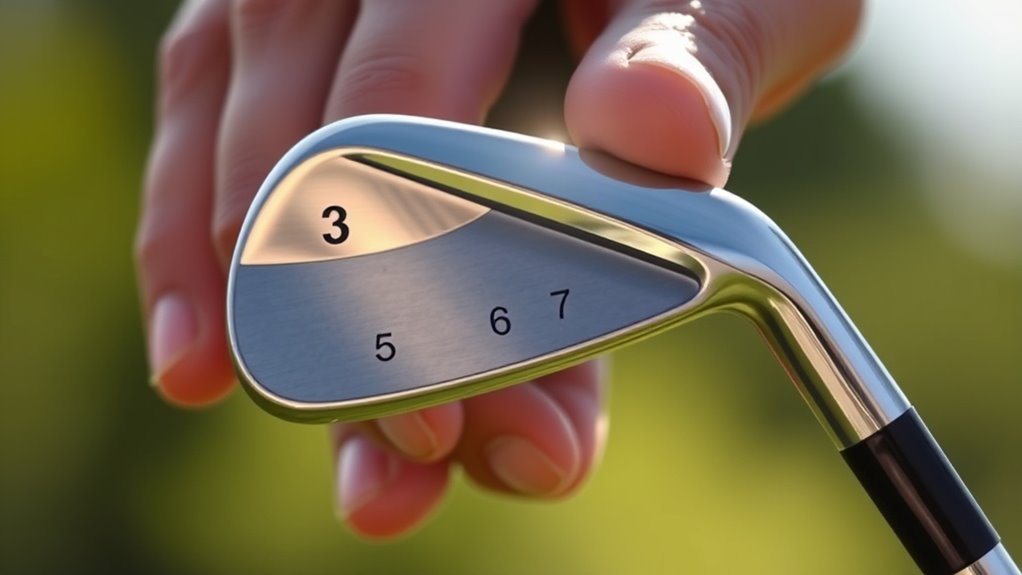
Choosing the right iron can considerably improve your golf game, but many players struggle to pick the correct club for each shot. To enhance your selection, focus on your golf ball compression and swing tempo. Properly compressed shots maximize distance and accuracy, so select irons that match your swing speed and strength. If your swing tempo is smooth and controlled, you might prefer higher-numbered irons for consistency. Conversely, a faster swing tempo can suit lower-numbered clubs that require more power. Practice with different irons to observe how your ball reacts, helping you choose clubs that fit your natural swing. Remember, understanding your swing’s rhythm and how it interacts with club lofts will greatly refine your iron choices, leading to better shots on the course. Additionally, being aware of your swing consistency can help you select clubs that support a more reliable and confident performance. Recognizing zodiac traits that influence your approach to the game may also provide unique insights into your playing style.
Frequently Asked Questions
Do Higher-Numbered Irons Always Hit the Ball Farther?
Higher-numbered irons don’t always hit the ball farther. They typically produce a higher ball flight and more loft, which can actually reduce distance compared to lower-numbered clubs. While they offer more control and accuracy on short shots, their increased loft can limit how far you hit the ball. Your club choice depends on the shot you want, not just the club number, so consider accuracy and the desired ball flight for best results.
How Do Custom Fitting Sessions Influence Club Numbering Choices?
Custom fitting sessions help you choose club numbers that suit your grip preferences and shaft flexibility. During the fitting, your swing is analyzed, and recommendations are made to optimize control and distance. If you prefer a softer grip or need more shaft flexibility, the fitter might suggest different club numbers or shaft options to enhance your performance. This personalized approach guarantees your clubs match your unique playing style and physical needs.
Are Numbered Irons Suitable for Beginner Golfers?
Numbered irons are great for beginner golfers because they offer a clear advantage in club fitting, helping you choose clubs that match your swing and skill level. While some might think less advanced clubs are better, these irons provide easier distance control and forgiveness. You’ll find that their straightforward design simplifies learning, making them an ideal choice for beginners aiming to build confidence and improve quickly.
Can Switching Numbers Improve My Overall Game?
Switching club numbers can improve your overall game by allowing you to customize your setup for better control and distance. As you experiment with different clubs, you’ll find what works best for your swing, ultimately enhancing your golf scoring. Club customization helps you optimize your approach, making each shot more accurate and consistent. So, don’t hesitate to try different club numbers to boost your confidence and lower your scores.
Why Do Some Brands Use Different Numbering Systems?
Because brands love a little chaos, they use different numbering systems to keep you guessing. Some want their brand logos to stand out, while others tweak manufacturing processes to create unique clubs. It’s all part of the game—confusing players just enough to keep them buying. So, next time you see a different number, remember, it’s not just a club; it’s a branding mystery wrapped in manufacturing magic.
Conclusion
As you hold your iron set, it’s almost like holding a map of your game’s potential. The numbers guide you through distances and shots, much like landmarks guiding a traveler. When you understand how each club’s length and loft work together, you’ll navigate the course with confidence. So, next time you step onto the fairway, remember—your clubs aren’t just numbered; they’re your trusted companions on the journey to lower scores.