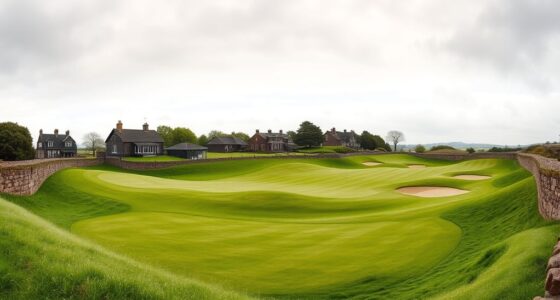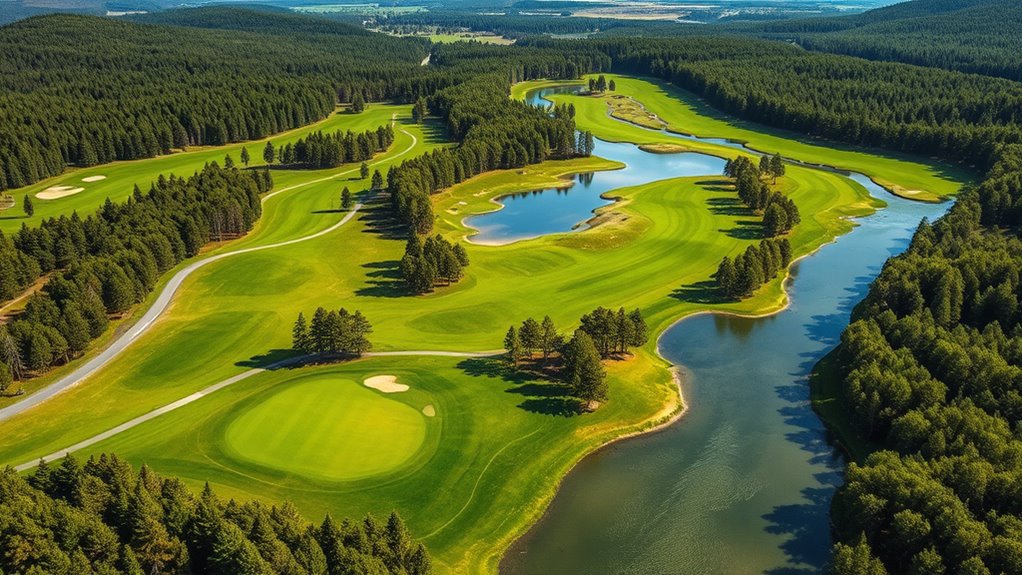

Golf courses can have a significant environmental impact by requiring large land areas, excessive water, and chemical use that threaten local ecosystems and biodiversity. These practices fragment habitats, harm wildlife, and lead to soil and water contamination through pesticide runoff. However, by adopting eco-friendly design, conserving water, and involving communities, you can reduce these effects. Exploring sustainable approaches will reveal how golf courses can become greener while maintaining their beauty and function.
Key Takeaways
- Golf courses consume large water quantities, often straining local resources, especially in drought-prone areas.
- Extensive chemical use for turf maintenance harms soil, water quality, and local biodiversity through runoff and seepage.
- Habitat fragmentation caused by golf course development reduces native plant and animal species diversity.
- Sustainable practices like native landscaping and water-efficient systems help minimize environmental impacts.
- Community engagement and ecological initiatives promote conservation and reduce the ecological footprint of golf courses.
The Ecological Footprint of Golf Courses
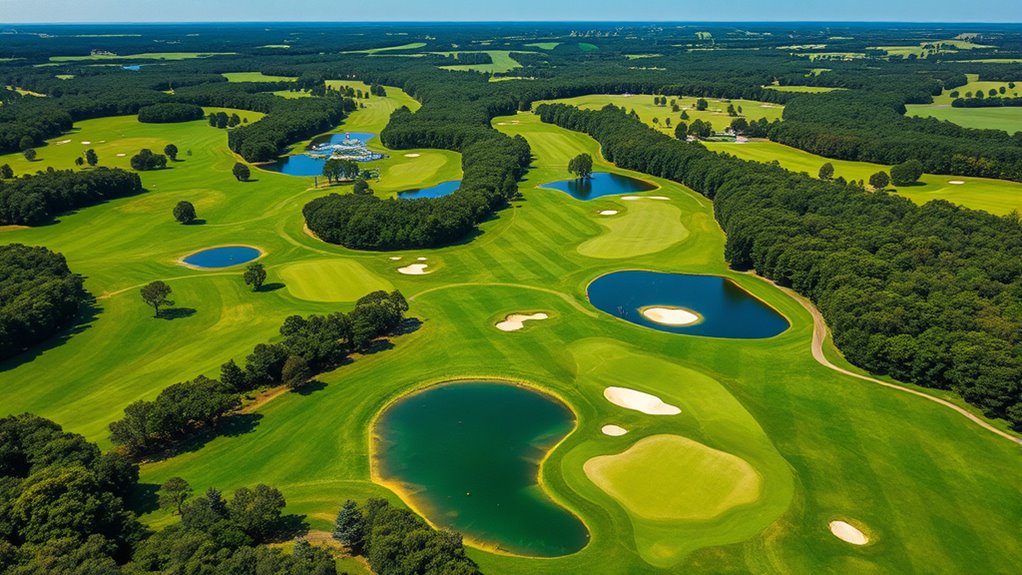
Golf courses often have a significant ecological footprint because they require large areas of land, extensive water use, and chemical inputs. This can fragment ecosystems, making it harder for wildlife to move freely. To mitigate this, you can create wildlife corridors—strips of natural habitat that connect different areas, allowing animals to migrate safely. Additionally, chemical pesticides harm local biodiversity and contaminate soil and water. Instead, you can explore pesticide alternatives like organic treatments, integrated pest management, or natural predators. These strategies help reduce environmental damage while maintaining course quality. By prioritizing habitat connectivity and eco-friendly pest control methods, you contribute to a more sustainable golf course that supports local ecosystems rather than harming them. Incorporating support breakfast options on or near golf courses can also promote eco-tourism and sustainable practices within the community. Implementing environmentally conscious maintenance practices further minimizes the ecological footprint of golf courses. Furthermore, utilizing electric equipment, such as electric mowers and golf carts, reduces emissions and noise pollution, leading to a quieter and cleaner environment. Transitioning to renewable energy sources, like solar or wind power, can also significantly decrease the carbon footprint of golf course operations. Incorporating innovative sustainable landscaping techniques can further enhance ecological benefits and reduce resource consumption.
Water Consumption and Management Challenges
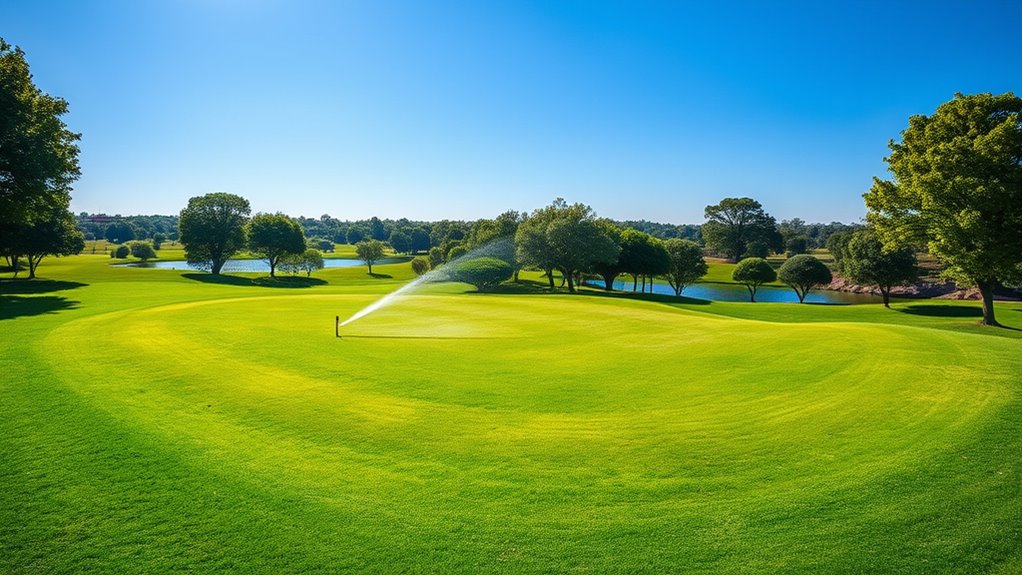
Have you considered how water-intensive golf courses can be? They often rely heavily on large amounts of water to keep grass green and healthy. Managing this demand presents significant challenges, especially in drought-prone areas. You might see efforts like:
Golf courses’ water needs pose sustainability challenges, prompting innovative conservation and efficiency efforts.
- Installing rainwater harvesting systems to collect runoff during storms
- Using advanced irrigation efficiency techniques to minimize waste
- Employing soil moisture sensors to optimize watering schedules
These strategies help reduce reliance on municipal water supplies and conserve resources. Yet, balancing water use with environmental sustainability remains complex. Overwatering can deplete local water sources, harming ecosystems. Improving irrigation efficiency, capturing rainwater, and total‑cost clarity are crucial steps to making golf courses more sustainable. Additionally, integrating soil moisture sensors can significantly enhance watering precision, further conserving water. Research shows that irrigation management can greatly reduce water consumption without compromising course quality. Implementing smart irrigation systems can further optimize water use and support environmental goals.
Chemical Use and Its Environmental Consequences

When golf courses use chemicals, you risk pesticide runoff that can harm nearby ecosystems. These chemicals can contaminate soil and water sources, affecting wildlife and public health. European cloud servers, which prioritize energy efficiency and sustainable practices, can help reduce the carbon footprint of golf course management by supporting data-driven environmental monitoring and eco-friendly solutions. Incorporating sustainable practices, such as integrated pest management and organic fertilizers, can further lessen environmental impact. Understanding these impacts helps you make more informed decisions about sustainable course management, which is essential for minimizing ecological disturbance and promoting long-term environmental health. Additionally, adopting environmentally conscious strategies can contribute to preserving local biodiversity and reducing the overall ecological footprint of golf courses. Embracing innovative technology solutions, like remote sensing and environmental analytics, can optimize resource use and enhance eco-friendly management efforts.
Pesticide Runoff Risks
Ever wonder how the chemicals applied to maintain golf courses can harm the environment? Pesticide runoff can carry harmful chemicals into nearby water sources, affecting aquatic life and water quality. You might imagine:
- Streams turning cloudy with chemical spills
- Fish struggling to survive in contaminated waters
- Plants and animals affected by persistent toxins
To reduce these risks, course managers are turning to pesticide alternatives that are less harmful. Implementing runoff mitigation strategies, like buffer zones and proper application timing, helps protect surrounding ecosystems. These measures prevent pesticides from leaching into water bodies, safeguarding wildlife and water safety. Additionally, increasing awareness of environmental impacts encourages responsible practices among course operators. Understanding the importance of chemical use in maintaining courses can further promote environmentally conscious decisions. Promoting sustainable practices among golf course staff can lead to more eco-friendly maintenance routines. By adopting such practices, you contribute to a more sustainable golf environment, balancing course maintenance with environmental health. Recognizing the significance of chemical use in maintaining courses can further promote environmentally conscious decisions.
Soil and Water Contamination
Did you know that the chemicals used on golf courses can seep into the soil and water, causing long-term environmental damage? These chemicals, including fertilizers and pesticides, often lead to soil contamination, harming the health of local ecosystems. When rain washes these substances off the turf, they enter nearby water sources, resulting in water pollution. This contamination can affect aquatic life and threaten drinking water supplies. You might not see the immediate effects, but over time, the buildup of chemicals in soil and water can cause serious ecological imbalances. Managing chemical use responsibly is essential to prevent soil contamination and water pollution, helping to protect surrounding wildlife and maintain healthier environments around golf courses. Additionally, implementing sustainable landscaping practices can significantly reduce the environmental footprint of golf course maintenance, supporting environmental conservation. Employing environmentally friendly pest management techniques can further reduce chemical reliance and promote healthier ecosystems.
Habitat Disruption and Biodiversity Loss

Golf courses often lead to habitat disruption by replacing natural landscapes with manicured fairways and greens. This change fragments ecosystems, creating barriers that hinder wildlife movement. You might imagine:
- Wildlife corridors cut off, trapping animals in small patches
- Native plants replaced by uniform grass, reducing food sources
- Birds and insects losing essential nesting and foraging spaces
These alterations increase habitat fragmentation, threatening biodiversity. As habitats become isolated, species struggle to find mates, food, and shelter. Your golf course may unintentionally contribute to the decline of local wildlife populations, disrupting ecological balances. The loss of diverse habitats diminishes the overall health of the environment, making it harder for ecosystems to adapt and thrive. Recognizing this impact encourages better management practices that minimize habitat disruption and support biodiversity conservation.
Soil Erosion and Land Degradation Risks
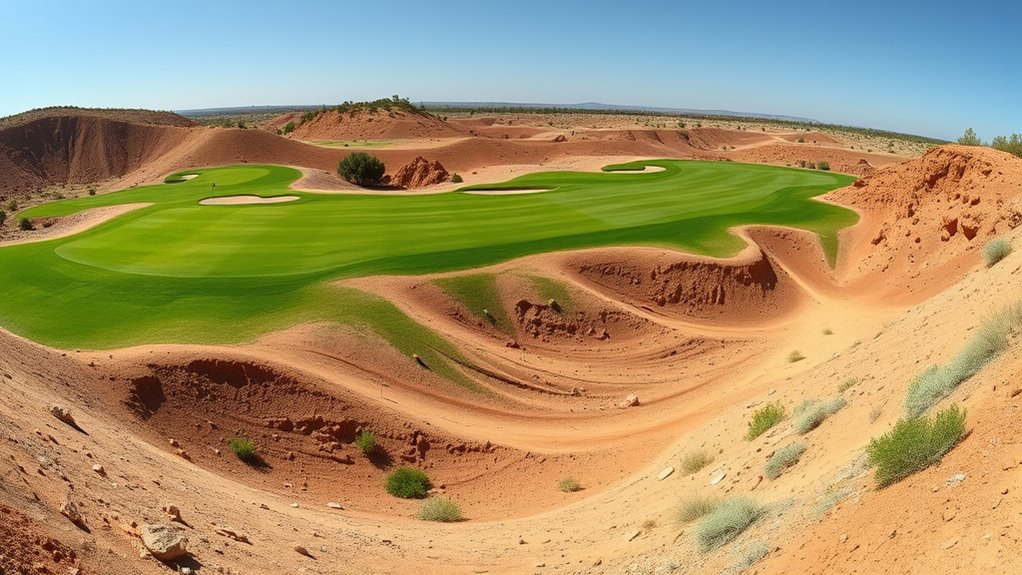
When the land is converted into a golf course, the natural stability of soil often deteriorates, leading to increased erosion and land degradation. Heavy equipment compacts the soil, reducing its permeability and causing runoff issues. Land subdivision for course features often exposes vulnerable areas, accelerating erosion. These disturbances weaken the soil’s structure, making it more prone to erosion from wind and water. Your efforts to maintain the course can unintentionally worsen these issues if proper management isn’t followed. Below is a table showing key factors influencing erosion risks:
| Factor | Impact | Mitigation |
|---|---|---|
| Soil compaction | Reduces water absorption | Aeration and organic amendments |
| Land subdivision | Increases exposed soil areas | Proper land planning |
| Water runoff | Causes soil washing away | Contour grading and barriers |
| Vegetation loss | Removes natural protection | Re-vegetation strategies |
| Maintenance activity | Disturbs soil stability | Use of minimal disturbance methods |
Green Innovations and Sustainable Practices

You can reduce environmental impact by adopting eco-friendly turf management, which minimizes chemical use and promotes healthy soil. Water conservation techniques, like smart irrigation systems, help preserve essential resources on the course. Implementing these sustainable practices allows you to maintain quality while protecting the environment.
Eco-Friendly Turf Management
Innovations in turf management are transforming golf courses into more sustainable landscapes by reducing environmental impacts. You can now see courses adopting native grasses, which require less water and chemical input, creating a hardy, eco-friendly ground cover. Organic fertilizers replace synthetic chemicals, enriching the soil naturally and minimizing runoff. Picture lush, resilient fairways that thrive with minimal intervention, thanks to these green practices. These methods help preserve local ecosystems, reduce pollution, and lower maintenance costs. Imagine:
- Native grasses blending seamlessly with surrounding nature
- Organic fertilizers nourishing plants without harmful chemicals
- Reduced pesticide use promoting healthier soil and water quality
Water Conservation Techniques
How can golf courses effectively reduce their water usage? One key strategy is planting native grasses, which are adapted to local climates and require less watering and maintenance. These grasses thrive naturally, minimizing the need for supplemental irrigation. Additionally, implementing rainwater harvesting systems allows courses to collect and store rainwater for irrigation purposes. This practice not only cuts down on municipal water consumption but also helps manage stormwater runoff, reducing erosion and pollution. Combining native grasses with rainwater harvesting creates a sustainable cycle, conserving water and supporting environmental health. These green innovations promote efficient water use while maintaining quality gameplay, making courses more eco-friendly and resilient against drought conditions.
The Role of Native Vegetation in Course Design
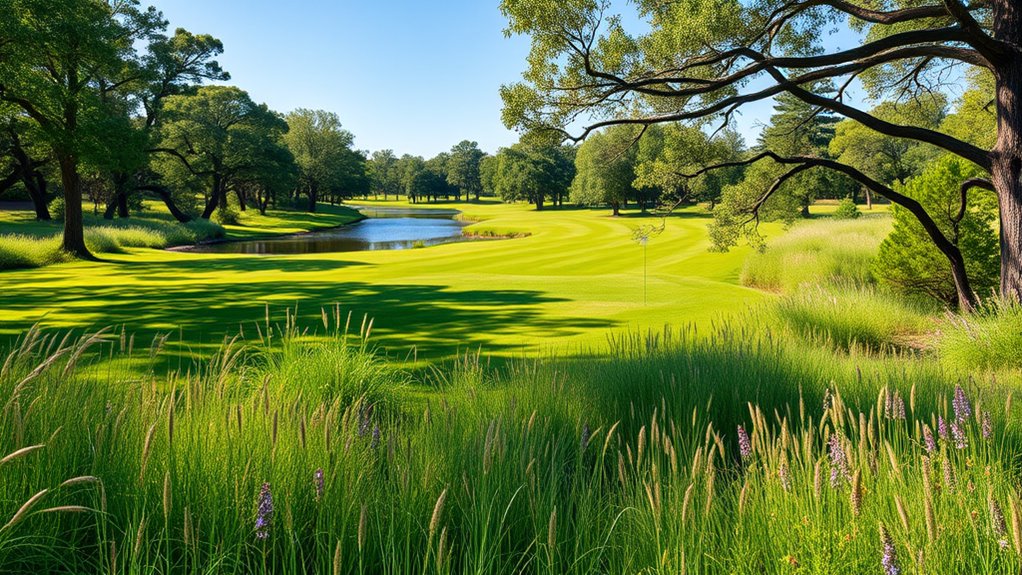
Incorporating native vegetation into golf course design plays a crucial role in promoting environmental sustainability. By using native plantings, you reduce water needs and chemical use, creating a more eco-friendly landscape. These plants support habitat restoration, providing shelter for local wildlife. Picture:
Native plantings enhance sustainability, reduce maintenance, and support local wildlife on golf courses.
- A lush, natural meadow filled with native grasses and colorful wildflowers
- Trees that blend seamlessly into the surrounding environment, offering shade and shelter
- Wetlands or ponds surrounded by native reeds and aquatic plants, attracting birds and insects
These features foster biodiversity while reducing maintenance costs. Native vegetation also helps control erosion and filter pollutants naturally. When thoughtfully integrated, native plantings transform the course into a harmonious space that respects local ecosystems and minimizes environmental impact.
Water Recycling and Conservation Technologies

Water recycling and conservation technologies are transforming how golf courses manage their water resources. By implementing rainwater harvesting, you can collect and store runoff from storms, reducing dependence on municipal water supplies. Greywater recycling allows you to reuse water from sinks, showers, and washing areas for irrigation, lowering overall water consumption. These methods help minimize environmental impact and promote sustainability. Modern systems often incorporate filtration and treatment to ensure water quality for turf and plant health. Using rainwater and greywater reduces the strain on natural water sources, especially during droughts. As a result, golf courses can operate more sustainably while maintaining excellent playing conditions. Embracing these technologies demonstrates a commitment to environmental stewardship and long-term resource efficiency.
Community Engagement and Environmental Stewardship
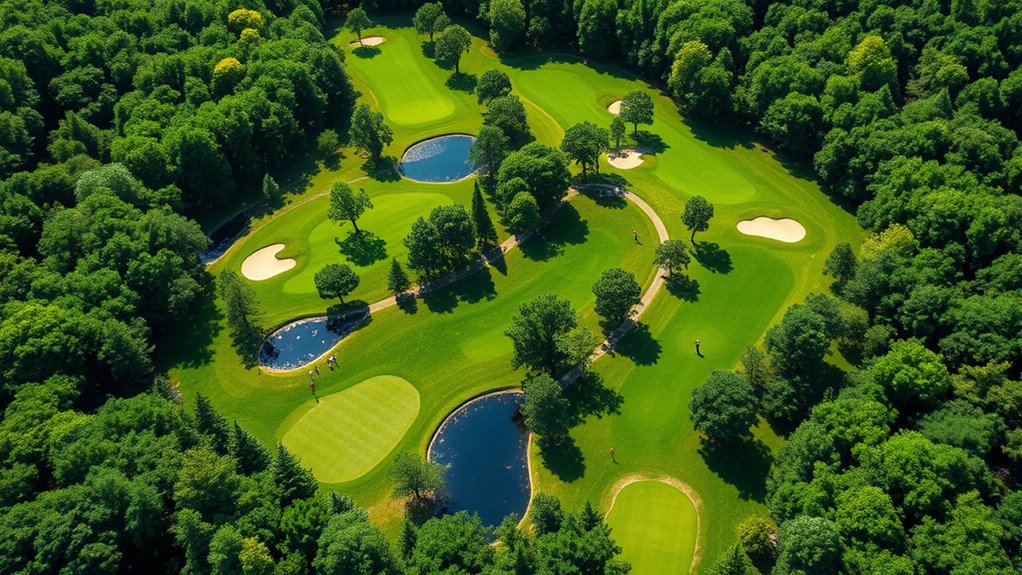
You can see how golf courses actively involve the community through local conservation initiatives and volunteer programs. These efforts encourage residents to participate in protecting natural resources and maintaining the course’s ecological health. Educational outreach further helps raise awareness and foster a shared sense of environmental responsibility.
Local Conservation Initiatives
How do golf courses actively contribute to local conservation efforts? They often serve as essential green spaces that promote native planting and create wildlife corridors. By planting native species, courses support local ecosystems, reducing water use and chemical runoff. Wildlife corridors link fragmented habitats, allowing animals to move safely across the landscape. Imagine lush areas filled with native grasses and flowering plants, attracting pollinators and birds. These initiatives help preserve biodiversity and strengthen ecological resilience. You might see:
- Native plants thriving along fairways and greens
- Birds nesting and foraging in naturalized zones
- Small mammals and insects moving freely through interconnected habitats
Through these efforts, golf courses become active stewards of the environment, fostering healthier local ecosystems while engaging communities in conservation.
Volunteer Engagement Programs
Have you ever wondered how golf courses foster a sense of community while promoting environmental stewardship? Volunteer engagement programs play a key role in this. By involving local residents and players in conservation efforts, you help maintain the golf course’s aesthetics and enhance the player experience. These programs often include planting native species, habitat restoration, and cleanup days, which directly benefit the environment. When you participate, you contribute to healthier landscapes that attract wildlife and improve water quality. Your involvement also fosters a deeper connection to the course, making it more than just a playing field—it becomes a shared space for stewardship. Ultimately, volunteer programs build community pride while ensuring the environmental sustainability of the golf course.
Educational Outreach Efforts
Building on the sense of community fostered through volunteer programs, golf courses increasingly prioritize educational outreach to promote environmental stewardship. You might attend workshops or guided tours that highlight sustainable practices, like native plantings or water conservation. Imagine:
- Interactive sessions demonstrating eco-friendly turf management
- Signage explaining the importance of habitats for local wildlife
- Community events focused on recycling and pollution reduction
These efforts enhance golf course aesthetics, making the landscape more vibrant and inviting. They also improve your player experience by connecting you to nature and fostering a sense of responsibility. As you learn about the environmental initiatives, you’ll appreciate how these courses balance beauty with sustainability, encouraging a more mindful approach to enjoying and protecting the environment.
Future Trends Toward Eco-Friendly Golf Development

As awareness of environmental issues continues to grow, the golf industry is increasingly adopting eco-friendly practices to reduce its ecological footprint. Future trends focus on sustainable development that enhances golf course aesthetics while improving the player experience. You’ll see more courses integrating native plants, reducing chemical use, and utilizing renewable energy sources. These innovations aim to create natural, visually appealing landscapes that support local ecosystems. Imagine a course where lush fairways blend seamlessly with native flora, promoting biodiversity. This table illustrates potential eco-friendly features:
| Feature | Impact |
|---|---|
| Native vegetation | Preserves local biodiversity and reduces water use |
| Solar-powered irrigation | Lowers energy consumption |
| Organic maintenance | Minimizes chemical runoff |
| Water-efficient design | Conserve water and enhance aesthetics |
These trends promise a greener, more sustainable future for golf courses.
Frequently Asked Questions
How Do Golf Courses Impact Local Wildlife Populations?
You might not realize it, but golf courses can substantially impact local wildlife populations. They often create new bird habitats and serve as wildlife corridors, helping animals move safely across developed areas. However, if not properly managed, they can also disrupt native species and reduce biodiversity. By preserving natural features and maintaining bird habitats, you can support healthy wildlife populations and promote ecological balance on and around golf courses.
Are There Eco-Friendly Alternatives to Traditional Fertilizers and Pesticides?
Yes, you can use eco-friendly alternatives like organic fertilizers and integrated pest management to reduce chemical use on golf courses. Organic options, such as compost and natural soil amendments, nourish the grass sustainably. Integrated pest management combines biological controls, habitat manipulation, and targeted treatments to keep pests in check without harming the environment. These practices help protect local ecosystems while maintaining healthy, vibrant turf.
What Policies Regulate Environmental Practices on Golf Course Properties?
You should know that policies regulating environmental practices on golf courses focus on water conservation and pesticide regulation. These policies often require course managers to implement sustainable watering methods, reduce chemical use, and follow strict pesticide application guidelines. By adhering to local and federal regulations, you can help minimize environmental impact, protect water resources, and promote eco-friendly practices on golf course properties, ensuring they stay environmentally responsible and sustainable.
Can Golf Courses Be Designed to Enhance Regional Biodiversity?
Imagine turning your golf course into a thriving haven for local wildlife. You can design it to enhance regional biodiversity by incorporating native plantings that support native species and reduce maintenance. Prioritize water conservation through efficient irrigation systems, minimizing water use while maintaining lush landscapes. By blending thoughtful design with eco-friendly practices, you transform your course into a vibrant ecosystem, enriching the environment and engaging players with the beauty of nature.
How Do Climate Change and Rising Temperatures Affect Golf Course Sustainability?
Climate change and rising temperatures threaten golf course sustainability by increasing water demands and stressing turf health. You can address this by prioritizing water conservation and energy efficiency practices, like using drought-resistant grasses and efficient irrigation systems. These steps help reduce water usage and energy consumption, making your golf course more resilient to climate impacts. Embracing sustainable strategies guarantees your course remains playable and environmentally responsible amid changing climate conditions.
Conclusion
By choosing eco-friendly golf courses that prioritize native plants and water conservation, you can help protect our environment. Imagine a course where wildlife thrives, and water is recycled efficiently—like Pine Valley’s recent green makeover. Your support for sustainable practices can make a difference, ensuring golf remains a fun, responsible sport for generations to come. Together, we can tee off toward a greener, healthier planet.