A great golf course design blends strategic layout, natural terrain, and environmental sustainability to create an engaging experience. It guides your flow smoothly from hole to hole, using landforms and scenic features for added challenge and beauty. Well-placed hazards, water, and bunkers test your skill without frustrating you. Versatility and eco-friendly practices guarantee the course remains sustainable and enjoyable for all players. To access more insights, explore how these principles come together seamlessly.
Key Takeaways
- Seamless course flow and natural landforms create an intuitive, engaging playing experience.
- Thoughtful hazard placement and strategic water features challenge players and enhance visual appeal.
- Incorporating native landscapes and eco-friendly practices ensures sustainability and ecological harmony.
- A well-balanced layout offers variety in hole length, green shapes, and strategic options for all skill levels.
- Cohesive design emphasizes environmental preservation, player enjoyment, and memorable scenic vistas.
The Importance of Layout and Flow

A well-designed layout and smooth progression are essential to creating an enjoyable and challenging golf course. Your focus should be on optimizing course flow, ensuring players move seamlessly from one hole to the next without unnecessary delays or confusion. Good layout guides players naturally, reducing distractions and enhancing their overall experience. When the course flow feels intuitive, players can concentrate on their game rather than navigation, which boosts enjoyment and confidence. A thoughtfully planned layout balances difficulty with accessibility, making sure each hole transitions smoothly into the next. This seamless experience keeps players engaged, encourages strategic play, and leaves them feeling satisfied, whether they score well or not. Ultimately, a cohesive course flow elevates the entire player experience. Paying attention to course architecture principles can further refine the flow and overall design quality. Additionally, considering course routing ensures that the terrain and natural features are utilized effectively, contributing to both aesthetic appeal and strategic depth. Incorporating natural topography into the design can also enhance the flow, creating more dynamic and memorable holes, and integrating these elements thoughtfully enhances the aesthetic appeal of the course. Moreover, understanding how the natural landscape influences movement and sightlines can significantly improve the overall harmony of the design.
Utilizing Natural Terrain and Landscape
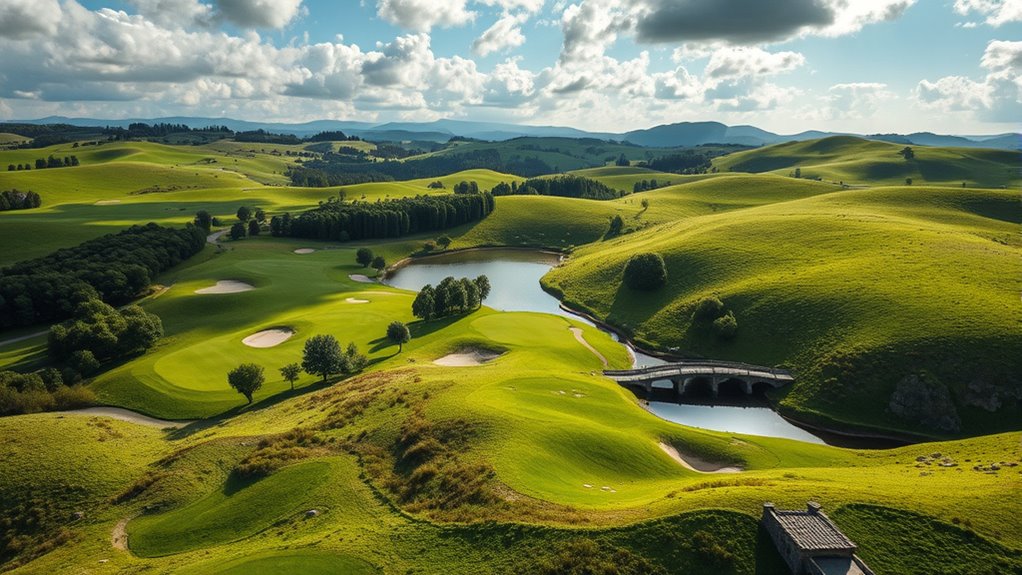
You can create a more authentic playing experience by working with the natural terrain rather than against it. By harmonizing with the topography, you preserve key features and reduce environmental impact. This approach also boosts the course’s scenic beauty, making it more inviting for players and spectators alike. Incorporating environmentally friendly practices can further enhance sustainability and appeal.
Harmonizing With Topography
By carefully analyzing the natural terrain, golf course architects can design layouts that seamlessly integrate with the existing landscape, creating a harmonious play experience. Topographical harmony is achieved when the course follows the land’s natural contouring, enhancing both beauty and playability. Instead of flattening or reshaping the land unnecessarily, you utilize elevation changes, slopes, and valleys to add challenge and visual interest. This approach minimizes environmental disruption and preserves the landscape’s integrity. By respecting the terrain’s original features, you create a course that feels authentic and organic. The key is to incorporate the land’s natural flow into every hole, allowing players to experience the course as a natural extension of the environment rather than an imposed structure. Additionally, understanding the contrast ratio can help in designing visual elements that stand out naturally within the landscape, ensuring clarity and visual appeal.
Preserving Natural Features
Preserving natural features is essential for maintaining the integrity and beauty of a golf course. By working with native flora, you support local ecosystems and create a more authentic landscape. Incorporate existing trees, shrubs, and grasses to reduce environmental disruption and enhance the course’s natural aesthetic. Design around key features, rather than altering them, to maintain the landscape’s original character. Establish wildlife corridors to allow safe movement for animals, promoting biodiversity and ecological health. These corridors connect different habitats, making the environment more resilient. Incorporating Free Floating elements can further contribute to a seamless integration of the course with its surroundings. When you prioritize natural features, you create a sustainable course that respects the land’s history and enhances the playing experience for golfers and wildlife alike. This approach underscores your commitment to environmental stewardship and course longevity, supported by innovative technological integration that can assist in planning and preserving these features.
Enhancing Scenic Beauty
Utilizing the natural terrain and landscape is key to enhancing a golf course’s scenic beauty. By designing around existing features, you create a seamless connection between the course and its environment. Incorporate native flora to add color, texture,, and local charm, which also supports local ecosystems. Position holes to highlight scenic vistas, offering players breathtaking views that elevate their experience. Avoid excessive grading or alteration that could disrupt the landscape’s natural flow. Instead, let the terrain guide your design, emphasizing natural contours and features. Thoughtful placement of trees, shrubs, and native plants enhances visual appeal while maintaining ecological balance. Landscape integration is essential for creating a harmonious and sustainable course that respects its surroundings. Additionally, considering environmental sustainability ensures the course remains beautiful and ecologically responsible for years to come. Incorporating natural landforms into the design process further enhances the course’s harmony with the environment. Interestingly, celebrity transformations like Hailey Bieber’s dramatic hair makeover demonstrate the power of natural change and adaptation, which can be a metaphor for sustainable landscape design. When properly executed, these strategies create a sustainable and attractive course that benefits both players and the environment. Ultimately, a course that respects and showcases its landscape leaves players with a memorable sense of harmony and beauty.
Strategic Placement of Hazards
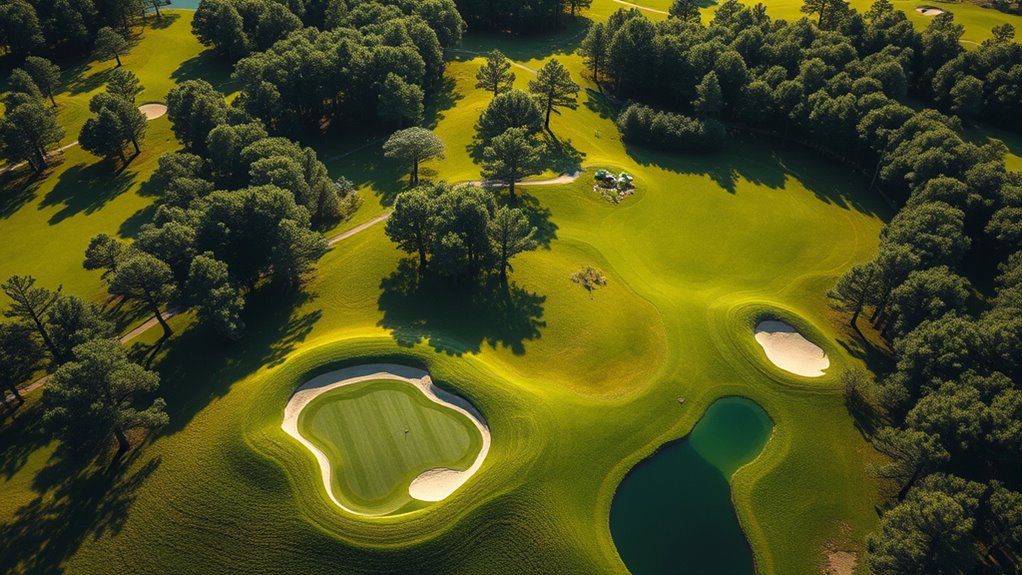
Have you ever wondered how golf course architects decide where to place hazards to challenge players? It all comes down to strategic placement and obstacle positioning. Architects analyze the course layout, considering the flow of play and natural features, to determine where hazards will add excitement without making the game impossible. They place bunkers, water hazards, and trees in spots that test your accuracy and decision-making, encouraging strategic shot choices. Proper hazard placement guides you to think carefully about club selection and shot execution, adding a layer of mental challenge. The goal is to create a balanced environment where hazards enhance the difficulty but don’t frustrate, ultimately making the course more engaging and rewarding for players of all skill levels. Additionally, understanding the importance of dream belief can inspire designers to approach their work with passion and confidence, ultimately leading to more innovative course designs. Recognizing the role of hazard placement in course design helps ensure a challenging yet enjoyable experience for golfers. Incorporating natural features thoughtfully can also enhance the aesthetic appeal and strategic complexity of the course. For example, the careful integration of environmental considerations can improve sustainability and harmony with the surrounding landscape.
Balancing Challenge and Playability

Balancing challenge and playability is essential in golf course design because it guarantees the game remains enjoyable for players of all skill levels. You achieve this by carefully considering tee placement, which can make holes more forgiving or demanding. Proper tee positioning ensures beginners aren’t overwhelmed, while still challenging experienced players. Course routing also plays a crucial role; it guides players naturally through the landscape, creating a flow that balances difficulty and fun. By mixing shorter, strategic holes with longer, more complex ones, you keep the game engaging without frustrating golfers. This balance encourages players to improve without feeling defeated, making the course accessible yet stimulating. Additionally, understanding the relationship between challenge and playability helps designers tailor courses that are both enjoyable and competitive. A well-balanced design also considers electric transportation concepts, such as sustainable practices and innovative layouts that enhance player experience while minimizing environmental impact. Incorporating natural landscape features thoughtfully can also elevate the aesthetic appeal and playability of a course. Recognizing the importance of environmental sustainability ensures that course design benefits both players and the local ecosystem. Moreover, integrating innovative design techniques can further refine the harmony between challenge, playability, and sustainability. Ultimately, a well-designed balance between challenge and playability enhances the overall experience and keeps players coming back.
Aesthetic Elements and Visual Appeal
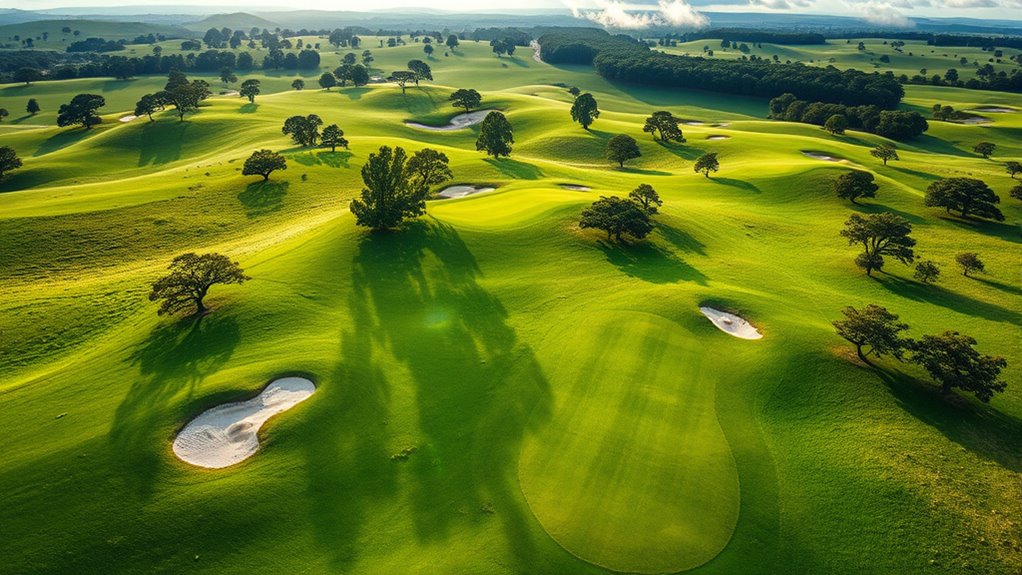
You notice how a well-designed course blends seamlessly with the natural landscape, creating a cohesive and inviting environment. Strategic use of bunkers and sculpted landforms guides your eye and enhances the course’s visual appeal. When these elements work together, they elevate the overall aesthetic and make your experience more memorable. Additionally, incorporating visual harmony through thoughtful design choices can significantly improve the course’s overall attractiveness and player enjoyment. Implementing AP Tuning principles in design can optimize how these elements are balanced for maximum impact, ensuring that each feature complements the natural surroundings and enhances the overall visual appeal. Moreover, considering adaptive lighting and circadian design principles can enhance nighttime aesthetics and player comfort during evening play.
Harmonious Landscape Integration
How do skilled golf course architects create landscapes that seamlessly blend with their surroundings? They focus on integrating native flora and cultural influence to foster harmony. This approach enhances visual appeal and respects the environment. Key strategies include:
- Using native flora to naturally frame fairways and greens, blending the course into the landscape.
- Incorporating cultural elements that reflect local history and traditions, adding depth and identity.
- Designing contours that mimic natural landforms, avoiding abrupt or artificial alterations.
- Selecting materials and planting styles aligned with regional aesthetics, creating a cohesive visual experience.
Strategic Use of Bunkers
Strategic placement of bunkers plays a essential role in enhancing a golf course’s visual appeal. Well-designed bunker placement creates a balanced, eye-catching landscape that draws players’ attention to key areas. The shape, size, and positioning of bunkers contribute to hazard design, shaping the course’s character and challenge. You want bunkers that complement the natural terrain, adding texture and contrast without overwhelming the scenery. Properly placed bunkers break up open fairways and frame greens, guiding your eye across the course. Their visual appeal lies in their integration with the overall landscape, providing a sense of depth and dimension. When thoughtfully crafted, bunker placement not only influences strategy but also elevates the aesthetic quality, making the course more inviting and memorable.
Visual Landform Sculpting
Landforms on a golf course serve as the foundation for its visual appeal, shaping the landscape to create a harmonious balance between natural beauty and design intent. Through artistic expression and visual storytelling, you can craft landforms that captivate players and enhance the overall experience. Consider these aspects:
- Natural integration of hills and valleys to evoke organic beauty
- Sculpting terrain to guide the eye and frame key features
- Using elevation changes to add depth and drama
- Blending built elements seamlessly into the landscape for a cohesive look
These techniques help create a visually compelling course that feels authentic, inviting players to engage with its artistic design while appreciating the natural landforms that define its character.
Incorporating Water Features and Bunkers

Incorporating water features and bunkers is essential for shaping a challenging and visually stunning golf course. Water features, like ponds and streams, add strategic complexity and create reflective beauty that enhances the landscape. Bunkers, carefully placed around greens and fairways, increase difficulty and demand precise shot-making. When designing, you should consider how water features influence playability and aesthetics, ensuring they complement the natural terrain. Bunkers should be positioned to protect key areas while also offering visual interest. The key is balance—using water features and bunkers to create a course that is both engaging and beautiful, without overwhelming the natural environment. Thoughtful integration of these elements elevates the overall design, making your course memorable and inspiring for players.
Flexibility and Variety in Hole Design
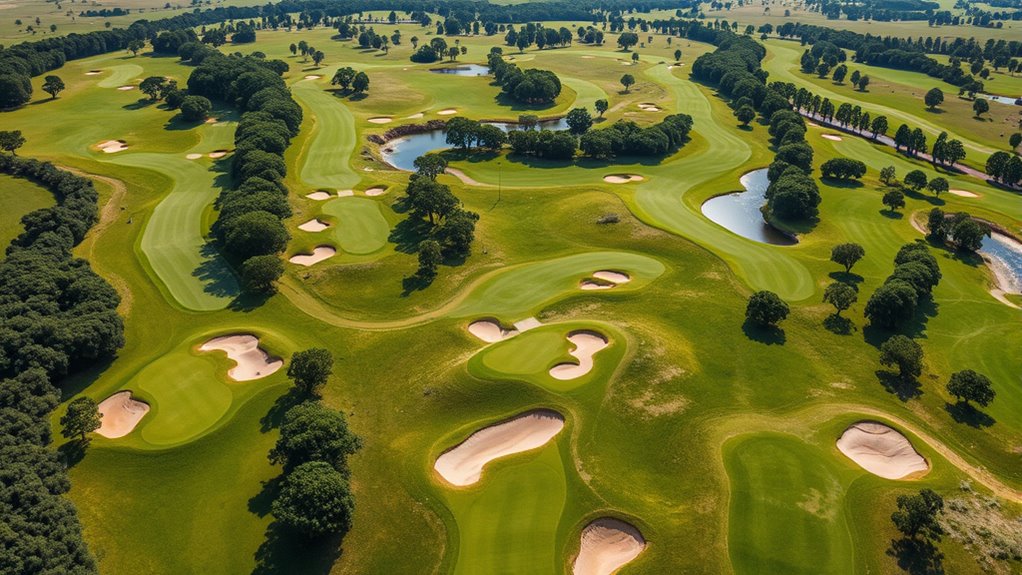
To create an engaging golf course, you need to design holes that offer a mix of challenges and experiences. Flexibility and variety in hole design are essential for this. Incorporate versatile hole layouts that can adapt to different skill levels and preferences. This approach encourages diverse playing strategies, keeping players engaged. Consider these ideas:
- Varying hole lengths to test distance control and shot selection
- Strategic bunkering to influence shot choices and risk-reward decisions
- Multiple tee options to accommodate players of all abilities
- Different green shapes and sizes to challenge putting skills
Sustainability and Environmental Considerations

As golf course architects prioritize sustainability, they actively seek ways to minimize environmental impact while creating enjoyable playing experiences. Using native grasses reduces water use and maintenance, supporting local ecosystems. They also design courses that protect and enhance wildlife habitats, ensuring native species thrive. Incorporating sustainable practices benefits the environment and preserves the course’s long-term viability. Consider the following strategies:
| Strategy | Benefit | Example |
|---|---|---|
| Use of native grasses | Reduced water and chemical needs | Prairie grasses on fairways |
| Preservation of habitats | Supports biodiversity | Wetlands and buffers |
| Water-efficient irrigation | Conserves water | Drip irrigation systems |
| Minimal chemical use | Protects soil and water quality | Organic fertilizers |
| Eco-friendly course materials | Reduces pollution and waste | Recycled landscaping supplies |
The Role of Technology and Innovation

Advancements in technology are transforming how golf courses are designed, maintained, and experienced. You can now leverage innovative tools to enhance every phase of course development. For example:
- Virtual reality allows you to visualize course layouts before construction begins, enabling better planning and design adjustments.
- Drone mapping provides precise topographical data, helping you identify terrain features and optimize water drainage.
- GPS systems improve maintenance efficiency by guiding equipment with pinpoint accuracy.
- Data analytics help you monitor course conditions, track environmental impact, and implement sustainable practices more effectively.
These technologies make the process more precise, sustainable, and engaging, ensuring you create a course that’s both innovative and enjoyable.
Frequently Asked Questions
How Does a Course’s History Influence Its Design Choices?
Your course’s history influences its design choices by emphasizing course preservation and incorporating historical symbols, which honor its legacy. You might preserve iconic landmarks or adapt historic features to modern play, creating a sense of continuity. These elements attract players who appreciate tradition, while also shaping the aesthetic and strategic aspects of your course. By respecting its history, you guarantee the design reflects the unique story and character of the course.
What Are the Latest Innovations Impacting Golf Course Architecture?
You’re witnessing a blend of tradition and innovation shaping golf course architecture today. Technological advancements like GPS-guided maintenance and drone mapping enhance precision, while sustainable practices such as native landscaping and water conservation protect the environment. These innovations allow you to enjoy challenging, beautiful courses that respect nature. Embracing these developments makes your game more enjoyable and responsible, ensuring golf’s future remains vibrant and sustainable.
How Do Weather Conditions Shape Course Layout Decisions?
Weather conditions influence your course layout decisions by requiring you to think about wind resistance and water management. You’ll design fairways and greens that minimize wind effects, ensuring players can control their shots. Additionally, you plan water management systems to handle rain and runoff, preventing flooding and maintaining playability. By adapting to local weather patterns, you create a course that’s challenging yet sustainable, offering a better experience regardless of the weather.
What Role Do Local Communities Play in Course Development?
You play a crucial role in course development through community involvement, ensuring the design reflects local values and needs. Local communities influence decisions, from layout to amenities, fostering a sense of ownership. Their input helps preserve cultural significance, making the course more meaningful and sustainable. By engaging residents early, you create a welcoming environment that respects tradition while offering an enjoyable experience for everyone.
How Is Player Feedback Incorporated Into Ongoing Course Modifications?
Think of player feedback like a compass guiding course improvements. You should regularly review player surveys and maintenance feedback, listening closely to their suggestions and concerns. These insights help identify areas needing adjustment, whether it’s reshaping a hole or improving turf conditions. By actively incorporating this feedback, you create a more enjoyable experience, ensuring the course evolves with players’ preferences and maintains its appeal for everyone.
Conclusion
A great golf course is like a well-told story, where every hole symbolizes a chapter of challenge, beauty, and harmony. When your course flows seamlessly through natural terrain, it invites players to explore and grow. Thoughtful hazards and lush water features serve as milestones, guiding and testing players along their journey. In designing your course, remember that it’s not just about the game, but about creating a landscape that inspires, endures, and connects players to the soul of the land.