Asia is quickly emerging as a golf powerhouse by heavily investing in world-class courses, hosting major tournaments, and supporting talented players. Countries like Thailand, Japan, and South Korea lead the charge with innovative designs and large-scale infrastructure projects. Rising Asian golfers and youth programs inspire a new generation, while government initiatives and sponsorships fuel growth. If you’re curious about how Asia’s influence is shaping golf’s future globally, there’s much more to explore.
Key Takeaways
- Asia’s growing infrastructure and luxury resorts are transforming the region into a premier global golf destination.
- Rising Asian golfers and youth engagement are elevating the continent’s influence in international golf.
- Hosting major tournaments and increasing sponsorship boost Asia’s visibility and economic impact in the sport.
- Government policies and technological advancements support sustainable growth and infrastructure development.
- Emerging markets and innovative course designs position Asia as a future powerhouse in global golf.
The Growth of Golf Infrastructure Across Asia

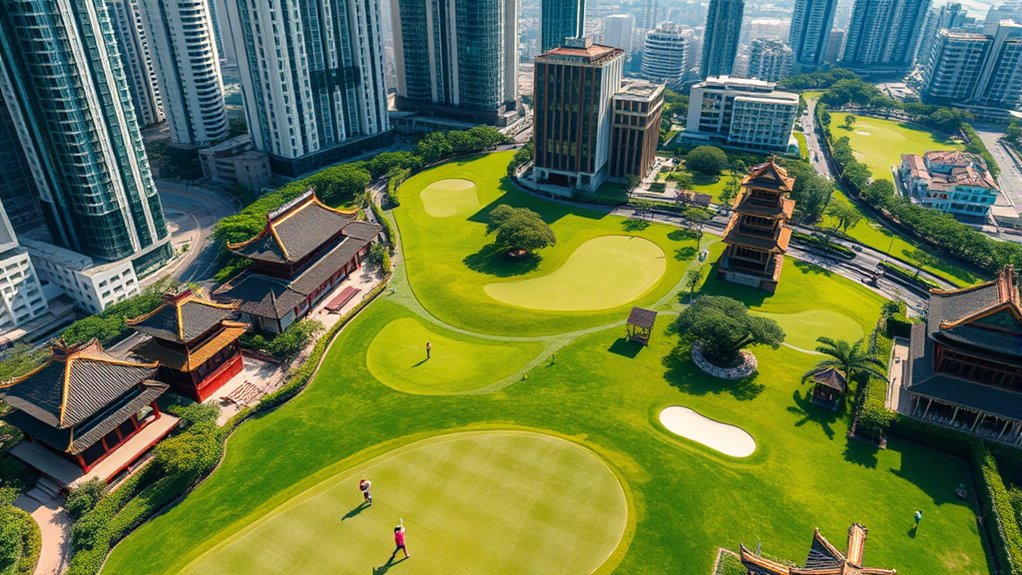
As Asia’s economy continues to expand, so does its investment in golf infrastructure. You’ll notice a surge in luxury resorts featuring world-class golf courses, attracting both enthusiasts and high-end travelers. Countries like Thailand, Malaysia, and Vietnam are transforming their landscapes with meticulously designed courses, aiming to boost golf tourism. These resorts often integrate stunning scenery, premium amenities, and exclusive services, making them prime destinations for leisure and business travelers alike. The focus on developing top-tier golf facilities not only elevates the region’s reputation as a global golf hub but also creates economic opportunities and job growth. As a result, Asia is quickly becoming a key player in the international golf scene, drawing visitors enthusiastic to experience its luxurious offerings.
Rising Stars: Notable Asian Golfers Making Waves

A new generation of Asian golfers is making a significant impact on the international stage, showcasing exceptional talent and determination. Young players excel in amateur tournaments, often standing out with their skill and composure. Their confidence is reflected both on the course and in their golf fashion, which blends tradition with modern trends. These rising stars are not only winning titles but also inspiring future golfers across Asia. Their success stories highlight the region’s growing influence in the sport. Here’s a quick look at some notable players:
| Name | Achievements | Style & Influence |
|---|---|---|
| Min Woo Lee | Multiple amateur wins, turning pro | Trendsetting golf fashion |
| Aditi Ashok | Top finishes in international events | Youthful confidence in style |
| Takumi Kanaya | Consistent high rankings, pro debut | Classic meets modern fashion |
| Hyo Joo Kim | Major championship contender | Elegant golf fashion |
Major Tournaments and Their Impact on the Region

The rise of Asian golfers on the international stage is closely linked to the prominence of major tournaments held in the region. These events attract global attention, boosting golf tourism and inspiring local course design improvements. When major tournaments take place, they draw international spectators and media coverage, highlighting the region’s growing golf appeal. As a result, more players and enthusiasts visit these destinations, fueling economic growth and elevating the sport’s status locally. Additionally, tournament organizers often invest in innovative course design to challenge top players and enhance spectator experience. This focus on quality course development attracts both amateurs and professionals, further cementing Asia’s reputation as a rising golf powerhouse. These tournaments serve as catalysts, transforming the region into a vibrant hub for golf.
Government Initiatives Supporting Golf Development

Governments are playing a vital role in growing the sport by introducing policy incentives that encourage golf development. They’re also investing heavily in expanding infrastructure to make the game more accessible. These initiatives are markedly accelerating golf’s global expansion and popularity.
Policy Incentives Boost Growth
Policy incentives play an essential role in fueling golf’s global growth by encouraging new course developments and making the sport more accessible. Governments implement regulatory reforms to streamline approval processes, reducing barriers for developers. Tax incentives further motivate investment in golf infrastructure, lowering costs and increasing profitability. These policies attract private investors and promote sustainable growth in emerging markets. By simplifying regulations and offering financial benefits, authorities create a favorable environment that stimulates industry expansion. As a result, more regions can develop high-quality courses and promote golf to broader demographics. Additionally, cloud-based infrastructure can support the digital transformation of golf facilities, enhancing management and customer experience. Implementing advanced technology solutions can further optimize operational efficiency and attract tech-savvy players, thereby expanding the sport’s reach. The integration of sustainable practices can also improve environmental impact and appeal to environmentally conscious audiences. Incorporating auditory processing techniques in golf instruction can help players better interpret course sounds and improve focus during play. Your efforts to support such initiatives can accelerate the sport’s reach, helping golf become a truly global phenomenon. Ultimately, policy incentives are indispensable in transforming golf from a niche activity into a widespread, accessible sport.
Infrastructure Investment Expansion
Investments in golf infrastructure have become a key driver of the sport’s global expansion, with government initiatives playing a pivotal role in supporting development. You’ll see many countries investing in luxury resorts that feature world-class golf courses, attracting international visitors and boosting local economies. These initiatives often include upgrading existing courses and building new ones, making the sport more accessible to beginners and enthusiasts alike. Additionally, as infrastructure improves, golf apparel sales increase, reflecting rising participation and interest. Governments also promote the sport through partnerships with private developers, encouraging the creation of integrated resorts that combine luxury accommodations with top-tier golf facilities. These efforts not only elevate the sport’s profile but also position regions as premier golf destinations, fueling Asia’s rise as a global golf powerhouse. Moreover, advancements in course‑design and development help optimize the layout and experience for players, further enhancing the sport’s appeal. Furthermore, government funding often supports training programs and youth development initiatives to cultivate future talent and ensure the sport’s sustainable growth.
Investment and Sponsorship Trends Fueling Expansion

You can see how growing corporate sponsorships and increased private investments are driving golf’s expansion worldwide. Government funding initiatives also play a key role in supporting new courses and tournaments. Together, these trends are transforming golf into a more global and accessible sport. Additionally, investment in infrastructure is crucial for accommodating the rising number of players and spectators, further boosting the sport’s appeal and reach. As the sport continues to grow, understanding the cultural perceptions of golf across different regions can help tailor development strategies to maximize engagement and inclusivity. Incorporating local content can also enhance relevance and foster stronger community connections within new markets. Moreover, adopting modern farmhousestyle elements into golf course amenities could appeal to a broader demographic and reflect the evolving aesthetic preferences.
Growing Corporate Sponsorships
As corporate brands recognize golf’s expanding global audience, they are pouring more resources into sponsorship deals to boost their visibility and engagement. This surge reflects a strategic shift toward leveraging golf’s prestige and international reach. Companies now tailor their sponsorship strategies to align with local markets, often creating exclusive branding opportunities. The following table highlights key trends shaping this growth:
| Sponsorship Type | Target Audience | Key Benefits |
|---|---|---|
| Event Sponsorship | Global, affluent consumers | Brand exposure and prestige |
| Player Endorsements | Sports enthusiasts | Credibility and loyalty |
| Course Branding | Local communities | Regional recognition |
| Digital Campaigns | Younger demographics | Engagement and reach |
| Hospitality Deals | Business clients | Relationship building |
This evolving landscape underscores how corporate branding strategies are fueling golf’s rise worldwide. Increased international appeal is making golf an even more attractive platform for global marketing efforts. Moreover, the strategic integration of sponsorships into local markets further amplifies golf’s global influence, fostering a more connected and engaged audience. Additionally, innovative technology applications are enhancing fan experiences and sponsor visibility during tournaments.
Increased Private Investments
Private investors and high-net-worth individuals are increasingly channeling funds into golf courses, tournaments, and related infrastructure to capitalize on the sport’s global growth. This surge in private investments fuels luxury branding efforts, elevating the prestige of the sport and attracting affluent players. You’ll notice a significant focus on private club expansion, with new, exclusive clubs opening across Asia, offering premium amenities and personalized experiences. These investments not only enhance the golf landscape but also drive revenue through membership fees and sponsorships. By backing high-end developments, investors position themselves at the forefront of a booming industry, strengthening the sport’s appeal among wealthy demographics. This trend highlights a strategic move to associate golf with luxury and exclusivity, ensuring sustained growth and brand recognition in emerging markets. Additionally, the development of luxury destinations helps attract international tourists and further boosts the sport’s profile in the region.
Government Funding Initiatives
How are government funding initiatives shaping the global expansion of golf? By boosting sponsorship strategies and supporting grassroots programs, governments play a pivotal role in fostering growth. They invest in local clubs and tournaments, making golf more accessible and appealing. These initiatives encourage partnerships with corporate sponsors, increasing visibility and financial backing. Grassroots programs, funded by government grants, introduce the sport to young players and underserved communities, expanding the sport’s reach. Such support helps develop future talent and builds a broader fan base. Additionally, community engagement efforts funded by governments foster a deeper connection between the sport and local populations. Moreover, strategic investments in market development and infrastructure further accelerate growth in emerging regions. Overall, government funding creates a sustainable foundation for golf’s global rise, especially in Asia, where strategic investments accelerate the sport’s development and popularity at all levels. Modern technology is increasingly integrated into golf, enhancing training and gameplay experiences.
Cultural Shifts and Youth Engagement in Golf
Recent cultural shifts have markedly influenced how younger generations perceive and engage with golf. Teen participation in the sport is rising as traditional stereotypes fade, making golf more appealing to youth. Cultural perceptions are evolving; golf is now seen as accessible, modern, and inclusive rather than elitist or outdated. Social media plays a significant role in reshaping views, showcasing young athletes and diverse players breaking barriers. Youth-focused programs and school initiatives promote golf as a fun, social activity that fits their lifestyles. As a result, more teens are picking up clubs, driven by positive messaging and changing attitudes towards the sport. Additionally, halal dietary practices are increasingly influencing the choices of Muslim youth participating in sports, including golf, by promoting inclusivity and cultural sensitivity. These shifts are vital for fostering long-term engagement and ensuring golf’s relevance among future generations worldwide. Recognizing the importance of cultural inclusivity, golf organizations are adopting more diverse outreach strategies to attract a broader youth demographic. Furthermore, integrating financial literacy into youth programs can help young players understand the value of sports investments and long-term planning. Embracing technology such as virtual golf platforms and mobile apps also appeals to tech-savvy youth, making the sport more engaging.
Future Outlook: Asia’s Role in Shaping Global Golf

As youth engagement in golf continues to grow worldwide, Asia’s expanding influence is poised to shape the sport’s future trajectory considerably. Emerging markets in Asia offer vast growth potential, attracting new players and investments. Technological innovation, like golf simulators and app-based coaching, makes the sport more accessible and engaging. These trends enable Asia to become a central hub for golf development and talent cultivation. Asia’s focus on infrastructure, combined with digital advancements, fosters rapid growth and global competitiveness. Your role in this shift involves recognizing how these factors drive the sport forward. The table below highlights key aspects shaping Asia’s future in golf:
| Aspect | Impact | Example |
|---|---|---|
| Emerging Markets | Expand participation | Southeast Asia golf academies |
| Technological Innovation | Improve accessibility and training | Virtual golf lessons |
| Infrastructure | Boost training facilities | New courses in China |
| Talent Development | Cultivate future champions | Junior programs in Korea |
| Investment Trends | Fuel industry growth | Sponsorships from Asian brands |
Furthermore, understanding the importance of wave and wind in golf course design and play can significantly influence strategic decisions and tournament outcomes. Recognizing the role of climatic factors in course layout and playability is essential for players and course designers alike. Additionally, innovations in training methods are making it easier for players to adapt to varying weather conditions and course challenges. As the sport continues to evolve, embracing technological advancements will be crucial for maintaining competitive edges and ensuring sustainable growth.
Frequently Asked Questions
How Has Golf’s Popularity Changed Among Different Age Groups in Asia?
You’ll notice that golf’s popularity among different age groups in Asia is shifting. Youth engagement is increasing, with more young players taking up the sport through school programs and tournaments. Meanwhile, senior participation remains strong, as older players enjoy the social and health benefits. This diverse interest helps grow the sport’s reach, creating a balanced golfing community where both young and older generations actively participate and thrive.
What Are the Environmental Impacts of Golf Course Expansion in Asia?
You should consider that golf course expansion in Asia considerably impacts the environment by increasing water consumption, which strains local water resources. Additionally, habitat disruption occurs as natural landscapes are cleared to make way for courses, threatening local flora and fauna. These environmental concerns highlight the need for sustainable practices, such as water-efficient irrigation and habitat preservation, to minimize the ecological footprint of golf development in the region.
How Do Asian Golfers Influence Global Golf Trends and Styles?
Imagine vibrant Asian fashion blending seamlessly with innovative course design—this is how Asian golfers influence global trends. You see their style and approach inspire fresh perspectives in golf fashion and course aesthetics worldwide. Their unique flair encourages a dynamic mix of tradition and modernity, shaping the way players dress and courses are designed across the globe. You’re part of a movement that’s redefining golf’s look and feel through Asian influence.
What Challenges Does Asia Face in Maintaining Golf Course Sustainability?
You face challenges in maintaining golf course sustainability by managing water conservation and ecological preservation. Limited water resources require efficient irrigation, while ecological preservation means protecting local habitats and biodiversity. You must adopt eco-friendly practices, such as drought-resistant grasses and sustainable landscaping, to reduce environmental impact. Balancing development with conservation efforts is vital to guarantee golf courses remain sustainable and contribute positively to the environment and community.
How Is Technology Transforming Golf Training and Play in Asia?
Imagine stepping into a golf simulator that feels like a modern spaceship—this is how golf technology transforms your training and play in Asia. You now access advanced golf technology and training innovations that analyze your swing, improve accuracy, and personalize coaching. This tech makes practice more efficient and exciting, helping you refine skills faster. It’s like having a pro coach by your side, revolutionizing your game every single round.
Conclusion
As Asia continues to nurture its golfing roots, you’ll find the region quietly steering the sport toward new horizons. With evolving infrastructure, emerging talent, and unwavering support, it’s clear that Asia’s influence is gently but steadily growing. The future promises a landscape where passion and opportunity intertwine, shaping a vibrant chapter in global golf. Embrace the journey ahead—you’re witnessing the dawn of a new golf era, gracefully unfolding across the continent.