

On coastal links courses, natural terrain, sandy soils, and exposure to wind and saltwater make play more unpredictable than parkland courses. You’ll need to adapt quickly to swirling breezes, firm ground, and waves of salt air that affect ball behavior. Unlike the flatter, tree-lined parkland layouts, links courses challenge your accuracy and strategy with their rugged surfaces and open exposure. Keep exploring to discover how these environmental factors shape each style of game.
Key Takeaways
- Coastal links courses feature sandy, firm ground and natural terrain, leading to faster ball roll and unpredictable bounces.
- Wind is a dominant factor on coastal links, requiring players to adjust shots for swirling, variable breezes.
- Parkland courses have lush, softer ground with abundant trees, reducing wind influence and favoring accuracy.
- Soil and vegetation differences between coastal and inland courses affect turf conditions, playability, and shot strategy.
- Natural dune formations and saltwater exposure shape the unique landscape and challenge players differently on links courses.
The Role of Terrain and Topography

The terrain and topography of a golf course considerably influence how the game is played, especially when comparing links and parkland styles. On a links course, natural features like rock formations and uneven ground create a rugged landscape that challenges your shots. These rocky outcrops often serve as natural obstacles, forcing you to adapt your strategy. Water hazards are also prominent, adding risk and requiring precise shot placement around lakes, streams, or marshy areas. In contrast, parkland courses tend to have smoother, more uniform terrain, with fewer rocks and water features. The flatter, manicured landscape offers a different playing experience, emphasizing accuracy and shot control over traversing natural obstacles. Overall, the topography shapes not just the course’s appearance but also your approach to playing each style.
Soil Types and Ground Conditions

Soil types and ground conditions play an essential role in how a golf course plays, influencing everything from ball roll to shot strategy. The soil composition varies between coastal and inland courses, affecting drainage and stability. Coastal courses often have sandy, well-draining soil, leading to firmer ground and faster ball roll. In contrast, inland parkland courses may feature clay-heavy soil, which retains ground moisture and results in softer conditions. Ground moisture levels fluctuate with weather and soil type, impacting shot execution and club choice. On drier, sandy soils, you’ll find the ball rolls more predictably, whereas moist, clay-based soils can cause the ball to plug or stop abruptly. Understanding these soil and ground moisture differences helps you adapt your game to each course’s unique playing conditions. Additionally, soil stability can influence how well the ground supports the turf, affecting both playability and course maintenance. Variations in soil composition can also impact the long-term health and resilience of the turf, which is especially important for sustainable course management. Recognizing these ground moisture levels and their effects enables better course conditioning and improved player strategy. Moreover, awareness of soil drainage characteristics can assist in planning maintenance and aeration schedules to optimize course conditions. Proper understanding of soil types can also guide irrigation practices, ensuring optimal turf growth and durability.
Vegetation and Tree Placement
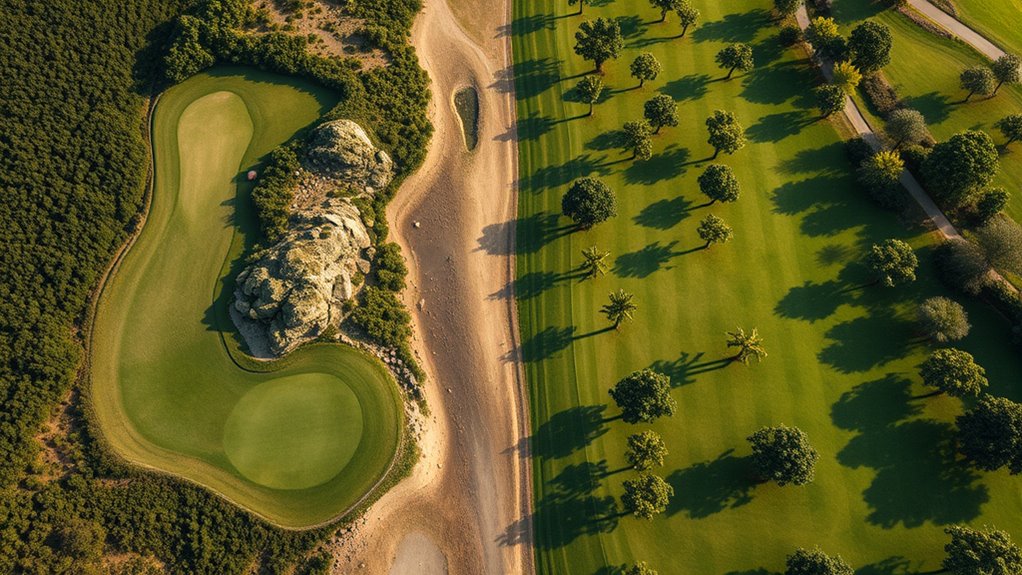
Vegetation and tree placement considerably influence a golf course’s strategy and visual appeal. On coastal courses, native foliage thrives in sandy soils, creating a natural barrier that shapes play. Tree spacing is essential; closely spaced trees can block shots and funnel play into specific areas, while widely spaced trees allow more freedom and challenge. In parkland settings, mature trees are often more abundant and strategically positioned to define fairways and protect greens. These trees, often non-native, add to the course’s aesthetic appeal but can also impact playability. Properly placed vegetation enhances the course’s character and strategy, requiring you to adjust your shots accordingly. Recognizing how native foliage and tree spacing influence the layout helps you better understand the distinct challenges each course presents. Additionally, understanding the role of vegetation management can help course designers optimize playability and maintain ecological balance.
Wind and Weather Influences

You’ll notice that coastal winds can substantially affect how you play, making club selection and shot strategy more challenging. Weather conditions also vary greatly, influencing ball behavior and course difficulty. Understanding these wind and weather patterns is essential to mastering links and parkland golf styles. Additionally, cybersecurity challenges such as hacking attempts and system vulnerabilities can disrupt operations and require proactive measures. Recognizing how environmental factors impact gameplay helps players adapt their techniques effectively. Being aware of course maintenance practices can also influence how the course plays during different times of the year. Incorporating knowledge of climatic variations can further enhance a golfer’s ability to anticipate and respond to changing conditions on coastal courses. Moreover, weather forecasting tools can provide valuable insights, enabling players to plan their shots more strategically.
Coastal Wind Dynamics
Coastal wind dynamics profoundly shape the playing conditions on links golf courses by creating unpredictable gusts and varying airflow patterns. The sandy dunes act as natural barriers, funneling and redirecting sea breezes that can suddenly intensify or weaken, impacting your shots. When the wind whips across the dunes, it often produces swirling patterns that challenge your judgment and club selection. Sea breezes can quickly change direction and strength, forcing you to adjust your strategy on the fly. This constant variability demands heightened focus and adaptability. Understanding how the sandy dunes influence airflow helps you anticipate how the wind will behave during your round. Recognizing these patterns allows you to better manage your shots and navigate the course’s natural, ever-changing wind conditions. Additionally, ear wax odor can sometimes serve as an unexpected indicator of environmental factors like humidity and airflow, subtly influencing the wind patterns around the course. Being aware of local weather phenomena can further enhance your ability to adapt to these dynamic conditions.
Weather Impact Variability
Wind and weather conditions add an unpredictable layer to golf on links courses, amplifying the effects of the coastal winds you’ve just explored. Humidity fluctuations can change how the ball travels through the air, making shots unpredictable. Higher humidity can cause the ball to fly slightly farther, while low humidity can make it stop quicker. Temperature variation also impacts play; warmer days tend to increase ball speed, while cooler days slow it down. These weather shifts can vary daily, forcing you to constantly adjust your club selection and shot strategy. Unlike parkland courses, where weather effects are more stable, the dynamic coastal environment makes weather impact variability a vital factor in your game, demanding flexibility and awareness to navigate the changing conditions effectively.
Course Design and Layout Features

Course design and layout features substantially influence how each type of course challenges players and shapes the overall experience. In coastal links courses, golf course architecture emphasizes natural terrain, with undulating fairways, deep bunkers, and minimal trees, reflecting a design philosophy that prioritizes natural flow and strategic play. Conversely, parkland courses focus on manicured landscapes, with tree-lined fairways, water hazards, and precise shot shaping. These layout differences affect how you approach each round: links courses demand adaptability to unpredictable bounces, while parkland courses require accuracy and control. Understanding these contrasting design features helps you appreciate how the course’s architecture influences shot selection, difficulty, and the overall challenge, making each style uniquely engaging.
Environmental and Climatic Factors

You’ll notice that coastal winds can considerably affect how you play on links courses, making shots more unpredictable. Saltwater exposure also influences the terrain, creating unique challenges and maintenance needs. These environmental factors set links golf apart from parkland courses and shape your overall experience. Additionally, the local climate plays a significant role in course conditions, affecting turf health and playability throughout the year. The combination of wind and moisture levels often requires specialized course management strategies to maintain optimal playing conditions. Furthermore, understanding the specific soil composition of coastal areas can help course managers implement more effective maintenance practices to sustain the turf’s resilience. Incorporating connected equipment and data-driven monitoring can further optimize turf care and environmental adjustments, leading to more precise environmental management practices.
Coastal Wind Influence
Coastal winds play a significant role in shaping the playing conditions on links golf courses, often introducing unpredictable elements that challenge even the most experienced golfers. Gusty breezes can vary suddenly in strength, making club selection tricky and shots less predictable. The wind direction is equally important; a breeze blowing against your shot can drastically reduce distance, while a tailwind can send the ball far beyond your target. These winds create a dynamic environment where adaptability is key. You need to read the gusts carefully and adjust your strategy accordingly. Unlike parkland courses, where trees and terrain stabilize conditions, coastal courses demand constant attention to the wind’s behavior. Mastering this influence can be the difference between a good score and a frustrating round.
Saltwater Impact
Saltwater from the ocean considerably influences the environment and climate of links golf courses, often accelerating corrosion and impacting plant life. Saltwater erosion gradually wears away soil and structures, challenging maintenance and longevity. You’ll notice that the salty air hampers coastal flora; many plants struggle to thrive, leading to sparse, hardy vegetation adapted to harsh conditions. This environment shapes the course’s character, with grasses and plants evolving to tolerate high salinity levels. The constant presence of salt in the air and soil also influences the choice of turfgrass, favoring species resistant to salt damage. Salt tolerance in plant species becomes a crucial factor for course sustainability. Additionally, the climatic conditions of coastal areas require specialized management practices to maintain healthy turf. The unique coastal ecosystem further influences how courses sustain their natural landscapes, emphasizing adaptive strategies. Understanding saltwater’s effects helps you appreciate why links courses develop unique landscapes, where resilience against environmental stressors is essential for sustaining the course’s integrity and playability. Sustainable practices are often employed to counteract these challenges and preserve the course’s natural beauty. Recognizing the importance of environmental resilience can lead to better strategies for course care and longevity.
Frequently Asked Questions
How Do Coastal Courses Differ in Maintenance and Upkeep Compared to Inland Courses?
Coastal courses require more frequent maintenance due to salt, wind, and moisture. You’ll notice soil drainage issues, so you need to choose salt-tolerant grasses like seashore paspalum. Regular aeration and careful irrigation help prevent compacted soil and disease. Compared to inland courses, you’ll spend more time managing these factors to keep the turf healthy and playable, ensuring the course withstands harsh coastal elements.
What Impact Does Saltwater Exposure Have on Course Materials and Grasses?
Saltwater exposure causes salt corrosion, which can damage course materials like metal fixtures and equipment, leading to faster deterioration. It also affects grasses by challenging their resilience; only salt-tolerant varieties thrive in coastal conditions. To maintain quality, you need to choose resilient grasses and manage salt buildup effectively. Regular flushing and proper drainage help protect the course, ensuring the grasses stay healthy and the materials remain intact despite the salty environment.
How Do Golfers Adjust Their Strategy on Links Versus Parkland Courses?
On links courses, you need to adapt your wind strategy by focusing on shot selection that counters the breeze, often opting for lower, more controlled shots to reduce spin and maintain accuracy. In parkland courses, you’ll likely rely less on wind considerations and more on precision and shot shape. Adjust your approach by choosing clubs and shot types suited to the course’s unique conditions, helping you navigate the terrain effectively.
Are There Specific Challenges in Designing Coastal Golf Courses?
Designing coastal golf courses is like taming the restless ocean’s spirit. You face unique challenges such as coastal erosion, which threatens the landscape, and wind resistance that tests every shot. You must carefully choose resilient materials and position tees to withstand relentless winds. Balancing natural beauty with durability demands ingenuity, ensuring the course remains stunning and playable despite nature’s fierce and ever-changing moods.
How Does Wildlife Presence Vary Between Links and Parkland Golf Environments?
You’ll notice wildlife diversity varies greatly between links and parkland golf environments due to habitat differences. In links courses, you might see seabirds, foxes, and coastal insects thriving in open, sandy areas. Conversely, parkland courses support a richer variety of wildlife like songbirds, deer, and amphibians, thanks to their lush trees and water features. Your experience depends on the habitat, making each course uniquely vibrant with local fauna.
Conclusion
As you step onto the coastal links, feel the sea breeze whisper against your skin and watch the waves crash nearby. The rugged terrain, shifting winds, and sandy soil create a landscape that challenges your shot accuracy and adaptability. Unlike parkland courses, here every swing is a dance with nature’s unpredictable elements. Embrace the wild beauty around you — it’s these unique conditions that make playing coastal links an unforgettable, dynamic experience.