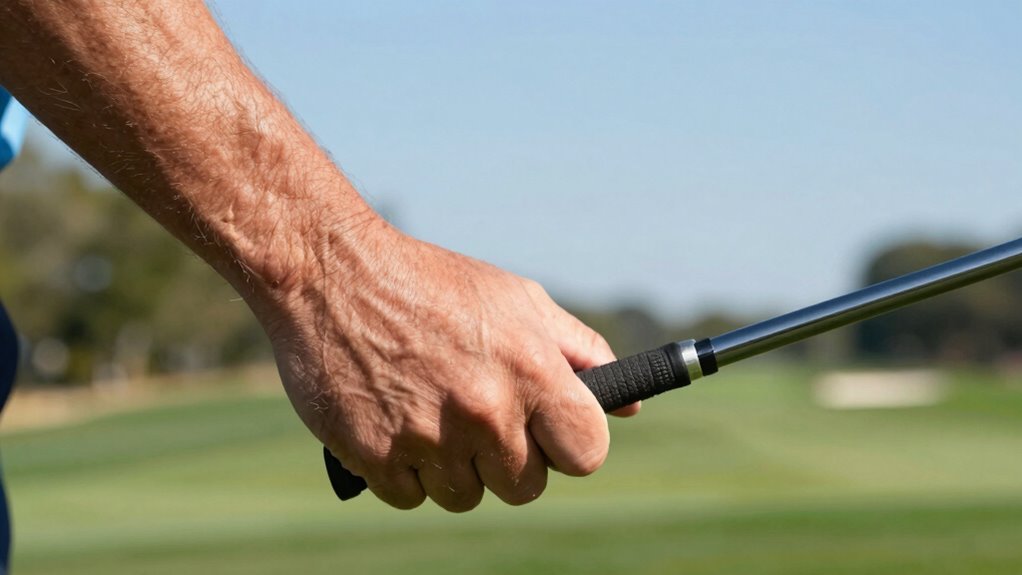
The most overlooked part of a great golf swing is your grip and wrist hinge. Many players focus on swing mechanics but forget how vital your grip pressure and hand positioning are for control, power, and consistency. A proper grip ensures the clubface stays square and promotes a fluid wrist hinge during the backswing. Improving these fundamentals can transform your shots and accuracy. Keep exploring to uncover how fine-tuning this overlooked area can elevate your game even further.
Key Takeaways
- The grip and wrist hinge interaction is often overlooked but crucial for consistent, powerful swings.
- Proper grip pressure and ball position significantly impact wrist hinge timing and overall swing control.
- Maintaining a relaxed grip promotes fluid wrist movement, enhancing control and shot accuracy.
- Recognizing the interconnectedness of grip, wrist hinge, and overall mechanics improves swing consistency.
- Small adjustments in grip can lead to significant improvements in control, power, and shot reliability.
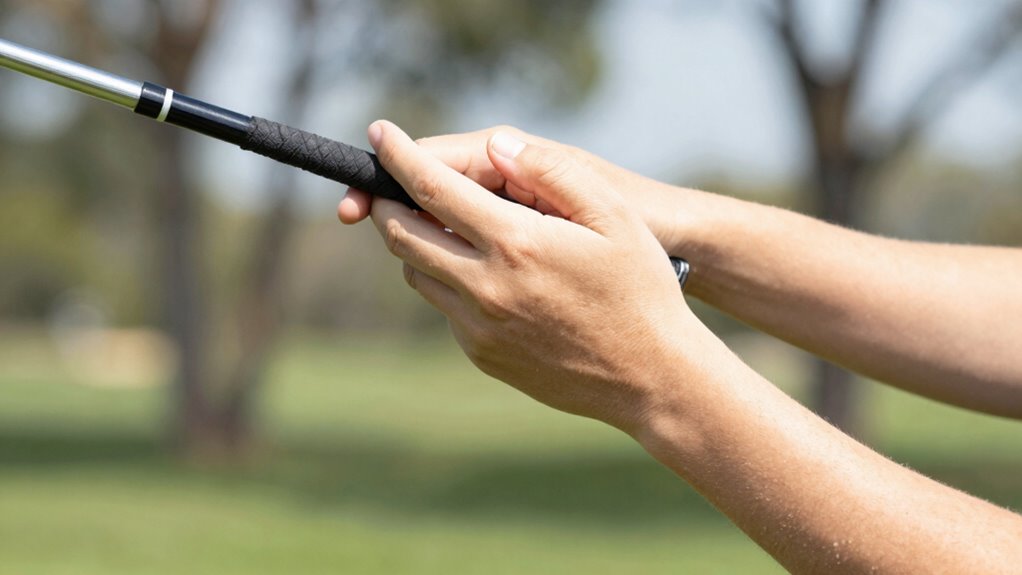
While many golfers focus on their swing techniques and ball position, they often overlook the most essential part that can make or break their shot: their grip. Your grip is the foundation of every swing. Without a proper grip, all the effort you put into lining up your shot or perfecting your ball position can still fall flat. A consistent, correct grip ensures that your clubface stays square through impact, giving you better control and accuracy. It also influences how well you can generate power and maintain a smooth rhythm. So, don’t underestimate the importance of your grip—spend time getting it right.
One key aspect that often gets ignored is how your grip interacts with your wrist hinge. The wrist hinge is critical because it helps you set the club at the right angle during your backswing. When you grip the club properly, it becomes easier to create a natural wrist hinge, which in turn promotes a more efficient swing. A good wrist hinge allows you to store energy in the top of your backswing, ready to be unleashed on the downswing. If your grip is too tight or too loose, it can limit your wrist movement, causing you to lose synchronization and power. Conversely, a proper grip facilitates a light, flexible wrist hinge that promotes a fluid, controlled swing. Additionally, understanding the importance of biodiversity in the environment can help you appreciate how interconnected systems function smoothly—similar to how a proper grip and wrist hinge work together to produce a seamless swing. Recognizing how interconnected systems function smoothly can also help you understand the importance of maintaining consistent fundamentals in your swing. Developing awareness of your body mechanics can further enhance your ability to synchronize your grip and wrist movement for optimal performance. Moreover, practicing mindfulness of your muscle engagement can help you maintain the right tension and fluidity throughout your swing.
Furthermore, practicing proper pressure in your grip can help you maintain control without tension, which is vital for a smooth wrist hinge and overall swing. Your ball position also plays a role in how well you can hinge your wrists. When your ball is positioned correctly—say, just inside your front foot for a driver or more centered for irons—you naturally set up your body to hinge your wrists at the right moment. This alignment helps you create a more consistent swing path and better contact. If your ball is too far forward or back, it can throw off your wrist hinge timing, leading to inconsistent shots. When your grip is secure and your ball position is spot-on, you’ll find it easier to initiate and maintain a proper wrist hinge throughout your swing, leading to more solid strikes.
Ultimately, your grip and wrist hinge work hand-in-hand. Mastering this connection gives you better control over your clubface, improves your timing, and enhances your overall swing. While focusing on ball position and swing mechanics is essential, don’t forget that a proper grip sets the stage for everything else. Spend time refining your grip, and you’ll likely see immediate improvements in your consistency and shot accuracy.

GOLF-GRIP™ Golf Grip Trainer for Left & Right-Handed Golfers – Snap-On Golf Training Aid for Proper Hand Position & Swing Technique – Hit Straighter, Longer Shots & Fix Slices or Hooks
FIXES SLICES, HOOKS & INCONSISTENT SHOTS – Correct grip fundamentals eliminate swing faults and help you hit straighter,…
As an affiliate, we earn on qualifying purchases.
As an affiliate, we earn on qualifying purchases.
Frequently Asked Questions
How Does Grip Pressure Affect the Overlooked Part of the Swing?
Grip pressure considerably impacts the overlooked part of your swing by influencing hand tension and grip relaxation. If your grip is too tight, it creates unnecessary tension, restricting your wrist movement and reducing swing fluidity. Conversely, a relaxed grip allows for better wrist hinge and smoother shift through the ball. Focus on maintaining a light grip to optimize hand tension, enhancing control and consistency in your swing.
Can Equipment Choice Influence This Overlooked Aspect?
Ever wonder if your equipment influences your swing’s overlooked part? Absolutely. Proper club fitting guarantees your clubs match your swing style, especially the shaft flex, which can impact consistency and control. When your equipment is tailored to your needs, it helps you maintain the right grip pressure and smooth motion. Don’t underestimate how choosing the right clubs can enhance your overall swing, making that overlooked part work for you instead of against you.
Is This Overlooked Part More Critical for Beginners or Advanced Players?
This overlooked part is more critical for beginners because it directly impacts swing consistency and mental focus. As a beginner, maintaining focus on this aspect helps develop a reliable swing, reducing mistakes and building confidence. Advanced players usually have this component well ingrained, but neglecting it can still cause inconsistency. Prioritizing mental focus and refining this overlooked part enhances overall performance at any skill level.
How Can I Identify if I’M Neglecting This Part in My Swing?
You can identify if you’re neglecting this part by paying attention to your swing tempo and mental focus. If your swing feels rushed or inconsistent, you’re likely overlooking it. Notice if your mental focus drifts during your shot, causing disruptions in rhythm. To improve, slow down your tempo and maintain concentration, ensuring you engage all parts of your swing, especially the overlooked one, for better consistency and overall performance.
Are There Specific Drills to Improve This Overlooked Swing Element?
Did you know that 80% of amateur golfers struggle with maintaining consistent swing tempo? To improve this overlooked element, try drills like counting your swing rhythm—say, “one, two” for backswing and downswing—or practice with a metronome. Focus your mental attention on smooth, controlled movements, helping you develop better swing tempo and mental focus. These drills can boost your consistency and overall game performance.
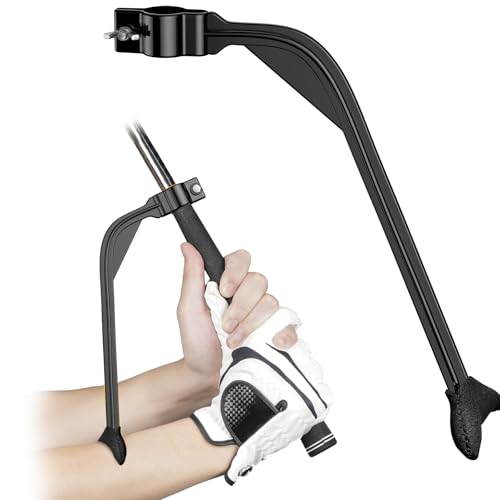
GreenHaven Golf Training Wrist Hinge Golf Swing Training Aid Swing Correcting Trainer Tool for Golfers Beginners Arm Elbow Posture Teaching Accessory for Golf Club Practice Black
Ideal Swing Training Aid: By adjusting the angle between the shaft and your forearms, this wrist hinge helps…
As an affiliate, we earn on qualifying purchases.
As an affiliate, we earn on qualifying purchases.
Conclusion
Remember, sometimes the smallest details can make the biggest difference. If you pay close attention to the often-overlooked parts of your swing, you might just uncover hidden potential you hadn’t realized was there. It’s easy to focus on the flashy aspects, but true mastery comes from nurturing those subtle, quiet elements. Keep exploring, stay patient, and trust that the overlooked can sometimes be the most valuable part of your game.

Golf Grip Trainer, Golf Club Grip Trainer for Right Hand,Improves Grip Strength and Accuracy,Trains Correct Hand Position for Stable Swing,Golf Training Swing Aid for All Level Golfers Black,1PCS
Master proper posture and build muscle memory: Our golf grip trainer is designed to lock in the perfect…
As an affiliate, we earn on qualifying purchases.
As an affiliate, we earn on qualifying purchases.

theHANGER Golf Training Aid for Right Handed Golfers, Golf Swing Aid Helps with Clubface Awareness, Swing Plane, and Proper Impact
OFFICIAL WATSON GOLF TRAINING AID – theHANGER is patented and Made in the USA using sustainable materials and…
As an affiliate, we earn on qualifying purchases.
As an affiliate, we earn on qualifying purchases.