

When accuracy and control matter most, leaving the driver in the bag and opting for a 3-wood off the tee is smarter. A 3-wood offers better consistency, less dispersion, and helps you avoid hazards on tight or narrow fairways. This club also reduces the risk of over swinging or hitting shaky drives. If you want more tips on making smart club choices for tricky situations, keep exploring how adjusting your strategy can lower your scores.
Key Takeaways
- Use a 3-wood for better control on tight or narrow holes where accuracy outweighs distance.
- Opt for a 3-wood when wind or hazards make driver shots too risky or inconsistent.
- Choose a 3-wood to maintain shot reliability and avoid costly mistakes in challenging course conditions.
- Use a 3-wood for confident, controlled tee shots when precision is more critical than maximum yardage.
- Leave the driver behind and select a 3-wood if your swing lacks consistency or you’re aiming for safer play.
When Accuracy Trumps Distance

Sometimes, hitting a 3-wood off the tee is the smarter choice because accuracy matters more than maximum distance. Your club selection should prioritize control, especially if you’re faced with tight fairways or tricky pins. Aiming for consistency helps keep your score low, and that requires a solid mental approach. Trust your 3-wood to deliver a reliable shot rather than risking a wayward drive with the driver. Focus on your swing, visualize the shot, and stay confident in your choice. Remember, it’s better to hit a shorter, accurate shot than to gamble for extra yards and end up in trouble. By choosing the right club and maintaining a calm mindset, you set yourself up for better scoring opportunities. Additionally, using the proper club fit and equipment maintenance can enhance your accuracy and confidence on the course. Recognizing the importance of course management strategies can help you make smarter decisions and improve overall performance. Developing a consistent pre-shot routine can further boost your mental focus and shot execution under pressure. Incorporating practice drills that simulate course scenarios can also build your confidence in selecting the right club for each shot. Moreover, understanding how lie and course conditions impact your shot can help you choose the most appropriate club and shot type.
Navigating Hazards and Difficult Bunkers

When facing hazards or tricky bunkers, choosing an accurate shot is vital to avoid costly mistakes. Managing risk effectively means selecting clubs and targets that keep you safe while still giving you a solid shot at par or better. By focusing on precision over power, you can navigate these challenges more confidently and maintain control of your game. Incorporating high-precision equipment can further improve your shot accuracy in difficult situations. Understanding the importance of shot selection allows golfers to adapt their strategy to various course conditions, reducing the likelihood of errors. Additionally, being aware of course hazards helps you plan your shots carefully to minimize trouble spots. Recognizing common hazard types enables better decision-making and shot planning on the course. Developing a good understanding of course management skills can significantly improve your ability to avoid trouble and play smarter shots.
Accurate Shot Selection
Choosing the right shot is crucial when steering through hazards and tricky bunkers, as it can mean the difference between saving par or adding unnecessary strokes. Your club selection plays a key role in this decision, helping you control distance and accuracy. Focus on a shot strategy that minimizes risk—sometimes a safer, more precise shot beats power and distance. Visualize the landing zone, factoring in the hazards around the green, and select a club that allows you to hit the desired trajectory. Avoid forcing heroic shots; instead, aim for consistent, controlled strikes that keep you out of trouble. By making deliberate club choices and sticking to your shot strategy, you increase your chances of navigating hazards successfully and keeping your scorecard clean.
Managing Risk Effectively
Charting hazards and difficult bunkers requires a strategic approach that prioritizes safety over distance. You need to conduct a quick risk assessment to identify the most dangerous areas and adjust your shot accordingly. Using effective decision-making strategies helps you avoid costly mistakes. Incorporating a clear understanding of style options can help you select the most appropriate shot to navigate hazards safely.
Controlling Spin and Ball Flight

Controlling your spin rate and ball flight can make a big difference in your shots. When you manage spin effectively, you gain better control over trajectory and stopping power. Focusing on these aspects helps you hit more accurate and consistent shots off the tee with a 3-wood.
Spin Rate Management
Managing spin rate is essential for optimizing your ball flight and consistency off the tee. A proper spin rate helps you control shot shaping and avoids the pitfalls of excessive or insufficient spin. When you fine-tune your spin, you can achieve more predictable trajectories and better accuracy. To regulate your spin rate effectively, consider adjusting your club’s loft, swing intensity, and ball position. This allows you to produce the desired ball flight without sacrificing distance or control. Remember, too much spin can lead to unwanted curves, while too little can cause low, unmanageable shots. Consistently monitoring and adjusting your spin ensures you stay on course and make smarter club choices, especially when considering options like a 3-wood over a driver. Using the right ball for your desired spin levels can significantly influence your shot consistency and control. Optimizing your swing path for better shot shaping also plays a crucial role in managing spin effectively. Adjust tee height for consistent spin control and regularly check your equipment for consistent spin performance to maintain reliable results. Incorporating launch monitor data can also help you better understand and refine your spin control techniques.
Ball Trajectory Control
To achieve the desired ball flight, you need to actively influence your spin and launch conditions. Your swing mechanics and proper club fitting play vital roles in controlling trajectory. Adjust your tee height, stance, and clubface angle to fine-tune your shot shape and height. For consistent results, understand how club loft and shaft flexibility affect spin and launch angle. Use this table to help visualize key factors:
| Factor | Effect on Trajectory |
|---|---|
| Club loft | Higher loft increases launch angle, spin |
| Swing path | Inside-out path promotes higher draw/spin |
| Ball position | Forward ball position increases launch angle |
| Shaft stiffness | Stiffer shafts produce lower spin |
Additionally, mastering firewood preparation techniques can help ensure your woodworking projects are safer and more efficient, paralleling how proper club setup influences shot consistency. Developing a deeper understanding of trajectory control can enhance your ability to manage shot shape and distance effectively. Recognizing the importance of club fitting can significantly improve your overall performance and confidence on the course. Furthermore, practicing proper swing mechanics can lead to more predictable and reliable ball flight. Incorporating modern golf technology such as launch monitors and data analysis can further refine your shot accuracy and consistency. Mastering these elements ensures you optimize your ball flight for better control and accuracy.
Managing Wind Conditions Effectively
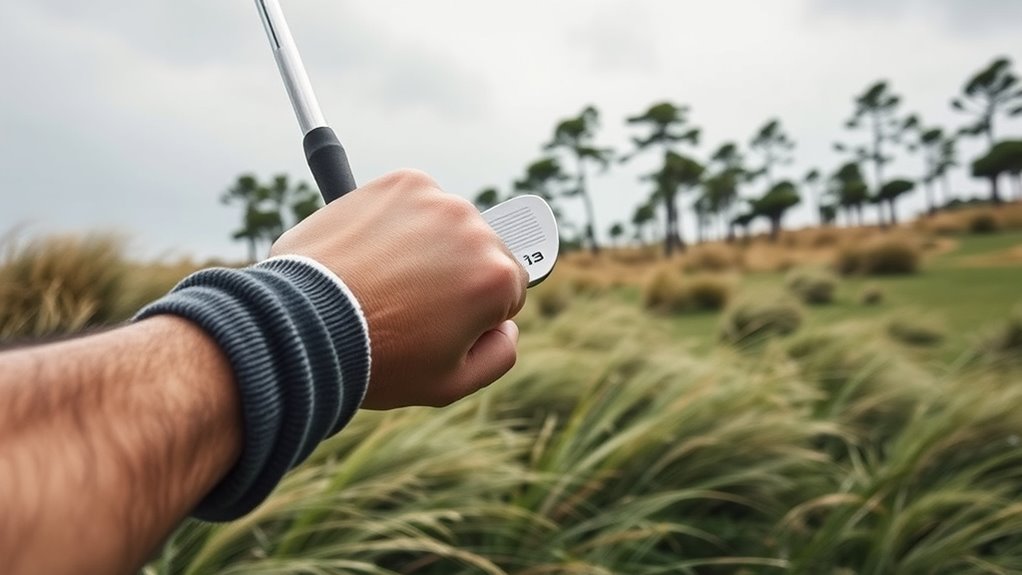
When wind gusts threaten to throw off your shot, adjusting your strategy can make all the difference. To handle challenging weather, focus on proper club fitting and weather adaptation techniques.
When wind challenges your shot, adapt with proper club selection and swing adjustments.
- Use a club with the right loft to minimize impact from crosswinds or headwinds
- Aim slightly into the wind to keep your ball on target
- Adjust your swing length and tempo to control ball flight and reduce wind influence
- Consider investing in a professional club fitting to optimize your equipment for varying wind conditions
- Stay informed about market trends and insights that could affect your game strategies during unpredictable weather patterns
- Incorporating precious metals investment into your financial planning can provide a hedge against economic volatility that might affect your overall stability, much like adjusting your golf strategy for wind. Additionally, understanding different nail styles can help you adapt your personal style to changing trends, ensuring you stay current and confident in your appearance.
Playing on Tight or Narrow Fairways

Playing on tight or narrow fairways demands precision and strategic shot placement. You need to carefully choose your club, often favoring a 3-wood or other control clubs over a driver to keep the ball in play. Club selection is essential; selecting a club that offers better control reduces the risk of overshooting the fairway’s edges. Shot shaping becomes critical—you might need to carve the ball around hazards or avoid bunkers lining the fairway. Focus on a smooth, consistent swing that promotes accuracy rather than distance. Visualize your shot, plan your landing spot, and trust your club for better control. Proper club choice is vital in these situations, as it directly impacts your ability to navigate tight fairways effectively. Developing a consistent shot technique can also improve your accuracy and confidence under pressure. By prioritizing shot placement and club choice, you set yourself up for a better approach and a lower score on these challenging holes.
Preserving Confidence on Off Days

Even on off days when your swing feels off or results aren’t what you expect, maintaining your confidence is essential to keeping your game on track. Focus on your mental resilience by staying positive and avoiding self-criticism. Practice emotional regulation to manage frustration and stay calm, which helps you make better decisions and reset quickly. Remember, setbacks are part of the game, and your mindset determines how fast you recover. To preserve confidence, consider these strategies:
- Visualize successful shots to reinforce your skills
- Stick to your pre-shot routine for consistency
- Focus on process, not just outcomes, to maintain perspective
Additionally, understanding your performance history can help you recognize patterns and build resilience during challenging times.
Adapting to Course Layouts and Tactics

Adapting to course layouts and tactics requires a keen understanding of each hole’s unique features and challenges. Effective course management means choosing shots that minimize risk and play to your strengths. Sometimes, that means opting for a 3-wood off the tee instead of a driver, especially on tight fairways or doglegs. Recognize where hazards, bunkers, or water come into play, and plan your shot accordingly. Maintaining mental resilience helps you stay focused and flexible when course conditions change or plans need adjusting. By studying the layout and adjusting your strategy, you can avoid unnecessary trouble and keep your score in check. This approach not only improves your performance but also builds confidence as you learn to navigate different course scenarios smartly.
Frequently Asked Questions
How Do I Determine When to Switch From Driver to 3-Wood?
You should switch from your driver to a 3-wood when club fitting shows better shot consistency and control with the latter. If you find your driver inconsistent or difficult to hit, a 3-wood can provide more accuracy and confidence off the tee. Pay attention to your typical shot shape and distance, and consider practicing with both clubs to see which offers more reliable results for your game.
What Are the Key Differences in Setup for a 3-Wood Versus a Driver?
When setting up a 3-wood versus a driver, focus on clubface alignment, keeping it square or slightly open for control. Use a slightly lighter grip pressure to promote smoother swings and better contact. Position the ball a bit farther back in your stance with the 3-wood, and set your hands closer to your body. These adjustments help you optimize your launch and accuracy, making the 3-wood a smarter choice off the tee.
Can a 3-Wood Help Improve My Overall Course Management?
Using a 3-wood can definitely improve your overall course management. It helps you choose the right club for tricky shots, giving you better control and consistency. By selecting a 3-wood instead of a driver in certain situations, you adopt smarter shot strategies that reduce risks and improve accuracy. This club selection allows you to play smarter, conserve energy, and set up easier approach shots, ultimately lowering your scores.
How Does Club Selection Affect My Mental Game During a Round?
Did you know golfers with high club confidence tend to play more consistently? Your club selection directly impacts your mental resilience—choosing a reliable club like a 3-wood can reduce anxiety and boost confidence. When you opt for clubs that suit your skill level, you stay focused and composed. This mental clarity helps you make better shots, ultimately improving your overall game and enjoyment on the course.
What Practice Drills Can Enhance Confidence With a 3-Wood?
To boost your confidence with a 3-wood, focus on swing tempo and alignment drills. Practice maintaining a smooth, consistent tempo to guarantee control and accuracy. Use alignment drills to perfect your stance and aim, building trust in your shot setup. Regularly incorporating these drills into your practice routine will help you develop a reliable, confident swing with your 3-wood, making it your go-to club off the tee.
Conclusion
So, next time you face that intimidating tee shot, maybe ditch the driver and embrace the 3-wood. Who needs those extra yards when you can master accuracy, avoid hazards, and keep your sanity intact? After all, playing it safe is overrated—unless you enjoy taking double bogeys with flair. Remember, sometimes the smartest move is leaving the driver in the bag and letting that trusty 3-wood do the real work. Happy golfing!