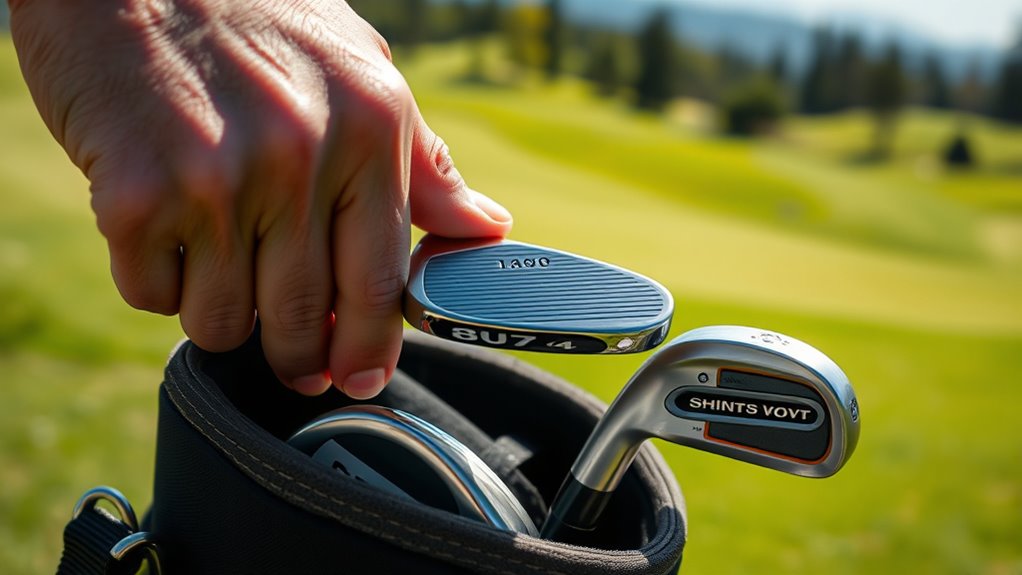

Choosing the right club starts with understanding your skill level, swing speed, and course conditions. Match your club’s length, flex, and type to improve distance and accuracy. Consider the weather and terrain—lower shots for wind, more control on soft courses. Confident decisions come from knowing your equipment, practicing different options, and trusting your instincts. Keep exploring these tips to sharpen your club selection and boost your game even more.
Key Takeaways
- Match club length and flex to your height, swing speed, and style for optimal control and comfort.
- Consider course conditions like weather and terrain to select clubs that provide better control and spin.
- Use quick reference guides and trust your knowledge to make confident club choices during play.
- Maintain your clubs regularly for better performance and consistent contact.
- Practice experimenting with different clubs to understand their reactions and improve decision-making.
Understanding Different Types of Golf Clubs

To choose the right golf clubs, you first need to understand the different types available. Golf club materials vary and impact performance; for example, stainless steel is durable and great for beginners, while titanium offers lightweight strength for advanced players. The club head design also matters, with drivers, irons, wedges, and putters each serving specific purposes. When exploring golf club brands, you’ll find options ranging from well-known giants to boutique manufacturers, each offering unique features and quality levels. Recognizing the differences in materials and brand reputations helps you make informed choices tailored to your game. Whether you’re seeking durability, distance, or precision, understanding the variety of clubs and what materials they’re made of is essential for selecting the right equipment.
Matching Clubs to Your Skill Level
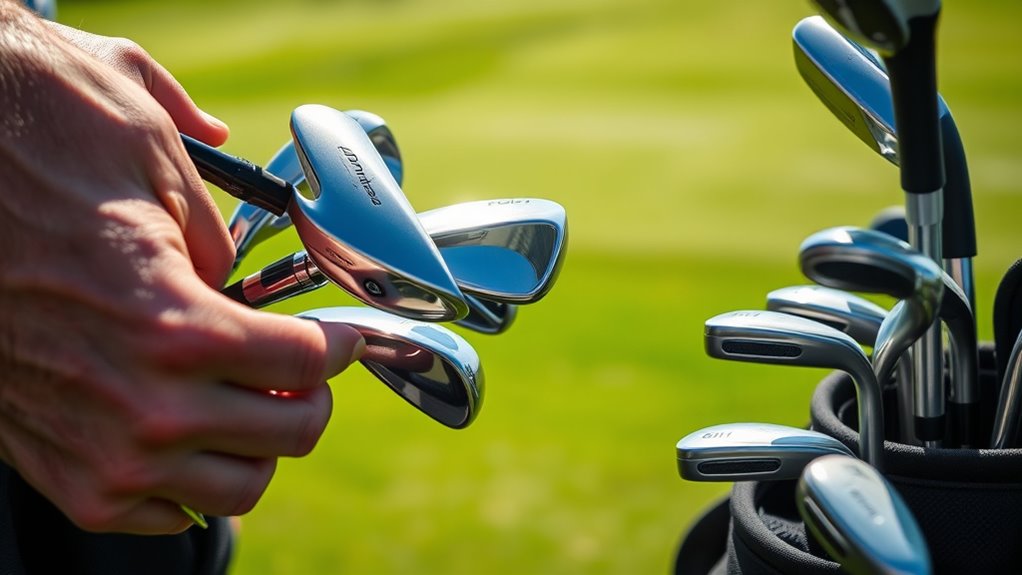
To improve your game, you need clubs that match your skill level. Make sure the club lengths suit your height and swing style, and consider your swing speed to choose the right flex. When these factors align, you’ll hit more consistent shots and enjoy playing even more. Additionally, selecting clubs with appropriate clubhead technology can enhance your performance and help you achieve better accuracy. Understanding your swing mechanics can further refine your club choices and improve your overall game. Recognizing your individual playing style can also guide you toward the most suitable equipment choices, making practice more effective and enjoyable. Paying attention to club fitting processes ensures that your equipment is tailored precisely to your personal needs, which is crucial for performance optimization.
Skill Level Compatibility
Choosing the right club depends heavily on your skill level, as using equipment that matches your experience makes a significant difference in your game. If you’re a beginner, opt for clubs with larger sweet spots and forgiving features that help improve your consistency. Advanced players might prefer clubs that offer more control and precision. Your choice also impacts your golf apparel; comfortable, well-fitted clothing helps you stay focused and move freely. Additionally, selecting clubs suited to your skill level shows respect for course etiquette, as it promotes smoother play and reduces disruptions. Matching clubs to your ability guarantees you’ll enjoy the game more and develop your skills efficiently. Remember, the right equipment boosts confidence and helps you perform at your best on every hole. Understanding the importance of equipment matching can lead to better overall performance and a more enjoyable golfing experience. Properly selecting clubs also contributes to your overall comfort and confidence during play, and taking the time to find the right fit can enhance your overall golf experience. Being aware of your skill level compatibility ensures you choose gear that complements your current abilities and encourages ongoing improvement. Additionally, leveraging AI-powered data analytics can help tailor equipment choices to optimize your game.
Proper Club Lengths
Selecting clubs that match your skill level also means paying attention to proper club lengths. The right length guarantees you can swing comfortably and make consistent contact. When choosing clubs, consider your posture and stance, which are influenced by club length. A proper club grip is essential; it helps you maintain control and accuracy, especially when your clubs are correctly fitted. Additionally, the club head shape can impact how well the club fits your swing style and your ability to hit the ball cleanly. Shorter clubs may offer better control for beginners, while longer clubs can add distance for more advanced players. Ensuring the correct club length ultimately helps you develop proper technique and improves your overall game. Accurate club fitting is crucial for optimizing your performance and preventing injury, and understanding club length measurements can guide you toward the best fit for your swing.
Swing Speed Considerations
Your swing speed plays a crucial role in determining which clubs are best suited for your game. If you have a faster swing speed, you’ll benefit from clubs with stiffer shafts, which provide more control and accuracy. Conversely, slower swing speeds usually require more flexible shafts to maximize distance and ease of swing. Additionally, your grip size can influence your swing speed; a proper fit helps you maintain better control and consistency. Matching shaft flexibility to your swing speed is essential for maximizing performance. Properly matching equipment to your skill level can help you improve both your accuracy and distance on the course. Recognizing how club fitting techniques impact your shot consistency can also make a significant difference in your performance, especially when considering factors like customized shaft options to optimize your game.
Considering Distance and Accuracy
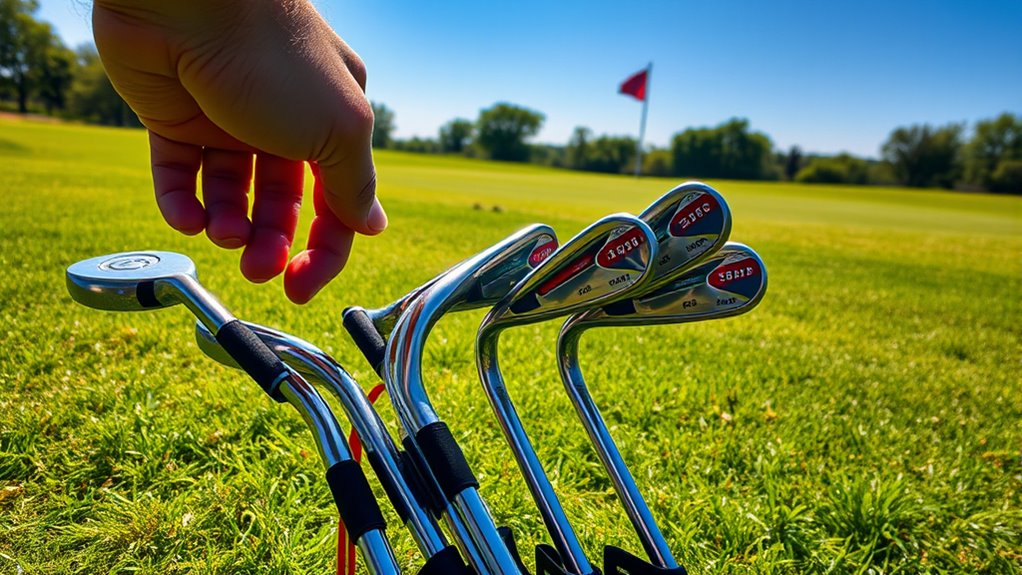
When considering which club to use, balancing distance and accuracy is essential. Your club grip plays a key role in control, helping you make consistent contact and aim accurately. If you’re facing strong wind or weather impact, you might opt for a club that offers better precision, even if it doesn’t hit as far. Conversely, if you need maximum distance, choosing a club with less control could be tempting, but it might compromise accuracy. Think about the shot’s purpose: is it better to aim for a safe, controlled shot or go for maximum yardage? Adjust your club choice based on the conditions and your ability to control the ball. Remember, the right club helps you find the sweet spot between distance and precision, much like optimizing your home charging setup for efficiency and safety in an EV. Additionally, practicing different club selections can improve your overall game by helping you adapt to various course scenarios. Understanding the horsepower of electric dirt bikes can also inform how you approach power and control in your swings, similar to how rider effort influences generator output or bike performance. Developing a deeper understanding of how different clubs influence shot outcomes, especially through herbalism principles like plant properties and preparation, can also enhance your strategic decision-making on the course.
Factors to Think About for Specific Shots

Understanding the specific demands of each shot helps you choose the right club and approach. Golf course conditions, such as slopes, bunkers, or hazards, influence your club selection. For example, if the terrain is uneven or has thick rough, you might need a club that offers more loft or control. Weather impacts also matter—wind can alter shot distance and accuracy, requiring adjustments in club choice. If it’s windy, you may opt for a club that keeps the ball lower; on calm days, a standard club may suffice. Additionally, if the course is wet or soft, selecting a club that provides better control and spin is essential. Paying attention to these factors guarantees your shot strategy matches the conditions, helping you play smarter and more confidently. Incorporating club selection strategies can further improve your performance in various scenarios. Recognizing how course conditions influence your club choice enables you to adapt more effectively during play.
Tips for Making Confident Club Choices

Making confident club choices starts with trusting your knowledge of your own swing and the course conditions. To do this effectively, consider factors like wind, lie, and distance. Always remember good golf etiquette by maintaining your clubs properly, ensuring they’re clean and in good condition, which boosts confidence. Before each shot, quickly assess the club’s suitability and your comfort level. Use this table as a quick reference:
| Situation | Recommended Club Adjustment | Tips |
|---|---|---|
| Windy Conditions | Club selection up or down | Check club maintenance |
| Uneven Lies | Use clubs with more loft | Stay calm and precise |
| Long Distance Shots | Opt for a longer club | Trust your swing |
| Short Approach | Wedge for control | Focus on accuracy |
| Tight Fairway | Use a smaller, controlled club | Keep golf etiquette in mind |
Confidence comes from preparation and awareness. Paying attention to club selection strategies can further improve your decision-making on the course.
Practice and Experimentation for Better Selection

Practicing different shots and experimenting with club choices helps build the confidence needed to select the right club in any situation. Regular practice allows you to understand how each club reacts, improving your decision-making on the course. During practice, focus on proper club fitting to ensure your equipment matches your swing, which enhances consistency. Experiment with different clubs to see how they perform under various conditions, helping you identify your ideal choices. Keep your clubs in good shape through regular equipment maintenance, like cleaning and checking for damage, so they perform as expected. This hands-on experience sharpens your instinct for selecting the right club, making you more adaptable during play and reducing hesitation when faced with tough shots.
Frequently Asked Questions
How Often Should I Replace My Golf Clubs?
You should replace your golf clubs every 5 to 10 years, depending on club maintenance and how often you play. Regularly cleaning and inspecting your clubs can extend their longevity, ensuring peak performance. Keep an eye on signs of wear, like worn-out clubfaces or loose shafts. Investing in new clubs when your current ones show significant damage or no longer meet your game’s needs helps maintain your performance and club longevity.
What Brand of Golf Clubs Is Best for Beginners?
They say, “The proof of the pudding is in the eating,” so start with beginner golf gear from trusted brands like Callaway or Wilson. For club purchase tips, look for sets with forgiving irons and a driver suited for beginners. Opt for clubs with lighter shafts and larger clubheads, making it easier to hit the ball consistently. These brands offer quality and affordability, helping you build confidence on the course.
How Does Weather Affect Club Selection?
Weather impact your club choice by influencing how the ball travels and your swing. Wind can force you to select clubs with less loft or shorter shafts, while rain and humidity affect ball spin and distance. Seasonal adjustments are essential—using lighter clubs in cold weather for better control and heavier clubs in heat for stability. Always consider current weather conditions to optimize your shot and improve overall performance on the course.
Can Custom-Fitted Clubs Improve My Game?
Think of your golf game as a finely tuned orchestra; custom-fitted clubs are your personalized instruments. They align with your swing, offering better control and consistency. The club fitting process uncovers these benefits, ensuring each club matches your unique style. With custom fitting, you gain enhanced comfort, improved accuracy, and more confidence on the course. It’s like having a tailor-made suit—perfectly suited to help you perform at your best.
What Is the Best Way to Store My Golf Clubs?
To keep your golf clubs in top shape, store them properly by using suitable club storage options like a golf bag with padded compartments or a dedicated rack. Regular golf club maintenance, such as cleaning and drying after each round, prevents rust and damage. Avoid extreme temperatures and humidity, which can warp or corrode clubs. Proper storage guarantees your clubs stay in great condition, ready for your next game.
Conclusion
Did you know that choosing the right club can lower your score by up to 4 strokes per round? By understanding your options, matching clubs to your skill, and practicing different shots, you’ll gain confidence on the course. Remember, experimenting with club choices helps you find what works best for you. So, take control of your game—make informed decisions, and watch your performance improve with every swing.