Mastering your golf grip is the key to hitting better, more consistent shots. It’s the foundation for control, power, and accuracy in your swing. Many players make mistakes like gripping too tightly or improper hand placement, which can cause fade or slice shots. Choosing the right grip style and adjusting grip pressure can dramatically improve your game. Keep exploring how refining this overlooked aspect can help you lower scores and enjoy the game even more.
Key Takeaways
- A proper golf grip ensures consistent contact, accuracy, and power, forming the foundation of a better swing.
- Avoid common mistakes like gripping too tightly or incorrect hand placement to maintain wrist mobility and control.
- Personalize your grip style—overlapping or interlocking—to suit your hand size and swing preferences for better comfort.
- Develop a routine to check grip pressure and hand positioning, promoting muscle memory and shot consistency.
- Adjust grip tension based on shot type and conditions for optimal control, power, and shot shaping.

Callaway Swing Easy Golf Swing Trainer Aid, Orange
Golf Training Aid: Our golf swing aid reinforces the key fundamentals of a good golf swing
As an affiliate, we earn on qualifying purchases.
Understanding the Importance of a Proper Golf Grip

A proper golf grip is the foundation of a consistent and powerful swing. Your grip pressure should be firm but not tight; too much tension can restrict your swing, while too little reduces control. Focus on maintaining a balanced grip that allows for fluid motion. Hand positioning is essential—place your hands so that the club rests comfortably in your fingers, not your palms. This setup promotes better control and clubface awareness. Your lead hand (left for right-handed players) should grip the club with knuckles visible, while your trailing hand (right for right-handed players) wraps around it, with the palms facing each other. Mastering these details guarantees a stable grip, leading to improved accuracy and distance on every shot.

TaylorMade Golf SIM 2 MAX DRIVER 10.5 DEGREE MENS RIGHT HAND GRAPHITE REGULAR
New Forged Ring Construction. Forged from a lightweight and high strength aluminum that is milled to an exacting...
As an affiliate, we earn on qualifying purchases.
Common Mistakes Players Make When Gripping the Club

One common mistake is gripping the club too tightly, which can restrict your swing and reduce control. Another issue is incorrect hand placement, leading to inconsistent shots and poor accuracy. Recognizing and fixing these errors is key to improving your game. Additionally, understanding the importance of a secure and proper grip can enhance both your consistency and shot power. Moreover, paying attention to grip pressure helps prevent tension that can negatively affect your swing and shot quality. Developing awareness of grip fundamentals can further support your overall technique and performance.
Too Tight Grip
Holding the club too tightly can considerably hinder your swing, making it less smooth and more tense. When your hand tension is excessive, it restricts your wrist movement and prevents a natural flow through the shot. A grip that’s too tight forces your muscles to work harder, leading to fatigue and inconsistent contact. To improve, focus on grip relaxation—lighten your hold so that the club feels secure but not rigid. This balance allows for better wrist hinge, increased swing speed, and more control. Remember, a relaxed grip doesn’t mean losing your hold; it means easing the pressure to enable a smoother, more fluid swing. With proper hand tension, you’ll notice improved shot consistency and greater overall control on the course.
Incorrect Hand Placement
Many players mistakenly place their hands too far forward or too far back on the club, which can disrupt the swing’s balance and accuracy. Incorrect hand placement affects your grip alignment, causing inconsistencies in your shots. If your hands are too far forward, you might hit thin or topped shots, while hands too far back can lead to fat or pulled shots. Proper hand position ensures your grip alignment is correct, promoting a natural swing path and better control. Focus on placing your hands so that the seams of your grip align with your forearms, creating a neutral, comfortable grip. Always check your grip placement before each shot to maintain consistency. Correct hand placement isn’t just about comfort; it’s about setting a solid foundation for accurate, powerful shots. Understanding the importance of free floating can help you achieve a more consistent and effective grip.

Speed System Golf Titanium Driver Golf Club, Loft Lightweight Graphite Shaft, Oversized Sweet Spot, Aerodynamic, USGA Conforming Mens Driver + Deluxe Headcover - Blue 11.5° Loft, Right
Ultra-Lightweight Graphite Shaft: Weighing under 60g, the golf drivers’ 100% graphite shaft is made for faster swing speeds...
As an affiliate, we earn on qualifying purchases.
The Different Types of Golf Grips and Their Advantages
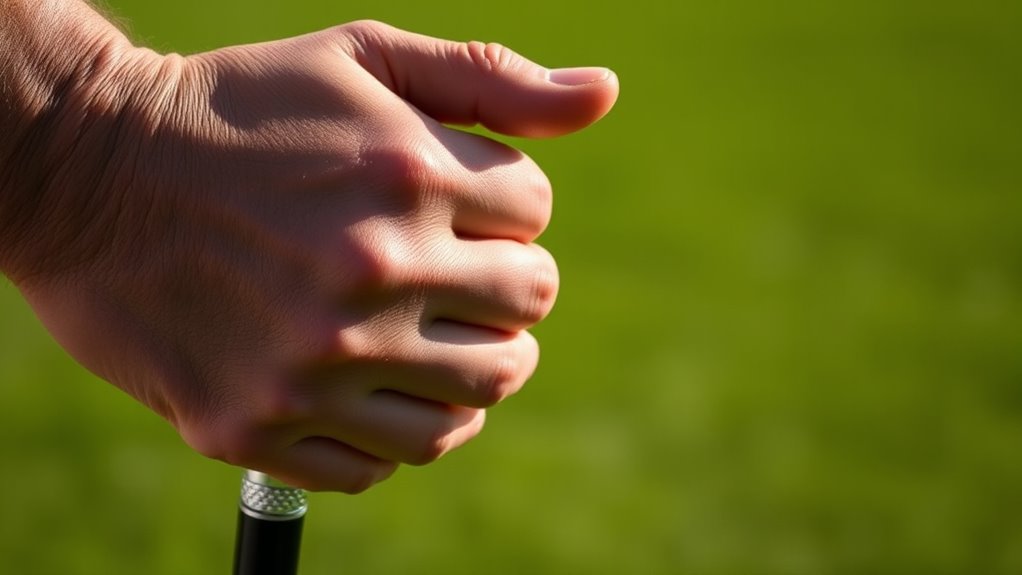
Choosing the right grip style can profoundly impact your game, whether you prefer overlapping, interlocking, or baseball grips. Each grip offers unique benefits, such as improved control or comfort, depending on your hand size and swing. Understanding these options helps you find the grip that best suits your playstyle and enhances your consistency. Additionally, selecting eco-friendly fabric options like Suprem fabric can contribute to more sustainable apparel choices on and off the course. Being aware of climate considerations can also influence your choice of materials for both comfort and durability during play. Recognizing how climate factors affect your grip and clothing choices can help you perform optimally in various weather conditions. Furthermore, understanding the lifecycle of your equipment can aid in maintaining optimal performance and safety during play.
Overlapping vs. Interlocking
When selecting a golf grip, understanding the differences between overlapping and interlocking grips can considerably impact your control and comfort. The overlapping grip, also called the Vardon grip, involves placing your little finger of the bottom hand over the index finger of the top hand, promoting relaxed hand placement and consistent grip pressure. Conversely, the interlocking grip secures your hands together by locking the little finger of the bottom hand with the index finger of the top hand, providing a firmer feel. Choosing the right grip can also influence your swing mechanics and overall shot consistency, especially as grip technique is rooted in fundamental chemistry principles like molecular interactions that affect how tightly your hands hold the club. | Grip Type | Advantages | Best For |
| —————- | ——————————————- | ——————————– |
|---|---|---|
| Overlapping | Easier hand placement, reduces grip tension | Players with smaller hands |
| Interlocking | Enhances control, especially in windy conditions | Players with strong grip needs |
Choose based on comfort and how well your hands work together during the swing.
Baseball vs. Finger Tip
Golf grips vary markedly in how they position your hands, with the baseball and fingertip grips offering distinct advantages. The baseball grip involves wrapping your fingers around the club, with your palms facing each other, providing a secure, natural hold. This grip is ideal for beginners or players seeking more control and comfort. In contrast, the fingertip grip places your fingertips on the club, reducing grip pressure and promoting better wrist hinge and swing flexibility. It’s often favored by experienced golfers who want enhanced feel and precision. While the baseball grip emphasizes stability, the fingertip grip encourages a lighter touch and quicker wrist action. Understanding the importance of attention to detail and how it affects your grip can significantly influence your performance. Recognizing the different grip styles and their effects allows you to tailor your approach for optimal results. Being mindful of grip technique is essential because even small adjustments can lead to noticeable improvements in shot accuracy. Additionally, practicing correct grip techniques with proper training aids can accelerate your progress and consistency.
In addition, choosing the right grip can also help prevent issues such as piercings and discomfort during play, ensuring you stay focused on your shot. Choosing between them depends on your comfort, swing style, and desired control, but understanding their differences helps you optimize your grip for better shots.
Neutral vs. Strong Grip
Understanding the difference between a neutral and strong grip is essential for optimizing your swing. A neutral grip offers versatility, making it easier to shape shots and maintain control, especially with varied club selection. It also helps you adapt to weather effects like wind or rain, providing a balanced shot trajectory. A strong grip, where your hands rotate more clockwise on the club, promotes a closed clubface at impact, ideal for maximizing distance and controlling fades or draws. However, it can lead to hooks if overdone. Your choice depends on your playing style and conditions. If you face tricky weather or need more control, a neutral grip may be better. For power shots, a strong grip can give you an edge, but practice is key to avoid mishits.

SKLZ Golf Grip Trainer Attachment for Improving Hand Positioning,Black/yellow
Creates muscle memory for proper hand positioning and grip
As an affiliate, we earn on qualifying purchases.
How to Find the Grip That Suits Your Playing Style
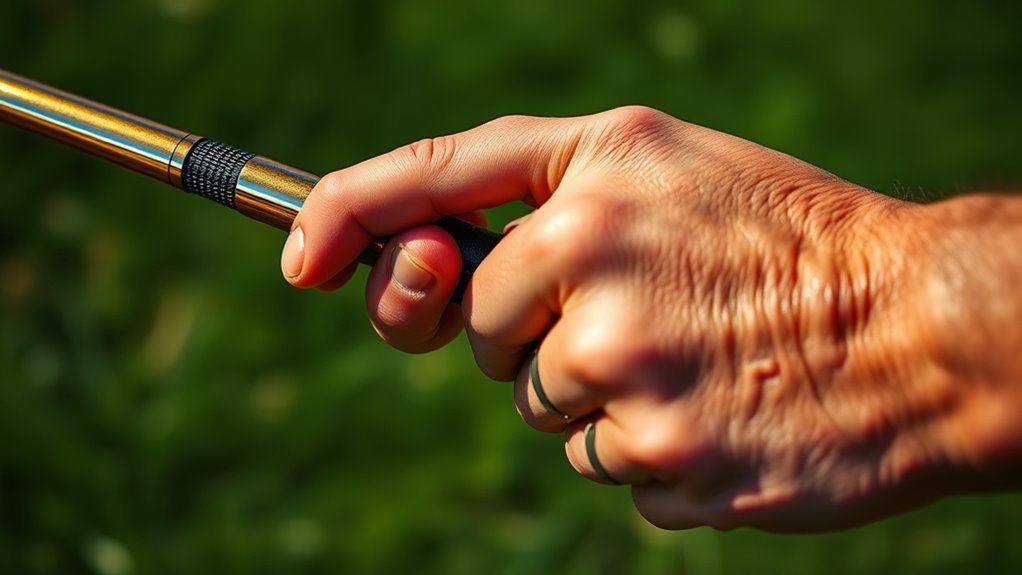
Finding the right grip begins with evaluating your playing style and comfort level. Your grip comfort directly impacts your swing consistency and confidence on the course. To personalize your grip, consider how you naturally hold the club and which grip feels most secure without tension. If you tend to hit fades or slices, a slightly stronger grip might help, while a more neutral grip suits those with a straight or draw shot tendency. Experiment with different hand placements and pressure levels until you find what feels most natural and comfortable. Remember, grip personalization isn’t about copying others but tailoring your grip to maximize comfort and control. By aligning your grip with your style, you set a strong foundation for improved performance and better shots.
Step-by-Step Guide to Achieving the Perfect Grip

Achieving the perfect grip involves a clear, step-by-step process that guarantees consistency and control. Start by choosing a golf glove that fits well, as it helps maintain a secure hold. Next, select the right grip size—too small or too large can hinder your swing. Place the club in your non-dominant hand, ensuring the grip runs diagonally across your fingers rather than your palm. Wrap your fingers around the grip, then position your dominant hand so that your pinky overlaps or touches your other fingers. Ensure your hands work together, not against each other. Maintain a relaxed grip, avoiding tension. Practice this process consistently until it becomes second nature, creating a solid foundation for your shots and improving overall control. Proper grip quality assessment is essential for developing a consistent swing and better shot accuracy. Additionally, paying attention to grip pressure can help prevent unnecessary tension and promote a smoother swing.
Tips for Maintaining Consistency With Your Grip

To maintain consistency with your grip, it’s essential to develop a routine you can follow every time you play. Focus on your grip pressure, ensuring it’s firm but not tight—too much tension can hinder your swing, while too little can lead to inconsistency. Pay close attention to your hand positioning; keep your hands in the same spot on the grip for every shot. Practice setting your hands in the same way before each swing, and check your grip regularly during practice rounds. Developing this routine helps your muscles remember the proper position, making your shots more reliable. Incorporating proper sleep hygiene can also improve your focus and consistency on the course. Additionally, understanding how smartphone settings can optimize your practice routines may help you track your progress more effectively. Regularly reviewing your practice habits and ensuring your equipment is properly maintained can further enhance your consistency. Over time, consistent hand positioning and grip pressure will become second nature, leading to more confident shots and better overall performance.
The Role of Grip Pressure in Swing Control

Grip pressure directly influences your swing control, affecting both accuracy and power. When your grip is too tight, it restricts wrist movement and reduces flexibility, making your swing stiff and less fluid. Conversely, a grip that’s too loose can cause clubs to shift during the swing, resulting in inconsistent shots. Finding the right grip pressure allows you to maintain a firm hold without sacrificing wrist mobility, giving you better swing control. This balance helps you deliver more accurate shots and generate ideal power. Remember, your grip shouldn’t be clenching but firm enough to keep the club secure. Adjusting grip pressure based on your shot type and swing rhythm can considerably improve your overall game. Proper grip pressure is a subtle, yet crucial, component of effective swing control.
Adjusting Your Grip for Different Shots and Lie Conditions
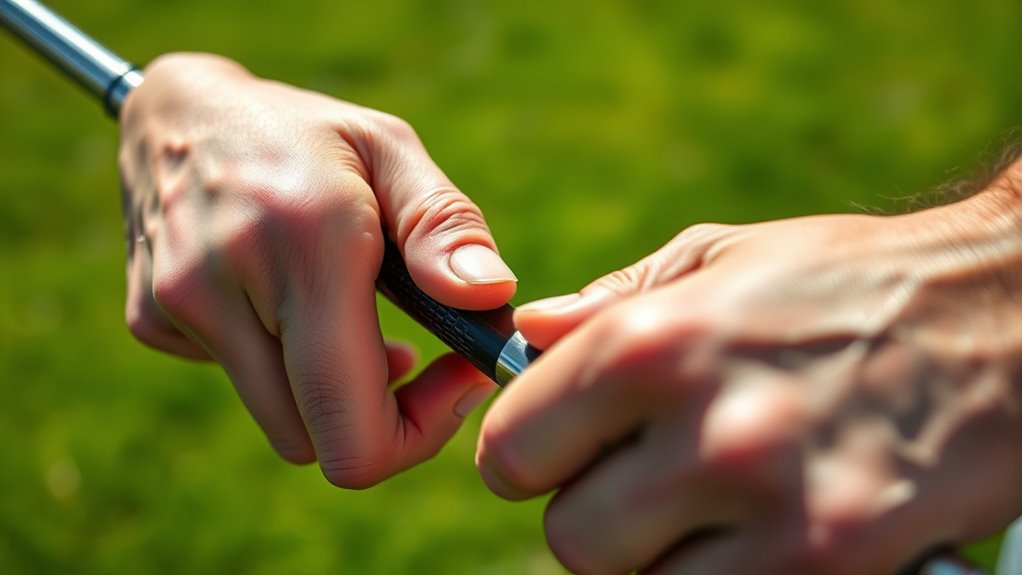
Adapting your grip based on the shot type and lie condition can considerably improve your results. A proper grip adjustment helps you handle different lies, like uneven or buried balls, more effectively. For uphill or downhill lies, you might need to modify your grip slightly to maintain control and clubface alignment. For example, a slightly stronger grip can help prevent open clubfaces on tricky lies, while a lighter grip might be better for delicate shots. Recognizing how the lie condition impacts your shot allows you to fine-tune your grip for better accuracy and distance. Remember, small grip adjustments can make a significant difference, so stay attentive to how your grip interacts with the lie for ideal shot execution.
Practice Drills to Improve Your Grip Technique

Practicing specific drills can considerably enhance your grip technique and overall golf performance. One effective drill involves focusing on wrist flexibility by gently rotating your wrists back and forth while holding your grip. This improves your range of motion, leading to a more natural and relaxed grip. Another useful exercise is maintaining consistent grip tension; practice holding your club with just enough pressure to control it without squeezing tightly. Try swinging slowly while paying attention to how your grip feels and adjusting tension as needed. Incorporate pauses during your practice to check your wrist flexibility and grip tension, ensuring they stay relaxed and adaptable. Regularly monitoring your progress and making adjustments can help reinforce muscle memory, making your grip more natural, consistent, and effective on the course. Additionally, understanding pinball machine weights can remind you of the importance of proper equipment handling and setup.
When to Seek Professional Help for Grip Corrections
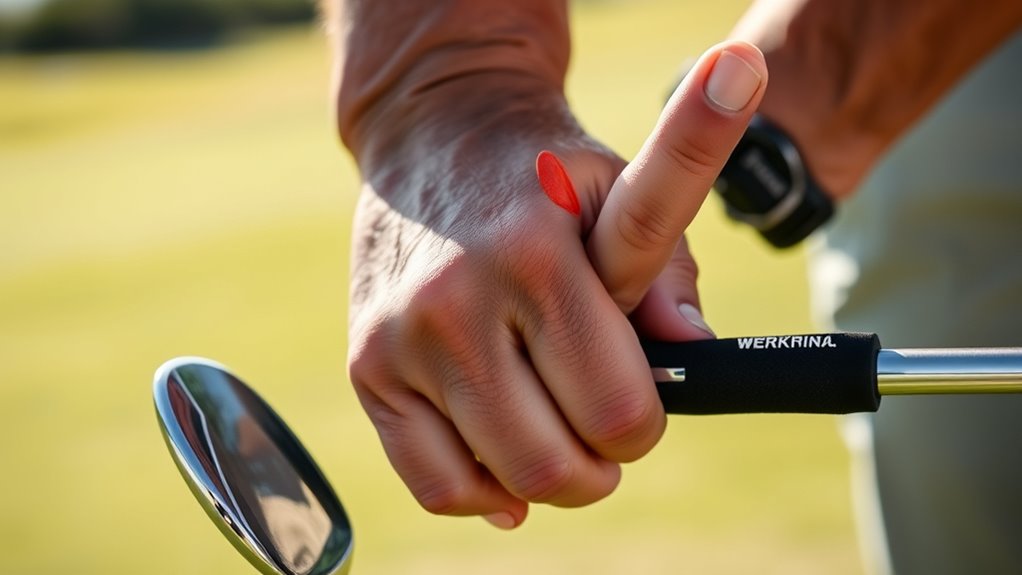
Even with dedicated practice, there are times when your grip may still feel inconsistent or uncomfortable, signaling the need for professional guidance. If you find yourself struggling with proper golf grip etiquette or persistent discomfort, it’s time to seek help. A golf instructor can assess your grip and identify issues that might not be obvious, helping you make precise grip adjustments. They often use grip adjustment tools to show you the correct hand positioning and ensure your grip supports a consistent swing. Don’t ignore persistent problems or pain, as they can hinder your progress and lead to bad habits. Consulting a pro early on can save you time and frustration, ultimately improving your game and shot accuracy. Recognizing the importance of correct grip technique can make a significant difference in your overall performance. Paying attention to technique correction can optimize your swing mechanics and prevent injury. Moreover, understanding the biomechanics of a proper grip can enhance your ability to maintain consistency under pressure.
Frequently Asked Questions
How Often Should I Re-Evaluate My Golf Grip?
You should re-evaluate your grip every few rounds or whenever you notice a change in your shot consistency. Grip maintenance is vital to guarantee proper control and comfort. As you play, your grip naturally evolves due to wear or adjustments in your swing. Regular checks help you stay aware of these changes, allowing you to fine-tune your grip and maintain peak performance. Keep an eye on grip evolution for better shots.
Can Grip Changes Improve My Overall Game Significantly?
Changing your grip is like tuning a musical instrument—you can open better performance. Yes, grip changes can markedly improve your game by optimizing grip pressure and positioning, leading to more consistent shots. Adjusting these elements helps you control the club better and reduces errors. Even small tweaks can make a big difference, so experiment with grip pressure and positioning until you find what works best for your swing.
What Are Signs of a Flawed Grip During Play?
You’ll notice a flawed grip during play if your hand position feels uncomfortable or inconsistent, leading to erratic shots. Pay attention to grip pressure—if it’s too tight, your swing may tighten and lose fluidity; if too loose, control suffers. Signs include slicing, hooking, or mishits. Regularly check your hand position and maintain balanced grip pressure to guarantee your shots stay accurate and controlled.
How Does Grip Influence Shot Accuracy and Distance?
Your grip directly affects shot accuracy and distance because proper grip pressure and hand placement guarantee control and consistency. When you hold the club too tight, you restrict your swing, reducing power and accuracy. Conversely, a loose grip leads to less control. Focus on maintaining a firm yet relaxed grip, with your hands properly placed on the club, to maximize your shot precision and distance with every swing.
Are There Specific Grips Recommended for Beginner Golfers?
As a beginner, you should start with a grip that feels comfortable, focusing on maintaining light grip pressure to avoid tension and improve control. Guarantee proper grip alignment by placing your hands correctly on the club, which promotes better shot consistency. Experiment with different grips until you find one that offers a balance of stability and flexibility, helping you develop a solid foundation for more accurate and powerful shots.
Conclusion
Mastering your golf grip is like revealing a secret doorway to better shots. By paying attention to your hold, avoiding common mistakes, and practicing with purpose, you’ll build a foundation that supports every swing. Remember, your grip is the steering wheel of your game—keep it firm yet flexible, and watch your confidence soar. When in doubt, seek help; sometimes, a small adjustment can make all the difference between a good shot and a great one.