To set up the perfect golf stance, guarantee your feet are shoulder-width apart with toes slightly outward to stay balanced. Keep your posture upright for shorter clubs and tilt slightly for drivers, with your weight centered and knees slightly flexed. Maintain a relaxed grip and proper hand and arm placement to keep your swing on plane. Align your shoulders, hips, and feet toward the target. Want to master this setup? Keep going to learn more and improve your game.
Key Takeaways
- Ensure your feet are shoulder-width apart with toes slightly outward for optimal balance.
- Align shoulders, hips, and club face square to the target for accurate shots.
- Position the ball appropriately: back for wedges, center for mid-irons, forward for drivers.
- Maintain a relaxed grip with a straight, slightly bent spine and proper posture.
- Keep weight centered and distribute evenly between both feet to enhance stability and consistency.

Stance Caddy Golf Stance and Alignment Training Aid – Setup Left & Right Handed – Proper Ball Position & Foot Placement Golf Aids/Tool – Pro Perfect Wedge to Driver – Portable Alignment Stick Mat
PERSONALIZED FIT – Stance Caddy features a patented measuring system that adapts to each golfer's unique stance width….
As an affiliate, we earn on qualifying purchases.
As an affiliate, we earn on qualifying purchases.
Understanding the Fundamentals of a Good Golf Stance

A solid golf stance is the foundation for a successful swing, and mastering its fundamentals is essential. Your club grip plays a crucial role in maintaining control and consistency, so ensure your hands are positioned comfortably and securely. A proper grip helps you execute a smooth swing path, reducing the chances of slicing or hooking the ball. Keep your hands relaxed, and grip the club slightly more in the fingers than the palms. This allows for better wrist hinge and swing fluidity. When you set up, align your club face square to the target, which guides your swing path. A balanced stance combined with a correct grip helps promote a more accurate and powerful shot, setting the stage for a successful game. Proper grip technique ensures consistent results and enhances overall swing performance. Additionally, paying attention to your stance alignment can significantly improve your shot accuracy and consistency. Remember, a well-balanced golf stance contributes greatly to your overall swing mechanics and shot success. Proper weight distribution is also key to maintaining stability throughout your swing, preventing unnecessary movement or misalignment. Developing an awareness of body positioning can further optimize your setup and improve your overall game.

SKLZ Golf Grip Trainer Attachment for Improving Hand Positioning,Black/yellow
Creates muscle memory for proper hand positioning and grip
As an affiliate, we earn on qualifying purchases.
As an affiliate, we earn on qualifying purchases.
How to Position Your Feet for Optimal Balance

To achieve ideal balance, position your feet shoulder-width apart, ensuring your weight is evenly distributed between both feet. Proper foot placement is essential for a stable, controlled swing. Keep your toes pointed slightly outward to promote natural movement and flexibility. Use balance techniques like feeling the ground beneath your feet to maintain a solid connection. Focus on placing your weight more on the balls of your feet rather than your heels or toes, which helps with stability during the swing. Adjust your stance slightly based on your comfort and swing style, but always prioritize a balanced setup. Proper foot positioning not only enhances your stability but also improves your overall swing consistency, making it easier to strike the ball cleanly. Additionally, developing awareness of your body alignment can further improve your stance and swing efficiency. Incorporating proper footwear can also provide better grip and support, contributing to a more consistent swing. Being mindful of your posture and stance can help prevent injuries and promote better energy transfer throughout your swing. Paying attention to your core stability can further enhance your balance and power during the swing. For optimal results, consider integrating glycolic acid benefits into your skincare routine to maintain healthy, radiant skin that complements your active lifestyle.

adidas Men's Tech Response 3.0 Golf Shoes, Grey Four/Footwear White/Grey Three, 12
Regular fit
As an affiliate, we earn on qualifying purchases.
As an affiliate, we earn on qualifying purchases.
The Role of Posture in Your Setup

Your posture directly influences the quality of your swing, connecting your foot alignment to how well you can generate power and control. Proper posture guarantees your spine is straight but relaxed, allowing smooth rotation. Focus on maintaining good hip positioning; your hips should be be level and aligned with your feet. This proper alignment helps you stay balanced throughout the swing and prevents unnecessary tension. Keep your weight centered, with a slight bend at the hips and knees, to promote fluid movement. When your foot alignment and hip positioning are correct, you’ll find it easier to achieve a consistent setup, which leads to better contact and accuracy. Additionally, understanding body mechanics can help you develop a routine that enhances your focus and confidence on the course. Remember, your posture forms the foundation for a powerful, controlled golf swing. Incorporating proper spinal alignment techniques can further optimize your setup and overall performance, and paying attention to muscle engagement ensures you maintain proper posture throughout your swing. Developing awareness of kinetic chain dynamics can also improve your coordination and efficiency during the swing.
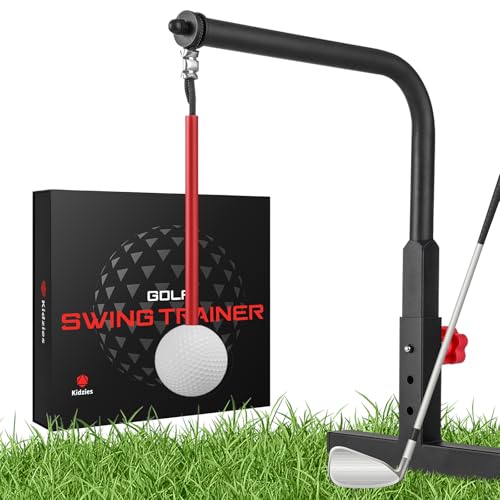
KIDZIES Golf Swing Trainer – Durable Iron Practice Golf Swing Training Aid – Golf Accessories for Kids & Youth with Replacement Ball Included & Height Adjustment Golf Accessories for Gift
UPGRADED SWING GROOVER: More durable, easier to set up, and longer lasting – we listened to your feedback…
As an affiliate, we earn on qualifying purchases.
As an affiliate, we earn on qualifying purchases.
Correct Hand and Arm Placement

Proper hand and arm placement is essential for a consistent and powerful golf swing. Your hand grip should be firm but relaxed, with your palms working together to promote control and fluid motion. Make certain your grip pressure isn’t too tight, which can restrict movement. Your arm angle plays a vital role in achieving solid contact; keep your arms naturally bent and aligned with your shoulders throughout the setup. This creates a stable swing path and helps generate power. When setting up, position your hands so the club rests comfortably in your fingers, not palms, and your arms hang naturally from your shoulders. Maintaining the correct hand grip and arm angle ensures your swing stays on plane and minimizes inconsistencies. Proper placement here sets the foundation for a successful shot. Additionally, consistent posture supports maintaining proper alignment and balance throughout your swing. To enhance your technique, understanding the importance of proper hand and arm positioning can make a significant difference in your game. Incorporating ergonomic setup principles can further optimize comfort and control during your swing.
Aligning Your Body for Accurate Shots

To hit accurate shots, you need to focus on your proper stance position, ensuring your body is aligned correctly. Keep your shoulders consistent and square to your target, so your swing stays on line. Also, pay attention to foot placement techniques to maintain balance and stability throughout your shot. Proper stance alignment is essential for consistent performance and is a fundamental aspect of a good golf setup. Additionally, maintaining proper body position can help optimize your swing mechanics and improve shot accuracy. Correct posture plays a critical role in ensuring your body moves fluidly during the swing, leading to better control and power.
Proper Stance Position
Aligning your body correctly is essential for consistent and accurate shots. Your proper stance position forms the foundation of good setup fundamentals. To find your ideal golf stance, focus on your feet, hips, and shoulders being aligned parallel to the target line. Keep your knees slightly flexed and distribute your weight evenly. A balanced stance guarantees stability and control throughout your swing.
| Key Aspect | Tips |
|---|---|
| Foot Placement | Shoulder-width apart, slight flare |
| Hip Alignment | Parallel to target line |
| Shoulder Position | Level and aligned with hips |
| Weight Distribution | Even or slightly favoring front foot |
Consistent Shoulder Alignment
Maintaining consistent shoulder alignment is essential for hitting accurate shots. Your shoulders should be roughly parallel to your target line, ensuring proper alignment. Focus on controlling your shoulder tilt—keeping it steady throughout your swing—to prevent mis-hits. Proper hip rotation also plays a key role; as you swing, your hips should rotate smoothly, allowing your shoulders to follow naturally. Avoid over-rotating or forcing your hips, as this can disrupt your shoulder alignment and cause inconsistent contact. Consistent shoulder positioning helps you maintain balance and repeatable swings. Keep your shoulders aligned with your hips and target, making small adjustments as needed to stay on plane. This focus on shoulder alignment promotes better accuracy and more reliable shot execution. Paying attention to market analysis can also help you understand how subtle adjustments impact your overall performance and consistency, especially when considering professional insights into swing mechanics. Additionally, incorporating modern training aids can provide real-time feedback to refine your setup and reinforce proper shoulder positioning. Regularly practicing with feedback tools can further enhance your awareness and consistency during each shot.
Foot Placement Techniques
Your foot placement is a foundational element in achieving consistent, accurate shots. Properly positioning your feet helps guarantee your body aligns with the target, influencing your ball alignment and swing path. Start by placing your feet shoulder-width apart for stability. Your toes should point slightly outward, promoting a natural stance. Focus on positioning your feet so that the ball aligns with the center of your stance, facilitating consistent contact. Your footwear choice also matters; wear comfortable, supportive shoes with non-slip soles to maintain balance during your swing. Keep your weight balanced evenly on both feet, and avoid leaning too far forward or back. This solid footing allows your upper body to rotate freely, leading to better control and more accurate shots.
Adjusting Your Stance for Different Clubs

As you switch between clubs, you’ll need to modify your stance to optimize your swing. Adjusting stance width, ball position, and posture guarantees you stay balanced and consistent. Small changes here can make a big difference in your shots’ accuracy and power.
Stance Width Variations
Adjusting your stance width for different clubs can considerably impact your swing’s stability and control. For shorter clubs like wedges, narrow your stance to enhance precision and quickness. Conversely, widen your stance for drivers to improve balance and power. Maintaining stance flexibility allows you to adapt easily across various shots. A narrower stance often results in a more upright posture, promoting better control, while a wider stance provides a solid base for generating force. Remember, the key is to find a stance width that feels natural and comfortable for each club, ensuring consistency. Don’t be afraid to experiment slightly; small adjustments can lead to significant improvements in your swing. Balancing stance width with your overall stance setup maximizes stability and helps you execute more accurate shots.
Ball Position Changes
Changing your ball position based on the club you’re using can considerably influence your swing path and contact quality. For shorter clubs like wedges and short irons, position the ball slightly back in your stance, closer to your trailing foot, to guarantee a descending strike and clean contact. As you move to mid-irons, position the ball roughly in the center of your stance, promoting a more neutral swing. For longer clubs like drivers and fairway woods, move the ball forward, near your front heel, to facilitate an upward strike. Remember, stance width also plays a role; a slightly wider stance can provide stability for longer shots, while a narrower stance offers better control for shorter shots. Adjusting ball position and stance width accordingly helps optimize your swing for each club.
Posture Adjustments
Your posture should adapt to the club you’re using to maximize efficiency and consistency. For shorter clubs like wedges, stand more upright, maintaining hip flexibility to allow smooth swings. For longer clubs, such as drivers, tilt slightly forward from the hips, promoting a balanced, athletic stance. Adjust your grip pressure accordingly—lighter for delicate shots, firmer for power swings. Remember, changing clubs affects your posture and swing dynamics. Use this table to guide your adjustments:
| Club Type | Posture Tip | Focus Area |
|---|---|---|
| Wedges | Stand upright, hips flexible | Grip pressure, control |
| Irons | Slight forward tilt | Hip flexibility, balance |
| Drivers | More tilt, wider stance | Power, stability |
Consistently refining your posture with these tips improves your game.
Common Mistakes and How to Avoid Them

One common mistake golfers make is standing too upright or leaning too far forward, which can throw off balance and reduce power. To avoid this, pay attention to your grip pressure; holding the club too tightly can hinder fluid swing tempo. Additionally, rushing your swing or forcing it can lead to inconsistent shots. Be mindful of these issues:
Avoid standing too upright or leaning too far forward to maintain balance and power.
- Gripping the club too tightly, causing tension
- Rushing your swing tempo, leading to loss of control
- Standing with improper posture, affecting balance and power
Maintaining a relaxed grip and smooth, rhythmic swing helps you stay centered. Focus on setting up with the correct stance, so your grip pressure stays light and your swing tempo remains steady. These adjustments improve consistency and help prevent common setup errors.
Drills to Perfect Your Setup

Practicing specific drills can markedly improve your setup and guarantee you’re consistently in the correct stance. Focus on drills that emphasize your alignment, posture, and grip pressure to enhance your golf swing. One effective exercise is the mirror drill: set up in front of a mirror to check your alignment and posture, ensuring your grip pressure remains light. Another is the towel drill: place a towel under your arms to promote a connected, balanced stance. Use the table below to compare key setup points:
| Aspect | Drill Focus |
|---|---|
| Alignment | Use a mirror or alignment sticks |
| Posture | Practice in front of a mirror |
| Grip Pressure | Maintain a light grip |
| Balance | Towel under arms |
| Consistency | Repetition of drills |
These drills help ingrain proper setup habits for a more consistent golf swing.
Frequently Asked Questions
How Often Should I Adjust My Stance During a Round?
You should adjust your stance as needed throughout a round to maintain stance consistency and adapt to changing conditions. Focus on small grip adjustments and posture tweaks when you notice your shots aren’t aligned or consistent. Make these changes subtly, rather than overhauling your stance each time. Regularly checking your alignment and balance helps you stay steady, ensuring your stance remains effective and your swings stay accurate during the entire game.
What Are Signs of an Incorrect Golf Stance?
Did you know that 75% of amateur golfers struggle with stance stability? If your posture alignment feels off, you might notice inconsistent ball contact or difficulty maintaining balance. Signs of an incorrect golf stance include leaning too far forward or backward, knees locked, or shoulders not aligned with the target. These issues compromise your swing, so regularly check your posture to guarantee proper stance stability and peak performance.
Can My Stance Improve With Practice Drills?
Yes, your stance can improve with practice drills. Focus on exercises that enhance your stance flexibility and promote swing consistency. Try foot alignment drills, balance exercises, or mirror practice to develop muscle memory and refine your setup. Consistent practice helps you naturally adopt a more stable, flexible stance, leading to more accurate swings and better overall performance on the course.
How Does Stance Differ for Beginners Versus Advanced Players?
They say practice makes perfect, and your stance differs based on your skill level. Beginners focus on stance consistency, maintaining a steady, balanced setup, while advanced players develop stance flexibility to adapt to various shots. You’ll want to keep your stance stable initially, then gradually introduce subtle adjustments for precision. As you improve, your ability to modify stance without losing balance will help elevate your game—remember, progress takes patience.
Is There a Perfect Stance for All Types of Shots?
There isn’t a one-size-fits-all perfect stance for every shot. You should adjust your ball position and shoulder alignment based on the shot type. For example, a driver might require a wider stance with the ball positioned forward, while an iron shot needs a more centered ball. Focus on maintaining good balance and guarantee your shoulders are aligned with your target to improve consistency across different shots.
Conclusion
Mastering your golf stance means mastering your balance, your posture, your alignment. It’s about setting your feet correctly, maintaining the right posture, positioning your hands properly, and adjusting your stance for each shot. Practice these fundamentals consistently, focus on your setup, and avoid common mistakes. When you do, you’ll hit straighter shots, play more confidently, and enjoy the game more. Keep refining your stance, keep improving your game, and enjoy every swing along the way.