

A consistent, well-timed swing creates better muscle coordination and reduces tension, making your shots more reliable and powerful. When you focus on timing, your body moves smoothly with the rhythm, minimizing wasted effort. Rushing or forcing power often leads to stiff, off-balance swings. Prioritizing rhythm over raw strength allows your natural movement to shine through. If you want to explore key drills and techniques to improve your timing, keep going—you’re about to learn more.
Key Takeaways
- Proper swing timing aligns body movements with the rhythm, ensuring smooth and efficient motion.
- Timing reduces muscle tension, preventing stiff, jerky swings and improving consistency.
- Well-coordinated timing maximizes natural power, making shots more accurate without relying on brute force.
- Focusing on rhythm enhances muscle memory, leading to more reliable and controlled performance.
- Prioritizing timing over raw strength results in better biomechanical efficiency and overall swing effectiveness.
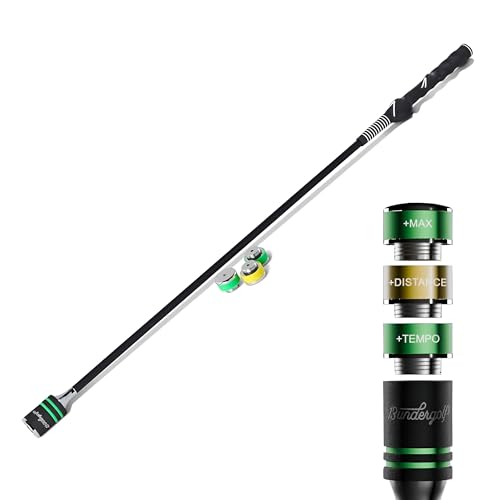
Golf Swing Trainer Aid Without Ribbon (Right-Handed) for Indoor Practice Speed Training, Improved Rhythm, Grip, Flexibility, Balance, Tempo and Strength
VERSATILE TRAINING: Innovative all-in-one golf swing trainer designed to improve tempo, lag, distance, and grip through adjustable weight…
As an affiliate, we earn on qualifying purchases.
As an affiliate, we earn on qualifying purchases.
Understanding the Science of Swing Timing

To truly grasp swing timing, it’s essential to understand the science behind how your body and the music work together. Musical synchronization is key—you need to align your movements precisely with the rhythm to maintain a smooth, consistent swing. This synchronization boosts biomechanical efficiency, allowing you to move naturally without unnecessary effort. When your body and the beat are in harmony, your swing becomes more fluid and controlled. Proper timing ensures your muscles work in concert, reducing tension and maximizing energy transfer. Think of your body as an instrument tuned to the music; when perfectly synchronized, you generate a seamless flow that enhances both power and accuracy. Additionally, understanding how precision and timing influence performance can help you develop a more reliable and effective swing. Mastering this scientific connection is fundamental to developing a reliable, effective swing.

KORG PuttRhythm PR-01 Golf Putt Trainer Metronome
KORG Putt Rhythm, a metronome that visualizes the swing, and marks the rhythm using sound and light
As an affiliate, we earn on qualifying purchases.
As an affiliate, we earn on qualifying purchases.
The Impact of Rhythm on Power and Accuracy

Rhythm plays a crucial role in maximizing both power and accuracy in your swing. When your movements align with musical rhythm, your timing improves, leading to more consistent contact and stronger shots. Athletic coordination relies on maintaining a steady rhythm, which helps synchronize your entire body during the swing. This synchronization not only enhances control but also fosters muscle memory, making your movements more automatic and reliable over time. Consider how different rhythms influence your performance: Understanding the importance of rhythm helps players develop a more reliable and effective swing. Developing a musical tempo awareness can further refine your timing and overall athletic performance. Recognizing movement synchronization as a vital component can help athletes fine-tune their coordination for better results. Additionally, practicing with metronomes or rhythm exercises can improve your timing consistency, leading to better on-field performance.

Golf Pressure Plate, Golf Weight Shift Board, Teaching Tool For Club Practice & Drills, Golf Swing Trainer, Improve Balance & Accuracy, Golf Training Aid For Increased Power & Swing Rhythm (Black)
Golf weight shift board: Our golf pressure plate provides real-time feedback on weight distribution to master controlled and…
As an affiliate, we earn on qualifying purchases.
As an affiliate, we earn on qualifying purchases.
Common Mistakes That Disrupt Your Tempo

One of the most common mistakes that disrupt your tempo is rushing through your swing, which causes your timing to become inconsistent. When you swing too quickly, muscle fatigue can set in early, reducing your control and smoothness. Additionally, grip tension often increases when you feel pressed for time, leading to a stiff, jerky motion instead of a fluid rhythm. Overgripping the club or trying to force power can throw off your timing and make maintaining a steady tempo difficult. This rush and tension create a cycle where your swing becomes hurried and less controlled, making it harder to develop consistent rhythm. To improve, focus on relaxing your grip and maintaining a steady pace, allowing your muscles to stay fresh and your timing to stay on track. Recognizing the importance of consistent rhythm can help you prioritize smoothness over raw power for better results.

Sukubiui Golf Swing Trainer, Click Stick Golf Swing Training Aid for Inertia & Swing Rhythm Practice, Weighted Golf Trainer with Comfort Grip Helps Enhance Strength & Maintain Good Grip Habits, Black
⛳ 【Instant Swing Tempo Feedback】 Master your release timing with our golf swing trainer's audible feedback system. Hear…
As an affiliate, we earn on qualifying purchases.
As an affiliate, we earn on qualifying purchases.
Drills and Techniques to Develop Consistent Rhythm

Practicing specific drills can substantially enhance your swing tempo and help you develop a more consistent rhythm. One effective method is using metronome drills, where you set a steady beat and swing in sync with it. This trains your body to internalize timing, reducing fluctuations. Additionally, rhythmic visualization helps you picture your ideal tempo before each swing, reinforcing a smooth, even rhythm. You can also incorporate simple drills like tapping your club or foot to the beat to build muscle memory. Focus on maintaining consistent timing instead of power, allowing your swing to become more fluid and reliable. Incorporating these techniques into your practice routine builds a strong rhythmic foundation, making your timing more instinctive and natural on the course. Connected fitness technology can also provide real-time feedback to help fine-tune your tempo and ensure consistent performance. To further enhance your rhythm, consider exploring backyard transformation essentials that create an environment conducive to regular practice, making it easier to develop and maintain a steady practice routine. Additionally, integrating wearable sensors can monitor your swing and offer insights to optimize your tempo over time.
Why a Well-Timed Swing Outperforms Raw Strength

While raw strength might enable you to hit the ball farther, it doesn’t guarantee consistent accuracy or control. A well-timed swing relies on proper muscle engagement and refined swing mechanics, which help you coordinate your movements smoothly. When you prioritize timing, you harness your body’s natural rhythm, ensuring each part moves in harmony. This synchronization reduces unnecessary muscle tension and prevents power leaks, allowing your swing to be more efficient. Instead of relying solely on brute force, focusing on proper timing lets you control the clubface and transfer energy effectively. Over time, developing good swing mechanics and muscle engagement improves your consistency, making each shot more accurate. Understanding swing mechanics is essential for developing a reliable and effective golf swing. Ultimately, a well-timed swing beats raw strength because it produces reliable, controlled power.
Frequently Asked Questions
How Do I Measure My Swing Tempo Accurately?
To measure your swing tempo accurately, start with metronome practice and tempo drills. Set a metronome to your desired beats per minute and swing along, paying attention to your timing. Use a mirror or video recording to analyze your rhythm and guarantee consistency. Regularly practicing with these tools helps you develop a steady tempo, making your swing more balanced and synchronized with the beat, ultimately improving your overall game.
Can Improving Tempo Help My Overall Game Performance?
Improving your tempo can markedly boost your game by enhancing rhythm consistency and mental focus. Think of it like a steady heartbeat—when your timing is smooth, your swings become more reliable. I once saw a golfer transform his game by focusing solely on rhythm, and his shots became more controlled and confident. When you prioritize tempo, you create a mental flow that keeps your focus sharp, ultimately elevating your performance.
What Equipment Can Assist in Developing Better Swing Timing?
You can use training aids like metronomes or swing tempo apps to develop better swing timing. Rhythm drills, such as counting or tapping in sync with your swing, also help you internalize your tempo. These tools and exercises improve your consistency and timing, making your swing more fluid and controlled. Regular practice with them can substantially enhance your overall performance by reinforcing a natural, repeatable rhythm.
How Long Does It Take to See Improvements in Tempo?
Impatience and progress often dance together, but with consistent swing rhythm practice, you could see improvements in just a few weeks. By focusing on tempo drills and deliberate timing exercises, your sense of rhythm sharpens and your swing becomes more fluid. While everyone’s different, regular effort accelerates your learning curve, helping you develop better timing and a more natural, confident swing faster than you’d expect.
Is There a Mental Aspect to Maintaining Consistent Rhythm?
Yes, there’s definitely a mental aspect to maintaining consistent rhythm. Your mental focus keeps you aware of your timing, helping you stay on track even under pressure. Confidence levels also play a key role; when you believe in your swing, you’re less likely to rush or slow down. Cultivating mental discipline, staying present, and practicing mindfulness can enhance your rhythm, making consistency feel more natural and automatic over time.
Conclusion
Remember, mastering your swing tempo is like tuning a fine instrument—you’ll hit the perfect note only when every beat is in harmony. Focusing on timing over raw power ensures your shots are more accurate and reliable. Don’t let rushed swings or stiff rhythms throw you off course. With consistent practice and attention to rhythm, you’ll find your game flowing smoothly, transforming your swing into a well-orchestrated symphony rather than a thunderclap.