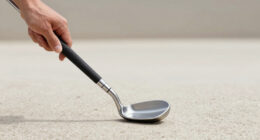
Try unconventional drills like the mirror drill to improve your swing path and posture by using visual feedback and keeping your spine angles consistent. Incorporate foot ladder exercises to boost your balance and footwork for better stability during swings. The no-club swing helps focus on body rotation and tempo without equipment, enhancing core stability and timing. Keep practicing these effective, surprising methods to elevate your game—more details are just ahead.
Key Takeaways
- Mirror drills improve swing path and posture by providing visual feedback, correcting misalignments, and promoting consistency.
- No-club swings enhance body rotation, tempo, and core stability without equipment, reinforcing natural movement.
- Foot ladder exercises boost balance, footwork, and muscle memory, leading to more stable and precise swings.
- Incorporating calibration and video feedback helps fine-tune mechanics and accelerates skill development through targeted adjustments.
- Combining unusual drills like mirror work and no-club swings creates a comprehensive, effective training routine for improving overall golf performance.

Callaway Swing Easy Golf Swing Trainer Aid, Orange
Golf Training Aid: Our golf swing aid reinforces the key fundamentals of a good golf swing
As an affiliate, we earn on qualifying purchases.
The Mirror Drill: Improving Swing Path and Posture
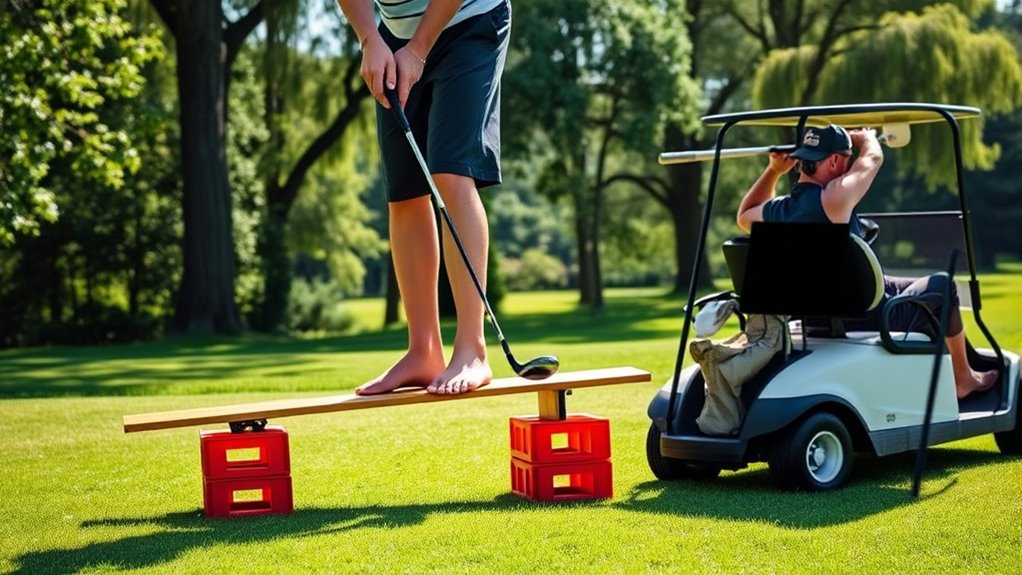
The Mirror Drill is a simple yet effective way to enhance your golf swing by focusing on your posture and swing path. As you practice, keep an eye on your reflection to guarantee your stance stays balanced and your spine angles remain consistent. Pay close attention to your grip pressure—holding the club too tight can restrict your swing, causing erratic ball flight. Loosen your grip slightly to promote a smooth, natural motion. Watching yourself in the mirror helps you identify any misalignments or unnecessary movements that could lead to slice or hook shots. By maintaining proper posture and a relaxed grip, you’ll develop a more consistent swing path, resulting in more accurate ball flights and better overall performance. Additionally, incorporating calibration techniques can help fine-tune your swing mechanics for even greater consistency. Incorporating feedback tools such as video analysis can further enhance your ability to make precise adjustments and accelerate your improvement.

SKLZ Golf Grip Trainer Attachment for Improving Hand Positioning,Black/yellow
Creates muscle memory for proper hand positioning and grip
As an affiliate, we earn on qualifying purchases.
The Foot Ladder: Enhancing Balance and Footwork
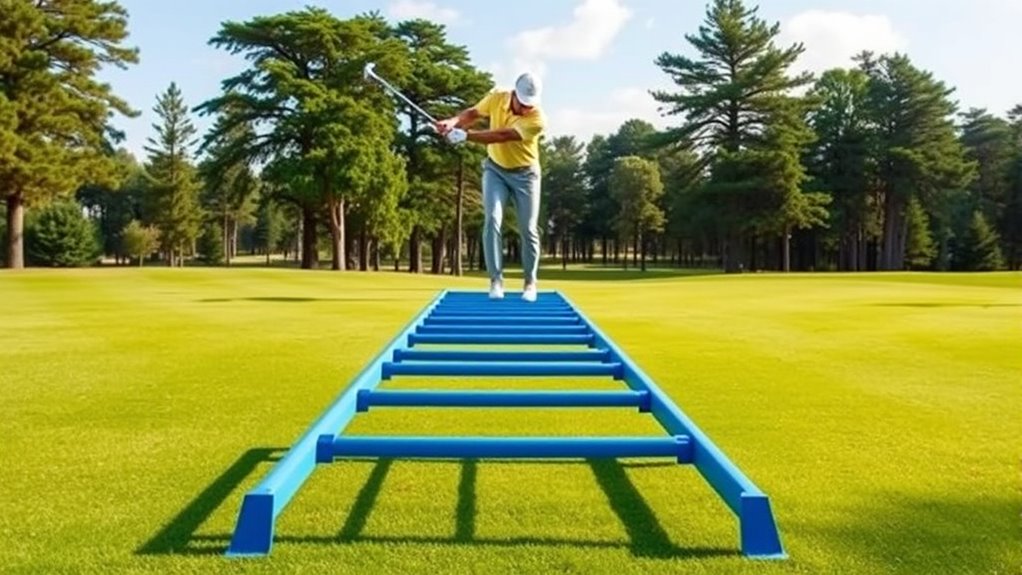
Using a foot ladder during practice can considerably improve your balance and footwork, which are essential for a consistent golf swing. The foot ladder helps you develop better footwork focus by encouraging precise, controlled movements. The drill also promotes muscle engagement, which is vital for building strength and stability. Incorporate balance drills that involve stepping in and out of the rungs carefully, emphasizing stability and coordination. As you progress, challenge yourself to maintain your posture and balance while increasing speed or complexity of footwork patterns. This drill trains your muscles to respond quickly and accurately, leading to more reliable weight transfer during your swing. Regular use of the foot ladder enhances your overall balance, making your footwork more agile and consistent. Additionally, practicing with a foot ladder can boost your awareness of body positioning, which is crucial for maintaining proper swing mechanics. Improving muscle memory through these drills also helps in automating correct movement patterns, leading to more consistent performance on the course. Incorporating seasonal maintenance of your training routines can help sustain these improvements over time. Over time, these improvements translate into better swing timing and accuracy on the course.

ALVO GOLF Premium Golf Wedges 52/56/60 Sets or Individual Wedges - 52 degree Gap Wedge, 56 degree Sand Wedge, 60 degree lob Wedge Golf Club - Pitching Wedge for Men Right Hand - Wedges Golf - Max spin
FULL-FACE GROOVES FOR ELITE SPIN AT A STEAL: CNC-milled full face golf wedges deliver surgical spin—stick 52, 56,...
As an affiliate, we earn on qualifying purchases.
The No-Club Swing: Focusing on Body Rotation and Tempo

Practicing a no-club swing shifts your focus from the equipment to your body’s natural movement, emphasizing proper rotation and rhythm. Without a club, you become more aware of your core stability, which is essential for maintaining balance and generating power. As you swing, pay attention to your wrist hinge; controlling it helps develop a smooth, consistent tempo. This drill encourages you to feel your body’s rotation rather than relying on the club’s weight, promoting better sequencing and timing. By honing your core stability, you enhance your ability to turn fully and efficiently. Keeping your wrist hinge natural and deliberate ensures a fluid swing, reinforcing muscle memory. Ultimately, this drill sharpens your body awareness, leading to more effective and controlled shots on the course.
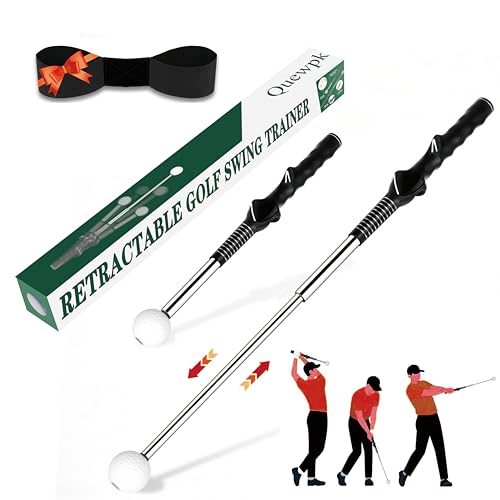
Quewpk Retractable Golf Swing Trainer – Golf Grip Trainer with Arm Band for Right-Handed Golfers, Grip Correction & Swing Click Feedback Training Aid, Indoor & Outdoor Practice, Golf Gifts for Men
【Retractable Click Feedback Golf Swing Training Aid】Our Quewpk retractable golf swing & grip trainer delivers crisp "click" feedback...
As an affiliate, we earn on qualifying purchases.
Frequently Asked Questions
Can These Drills Improve My Accuracy or Just Power?
These drills can definitely improve both your accuracy and power. They help with technique adaptation, refining your swing mechanics for better shot precision. Plus, they boost your mental focus, which is vital for consistent performance. By practicing these unusual drills, you train your mind and body to work together more effectively, leading to more accurate shots and increased power. So, don’t just stick to traditional drills—try these for well-rounded improvement.
How Often Should I Practice These Unusual Drills?
You should practice these unusual drills 2-3 times a week to see steady progress. Keep your training frequency consistent to guarantee effective skill transfer, helping you improve both accuracy and power over time. Avoid overdoing it, as too much practice can lead to fatigue and diminish benefits. Focus on quality, not just quantity, and give yourself time to integrate these new skills into your regular game.
Are These Drills Suitable for Beginners or Advanced Players?
Ever wonder if these drills are just for pros or beginners? They’re suitable for both, but you should tailor them to your skill level. Beginners can focus on fundamentals like golf etiquette and course management while trying these exercises, gradually increasing difficulty. Advanced players can challenge themselves further. The key is consistency and understanding your limits, so you improve without frustration. Are you ready to elevate your game?
Do I Need Special Equipment to Perform These Drills?
You don’t typically need special equipment for these drills, making equipment requirements minimal. Most can be done with common items like golf balls or clubs you already own. If you find certain drills challenging, you can easily modify them to suit your skill level. This flexibility allows you to focus on technique without worrying about extra gear, making practice more accessible and tailored to your needs.
How Long Before I See Noticeable Improvements?
You might see noticeable improvements in just a few weeks if you stay consistent with your training and maintain strong mental focus. While progress varies, regular practice helps your skills develop faster than you’d expect. Don’t underestimate the power of mental focus, as it sharpens your technique and keeps you motivated. The key is consistent effort, combining unusual drills with focused practice, so you’ll see results sooner rather than later.
Conclusion
These unusual drills are like keys to revealing your full golf potential. The Mirror Drill reflects your true form, guiding your posture and swing path. The Foot Ladder builds a solid foundation of balance and footwork, while the No-Club Swing symbolizes trusting your body’s natural rhythm. Embrace these tools, and watch your game transform—because sometimes, the most unexpected methods are the ones that open the door to greatness. Keep swinging, and stay open to new possibilities.