
To control distance on short wedge shots, focus on selecting the right loft and lie angles to match your swing and course conditions. Use a consistent, relaxed swing with a steady tempo, and practice adjusting your grip pressure and stance to influence shot length. Incorporate drills that develop feel and feedback, and learn to read the green and lies to make fine-tuned adjustments. Keep refining your technique — you’ll discover even more ways to master your wedge game.
Key Takeaways
- Use consistent swing length and tempo to achieve predictable short shot distances.
- Adjust grip pressure and stance width to influence control and shot length.
- Focus on proper ball positioning and body alignment for accurate distance management.
- Practice varying shot trajectories and club selection to develop feel and precision.
- Incorporate feedback and green reading to refine distance control and shot accuracy.
Understanding Your Wedge Options and Loft Angles
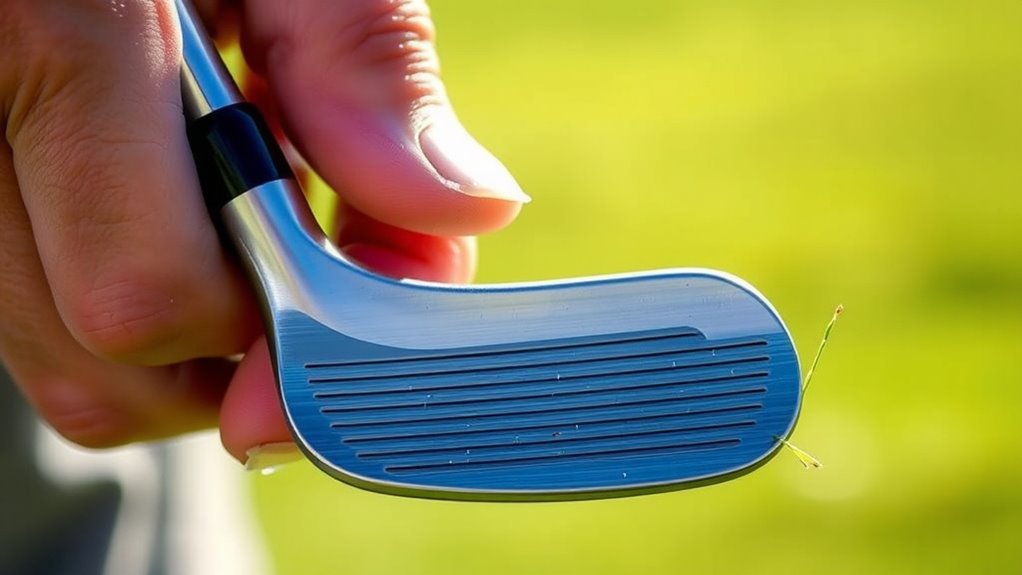
To choose the right wedge, you need to understand the different options available and how loft angles impact your shots. Loft angles determine the height and distance of your shots, so selecting the correct one is essential. Lie angles also play an important role; they influence how the club sits at address and affect shot direction, especially on uneven lies. Additionally, bounce characteristics are fundamental because they help prevent the club from digging into the ground or sand, allowing smoother swings on different surfaces. A wedge with the right bounce and lie angles matches your swing style and typical playing conditions. By understanding these options, you can fine-tune your wedges for better control and more consistent results around the greens. Proper club fitting ensures you select wedges that optimize your individual swing and course conditions, leading to improved performance. Moreover, considering custom options can further enhance how well your wedges suit your unique playing style and course environments.
Mastering the Art of Swing Length and Tempo

To improve your wedge game, focus on keeping your swing length consistent and your tempo smooth. This consistency helps you make more accurate shots and build confidence. Practice with purpose, so each swing reinforces your rhythm and control. Incorporating swing rhythm drills can further enhance your timing and overall performance. Additionally, understanding your shot distance and how it relates to swing mechanics allows for better shot planning and execution. Knowing your personal tempo can help tailor your practice to develop a more natural and effective swing. Developing a clear distance control strategy also contributes to more precise shots and greater consistency on the course. Paying attention to your impact position can further refine your control and shot accuracy.
Consistent Swing Lengths
Maintaining a consistent swing length is essential for developing reliable contact and improving overall accuracy. When your swing length stays steady, your club selection becomes more predictable, and you better understand how lie angles affect ball flight. To stay consistent, focus on a controlled takeaway and follow-through, avoiding unnecessary movement. Remember, shorter swings often produce more control, especially with wedges.
| Swing Length | Effect on Accuracy | Tips to Maintain |
|---|---|---|
| Longer | Less control | Use a slower, rhythmic tempo |
| Shorter | Greater control | Keep arms and wrists steady |
| Moderate | Balanced accuracy | Practice with different lie angles |
| Variable | Unpredictable | Focus on a consistent length |
Maintaining a Smooth Tempo
A consistent swing length lays the foundation for predictable shots, but controlling your swing tempo takes your accuracy even further. When selecting your club, consider the shot’s required distance and how your tempo influences your timing. A smooth, steady rhythm helps you stay committed to your club choice, especially in tricky wind conditions. Wind considerations demand a controlled tempo; rushing can cause mis-hits or overcompensation. Focus on maintaining a relaxed, even swing, avoiding rushing or decelerating. A steady tempo ensures your clubface stays square through impact, improving precision. Practice syncing your swing rhythm with club selection and environmental factors, so your short game becomes more reliable and consistent regardless of external conditions.
Practicing With Purpose
Practicing with purpose means focusing intently on refining your swing length and tempo with intentionality. To do this, experiment with different club selections to understand how each affects your distance control. Pay close attention to weather considerations, such as wind and humidity, which can impact your shot’s feel and require adjustments in swing length and tempo. Instead of hitting random shots, set specific goals for each practice session—like maintaining a consistent tempo or adjusting your swing length based on club and conditions. Use drills that emphasize smooth, controlled swings, and record your results to track progress. This deliberate approach helps you develop a reliable rhythm, ensuring better control over distance, especially when facing variable weather factors. Additionally, understanding how your equipment interacts with environmental conditions, such as climate factors, can further enhance your shot accuracy.
Using Grip and Setup to Influence Distance Control

Your grip and setup are powerful tools for controlling distance with wedges. How you position your hands influences both the wrist hinge and grip pressure, which directly impact shot length. A lighter grip pressure allows your wrists to hinge naturally, creating a more consistent swing arc and controlled shot distance. Conversely, gripping too tightly restricts wrist movement, leading to less control and unpredictable distances. Your setup also matters; positioning the ball slightly back in your stance or adjusting your body alignment can influence how far the ball travels. Focusing on proper grip pressure and maintaining a relaxed, balanced setup can significantly enhance your distance control. Small adjustments here can make a substantial difference in hitting consistent, accurate wedge shots. Paying attention to swing mechanics can further refine your control and consistency. Additionally, understanding muscle engagement helps optimize swing efficiency and shot precision, contributing to better distance management. Developing a consistent practice routine can also help internalize these adjustments and improve overall performance.
Practicing Distance Drills to Build Consistency
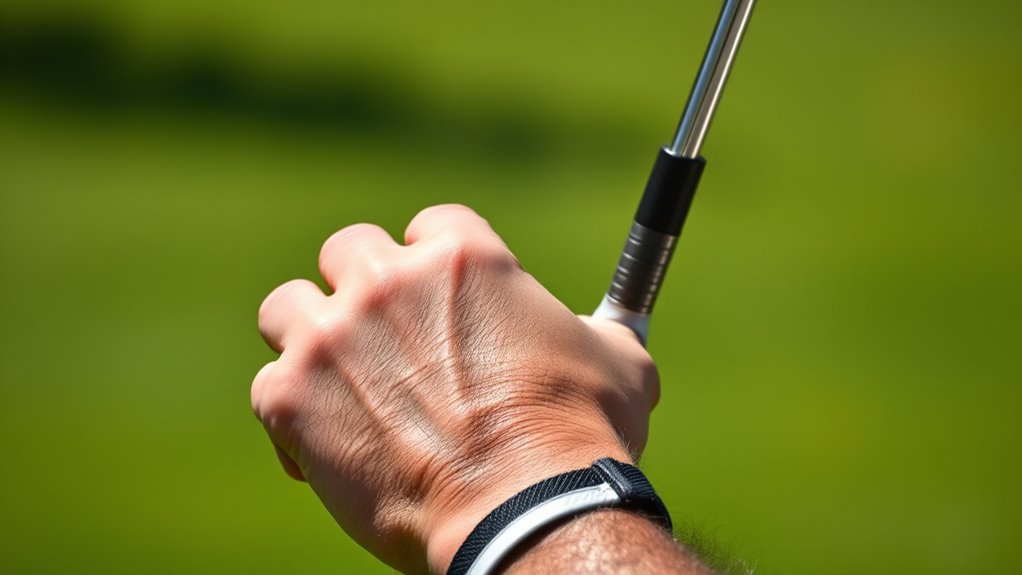
To improve your wedge consistency, start practicing with varying shot distances to develop better feel. Use alignment aids to guarantee your setup stays steady, and focus on maintaining a smooth, repeatable swing tempo. These targeted drills will help you control your wedge shots more reliably under different conditions. Incorporating shot control techniques into your practice will further enhance your ability to execute precise short shots. Additionally, working on shot trajectory awareness enables you to better manage height and roll, leading to more predictable outcomes. Remember, understanding the fundamentals of club selection can also play a crucial role in optimizing your short game performance. Utilizing smart home technology such as sensors and data tracking can provide insights into your practice patterns, helping you identify areas for improvement and track your progress over time. Moreover, integrating consistent routines can help reinforce good habits and improve your overall shot execution.
Varying Shot Distances
Varying shot distances is essential for developing consistency on the course. To do this effectively, adjust your grip pressure and stance width for each shot. A lighter grip helps you maintain control and feel for different distances, while a firmer grip may be needed for longer shots. Similarly, widening your stance can provide more stability for longer swings, whereas narrowing it suits shorter shots requiring precision. Practice drills where you intentionally change these variables, focusing on how your grip and stance affect the distance. By consciously experimenting with grip pressure and stance width, you’ll learn how to control your short shots more reliably. Over time, this variation will translate into better distance control and more confidence in every wedge shot you face.
Using Alignment Aids
Using alignment aids during your practice sessions can considerably improve your consistency with wedge shots. They help you establish a reliable visual alignment, making it easier to target accurately. When setting up, focus on these key points:
- Visualize a straight line from your ball to the target, aligning your clubface and body accordingly.
- Use alignment sticks or markers to ensure your feet, hips, and shoulders are parallel to your intended line.
- Maintain consistent grip pressure, avoiding too tight or loose holds that can affect your swing path and shot distance.
- Remember that visualization techniques can further enhance your ability to align correctly and execute precise shots. Incorporating accurate shot execution practices can also help you develop better control over your distance.
- Additionally, understanding the importance of projector calibration can ensure your visual aids are aligned properly with your setup, improving overall consistency.
Consistent Swing Tempo
Practicing consistent swing tempo is essential for developing reliable wedge shots. When your tempo stays steady, your mental focus sharpens, and club selection becomes more intuitive. To build this rhythm, incorporate distance drills that emphasize timing. Use a simple pattern to reinforce tempo, like counting “one, two” during your backswing and downswing.
| Count | Swing Phase | Focus Point |
|---|---|---|
| 1 | Backswing | Maintain rhythm and balance |
| 2 | Shift | Accelerate through impact |
| 3 | Follow-through | Stay relaxed and controlled |
Repeat these drills regularly, ensuring your tempo remains consistent. This practice trains your muscles and mind to work together, making it easier to control distance and select the right club with confidence.
Reading the Green and Adjusting for Lies

Reading the green accurately is crucial for making confident shots, but it’s easy to be misled by illusions or subtle surface flaws. To improve your green reading, focus on these key factors:
- Assess the lie angle of the slope—notice if it tilts towards or away from you, affecting the ball’s path.
- Observe the surface texture—look for subtle bumps, grain, or damage that can influence the ball’s roll.
- Analyze the overall terrain—identify subtle inclines or declines that might alter the ball’s trajectory.
- Consider the pinball machine design and layout influences, as similar principles of surface reading apply in understanding how objects interact with their environment. Additionally, understanding the surface conditions can help you better anticipate how the ball will behave on different greens. Recognizing the importance of consistent practice can also significantly improve your green reading skills over time. Paying attention to green speed variations is essential, as differences in speed can drastically change your read and subsequent shot.
Fine-Tuning Your Technique With Feedback and Adjustments

Once you’ve assessed the green and made your initial read, the next step is to fine-tune your technique through feedback and adjustments. Focus on maintaining mental focus and shot visualization to improve consistency. Pay attention to how your swing feels and results, making small tweaks as needed. Use feedback from each shot to identify patterns—whether your distance is off or your trajectory needs adjusting. Adjust your stance, grip, or swing tempo based on this insight. Regularly reflect on your progress to build confidence and refine your approach. The key is staying adaptable and attentive.
| Feedback Source | Adjustment Technique | Focus Area |
|---|---|---|
| Shot outcome | Alter stance or grip | Distance control |
| Swing feel | Slow down or speed up | Tempo consistency |
| Visual cues | Adjust alignment | Shot visualization |
| Green slope | Aim differently | Shot accuracy |
| Mental focus | Use breathing exercises | Concentration |
Frequently Asked Questions
How Does Wind Affect Wedge Shot Distance Control?
Wind influence can markedly impact your wedge shot distance control. When wind blows against you, it reduces the ball’s carry, so you might need to club up to compensate. Conversely, wind with your shot can add extra distance. Always consider the wind’s direction and strength when selecting your club, and adjust your swing accordingly to maintain accuracy and control over your short shots.
Can Mental Focus Improve Distance Consistency With Wedges?
Yes, mental focus can improve your distance consistency with wedges. By using mental imagery and visualization techniques, you can picture your shot and reinforce your swing mechanics. Focusing your mind helps you stay relaxed and confident, reducing errors caused by distraction or doubt. Practice regularly, imagining successful shots, and you’ll find it easier to control your wedge distances and execute precise, consistent shots on the course.
What Role Does Wrist Hinge Play in Short Shot Control?
Coincidentally, your wrist hinge plays a vital role in shot control. When you actively hinge your wrists during a short shot, you generate better clubface control and consistent contact. This movement helps you adjust the swing length and trajectory effortlessly. By focusing on a proper wrist hinge, you create a more stable, controlled swing, ensuring your short shots land closer to your target with precision and confidence.
How Do Course Conditions Influence Wedge Distance Adjustments?
Course conditions considerably influence your wedge distance adjustments. If the lie angle is more upright or flat, you’ll need to tweak your stance or club choice to maintain control. Additionally, grip pressure impacts swing consistency; a firmer grip can reduce clubface rotation, affecting distance. Adjustments based on these factors help you hit accurate, controlled short shots, ensuring you adapt effectively to varying turf conditions and terrain.
Is There a Preferred Wedge Brand for Better Distance Control?
There isn’t a single preferred wedge brand for better distance control because it depends on your swing and preferences. Focus on choosing a wedge with a comfortable grip that promotes consistent shot alignment. A good grip helps you maintain control and confidence, making it easier to adjust your distance accurately. Test different brands to find one that feels natural, so you can fine-tune your wedge shots and improve your overall short game.
Conclusion
Remember, practice makes perfect, and mastering your wedge control takes patience. By understanding your options, fine-tuning your swing, and adjusting to the lie, you’ll gain confidence on short shots. Keep working on distance drills and reading greens—these small adjustments add up. As the saying goes, “A little practice goes a long way.” Stay committed, and you’ll see your wedge game become more consistent and reliable with every round.