

Your range game struggles to translate to the course because you focus too much on perfect mechanics instead of adapting to real conditions. You might chase perfect contact, which adds unnecessary pressure and neglects smart shot selection and mental calmness. Course play requires mental resilience, strategy, and flexibility rather than just technical precision. Developing a stronger mental game and learning to adjust under different conditions will help you perform more consistently, so keep exploring to improve your overall game.
Key Takeaways
- Focusing on perfect mechanics during practice creates pressure and reduces adaptability under real course conditions.
- Overemphasis on perfect contact leads to mental tension, hindering consistent performance on the course.
- Ignoring shot strategy and course variables causes difficulty translating range success to unpredictable situations.
- Lack of mental focus and routine results in difficulty staying present and making smart decisions.
- Neglecting mental resilience and adaptability prevents players from managing uneven lies and hazards effectively.
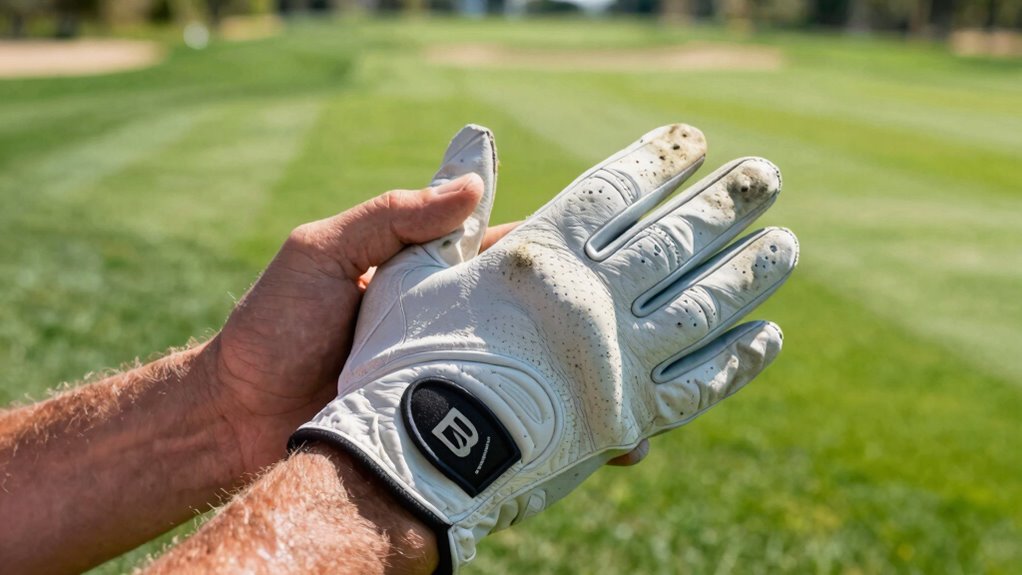
Many golfers struggle to transfer their solid range performance to the course because they focus too much on hitting perfect shots rather than developing a consistent, adaptable swing. This mindset creates unnecessary pressure and undermines your ability to perform under real-game conditions. Instead of thinking about perfect contact or trying to replicate every shot you hit on the range, you need to shift your focus toward mental focus and shot selection**. These two elements are essential for maintaining consistency and adapting to the unpredictable environment** on the course.
Focus on mental clarity and smart shot choices to adapt and perform under real-course conditions.
When you step onto the course, your mental focus should be more about strategic decision-making than about executing perfect swings. It’s easy to fall into the trap of overthinking or second-guessing every shot, but that only hampers your performance. Instead, develop a routine that helps you stay present and focused on the process rather than the outcome. Visualize your shot, pick a target, and trust your swing — don’t let self-doubt creep in. Your mental focus should be sharp enough to keep distractions at bay and help you commit to each shot with confidence. Developing a positive mental attitude can also significantly enhance your overall performance and resilience during the round. Additionally, practicing mindfulness techniques can help improve your mental clarity and reduce anxiety on the course. Recognizing the importance of mental resilience can help you bounce back quickly from mistakes and maintain your composure throughout the round.
Shot selection plays a significant role in translating your range skills to the course. On the range, you often hit shots with a narrow target and ideal conditions, but on the course, you encounter uneven lies, wind, and hazards. Your ability to choose the right shot for the situation can make or break your round. Recognize that not every shot needs to be perfect; instead, focus on making smart decisions that minimize risk and maximize your chances for success. For example, if a pin is tucked behind a bunker, sometimes laying up or playing away from the hazard is a better choice than trying a risky shot. Good shot selection reduces pressure and helps you stay in control, even if your swing isn’t perfect.
In essence, your challenge isn’t just about mechanics — it’s about your mental game and how you approach each shot. When you maintain a focused mind and choose your shots wisely, you’re more likely to stay calm and consistent, regardless of what the ball does. This mindset allows you to adapt to the course’s challenges rather than fighting against them. Developing a strong mental game is just as important as honing your swing mechanics. So, next time you practice, work on sharpening your mental focus and honing your shot selection skills. These small but powerful adjustments will help you carry your range game onto the course and, more importantly, enjoy the game more.

FODESAN Retractable Golf Swing Trainer, Training Aid with Grip Trainer, Swing Mechanics for Beginners & Tempo Training for Advanced, Click Feedback, Muscle Training, Indoor/Outdoor
- Instant Swing Feedback: Provides real-time feedback during practice
- Retractable Shaft with Click: Clicks to indicate correct mechanics
- Ergonomic Grip Trainer: Ensures proper hand and finger placement
As an affiliate, we earn on qualifying purchases.
As an affiliate, we earn on qualifying purchases.
Frequently Asked Questions
How Can I Transfer My Swing From the Range to the Course?
You can transfer your swing from the range to the course by practicing consistency in your routine and focusing on visualization. Keep your practice simple, repeat the same pre-shot routine, and trust your swing. Visualize successful shots before each swing, helping your mind and body stay connected. This approach builds confidence and muscle memory, making it easier to execute the same swing on the course as you do on the range.
What Mental Barriers Prevent Consistent On-Course Performance?
Mental barriers, like confidence issues, act as invisible walls blocking your full potential on the course. These barriers often stem from fear of failure or overthinking, clouding your mind like fog on a morning fairway. To break through, focus on positive self-talk and visualization. When you trust your swing and stay present, you’ll find your game flows naturally, transforming those mental hurdles into stepping stones toward consistent, on-course success.
Do Different Clubs Require Different Practice Approaches?
Yes, different clubs require different practice routines and focus on club selection. For example, wedges demand precision and short game drills, while drivers need power and distance work. Adjust your practice to match each club’s purpose, ensuring you develop consistent contact and confidence. By tailoring your routines, you’ll better understand each club’s behavior, making it easier to select the right club and execute shots effectively on the course.
How Important Is Course Management Versus Raw Skill?
Course management often outweighs raw skill because it involves strategic decision-making, swing consistency, and club selection. When you prioritize smart choices, you reduce errors and play more confidently. Even if your swing isn’t perfect, good course management helps you avoid hazards and make better shots. Focusing on these aspects can turn mediocre skills into lower scores. Ultimately, understanding when and how to use each club makes a bigger difference than pure power or technique.
Can Playing More On-Course Improve My Range Game?
Yes, playing more on-course can definitely improve your range game. It helps you develop consistent practice routines that mirror actual play, making your practice more effective. Plus, it allows you to fine-tune equipment adjustments based on real-course conditions. This hands-on experience builds confidence and adaptability, translating your range skills into better shot execution on the course. Regular on-course play bridges the gap between practice and real-game performance.

ONHAWKS Golf Alignment Rods – Club Alignment Sticks with Telescopic Magnetic Corrector Trainer Aid Tools Help Visualize and Align Your Golf Shots Club,Swing Aim Practice Accessories Golf Gifts
- Scientific Alignment Design: Magnetic aid for club face positioning
- Telescopic Upgrade Design: Compact, lightweight, and portable training tool
- Enhances Swing Technique: Magnetic attachment for accurate club face angle
As an affiliate, we earn on qualifying purchases.
As an affiliate, we earn on qualifying purchases.
Conclusion
So, next time your swing feels off on the course, remember it’s not just about the hours at the range. Sometimes, it’s about gently steering your mind and body into harmony, like a quiet conversation between old friends. Keep practicing with patience, and don’t be discouraged if things don’t click immediately. With a bit of time and a softer touch, you’ll find your true rhythm — making your game feel more natural and, ultimately, more enjoyable.
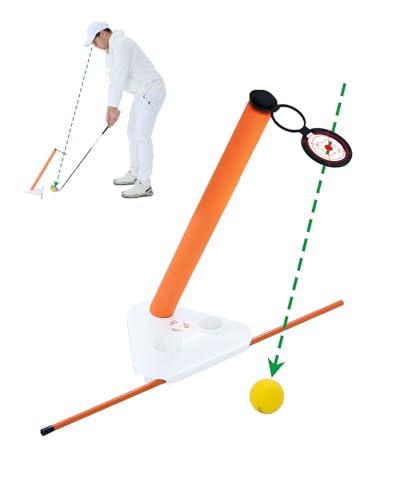
Cusprtm Visual Lock Golf Training Aid – Instant Head Stability & Swing Plane Trainer – Master Swing Path, Fix Swaying, and Correct Slices for Driver & Irons
- Instant Visual Feedback: Provides immediate head position confirmation
- Improves Swing Plane: Helps stabilize your swing axis and plane
- Eliminates Swaying & Slices: Reduces excessive head movement for better shots
As an affiliate, we earn on qualifying purchases.
As an affiliate, we earn on qualifying purchases.

The Golf Course GM’s Handbook Practical Leadership for Profitable, Sustainable Clubs.
As an affiliate, we earn on qualifying purchases.
As an affiliate, we earn on qualifying purchases.