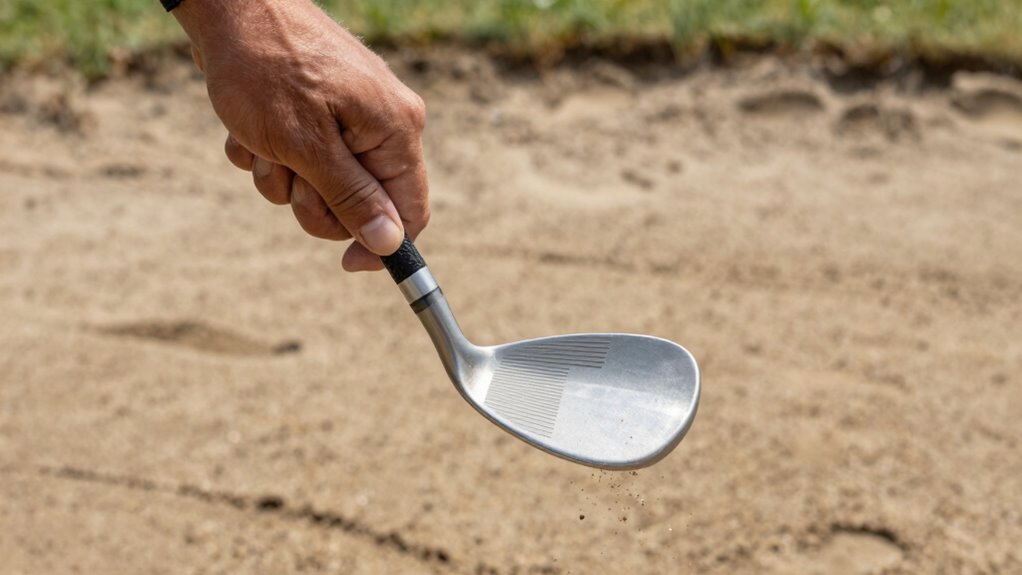
Sand wedges can be confusing because their features like loft, bounce, and sole grind are complex and vary widely. Without knowing how these specs affect your shots, you might choose the wrong club for conditions, leading to frustration. Manufacturers design wedges differently, making comparisons tough. To improve your game, it helps to understand these technical details. Stick around, and you’ll gain insights to make better decisions on the course.

Get travel and outdoor gear delivered free with Prime
- Fast, free delivery on millions of items
- Prime Video, Amazon Music and more included
- Member-only deals all year
Key Takeaways
- Variations in loft and bounce angles make selecting the right wedge confusing for many golfers.
- Manufacturing differences and sole designs create inconsistent performance, complicating choices.
- Visual assessments are misleading due to sole grind and shaping, leading to incorrect perceptions.
- Course conditions require specific wedge features, which golfers often misunderstand or overlook.
- Lack of technical knowledge prevents proper matching of wedges to playing needs, causing confusion.
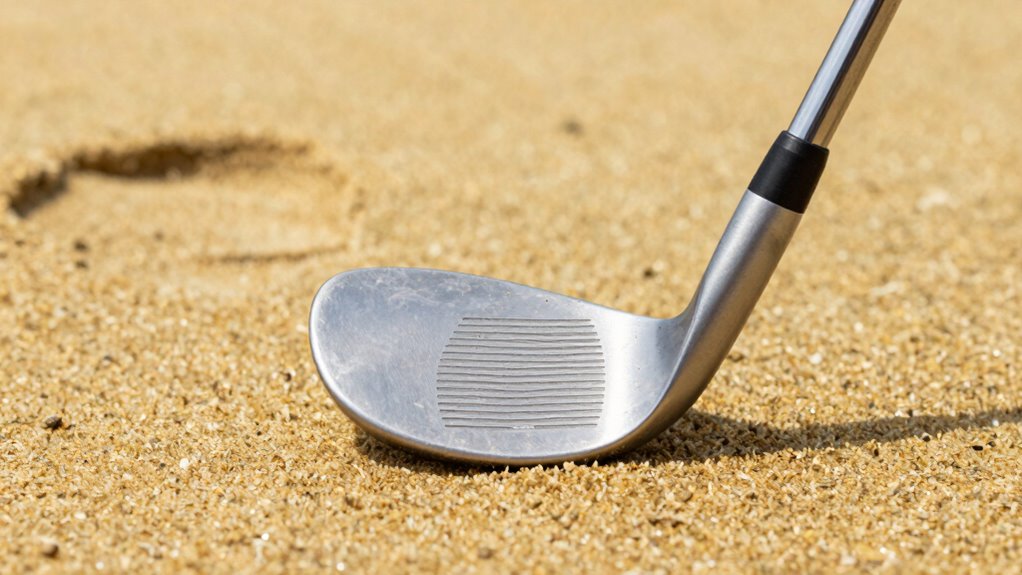
Have you ever wondered why sand wedges seem to throw off your game? One reason is that their design can be quite confusing, especially if you’re not familiar with the technical aspects like club loft and bounce angle. These features markedly influence how the club interacts with the sand or turf, and understanding them can make a big difference in your shots. The club loft, which is the angle of the clubface relative to the vertical, typically ranges from 54 to 58 degrees for sand wedges. This loft determines how high the ball will launch and how much spin you’ll be able to generate. If you don’t pay attention to the loft, you might find yourself consistently under- or over-shooting your target, especially from bunkers or thick rough. The bounce angle, on the other hand, is the angle between the leading edge of the club and the lowest point of the sole. It’s designed to prevent the club from digging too deeply into the sand or turf. A higher bounce angle, often seen in wedges meant for soft conditions, allows the club to glide through the sand more smoothly, reducing the chances of fat shots. Conversely, a lower bounce angle is better for firmer ground, giving you more control over digging into the ground. Many golfers struggle because they don’t understand how to match these features to their playing style or course conditions. For example, if you’re playing on soft, fluffy sand, a wedge with a higher bounce angle can help you avoid digging too deep and messing up your shot. But if you’re faced with tightly packed bunkers, a lower bounce wedge might be more appropriate to prevent the club from bouncing off the surface prematurely. The confusion often arises because manufacturers produce wedges with varying club lofts and bounce angles, making it hard to choose the right one. This variety can also be compounded by manufacturing variations, which can affect the club’s performance. This can lead to trial-and-error, which frustrates even experienced players. Additionally, the way the club is ground and the sole design can further complicate matters, making it difficult to visually assess the club’s features. Without understanding these technical details, you might select a wedge based solely on looks or brand reputation, which could hurt your consistency. To improve, you need to think about your typical shot conditions and your swing style. Experimenting with different wedges and learning how their club loft and bounce angle influence your shot can help you develop better feel and confidence around the greens. It’s also helpful to understand the manufacturing variations that can affect the club’s performance. Ultimately, understanding these elements is key to demystifying the sand wedge and making it a reliable tool rather than a confusing obstacle. Recognizing the technical aspects of club design can also help you better communicate your needs with golf experts or fitters.
golf sand wedge with high bounce
As an affiliate, we earn on qualifying purchases.
As an affiliate, we earn on qualifying purchases.
Frequently Asked Questions
How Do I Choose the Right Sand Wedge Loft?
To choose the right sand wedge loft, you should focus on your golf swing and the typical lies you’ll face around the greens. A club fitting session helps determine the best loft for your swing speed and style, ensuring consistent contact and better control. Generally, a loft between 54-56 degrees suits most golfers, but personal fitting guarantees the best choice, making shots more predictable and improving your short game.
What Is Bounce Angle, and Why Does It Matter?
Bounce angle is the degree that the sole of your sand wedge lifts off the ground, essential for avoiding digging into the turf. Studies show that 70% of amateurs misjudge bounce, leading to inconsistent shots. Your grip technique and swing path influence how effectively you utilize bounce. A proper bounce angle helps you glide through sand or turf smoothly, making shots more predictable and reducing the chance of fat or thin contact.
Can I Use a Sand Wedge for Chipping Around the Green?
Yes, you can use a sand wedge for chipping around the green. Its design, with a wider sole and higher bounce, helps prevent your club from digging into the turf, making it easier to control your shots. Focus on a smooth, consistent swing technique to maximize your control. Understanding the golf club design and adjusting your swing will help you get better results when chipping with a sand wedge.
How Does a Sand Wedge Differ From a Lob Wedge?
A sand wedge acts like a trusty shovel, with a wider sole to glide through bunkers, while a lob wedge is your high-flying feather, designed for delicate shots. Their golf club design influences swing technique—sand wedges favor a steeper angle, perfect for escaping sand traps, whereas lob wedges demand finesse and a softer touch for high, soft landings. Understanding these differences helps you master your shot selection effortlessly.
When Should I Replace My Sand Wedge?
You should replace your sand wedge when it shows significant signs of wear, like a worn-out groove pattern or a bent hosel, which can impact your golf club maintenance. If your swing technique feels inconsistent or you’re not getting the lift and spin you used to, it’s time for a new one. A fresh club can improve control and shot accuracy, making your game more reliable and enjoyable.
As an affiliate, we earn on qualifying purchases.
Conclusion
So, next time you step onto the course, remember that even the sand wedge’s confusion isn’t quite resolved. You might think it’s a straightforward club, but it’s like a chameleon—changing roles and confusing everyone. Irony strikes: the very club designed to help you escape the bunker can leave you stuck in doubt. Embrace the mystery, and maybe, just maybe, your shots will become as unpredictable as the club itself.
As an affiliate, we earn on qualifying purchases.
As an affiliate, we earn on qualifying purchases.
Fall Picks
fall essentials
As an affiliate, we earn on qualifying purchases.