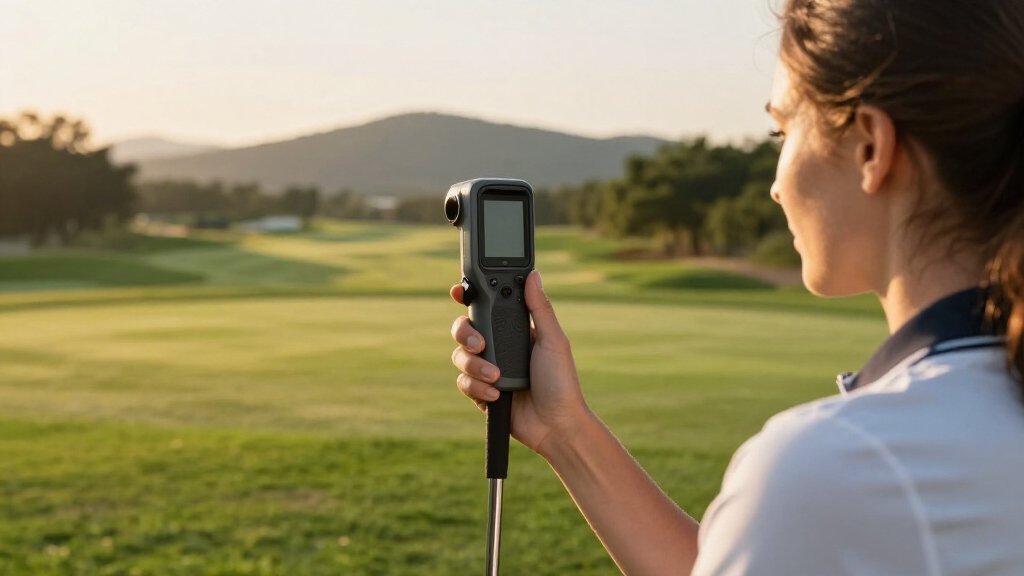

Portable golf rangefinders split into two camps: laser models that give you exact distances to any target, and GPS handhelds like the MILESEEY GeneSonic Go that preload front, middle, and back yardages without ever needing a clean line of sight. The Leupold GX-5C earns my best overall pick for tournament-legal precision and optical clarity in a genuinely pocketable body, while the Callaway 300 Pro stands out for its external slope switch and the Gogogo Sport Vpro GS24 wins the value conversation at a fraction of premium pricing. The main tradeoffs you’ll face are slope legality for tournament play, battery type (rechargeable versus replaceable), and whether maximum range claims hold up on real courses with shaky hands. Keep reading for the full breakdown of all 13 models and which one fits your game.
Complete the kit


Key Takeaways
- The Leupold GX-5C took best overall because its optical glass and target-lock consistency beat budget lasers on hazy or partially obscured shots, not just on spec sheets.
- Sub-$60 models like the Gogogo Sport Vpro GS24 and the two REVASRI units now include slope and pin-lock vibration — features that were premium-only two years ago — but their 1200-yard claims shrink to roughly 300–400 usable yards on flags.
- The external slope switch on the Callaway 300 Pro and Redtiger models is the cleanest solution for tournament legality, since a compliance official can see the adjustment without handling the device.
- GPS options (MILESEEY GeneSonic Go, Bushnell Phantom 3) solved a different problem than lasers: instant green distances on blind shots and doglegs, but no exact yardage to pins, hazards, or trees.
- Rechargeable models (the 1200Y with 7X magnification, Acer Gadget) are cheaper to run but lose their advantage mid-round if you forget to charge — replaceable-CR2 models like the GX-5C and 300 Pro never strand you before a weekend game.
| Leupold GX-5C Golf Rangefinder |  | Best Premium Pick | Range: 700 yards | Accuracy: +/- 1 yard | Targeting Features: Flag Lock, PinHunter 3 | VIEW LATEST PRICE | See Our Full Breakdown |
| Range Finder Golf with Slope – Portable Golf Rangefinder for Men |  | Best Value Pick | Maximum Range: 1200 yards | Accuracy: ± 0.7 yards | Measurement Speed: 0.5 seconds | VIEW LATEST PRICE | See Our Full Breakdown |
| Range Finder Golf with Slope – Golf Rangefinder for Men |  | Best for Beginners | Maximum Range: 1200 yards | Accuracy: ± 0.7 yards | Measurement Speed: 0.5 seconds | VIEW LATEST PRICE | See Our Full Breakdown |
| MILESEEY GeneSonic Go Golf GPS Handheld with 43K+ Courses (No Subscription) |  | Best GPS Alternative | Screen: 3-inch full-color touchscreen | Courses Preloaded: 43,000+ | Subscription: None required | VIEW LATEST PRICE | See Our Full Breakdown |
| Gogogo Sport Vpro GS24 Golf & Hunting Laser Rangefinder, 1200 Yards |  | Best Dual-Sport Budget Pick | Range: 5 to 1200 yards | Magnification: 7x | Accuracy: +/- 0.1 meters | VIEW LATEST PRICE | See Our Full Breakdown |
| Golf Rangefinder 1200Y with Slope, 7X Magnification Rechargeable |  | Best All-Around Rechargeable Pick | Range: 1200 yards | Magnification: 7x | Battery: 900mAh rechargeable | VIEW LATEST PRICE | See Our Full Breakdown |
| Callaway 300 Pro Golf Laser Rangefinder with External Slope Switch |  | Best Trusted Brand for Tournament Play | Magnification: 6x | Range: 5-1000 yards | Accuracy: +/- 1 yard | VIEW LATEST PRICE | See Our Full Breakdown |
| Redtiger Golf Rangefinder with Slope On/Off, 7X Magnification, 1200 Yards |  | Best Value Feature Set | Magnification: 7x | Maximum Range: 1200 yards | Accuracy: 0.5 yards | VIEW LATEST PRICE | See Our Full Breakdown |
| Golf Rangefinder with Slope 1500 Yards Laser Range Finder |  | Best Long-Range Flag Locking | Range: Up to 1500 yards | Flag Lock Distance: Up to 1000 yards | Magnification: 7x | VIEW LATEST PRICE | See Our Full Breakdown |
| Bushnell Golf Phantom 3 Slope GPS |  | Best for Effortless GPS Yardages | Distance Type: GPS with slope adjustment | Display: Touchscreen | Preloaded Courses: 38,000+ worldwide | VIEW LATEST PRICE | See Our Full Breakdown |
| REVASRI Golf Rangefinder with Slope, Magnetic Mount, and Vibration, 1000 Yards |  | Best Magnetic Mount | Range: 5-1000 yards | Accuracy: ±1 yard | Dimensions: 4.13 x 2.95 x 1.5 inches | VIEW LATEST PRICE | See Our Full Breakdown |
| REVASRI Range Finder for Golf, Slope, Pin Lock Vibration 1000Y Rangefinder |  | Best Budget Pick | Range: 1000 yards | Accuracy: ±1 yard | Dimensions: 3.8 x 2.6 x 1.3 inches | VIEW LATEST PRICE | See Our Full Breakdown |
| Acer Gadget Golf Rangefinder with Slope On/Off, 800/1200 Yards |  | Best for Precision Seekers | Range: 800 yards (up to 1200 in some modes) | Magnification: 6x | Accuracy: ±0.5 yards | VIEW LATEST PRICE | See Our Full Breakdown |
| portable golf rangefinder | Accuracy | Range | Magnification |
|---|---|---|---|
| Leupold GX-5C Golf Rangefinder | +/- 1 yard | 700 yards | — |
| Range Finder Golf with Slope | ± 0.7 yards | — | 7x |
| Range Finder Golf with Slope | ± 0.7 yards | — | 7x |
| MILESEEY GeneSonic Go Golf GPS | — | — | — |
| Gogogo Sport Vpro GS24 Golf & | +/- 0.1 meters | 5 to 1200 yards | 7x |
| Golf Rangefinder 1200Y with Sl | — | 1200 yards | 7x |
| Callaway 300 Pro Golf Laser Ra | +/- 1 yard | 5-1000 yards | 6x |
| Redtiger Golf Rangefinder with | 0.5 yards | — | 7x |
| Golf Rangefinder with Slope 15 | — | Up to 1500 yards | 7x |
| Bushnell Golf Phantom 3 Slope | — | — | — |
| REVASRI Golf Rangefinder with | ±1 yard | 5-1000 yards | — |
| REVASRI Range Finder for Golf | ±1 yard | 1000 yards | — |
| Acer Gadget Golf Rangefinder w | ±0.5 yards | 800 yards (up to 1200 in some modes) | 6x |
More Details on Our Top Picks
Leupold GX-5C Golf Rangefinder
For golfers who treat distance data as shot-critical information rather than a nice-to-have, the GX-5C sits at the premium end of this lineup. PinHunter 3 and Flag Lock lock onto pins faster and more reliably than budget models like the Gogogo Sport Vpro GS24, whose flagpole locking cuts out beyond 150 yards. The standout here is True Golf Range, which factors slope into a played-distance number — something the two generic 1200-yard slope rangefinders in this roundup do, but with less refinement in how readings settle.
The tradeoff is price and practicality. At 700 yards of range it covers everything a golfer needs, but hunters and long-range users should look elsewhere. And unlike the rechargeable USB-C options flooding this category, it runs on replaceable batteries, which means carrying spares. This pick makes the most sense for the golfer who wants optical clarity and a trusted brand name over accessory bundles.
Pros:- True Golf Range delivers slope-adjusted played distances with real accuracy
- PinHunter 3 and Flag Lock acquire pins quickly and hold them steadily
- Digitally Enhanced Accuracy (DNA) engine produces dependable +/- 1 yard readings
- Scan Mode allows continuous ranging across hazards and layup zones
Cons:- Premium price puts it out of reach for occasional golfers
- Uses replaceable batteries rather than built-in USB-C recharging
- 700-yard range trails the 1200-yard models in this roundup for non-golf uses
Best for: Serious golfers who prioritize optical quality and premium targeting algorithms over price
Not ideal for: Budget-conscious casual players or anyone wanting a rechargeable battery and multi-sport versatility
- Range:700 yards
- Accuracy:+/- 1 yard
- Targeting Features:Flag Lock, PinHunter 3
- Slope Technology:True Golf Range (TGR)
- Measurement Engine:Digitally Enhanced Accuracy (DNA)
- Scan Mode:Yes
Our verdict“Worth the premium for dedicated golfers who want best-in-class pin targeting, but overkill for weekend players.”
Range Finder Golf with Slope – Portable Golf Rangefinder for Men
This model is where price and performance meet most sensibly. For a fraction of what the Leupold GX-5C costs, it delivers 1200 yards of range, ± 0.7 yard accuracy, slope compensation, and a flag lock with vibration confirmation — the same core toolkit, just with less polished glass and optics. The built-in USB-C rechargeable battery is a genuine convenience over replaceable-battery designs, and at 0.27 lbs it disappears into a pocket between shots.
Compared with the Gogogo Sport Vpro GS24, it reads faster (0.5 seconds) and skips the subscription anxiety entirely. The honest tradeoff: slope mode must be manually disabled for tournament play, and the menu of modes — slope, flag lock, speed — takes some learning. Buyers who only want point-and-shoot simplicity may find the feature set busier than needed, but value hunters will forgive that quickly.
Pros:- Exceptional accuracy and 0.5-second readings at a budget-friendly price
- USB-C rechargeable battery eliminates ongoing battery costs
- 0.27 lb weight makes it one of the most pocketable options here
- IP54 waterproofing handles rain and morning dew
Cons:- Slope mode must be manually switched off for tournament legality
- Feature-rich interface may overwhelm first-time rangefinder users
- 1200-yard ceiling trails long-range hunting models
Best for: Value-focused golfers who want slope, flag lock, and rechargeable power without the premium price
Not ideal for: Golfers who want a one-button device with no mode switching or setup learning curve
- Maximum Range:1200 yards
- Accuracy:± 0.7 yards
- Measurement Speed:0.5 seconds
- Magnification:7x
- Weight:0.27 lbs
- Waterproof Rating:IP54
- Battery:Built-in rechargeable USB-C
Our verdict“The smartest spend in this roundup for golfers who want full features without the premium tax.”
Range Finder Golf with Slope – Golf Rangefinder for Men
Nearly identical on paper to the Best Value pick above — same 1200-yard range, same ± 0.7 yard accuracy, same 7x magnification and USB-C charging — so why does it earn a separate slot? The differentiator is mode flexibility: adding a dedicated fog mode makes it the friendlier choice for golfers who play early mornings or misty coastal courses, where cheaper lasers struggle to return any reading at all. The flaglock vibration gives beginners the confidence that they’ve hit the pin, not the trees behind it.
That said, the accessory bundle is a mixed blessing. Compared with the leaner Gogogo Sport Vpro GS24, all the extras add carrying bulk some players won’t want. And like its sibling model, slope must be manually toggled off before tournament rounds — a step newer golfers should build into their routine early. Heavy rain still degrades performance regardless of the fog setting.
Pros:- Dedicated fog mode extends usability in poor visibility conditions
- Flaglock vibration confirms pin acquisition for newer users
- Fast 0.5-second measurements build confidence on the course
- Lightweight 0.27 lb body with rechargeable USB-C power
Cons:- Slope mode requires manual deactivation for legal tournament play
- Accessory bundle adds bulk that some players find unnecessary
- Performance degrades in heavy rain despite IP54 rating
Best for: New golfers who want guided targeting features and all-weather modes in one affordable package
Not ideal for: Minimalists who want just a rangefinder and case, without the extra accessories and bulk
- Maximum Range:1200 yards
- Accuracy:± 0.7 yards
- Measurement Speed:0.5 seconds
- Magnification:7x
- Weight:0.27 lbs
- Waterproof Rating:IP54
- Modes:Slope, Flaglock, Fog, Speed
- Battery:Built-in USB-C rechargeable
Our verdict“A beginner-friendly entry point with helpful confirmation cues, as long as you don’t mind the extra gear in the box.”
MILESEEY GeneSonic Go Golf GPS Handheld with 43K+ Courses (No Subscription)
This is the odd one out in a laser-heavy lineup, and that’s exactly its appeal. Instead of shooting a pin, the GeneSonic Go uses preloaded GPS data for 43,000+ courses to show front, middle, and back yardages plus hazards — information a laser like the Leupold GX-5C simply cannot give you when the green is hidden or you can’t see the flag. The 3-inch color touchscreen is dramatically easier to read than any monocular eyepiece, which matters for golfers who struggle with laser aiming.
The tradeoffs are real. Yardages are to mapped GPS points, not the actual pin position, so precision players will still prefer a laser. Audio yardages require pairing a separate Bluetooth speaker, and unlike the dual-purpose Gogogo Sport Vpro GS24, it’s useless off the golf course. But with 10-hour battery life, IP67 waterproofing, and a magnetic cart mount, it’s the strongest pick here for golfers who want course context over pin-point precision.
Pros:- 43,000+ preloaded courses with no subscription fees
- Full-hole hazard and green information that lasers can’t provide
- IP67 waterproofing and 10-hour battery outlast most laser rangefinders here
- Magnetic mount keeps it accessible on any cart
Cons:- GPS yardages are to mapped points, not the actual pin location
- Audio yardage readouts require a separate paired speaker
- Golf-only design offers no hunting or outdoor versatility
Best for: Golfers who want full-hole context — hazards, fronts, backs — without a subscription or laser-aiming skills
Not ideal for: Precision-focused players who need exact pin distances, or anyone wanting a multi-sport device
- Screen:3-inch full-color touchscreen
- Courses Preloaded:43,000+
- Subscription:None required
- Waterproof Rating:IP67
- Battery Life:10 hours
- Mounting:Magnetic mount, handheld
- Connectivity:Bluetooth
Our verdict“Choose this over a laser if you value whole-course awareness and easy readability over exact pin distances.”
Gogogo Sport Vpro GS24 Golf & Hunting Laser Rangefinder, 1200 Yards
The GS24 earns its place by refusing to pick a lane. It ranges to 1200 yards for hunting while keeping the golf essentials — slope adjustment and flagpole locking up to 150 yards — at a price well below the Leupold GX-5C. A physical toggle switch for slope is a small detail with real value: unlike the two generic slope models in this roundup that bury the setting in menus, flipping a switch before a tournament round takes two seconds.
The compromises are mostly about precision. Its flag lock range of 150 yards is the shortest in this lineup — the Best Value pick holds locks at greater distances — so long approach shots require steadier hands. And the multi-mode interface leans complex for players who just want a number. Still, for the golfer who also hunts, no other entry here covers both pursuits this affordably, and the 1-year warranty adds reassurance at this price.
Pros:- Genuine 1200-yard range covers hunting and long golf holes alike
- Physical slope toggle switch makes tournament-legal switching effortless
- Compact build with both flagpole lock and continuous scan modes
- Backed by a 1-year warranty at a budget price
Cons:- Flagpole locking limited to 150 yards, the shortest in this lineup
- Multi-mode interface feels complicated for casual golf-only users
- Slope must still be manually disabled for competitive play
Best for: Golfers who also hunt and want one affordable device for both pursuits
Not ideal for: Golfers who regularly shoot pins from beyond 150 yards and need extended flag lock range
- Range:5 to 1200 yards
- Magnification:7x
- Accuracy:+/- 0.1 meters
- Flagpole Locking Distance:Up to 150 yards
- Aim Flag Distance:Up to 250 yards
- Slope Function:Yes, with toggle switch
- Warranty:1 year
Our verdict“The best pick here if your rangefinder needs to leave the golf course for hunting season.”
Golf Rangefinder 1200Y with Slope, 7X Magnification Rechargeable
This model stands out for balancing 7x magnification with a genuinely portable frame, and the 900mAh rechargeable battery delivering up to 10 hours means a weekend golfer can go multiple rounds between charges. Compared with the Callaway 300 Pro, which runs on replaceable batteries, this option trades brand familiarity for lower long-term running costs and brighter optics in low light. The dual usefulness for hunting and bowhunting also widens its appeal beyond the fairway, something the golf-only Bushnell Phantom 3 can’t match.
The tradeoffs are real: no charging cable ships in the box, so you’ll need to supply your own USB-C, and it sits above entry-level units like the Acer Gadget in price.
Pros:- Highly accurate measurements with minimal error across its 1200-yard range
- Bright, clear optics that perform in low-light morning or evening rounds
- Rechargeable battery with up to 10 hours of continuous use
- Multiple modes including slope adjustment and flag locking
Cons:- USB-C charging cable is not included in the box
- Pricier than basic rangefinder models
- Designed primarily for outdoor use, limiting indoor versatility
Best for: Multi-sport outdoorsmen who want one rangefinder for golf, hunting, and bowhunting without buying two devices
Not ideal for: Budget-first buyers who only play golf occasionally — a basic sub-$100 model covers that use case for less
- Range:1200 yards
- Magnification:7x
- Battery:900mAh rechargeable
- Battery Life:Up to 10 hours
- Charging:USB-C
- Laser Class:Class 1
- Slope Adjustment:Yes
Our verdict“A smart buy for the golfer-hunter who wants one rechargeable, accurate device that handles both the course and the field.”
Callaway 300 Pro Golf Laser Rangefinder with External Slope Switch
The Callaway 300 Pro earns its slot on brand reliability and tournament readiness. Its external slope switch lets you visibly disable slope compensation before competition — a genuine advantage over units like the Redtiger, where slope toggling happens through menus and can raise questions with playing partners or rules officials. Add the magnetic cart mount and included hard case, and you have a device built for golfers who play organized rounds regularly.
The compromises: 6x magnification falls short of the 7x offered by the Redtiger and the 1200Y rechargeable model, so distant pins appear smaller in the viewfinder. It also uses replaceable batteries rather than USB-C charging, and its larger body may feel bulky in a pocket compared with slimmer generics.
Pros:- Highly accurate to within +/- 1 yard with slope adjustment for elevation
- Pin-locking technology for precise targeting at distance
- Magnetic cart mount keeps it within reach during play
- Durable hard carry case included
Cons:- External slope switch can be accidentally toggled in a bag
- Bulkier than slimmer generic competitors
- Only 6x magnification versus the 7x common at this price
Best for: League and tournament golfers who need a rules-compliant slope switch and want a recognized brand with support behind it
Not ideal for: Travel-minimalists and walkers who carry everything in pockets — the bulk and hard case add weight to a walking round
- Magnification:6x
- Range:5-1000 yards
- Accuracy:+/- 1 yard
- Slope Adjustment:Yes, with external switch
- Pin-Locking Technology:Yes
- Measurement Units:Yards or meters
- Battery Included:Yes
Our verdict“The safest choice for competitive golfers who value a visible, physical slope switch and a proven brand over cutting-edge specs.”
Redtiger Golf Rangefinder with Slope On/Off, 7X Magnification, 1200 Yards
Redtiger bundles nearly everything the premium models offer at a friendlier price: 7x magnification, half-yard accuracy, slope on/off, flag locking, and a full accessory kit with magnetic belt clip and soft case. Against the Callaway 300 Pro, you gain an extra power of magnification and USB-C rechargeability while spending less; against the Gogogo Sport Vpro GS24, you gain the magnetic mounting system that cart golfers will use constantly.
Where it cuts corners: the IP54 water resistance handles drizzle but not heavy rain, and some buyers report occasional calibration drift requiring a reset. The mode system also takes an afternoon to learn if you’re upgrading from a simple point-and-shoot.
Pros:- 0.5-yard accuracy across the full 1200-yard range
- Multiple measurement modes including slope and flag locking
- Magnetic mount attaches easily to clubs, carts, and bags
- Generous accessory bundle plus a 2-year warranty
Cons:- IP54 rating may not withstand heavy rain
- Feature-rich menus carry a learning curve
- Occasional calibration issues reported by customers
Best for: Value-conscious mid-handicappers who want slope, magnet mount, and 7x glass without paying premium-brand prices
Not ideal for: Golfers who play in wet climates or demand flawless out-of-box calibration — the IP54 rating and reported drift issues matter more for them
- Magnification:7x
- Maximum Range:1200 yards
- Accuracy:0.5 yards
- Slope Switch:Yes
- Water Resistance:IP54
- Charging:USB-C
- Warranty:2 years
- Includes:Magnetic belt clip, buckle, lanyard, case, cable, cloth
Our verdict“The best price-to-feature ratio in this lineup, provided you don’t regularly play in downpours.”
Golf Rangefinder with Slope 1500 Yards Laser Range Finder
Distance is the headline here: a 1500-yard maximum range with flag lock reaching 1000 yards and a vibration confirmation when the pin is captured. That’s the longest flag-lock range in this batch, ahead of both the Redtiger and the 1200Y rechargeable unit, and it matters most on long par-5s where you’re shooting a second shot from 250+ yards out. The vibration feedback removes the guesswork of wondering whether you hit the flag or the trees behind it, and the bundled gift kit makes it an easy present.
The catch is specialization: unlike the 1200Y model, it can’t double for hunting, and the body runs slightly bulky. USB-C charging also means a dead battery mid-tournament is possible if you forget to top it off.
Pros:- Longest range in the lineup at up to 1500 yards
- Flag lock vibration confirms target capture up to 1000 yards
- Built-in slope compensation improves club selection
- Complete gift kit with hardshell case and 2-year warranty
Cons:- Golf-only design with no hunting or outdoor crossover
- Slightly bulky body for pocket carry
- Requires charging, which can be inconvenient during long events
Best for: Long-hitters and gift buyers who want maximum flag-lock reach and clear vibration confirmation on distant pins
Not ideal for: Multi-sport users and multi-day tournament players — it’s golf-only and battery-dependent without a spare-cell fallback
- Range:Up to 1500 yards
- Flag Lock Distance:Up to 1000 yards
- Magnification:7x
- Power Source:USB-C rechargeable battery
- Slope Compensation:Yes
- Vibration Flag Lock:Yes
- Magnetic Mount:Yes
- Warranty:2 years
Our verdict“The pick for golfers who play long courses and want confident pin acquisition from farther out than anything else here.”
Bushnell Golf Phantom 3 Slope GPS
The Phantom 3 takes a completely different approach: instead of firing a laser, it pulls slope-adjusted GPS yardages from 38,000+ preloaded courses with automatic course recognition. That means no steady hands, no flag-hunting, and front/middle/back numbers the moment you step up to the ball — a friendlier experience for beginners than any laser here, including the Gogogo Sport Vpro. The 18-hour battery comfortably covers two-plus rounds, beating every laser in this batch.
The tradeoff is precision and versatility. GPS gives you green-center distances, not the exact number to the stick, and unlike the Redtiger or the 1200Y model, it’s useless off the golf course. The electronic display also becomes harder to read in direct sun or heavy weather compared with optical viewfinders.
Pros:- Slope-adjusted yardages with no aiming required
- 38,000+ preloaded courses with automatic recognition and updates
- Up to 18 hours of battery for multiple rounds per charge
- Touchscreen interface and magnetic cart mount
Cons:- GPS distances are less precise than laser flag targeting
- Electronic display can struggle in bright sun or bad weather
- No use beyond golf, unlike dual-purpose lasers
Best for: High-handicap and beginner golfers, or frequent travelers, who want instant yardages without laser-aiming skill
Not ideal for: Single-digit handicappers chasing exact pin numbers — GPS approximations can’t match a laser’s precision to the flag
- Distance Type:GPS with slope adjustment
- Display:Touchscreen
- Preloaded Courses:38,000+ worldwide
- Course Recognition:Automatic
- Course Updates:Automatic
- Battery Life:Up to 18 hours
- Magnetic Cart Mount:Yes
Our verdict“The easiest path to reliable yardages for casual and traveling golfers, as long as pin-point precision isn’t the priority.”
REVASRI Golf Rangefinder with Slope, Magnetic Mount, and Vibration, 1000 Yards
This REVASRI model stands out for a feature most competitors in this roundup skip: a magnetic mount that lets you stick the unit to a cart frame between shots. That small detail changes how the device lives on the course — no fumbling in a pouch while your group waits. Compared with the REVASRI 1000Y Pin Lock, this version is slightly larger and heavier, but it adds USB-C charging and a more refined mode set including slope compensation and flag lock with vibration confirmation.
The tradeoffs are real, though. Mode switching is manual rather than automatic, so expect a few extra button presses compared with the Callaway 300 Pro’s external slope switch. And there’s no stated waterproofing, which gives me pause for golfers who play in drizzle. For cart players, the magnetic convenience outweighs those quibbles.
Pros:- Magnetic mount attaches securely to cart frames
- ±1 yard accuracy across a 5-1000 yard range
- USB-C rechargeable battery eliminates coin-cell swaps
- Slope, flag lock, and vibration modes cover core course needs
Cons:- Manual mode switching adds friction mid-round
- No waterproof rating, limiting wet-weather confidence
Best for: Cart golfers who want hands-free storage and quick access between shots
Not ideal for: Golfers who regularly play in wet weather, since there’s no waterproof rating
- Range:5-1000 yards
- Accuracy:±1 yard
- Dimensions:4.13 x 2.95 x 1.5 inches
- Weight:5.43 ounces
- Battery:Built-in, USB-C rechargeable
- Mounting:Magnetic
- Modes:Slope, flag lock, vibration
Our verdict“If you ride a cart and value grab-and-go convenience over all else, the magnetic mount here is a genuine differentiator.”
REVASRI Range Finder for Golf, Slope, Pin Lock Vibration 1000Y Rangefinder
At 4.3 ounces and just 3.8 inches long, this is the lightest, most packable option among the laser rangefinders in this roundup — noticeably slimmer than the magnetic REVASRI above and easier to pocket than the Redtiger 1200. One-button operation keeps things simple: aim, press, and a 0.5-second measurement returns with ±1 yard accuracy. The multilayer coated lens is a nice touch at this price, delivering a clearer sight picture than budget units usually manage.
What you give up is range headroom. The 1000-yard ceiling trails the Gogogo Sport Vpro GS24 and Redtiger at 1200 yards, though on most par 4s and 5s you’ll never notice. The reliance on a built-in battery means a forgotten charge ends your round early — no swapping in a spare CR2 like some competitors allow. For walkers counting ounces, that’s a fair compromise.
Pros:- 4.3-ounce weight is among the lightest in its class
- 0.5-second measurement speed keeps pace of play quick
- Multilayer coated lens for clear target viewing
- Simple one-button operation with slope and pin lock vibration
Cons:- 1000-yard ceiling trails 1200-yard competitors
- Non-replaceable battery means no mid-round power fix
Best for: Walking golfers and budget-conscious buyers who want core features in the smallest possible package
Not ideal for: Golfers who forget to charge devices, since the sealed battery can’t be swapped mid-round
- Range:1000 yards
- Accuracy:±1 yard
- Dimensions:3.8 x 2.6 x 1.3 inches
- Weight:4.3 ounces
- Battery:Built-in Li-ion, USB-C rechargeable
- Measurement Speed:0.5 seconds
- Modes:Slope, flagpole lock, vibration
Our verdict“This pick makes the most sense for walkers who prioritize low weight and simple operation over maximum range.”
Acer Gadget Golf Rangefinder with Slope On/Off, 800/1200 Yards
The headline spec here is ±0.5-yard accuracy — twice as precise as the ±1-yard standard set by both REVASRI models and most of this roundup. Add anti-shake stabilization, which the budget picks lack entirely, and the result is steadier readings at longer distances where hand tremor wrecks cheaper units. The slope on/off toggle also makes it tournament-legal, mirroring the approach of the Callaway 300 Pro rather than the always-available slope on the entry-level REVASRI.
The catch is complexity. With modes for vertical/horizontal distance, angle, speed, and scanning, this is closer to a hunting hybrid than a pure golf tool, and beginners may find themselves cycling through settings they never wanted. The 800-yard golf range also sits below the Redtiger 1200, though the accuracy advantage matters far more than raw distance for anyone serious about dialing in approach shots.
Pros:- ±0.5-yard accuracy is best in this roundup
- Anti-shake technology steadies long-distance readings
- Slope on/off toggle makes it tournament-legal
- Versatile modes extend usefulness to hunting and range practice
Cons:- Feature-heavy interface can overwhelm casual golfers
- 800-yard range trails 1200- and 1500-yard competitors
- Charger not guaranteed to be included
Best for: Low-handicap golfers who want tournament-legal slope switching and sub-yard precision
Not ideal for: Beginners who just want point-and-shoot distances, since the mode menu adds confusion
- Range:800 yards (up to 1200 in some modes)
- Magnification:6x
- Accuracy:±0.5 yards
- Modes:Slope on/off, vertical/horizontal distance, angle, speed, scanning
- Battery:Rechargeable via USB-C
- Special Features:Anti-shake, flaglock vibration
Our verdict“If half-yard precision and a legal slope switch matter more to you than raw range, this is the most precise pick on the board.”
How We Picked
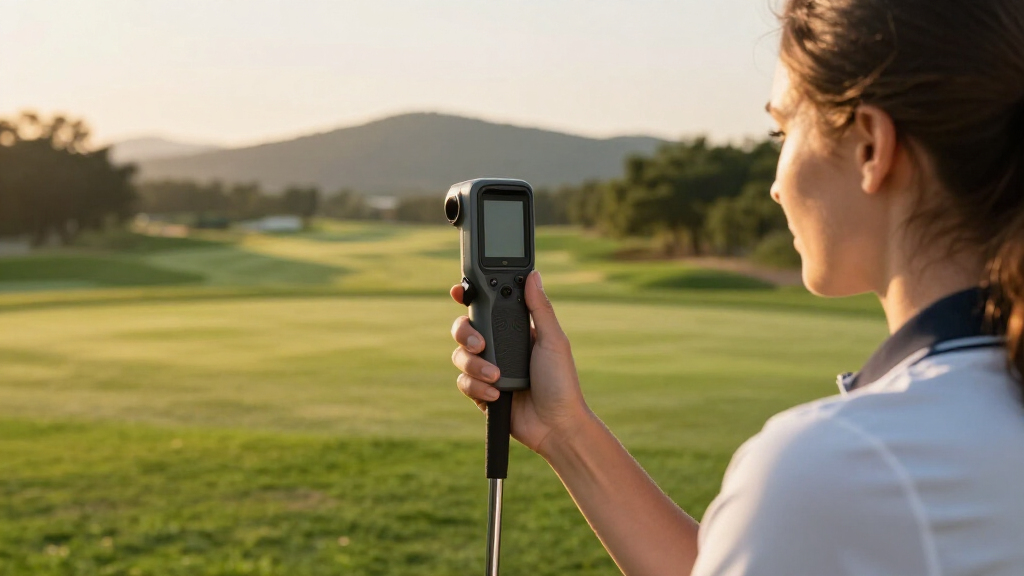
I ranked these 13 rangefinders against four buyer-relevant criteria rather than marketing spec sheets. Real-world accuracy came first: I prioritized models with reliable pin-lock acquisition at 200+ yards over inflated maximum range numbers, because a 1500-yard claim means nothing if it only reads trees reliably. Slope handling was second — models with a visible, external on/off switch scored higher than menu-buried toggles, since slope must be disabled in tournament play. Portability itself mattered: weight, pocketability, magnetic cart mounts, and one-handed operation all factored into whether a device actually earns its place in a walking round. Finally, value durability — battery type, build feel, and warranty — separated models that feel like multi-season investments from ones that feel disposable.
The ranking logic follows use case rather than price alone. Premium optics rise to the top because accuracy is the entire point of the purchase, but strong budget lasers rank above mediocre mid-rangers when they deliver 90% of the performance at 40% of the cost. GPS units are ranked within their own lane, since comparing them head-to-head with lasers would misrepresent what they do well.
Factors to Consider When Choosing Portable Golf Rangefinders
Before pulling out your card, a few category-wide realities will shape whether you’re happy with your purchase six months from now. These are the factors that consistently separate satisfied buyers from returns.Laser vs. GPS: The Choice That Decides Everything Else
This is the fork in the road most buyers underestimate. Laser rangefinders give you exact yardage to anything you can see — the flag, a bunker lip, a tree line — which is what you want for approach shots and club selection. GPS devices like the MILESEEY and Bushnell Phantom 3 give you front, middle, and back of green instantly, including on blind shots and doglegs where a laser is useless, but they can’t tell you the exact distance to the pin. Most golfers who shoot in the 80s and 90s actually benefit more from a laser, because pin distance is the number that changes club choice. GPS shines for hilly courses, casual riders who want fast numbers, and players who struggle to hold a laser steady. Some golfers carry both — a cheap laser for approaches and a phone app for layout — which can cost less than one premium laser.
Usable Range vs. Advertised Range
Every model in this roundup claims 800 to 1500 yards, and almost none of them deliver that against a flag. The honest number to shop by is reflective range to flags, which typically runs 250–400 yards even on good lasers, and shrinks further in haze, rain, or with unsteady hands. A 1200-yard claim is measured against large reflective surfaces like buildings, not 1.5-inch flagsticks. If you regularly play long par 4s and want to laser pins from 250 out, budget lasers with flag-lock vibration will serve you better than higher-range models without it, because the confirmation buzz tells you whether you actually hit the pin or the bushes behind it. Don’t pay extra for range digits you’ll never use — pay for lock reliability instead.
Slope Function and Tournament Legality
Slope-adjusted distances are genuinely useful — a 150-yard shot uphill might play 165 — but slope is illegal in tournament play under USGA rules unless it can be switched off. The design of that switch matters more than buyers expect. External switches like those on the Callaway 300 Pro and Redtiger let a rules official verify compliance at a glance, while models that bury slope in a menu mode create ambiguity that some tournaments won’t accept. If you only play casual weekend rounds, this is a non-issue and you should never pay a premium just for switch placement. But if you play club competitions or sanctioned events, this single detail can disqualify an otherwise perfect device. Check whether your model has a visible slope-off indicator before you buy, not after.
Battery Strategy: Rechargeable vs. Replaceable
The rechargeable models in this roundup save you money on CR2 batteries, which cost $8–12 each, but they introduce a failure mode replaceable-battery models don’t have: showing up to a 7 AM tee time with a dead device. Magnetic cart mounts on the REVASRI units pair well with rechargeable designs because the device lives where you can see its battery level. If you play weekly, a rechargeable unit pays for its convenience; if you play monthly, you may find the battery self-discharges between rounds and dies on hole three. The pragmatic middle path is carrying a $12 CR2 spare in your bag if you buy a replaceable-battery model, or choosing a rechargeable one with a battery-level readout rather than a vague low-power blink. Match the battery type to how often you actually play, not to how the spec sheet reads.
Magnification, Size, and One-Handed Use
Most of these rangefinders offer 6X magnification, with several (Redtiger, the 1200Y rechargeable) pushing 7X. More magnification sounds better, but 7X amplifies hand shake, which makes pin-locking harder for golfers with unsteady hands — 6X is the sweet spot for most players. Weight differences of 2–3 ounces sound trivial until you’re holding the device steady for five seconds on a windy day. Portability also means case design: models that fit a golf bag side pocket or clip to a cart rail get used; chunky tubes that need a dedicated pouch get left at home. If you walk your rounds, prioritize total weight under 8 ounces and a case that attaches to your bag, because the best rangefinder is the one that’s actually in your hand when you need it.
The Price Tiers and Where the Value Breaks
This category has a clear value curve. Under $60, you get functional lasers with slope and vibration — impressive, but expect softer optics, slower lock times, and shorter realistic flag range. The $80–150 tier, where the Redtiger and Callaway 300 Pro sit, is the current sweet spot: optical quality, switch design, and build feel all improve materially. Above $250, you’re paying for glass quality, faster processors, and brand support, which matters if you play often or in varied light. The most common mistake I see is beginners buying $300 devices whose advantages they can’t perceive yet, alongside the opposite error — competitive golfers saving $40 on a model that’s legal headaches at tournaments. Spend according to your handicap trajectory, not your ambitions.
Frequently Asked Questions
Can I use a slope rangefinder in tournament play?
Only if the slope function can be switched off, and even then the switch design matters. Models with an external slope switch, like the Callaway 300 Pro and Redtiger, are the safest choice because a rules official can see that slope is disabled without touching the device. Menu-based slope toggles create compliance ambiguity, and some club events will reject them outright. Local rules also vary, so check with your tournament organizer before relying on any specific model. If you never play sanctioned events, this is irrelevant — leave slope on and enjoy the adjusted yardages.
Is a 1500-yard rangefinder actually better than a 1000-yard one?
Almost never, for golf purposes. Those maximum figures are measured against large reflective targets, not flagsticks, so the number that matters is flag-lock range, which tops out around 300–400 yards on even the best models here. What separates a good laser from a weak one is how reliably it locks the pin at 150–250 yards — vibration confirmation, lock speed, and resistance to picking up background trees. A $60 1200-yard model that locks flags quickly beats a 1500-yard model that hesitates every time. Spend your budget on lock reliability and optics, not headline range.
Why would I choose a GPS handheld like the MILESEEY or Bushnell Phantom 3 over a laser?
GPS solves problems a laser physically can’t: it gives you distances on blind shots, doglegs, and holes you’ve never played, because it reads from preloaded course maps rather than line of sight. GPS also delivers green distances instantly without steady hands, which helps older golfers and anyone who finds lasers fiddly. The tradeoff is precision — GPS gives front, middle, and back numbers, not exact pin yardage, and it can’t range hazards or trees. If your home course is hilly or links-style with hidden greens, GPS earns its spot; if you mostly need pin distances for approach shots, a laser is the better single purchase.
Are cheap rangefinders under $60 accurate enough to trust?
For casual play, yes — the accuracy of budget lasers like the Gogogo Sport Vpro GS24 is generally within a yard or two, which is tighter than most golfers’ distance control anyway. What you give up isn’t distance math; it’s acquisition speed, optical clarity, and low-light performance. Budget models take longer to lock flags, struggle in haze or late-afternoon light, and may pick up objects behind the green if you have shaky hands. For a 20-handicap playing weekend rounds, those compromises are acceptable. For a single-digit player who changes clubs based on five-yard gaps, the premium optics of something like the Leupold GX-5C will actually change decisions.
Should I get a rechargeable rangefinder or one with replaceable batteries?
Match the battery to your playing frequency. Rechargeable models save the $8–12 cost of CR2 batteries and are ideal if you play weekly, since regular use keeps the charge topped up. The risk is self-discharge: play once a month, and you may find a dead unit on the first tee. Replaceable-battery models like the Leupold and Callaway work instantly after sitting in a bag all winter — keep a spare CR2 in your bag and you’re never stranded. Also check whether the rechargeable model shows a real battery-percentage readout or just a vague low-battery blink, because the latter gives you no warning before it quits.
Conclusion
After comparing all 13 models, the right pick depends less on specs and more on how you play. For best overall, the Leupold GX-5C delivers the optical quality and lock reliability that make a rangefinder trustworthy on every shot, with replaceable batteries that never strand you. The Callaway 300 Pro is the strongest premium-tournament hybrid, pairing external slope control with polished usability. For best value, the Gogogo Sport Vpro GS24 brings slope and pin-lock vibration to a budget price, with the Redtiger close behind for players who want 7X magnification and a visible slope switch at mid-tier cost. Beginners should start with either REVASRI model — the magnetic cart mount keeps the device accessible, which is half the battle when you’re building the habit of ranging shots. For specific needs: the MILESEEY GeneSonic Go and Bushnell Phantom 3 suit golfers on blind, hilly courses who want subscription-free GPS layouts, and the Acer Gadget or 1200Y rechargeable models fit occasional players who want zero battery costs. Whatever you choose, buy for the courses you actually play and the frequency you actually play them — that’s what separates a rangefinder you love from one that lives in a drawer.