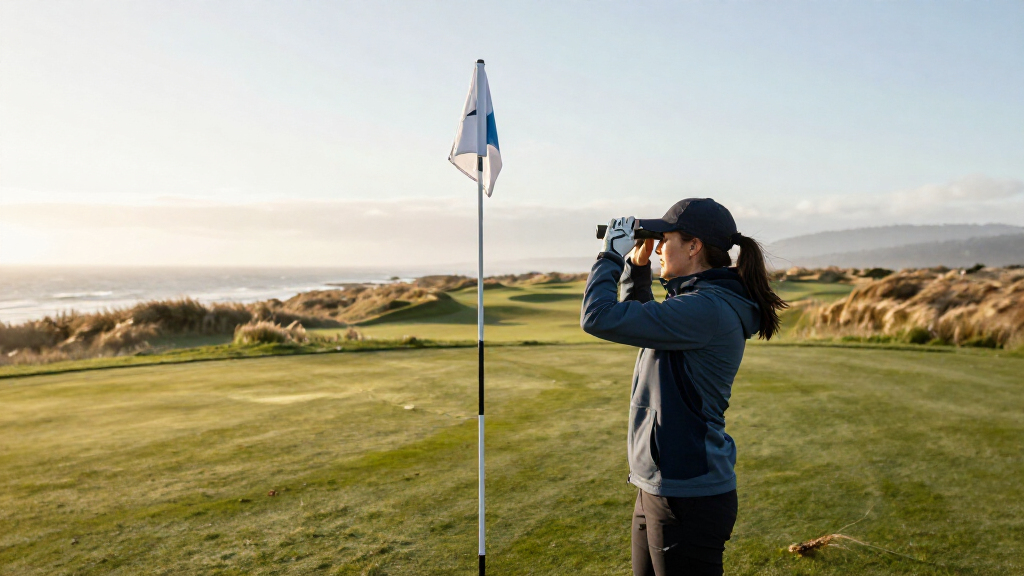
The best golf rangefinders balance quick pin acquisition, useful slope information, and simple controls; in this lineup, the Bushnell Golf Tour V7 Shift is my best overall choice for golfers who want a feature-rich laser unit. The Callaway 300 Pro is a more straightforward pick for players who want an external slope switch, while the Bushnell Tour Hybrid stands out for golfers who want laser and GPS information in one device. The main tradeoffs are paying for advanced displays and connected features versus keeping operation and setup simple, along with deciding whether slope and dual-use range features matter to your game. Read on for how the 14 options compare, who each one suits, and what to prioritize before choosing.

Get travel and outdoor gear delivered free with Prime
- Fast, free delivery on millions of items
- Prime Video, Amazon Music and more included
- Member-only deals all year
Complete the kit


Key Takeaways
- The Bushnell Tour V7 Shift leads on feature breadth: its dual-color display, 1300-yard stated range, and 6× magnification suit golfers seeking a capable premium laser rangefinder.
- Simple slope control can matter more than extra modes: models such as the Callaway 300 Pro and Acer include an external slope switch, making it easier to distinguish practice use from competition settings.
- Hybrid functionality is a distinct choice, not a universal upgrade: the Bushnell Tour Hybrid makes the most sense when golfers want laser targeting alongside GPS information rather than a laser-only setup.
- Long stated range does not automatically mean better on-course performance: 1200-yard claims on the Gogogo and Jimillys models are less useful to most golfers than clear optics, reliable pin targeting, and controls they can operate quickly.
- Several entries are duplicates or close variants: the list includes two Gogogo GS24 entries, two Bushnell A1-Slope entries, and two Tour V6 Shift listings, so buyers should verify the exact model and included features before ordering.
| MILESEEY GenePro G1 Touchscreen GPS Golf Rangefinder |  | Best for GPS and Laser Features in One | Display: 2.13-inch AMOLED touchscreen | Preloaded golf courses: Over 43,000 | Flag-lock range: Up to 600 yards | VIEW LATEST PRICE | See Our Full Breakdown |
| Bushnell Golf A1-Slope Laser Rangefinder |  | Best Compact Rangefinder | Magnification: 6x | Measuring range: 5–1,300 yards | Flag accuracy range: 1–350 yards | VIEW LATEST PRICE | See Our Full Breakdown |
| Acer Golf Rangefinder with Slope Switch, Pin Lock Vibration, 800-Yard Range |  | Best for Multi-Mode Use | Measuring range: 800 yards | Accuracy: ±0.5 yard | Magnification: 6× | VIEW LATEST PRICE | See Our Full Breakdown |
| Bushnell Golf Tour V6 Shift Laser Rangefinder |  | Best for Tournament-Ready Flag Lock | Measuring range: 5–1,300 yards | Magnification: 6× | Slope compensation: Yes, with external switch | VIEW LATEST PRICE | See Our Full Breakdown |
| Bushnell Golf Tour V6 Shift Laser Rangefinder with Slope Compensation |  | Best for Slope Readings and Cart Convenience | Measuring range: 5–1,300 yards | Magnification: 6× | Slope compensation: Yes, with external switch | VIEW LATEST PRICE | See Our Full Breakdown |
| Gogogo Sport Vpro GS24 Golf and Hunting Laser Rangefinder, 1200 Yards |  | Best for Golfers Who Also Hunt | Measuring range: 5–1,200 yards | Accuracy: ±0.1 m | Magnification: 7× | VIEW LATEST PRICE | See Our Full Breakdown |
| Callaway 300 Pro Golf Laser Rangefinder with External Slope Switch |  | Best for Straightforward Pin Locking | Measuring range: 5–1,000 yards | Accuracy: ±1 yard | Magnification: 6× | VIEW LATEST PRICE | See Our Full Breakdown |
| Jimillys G303 Golf Rangefinder with External Touchscreen, Slope, 1200-Yard Range and 7× Magnification |  | Best for Readouts and Rechargeable Convenience | Measurement range: 5–1,200 yards | Accuracy: ±1 yard | Magnification: 7× | VIEW LATEST PRICE | See Our Full Breakdown |
| Bushnell Golf Tour Hybrid Laser Rangefinder |  | Best for Laser and GPS Yardages Together | Laser range: 5–1,300 yards | Flag accuracy: Within 1 yard out to 500 yards | GPS courses: More than 38,000 preloaded | VIEW LATEST PRICE | See Our Full Breakdown |
| Bushnell Golf Tour V7 Shift Laser Rangefinder with Slope, Dual-Color Display, 1300-Yard Range, and 6x Magnification |  | Best for Slope Readouts and Yardage Recall | Maximum range: 1,300 yards | Magnification: 6× | Display: Dual-color OLED | VIEW LATEST PRICE | See Our Full Breakdown |
| REDTIGER Golf Rangefinder with Slope Switch, 7x Magnification, and 1200-Yard Range |  | Best for Flexible Carry Options | Model: C001 | Measurement range: 5–1,200 yards; also listed as 5–1,000 yards | Accuracy: 0.5 yards | VIEW LATEST PRICE | See Our Full Breakdown |
| Bushnell Golf Pro X3+ LINK Laser Rangefinder |  | Best for Advanced Course Conditions | Model: 202450 | Range: Up to 1,300 yards | Magnification: 7x | VIEW LATEST PRICE | See Our Full Breakdown |
| Gogogo Sport Vpro GS24 Golf and Hunting Laser Rangefinder, 1200 Yards |  | Best for Battery Replacement Flexibility | Model: GS24 MTL | Measuring range: 5–1,200 yards | Magnification: 7x | VIEW LATEST PRICE | See Our Full Breakdown |
| Bushnell Golf A1-Slope Laser Rangefinder |  | Best Compact Pick | Model: A1 Slope 2026 | Measuring range: 5–1,300 yards | Magnification: 6x | VIEW LATEST PRICE | See Our Full Breakdown |
| golf rangefinder | Magnification | Water resistance | Battery | Weight |
|---|---|---|---|---|
| MILESEEY GenePro G1 Touchscree | 6X | — | — | — |
| Bushnell Golf A1-Slope Laser R | 6x | Waterproof | Rechargeable lithium-ion; lasts 50+ rounds | 5.1 ounces |
| Acer Golf Rangefinder with Slo | 6× | IP54 | Rechargeable lithium-ion, USB-C | — |
| Bushnell Golf Tour V6 Shift La | 6× | Waterproof | CR123 | 1.2 pounds |
| Bushnell Golf Tour V6 Shift La | 6× | Waterproof; IPX6 rating | CR2 lithium | 16 ounces |
| Gogogo Sport Vpro GS24 Golf an | 7× | IP54 | AAA | 184 g |
| Callaway 300 Pro Golf Laser Ra | 6× | IPX4 | Lithium | 8 oz |
| Jimillys G303 Golf Rangefinder | 7× | — | — | 0.46 lb |
| Bushnell Golf Tour Hybrid Lase | — | Waterproof | Lithium-ion | 1.2 lb |
| Bushnell Golf Tour V7 Shift La | 6× | Waterproof | CR2 lithium | — |
| REDTIGER Golf Rangefinder with | 7x | Listed as IP54 and IPX4 | — | 6.4 ounces |
| Bushnell Golf Pro X3+ LINK Las | 7x | — | — | — |
| Gogogo Sport Vpro GS24 Golf an | 7x | IP54 | AAA | — |
| Bushnell Golf A1-Slope Laser R | 6x | Waterproof | Rechargeable lithium-ion; lasts 50+ rounds | 5.28 ounces |
More Details on Our Top Picks
MILESEEY GenePro G1 Touchscreen GPS Golf Rangefinder
The GenePro G1 suits golfers who want course context as well as a direct laser reading. Its 2.13-inch AMOLED touchscreen presents GPS yardages to the front, center, and back of the green, while the laser adds flag lock out to 600 yards with vibration confirmation. Compared with the Bushnell Golf A1-Slope, it offers much more on-device mapping and point-to-point distance measurement, rather than focusing on a compact laser-first setup. The tradeoff is a more screen-centered experience: golfers who want a simple unit to grab, range, and stow may find the Bushnell’s smaller form easier to manage. The GenePro also lacks a built-in magnetic mount, and adding one requires a separately sold case. Free lifetime course updates and a tournament switch make it a flexible choice for players who use both GPS and laser distances.
Pros:- Combines GPS course mapping and laser flag-lock readings.
- Large 2.13-inch AMOLED touchscreen shows green distances clearly.
- Ball-to-Pin Mode measures between selected points.
- Tournament switch disables slope, and vibration confirms flag lock.
Cons:- No magnetic mount is included; magnetic mounting requires a separate case.
- Its touchscreen and added GPS functions may be more than golfers seeking a simple laser need.
Best for: Golfers who want mapped front, center, and back green distances alongside laser flag readings in one device.
Not ideal for: Players who prioritize a compact laser-only rangefinder or want magnetic cart mounting without buying an extra case.
- Display:2.13-inch AMOLED touchscreen
- Preloaded golf courses:Over 43,000
- Flag-lock range:Up to 600 yards
- Flag-lock accuracy:±0.5 yard
- Magnification:6X
- Battery life:Up to 24 hours
- Protection:IP65 water and dust protection
- Slope:SmartSlope with external tournament switch
Our verdict“Choose the GenePro G1 if you want GPS course information and laser measurements together, and skip it if a compact, mount-ready laser is your priority.”
Bushnell Golf A1-Slope Laser Rangefinder
The A1-Slope is the most pocket-friendly choice here for golfers who want a laser without carrying a larger unit. At 5.1 ounces, it is notably lighter than the Acer Golf Rangefinder, while still offering 6x magnification, slope-adjusted readings, and a switch to turn slope off for tournament play. Its BITE magnetic skin and included case also make cart storage more convenient than the GenePro G1, which needs a separately sold case for magnetic mounting. PinSeeker with JOLT provides a confirmation when the device locks onto a flag. The compromises are its plastic construction and reliance on a rechargeable battery, so golfers who prefer replaceable batteries may favor the Bushnell Tour V6 Shift instead. Flag accuracy is specified from 1 to 350 yards, which is a more bounded figure than the device’s full 1,300-yard measuring range.
Pros:- Compact 5.1-ounce design is easy to carry in a pocket or golf bag.
- Slope mode can be switched off for tournament play.
- PinSeeker with JOLT helps confirm flag acquisition.
- Includes a magnetic skin, carrying case, and USB-C charging cable.
Cons:- Plastic construction may feel less substantial than buyers seeking a more rugged build expect.
- Rechargeable battery requires charging rather than a quick battery swap.
- Flag accuracy range is specified as 1 to 350 yards, shorter than its overall measuring range.
Best for: Golfers who walk the course and want a lightweight laser with slope, flag confirmation, and a magnetic cart option.
Not ideal for: Players who prefer replaceable batteries or want flag accuracy specified across the rangefinder’s full measuring distance.
- Magnification:6x
- Measuring range:5–1,300 yards
- Flag accuracy range:1–350 yards
- Battery:Rechargeable lithium-ion; lasts 50+ rounds
- Weight:5.1 ounces
- Dimensions:3.75 × 1.42 × 2.36 inches
- Slope mode:Switchable on/off
- Water resistance:Waterproof
Our verdict“Pick the A1-Slope for a lightweight, rechargeable laser with a magnetic cart option, but choose another model if replaceable power is a must.”
Acer Golf Rangefinder with Slope Switch, Pin Lock Vibration, 800-Yard Range
The Acer stands apart from the Bushnell Tour V6 Shift by offering more than standard golf distance and slope functions: its six modes include angle, speed, scanning, and vertical or horizontal distance. That makes it a plausible fit for golfers who also want a general-purpose rangefinder for other outdoor activities. For golf, ±0.5-yard accuracy, 6× magnification, and flag-lock vibration cover the key basics, while the slope function adds elevation-adjusted readings. Its 800-yard stated range is shorter than the Bushnell models’ 1,300-yard measurement range, though that difference may matter less for typical course shots than for long-distance use. The listed model information also creates some uncertainty: the description refers to both 800- and 1,200-yard versions. Buyers should verify that the specific listing is for the 800-yard model. IP54 protection is also less protective than waterproof options here.
Pros:- Six modes support golf and other distance-measuring activities.
- ±0.5-yard accuracy and anti-shake technology support steadier readings.
- Flag-lock vibration confirms target acquisition.
- USB-C rechargeable battery and IP54 water resistance suit outdoor use.
Cons:- Stated 800-yard range is shorter than the 1,300-yard Bushnell options.
- Product description also mentions a 1,200-yard version, creating uncertainty about the listed configuration.
- IP54 water resistance is not equivalent to the waterproof construction listed for the Bushnell Tour V6 Shift.
Best for: Golfers who want slope and flag confirmation in a rangefinder that also offers scanning, angle, and other measurement modes.
Not ideal for: Players seeking a waterproof device, a longer stated range, or unambiguous model specifications.
- Measuring range:800 yards
- Accuracy:±0.5 yard
- Magnification:6×
- Modes:Slope compensation, vertical/horizontal distance, angle, speed, scanning
- Target confirmation:Flag-lock vibration
- Display:Bright LCD
- Battery:Rechargeable lithium-ion, USB-C
- Water resistance:IP54
Our verdict“Choose the Acer if its extra measurement modes matter beyond golf, but favor a Bushnell Tour V6 Shift for a longer stated range and waterproof design.”
Bushnell Golf Tour V6 Shift Laser Rangefinder
The Tour V6 Shift is a strong fit for golfers who want familiar laser operation with clear flag-lock feedback. Its visual ring and vibration alert give two forms of confirmation, while the external slope switch lets players turn slope compensation off for tournament play. Like the Bushnell A1-Slope, it measures up to 1,300 yards and has 6× magnification; unlike that compact model, this listing describes the Tour V6 Shift as waterproof and includes a magnetic mount for cart access. That added convenience comes with a less portable profile: the A1-Slope is listed at 5.1 ounces, while this model is listed at 1.2 pounds. The plastic body and included CR123 battery may also disappoint golfers seeking a lighter unit or rechargeable power. For golfers who keep a rangefinder on a cart, though, the mount and confirmation alerts are practical advantages.
Pros:- External switch turns slope compensation off for tournament play.
- Visual ring and vibration provide dual flag-lock confirmation.
- Magnetic mount keeps the rangefinder accessible on a cart.
- Waterproof design and 1,300-yard measuring range.
Cons:- Listed weight of 1.2 pounds makes it much heavier than the Bushnell A1-Slope.
- Plastic construction may not suit golfers seeking a more substantial body.
- Uses an included CR123 battery rather than a rechargeable battery.
Best for: Cart-riding golfers who want slope they can disable for tournament play, plus visual and vibration flag confirmation.
Not ideal for: Walkers prioritizing a lightweight pocket unit or golfers who want rechargeable power instead of a CR123 battery.
- Measuring range:5–1,300 yards
- Magnification:6×
- Slope compensation:Yes, with external switch
- Flag-lock alerts:Visual ring and vibration
- Water resistance:Waterproof
- Weight:1.2 pounds
- Battery:CR123
- Warranty:2-year manufacturer warranty
Our verdict“Choose the Tour V6 Shift if cart access and dual flag-lock alerts matter more than minimizing weight or using rechargeable power.”
Bushnell Golf Tour V6 Shift Laser Rangefinder with Slope Compensation
This Tour V6 Shift shares the core golf features of the other Tour V6 Shift in this roundup: 6× magnification, a 1,300-yard measuring range, switchable slope compensation, and a magnetic cart mount. It is best understood as a familiar laser-first option rather than a feature-rich GPS alternative like the MILESEEY GenePro G1, which also shows mapped green distances and measures between selected points. The Bushnell instead keeps attention on direct laser readings, with vibration and a flashing visual ring to signal flag lock. Its waterproof build suits golfers who play in wet conditions, but the unit uses a CR2 lithium battery, so there is no USB charging convenience like the rechargeable A1-Slope. This version is listed at 16 ounces and includes a case, cloth, and veteran coin; those accessories do not change its basic tradeoff of a cart-friendly laser over a more portable or GPS-equipped design.
Pros:- Slope compensation can be switched off for tournament play.
- Vibration and flashing visual ring confirm flag acquisition.
- Magnetic mount provides convenient cart access.
- Waterproof construction and included case support regular course use.
Cons:- CR2 battery is not rechargeable like the Bushnell A1-Slope’s lithium-ion battery.
- At 16 ounces, it is less appealing to golfers focused on a light carry.
- Lacks the GPS mapping and point-to-point functions offered by the MILESEEY GenePro G1.
Best for: Golfers who want a waterproof, slope-switchable laser with magnetic cart mounting and dual flag-lock alerts.
Not ideal for: Players who want GPS course mapping, USB-rechargeable power, or the lightest possible rangefinder for walking.
- Measuring range:5–1,300 yards
- Magnification:6×
- Slope compensation:Yes, with external switch
- Flag lock:Vibration and flashing visual ring
- Mount:Magnetic cart mount
- Water resistance:Waterproof; IPX6 rating
- Battery:CR2 lithium
- Weight:16 ounces
Our verdict“Pick this Tour V6 Shift for a waterproof, cart-ready laser with slope and clear flag alerts, but look elsewhere for GPS or rechargeable power.”
Gogogo Sport Vpro GS24 Golf and Hunting Laser Rangefinder, 1200 Yards
The GS24 makes the most sense for buyers who want one rangefinder for golf and hunting rather than a golf-only tool. Its 5–1,200-yard range and 7× magnification reach beyond the Callaway 300 Pro’s 1,000-yard limit, while pin seeking and vibration help confirm a flag reading on the course. Slope and angle compensation add context on uneven ground, and the MTL version lets golfers disable slope for tournament play. That versatility comes with a specific limitation: flagpole locking is rated to 150 yards for the pole itself, shorter than the Callaway’s stated 300-yard pin-locking range. The MTL magnetic mount is also version-specific, so buyers should check which configuration they are choosing. Its IP54 protection is suited to splashes and dust, not immersion.
Pros:- Long 5–1,200-yard measurement range with 7× magnification.
- Pin seeking and vibration provide confirmation when a target is locked.
- Slope and angle compensation support golf and hunting use.
- MTL version can disable slope for tournament play.
Cons:- Flagpole locking is specified only up to 150 yards for the pole itself.
- The magnetic mount is specified only for the MTL version.
- IP54 protection does not cover full immersion.
Best for: Golfers who also hunt and want long-range measurements, angle compensation, and a tournament-legal slope switch in the MTL version.
Not ideal for: Golfers who prioritize long-distance flag locking or want a magnetic cart mount without checking the exact version.
- Measuring range:5–1,200 yards
- Accuracy:±0.1 m
- Magnification:7×
- Flagpole locking:Up to 150 yards for a flagpole; 250 yards when aimed at an unfolded flag
- Water resistance:IP54
- Weight:184 g
- Battery:AAA
- Tournament mode:Slope can be disabled on the MTL version
Our verdict“Choose the GS24 if you want a long-range golf and hunting tool, but favor the Callaway 300 Pro if extended pin-locking distance matters more.”
Callaway 300 Pro Golf Laser Rangefinder with External Slope Switch
The Callaway 300 Pro is a focused golf pick for buyers who want a familiar laser workflow without the extra modes of the Jimillys G303. Its pin locking up to 300 yards and vibration confirmation give a clear signal when the flag is acquired; that stated lock range is twice the GS24’s flagpole-only figure. The external slope switch also makes it easy to turn elevation adjustment off for tournament rounds, without digging through menus. At 6× magnification and a 1,000-yard maximum range, it is less far-reaching than the GS24 or either Bushnell in this batch, but that is unlikely to matter to golfers focused on course targets. The tradeoffs are modest IPX4 water protection and a lithium battery rather than a stated rechargeable setup. Its included case and integrated magnet suit cart-based rounds.
Pros:- Pin locking reaches up to 300 yards and confirms a reading with vibration.
- External slope switch makes tournament mode easy to access.
- Integrated magnet attaches to a golf cart frame.
- Includes a hard case, lens cloth, and quick start guide.
Cons:- Maximum range is 1,000 yards, shorter than the GS24 and Bushnell models here.
- IPX4 protection offers limited resistance to water.
- The listed specifications do not state a rechargeable battery.
Best for: Golfers who want clear pin-lock vibration, a physical tournament slope switch, and a magnetic cart attachment.
Not ideal for: Players seeking a rangefinder for hunting or very long-distance targets, or those who want stronger water protection.
- Measuring range:5–1,000 yards
- Accuracy:±1 yard
- Magnification:6×
- Pin locking:Up to 300 yards
- Slope:Elevation-adjusted distance; external on/off switch
- Water resistance:IPX4
- Weight:8 oz
- Battery:Lithium
Our verdict“Pick the Callaway 300 Pro for simple, long-reaching pin lock and an accessible slope switch rather than extra range or advanced features.”
Jimillys G303 Golf Rangefinder with External Touchscreen, Slope, 1200-Yard Range and 7× Magnification
The G303 takes a different approach from the eyepiece-first Callaway 300 Pro: its 0.9-inch external touchscreen lets golfers view measurements without looking through the optics. That can suit players who want a visible readout between shots, while its six modes extend beyond basic distance to horizontal and vertical readings, speed, scanning, and range hold. The USB-C rechargeable battery is rated for up to 40,000 measurements under specified test conditions, avoiding routine disposable-battery changes. It also matches the GS24’s 1,200-yard reach and adds a magnetic mount. Those features bring more complexity than the Callaway’s simpler controls, and the magnet only works on compatible metal surfaces. IP54 covers dust and splashes, not immersion; the stated 0.46-pound weight is also heavier than a pocket-focused choice may suit.
Pros:- External touchscreen displays readings without requiring use of the eyepiece.
- Six measurement modes cover pin lock, slope, scanning, speed, and more.
- USB-C rechargeable battery is rated for up to 40,000 measurements under specified test conditions.
- Switchable slope and a built-in magnetic mount add course flexibility.
Cons:- IP54 protection does not cover immersion.
- Magnetic mounting requires a compatible metal surface.
- Its multiple modes and touchscreen may be more involved than the Callaway 300 Pro’s simpler setup.
Best for: Golfers who want a visible external measurement screen, multiple measurement modes, and USB-C charging.
Not ideal for: Players who prefer a simple eyepiece-only device, need full waterproofing, or cannot use a compatible metal cart surface.
- Measurement range:5–1,200 yards
- Accuracy:±1 yard
- Magnification:7×
- Display:0.9-inch external touchscreen
- Measurement modes:Six, including pin lock, slope, horizontal and vertical distance, continuous scan, speed, and range hold
- Battery and charging:Built-in 1000mAh rechargeable battery; USB-C
- Protection:IP54 dust and water-splash protection
- Weight:0.46 lb
Our verdict“Choose the G303 if an external screen and rechargeable, multi-mode operation matter more than a simpler rangefinder layout.”
Bushnell Golf Tour Hybrid Laser Rangefinder
The Tour Hybrid is the clearest choice here for golfers who want course context as well as a direct laser reading. It combines laser distance measurement with GPS front, center, and back yardages from more than 38,000 preloaded courses, giving players another reference when a flag is obscured or the target is hard to isolate. The GS24 and Callaway 300 Pro rely on laser measurements, so they do not offer this same GPS layer. Bushnell adds slope compensation to both GPS and laser readings, plus Pinseeker and Visual JOLT feedback for flag acquisition. The tradeoff is a more feature-dependent setup: GPS course data is central to its appeal, while laser flag accuracy is specified within 1 yard only out to 500 yards. Buyers who want a straightforward laser alone may find this more than they need.
Pros:- Combines laser measurements with GPS front, center, and back yardages.
- Includes more than 38,000 preloaded courses.
- Pinseeker and Visual JOLT provide flag-lock feedback.
- Slope compensation for laser and GPS can be disabled for tournament play.
Cons:- Flag accuracy is specified within 1 yard only out to 500 yards.
- Slope-adjusted readings must be disabled for tournament play.
- At 1.2 pounds, it is heavier than the Callaway 300 Pro.
Best for: Golfers who want GPS front, center, and back yardages alongside laser readings, especially when flags are difficult to target.
Not ideal for: Players who want a lightweight, laser-only device or do not want to rely on preloaded course GPS features.
- Laser range:5–1,300 yards
- Flag accuracy:Within 1 yard out to 500 yards
- GPS courses:More than 38,000 preloaded
- GPS yardages:Front, center, and back
- Slope compensation:Available for laser and GPS; can be disabled for tournament play
- Water resistance:Waterproof
- Battery:Lithium-ion
- Weight:1.2 lb
Our verdict“Choose the Tour Hybrid if GPS course yardages complement your laser use; choose the Callaway 300 Pro for a simpler laser-focused round.”
Bushnell Golf Tour V7 Shift Laser Rangefinder with Slope, Dual-Color Display, 1300-Yard Range, and 6x Magnification
The Tour V7 Shift is a strong fit for golfers who want slope information to be easy to distinguish from the unadjusted distance. Its dual-color OLED display presents actual and slope-adjusted yardages in different colors, reducing ambiguity when choosing a club. That contrasts with the Tour Hybrid, which adds GPS front, center, and back distances instead of emphasizing two-color laser readouts. The V7 also includes PinSeeker with Visual JOLT and yardage recall, so players can confirm a flag lock and review a previous reading. Its 1,300-yard maximum range matches the Hybrid’s stated limit, though the supplied data does not list a specific pin-locking distance. LINK connectivity is useful only for golfers with compatible Bushnell or Foresight launch monitors; without one, that feature adds little. It also uses a CR2 battery.
Pros:- Dual-color OLED separates slope-adjusted and actual distances.
- PinSeeker with Visual JOLT supports flag acquisition.
- Yardage Range Recall lets players review a previous reading.
- Waterproof construction and a 1,300-yard maximum range suit varied course conditions.
Cons:- LINK connectivity requires a compatible Bushnell or Foresight launch monitor.
- Uses a CR2 lithium battery rather than a stated rechargeable battery.
- Unlike the Tour Hybrid, it does not list GPS front, center, and back yardages.
Best for: Golfers who want color-separated slope and actual distances, yardage recall, and compatible launch-monitor connectivity.
Not ideal for: Players who need GPS course yardages, prefer USB-C charging, or do not own compatible Bushnell or Foresight equipment.
- Maximum range:1,300 yards
- Magnification:6×
- Display:Dual-color OLED
- Slope:Slope technology with actual and adjusted distances displayed in different colors
- Target feedback:PinSeeker with Visual JOLT
- Additional features:Yardage Range Recall and LINK connectivity
- Water resistance:Waterproof
- Battery:CR2 lithium
Our verdict“Choose the Tour V7 Shift for clear slope-versus-actual laser readouts and recall, but pick the Tour Hybrid if GPS yardages are your priority.”
REDTIGER Golf Rangefinder with Slope Switch, 7x Magnification, and 1200-Yard Range
The REDTIGER C001 suits golfers who want a rechargeable rangefinder with several ways to keep it within reach. Its magnetic mount and belt clip give it a carrying flexibility the Gogogo Sport Vpro GS24 MTL does not list, while USB-C charging avoids keeping spare AAA batteries on hand. Slope compensation can be switched off for tournament play, and six measurement modes add options for scanning or checking other distances beyond the flag.
The tradeoff is less certainty in the published specifications: the range appears as both 1,000 and 1,200 yards, and water resistance is listed as both IP54 and IPX4. Its 7x magnification and 0.5-yard stated accuracy are useful on the course, but buyers who prioritize a clearer, more consistent specification set may prefer the Bushnell Golf A1-Slope. Choose REDTIGER for carrying convenience and rechargeable power, not for the most clearly documented range rating.
Pros:- Slope compensation can be switched off for tournament play.
- Magnetic mount and included belt clip offer two convenient carrying options.
- USB-C rechargeable lithium-ion battery.
- Six modes include flag locking, continuous scanning, and speed measurement.
Cons:- Published maximum range differs between 1,000 and 1,200 yards.
- Water-resistance rating is inconsistent across the product details.
- Plastic construction may feel less robust than a rubber-armored rangefinder.
Best for: Golfers who want USB-C recharging and the choice of attaching a rangefinder to a cart or carrying it on a belt.
Not ideal for: Buyers who need an unambiguous published range or water-resistance rating before choosing a device.
- Model:C001
- Measurement range:5–1,200 yards; also listed as 5–1,000 yards
- Accuracy:0.5 yards
- Magnification:7x
- Measurement modes:6
- Display:Transflective LCD
- Charging:USB-C, 5V/2A
- Weight:6.4 ounces
- Water resistance:Listed as IP54 and IPX4
Our verdict“Pick the REDTIGER if rechargeable power and flexible attachment matter more to you than a consistent published range specification.”
Bushnell Golf Pro X3+ LINK Laser Rangefinder
The Bushnell Pro X3+ LINK is the most data-oriented choice in this group. Along with slope-adjusted distances, it accounts for temperature, altitude, and home elevation, giving golfers more context than the REDTIGER C001’s basic slope compensation. Connected to the Bushnell Golf app, it can also show wind speed and direction, a useful addition for players who want more than a raw laser reading. Its dual-color display and Visual JOLT provide further help with reading results and confirming a flag lock.
That capability comes with a connectivity tradeoff: wind and LINK features depend on app or launch-monitor connections, and the launch monitor is sold separately. It is also a less stripped-down choice than the compact Bushnell Golf A1-Slope, which focuses on straightforward distance readings and portability. The Pro X3+ LINK makes the most sense for golfers who will use its added course data; those wanting simple laser measurements may be paying in complexity without gaining much.
Pros:- Measures up to 1,300 yards with 7x magnification.
- Compensates for slope, temperature, altitude, and home elevation.
- App connection can provide wind speed and direction.
- Waterproof, rubber-armored housing includes an integrated magnetic cart mount.
Cons:- Wind and LINK features depend on app or launch-monitor connectivity.
- Launch monitor is sold separately.
- Its feature set is more involved than a basic laser rangefinder.
Best for: Golfers who want slope and environmental compensation, and who are willing to use the Bushnell app or compatible launch-monitor setup.
Not ideal for: Players who want a simple standalone rangefinder or do not plan to connect a phone or launch monitor.
- Model:202450
- Range:Up to 1,300 yards
- Magnification:7x
- Distance compensation:Slope, temperature, altitude, and home elevation
- Wind data:Speed and direction through the mobile app
- Display:Dual display with red or black readouts
- Mount:Integrated BITE magnetic cart mount
- Housing:Waterproof, rubber-armored
- Warranty:2 years
Our verdict“Choose the Pro X3+ LINK if you will use its connected wind and environmental data, rather than just measuring yardage.”
Gogogo Sport Vpro GS24 Golf and Hunting Laser Rangefinder, 1200 Yards
The Gogogo Sport Vpro GS24 MTL is a practical pick for golfers who prefer replaceable batteries over recharging. It uses AAA batteries, unlike the USB-C rechargeable REDTIGER C001 and Bushnell A1-Slope, so power can be restored with a spare set rather than a cable. Its slope mode can be switched off for tournament play, while continuous scanning and vibration-assisted flag locking cover the core on-course tasks.
The main limitation is flag acquisition distance: the stated flagpole-locking range is up to 150 yards for the flagpole alone, rising to 250 yards when the flag is unfolded. That may be restrictive for golfers who often target distant pins, especially compared with the Bushnell A1-Slope’s stated 350-yard flag accuracy range. Gogogo also lists a one-year warranty, shorter than the two-year coverage provided for the REDTIGER and Bushnell options here. It favors replaceable power and a broad stated measuring range over longer flag-lock reach and longer warranty coverage.
Pros:- Slope mode can be disabled for tournament play.
- Continuous scanning supports checking multiple targets.
- Flag locking uses vibration to confirm acquisition.
- AAA batteries can be replaced without waiting for a recharge.
Cons:- Flagpole-only locking range is listed as up to 150 yards.
- Uses AAA batteries rather than a rechargeable battery.
- One-year warranty is shorter than the two-year coverage listed for the REDTIGER and Bushnell models.
Best for: Golfers who want a slope-switching rangefinder with replaceable AAA batteries and use flag locking mainly at shorter distances.
Not ideal for: Players who frequently need to lock onto distant flags or prefer USB-C charging and a longer stated warranty.
- Model:GS24 MTL
- Measuring range:5–1,200 yards
- Magnification:7x
- Accuracy:±0.1 m
- Flagpole locking range:Up to 150 yards for flagpole alone; 250 yards when flag is unfolded
- Tournament mode:Slope function can be switched off
- Water resistance:IP54
- Battery:AAA
- Warranty:1 year
Our verdict“Choose the GS24 MTL if you value replaceable batteries and mostly lock onto flags within its shorter stated flag-finding range.”
Bushnell Golf A1-Slope Laser Rangefinder
The Bushnell Golf A1-Slope is the compact choice for golfers who want a capable laser without a larger, feature-heavy body. At 5.28 ounces and under four inches long, it is easier to slip into a pocket than the Bushnell Pro X3+ LINK, which is built around extra environmental data and app connectivity. The A1-Slope keeps the on-course essentials: 6x magnification, slope-adjusted distances that can be switched off, and PinSeeker with JOLT vibration to signal a flag lock.
Its stated 350-yard flag accuracy range gives it more reach for flag acquisition than the Gogogo GS24 MTL’s 150-yard flagpole-only figure, although that does not mean every pin will be easy to lock in all conditions. The rechargeable battery, magnetic skin, and waterproof construction add convenience, but the battery’s stated life is 50+ rounds and it cannot be swapped for ordinary AAA cells. Choose it for compact carry and a straightforward Bushnell feature set, not for 7x magnification or connected wind readings.
Pros:- Compact 5.28-ounce design is easy to carry.
- Slope adjustment can be toggled off for tournament play.
- PinSeeker with JOLT vibration confirms flag lock.
- Rechargeable battery, waterproof construction, and included magnetic skin.
Cons:- Uses 6x magnification, less than the 7x REDTIGER, Gogogo, and Pro X3+ LINK.
- Rechargeable battery is less convenient to replace mid-round than AAA cells.
- Slope mode must be disabled for tournament-legal use.
Best for: Golfers who want a lightweight, pocket-friendly rangefinder with switchable slope and vibration-confirmed flag finding.
Not ideal for: Players who prioritize 7x magnification, app-linked wind information, or replaceable standard batteries.
- Model:A1 Slope 2026
- Measuring range:5–1,300 yards
- Magnification:6x
- Flag accuracy range:1–350 yards
- Slope technology:Elevation-adjusted distance; toggle on or off
- Battery:Rechargeable lithium-ion; lasts 50+ rounds
- Water resistance:Waterproof
- Weight:5.28 ounces
- Dimensions:3.75 × 1.42 × 2.36 inches
Our verdict“Pick the A1-Slope if easy pocket carry and straightforward flag confirmation matter more than maximum magnification or connected data.”
How We Picked
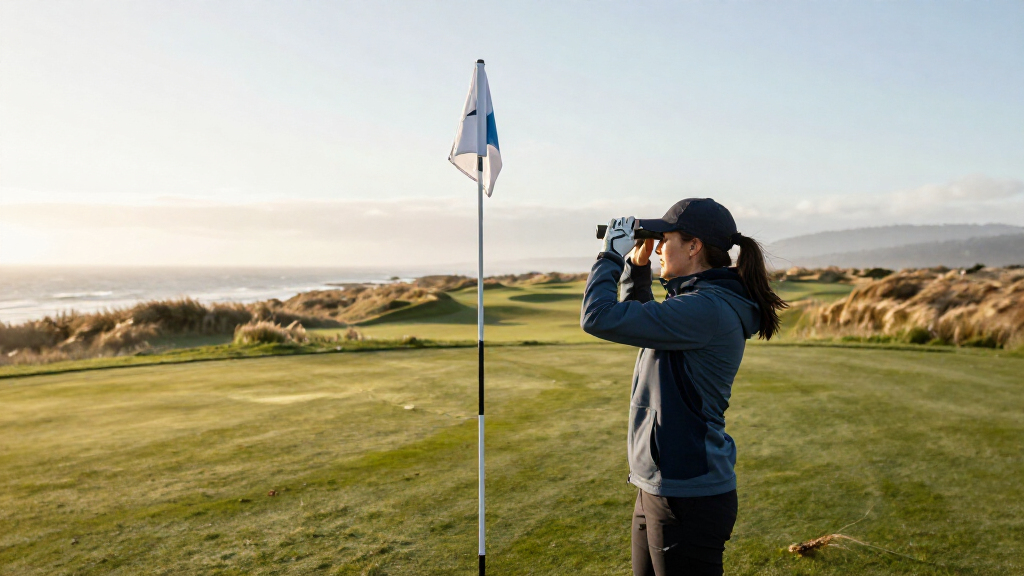
I compared these golf rangefinders on the factors that change decisions on the course: stated range and magnification, pin-lock or vibration feedback, slope controls, display readability, and the number of steps needed to get a yardage. I also weighed whether a model’s added functions—such as GPS, hunting use, or a premium display—solve a real need or add complexity a golfer may not use. Build and practical upkeep matter too: a rangefinder that is awkward to handle or depends on features a buyer will not use can be a poor fit even when its specification list is long.
The ranking favors golf-focused usability and useful differentiation over headline range alone. Models with a well-rounded feature set rank ahead of options that specialize in one area, while simpler designs remain strong choices for golfers who want fewer controls. Closely named entries and repeated products are treated as separate listed options only where the supplied names indicate a meaningful variant; I flag duplicates because they do not represent additional buying choices. Product specifications can vary by listing, so I recommend checking the exact version and included accessories before purchase.
| golf rangefinder | Water resistance |
|---|---|
| MILESEEY GenePro G1 Touchscree | — |
| Bushnell Golf A1-Slope Laser R | Waterproof |
| Acer Golf Rangefinder with Slo | IP54 |
| Bushnell Golf Tour V6 Shift La | Waterproof |
| Bushnell Golf Tour V6 Shift La | Waterproof; IPX6 rating |
| Gogogo Sport Vpro GS24 Golf an | IP54 |
| Callaway 300 Pro Golf Laser Ra | IPX4 |
| Jimillys G303 Golf Rangefinder | — |
| Bushnell Golf Tour Hybrid Lase | Waterproof |
| Bushnell Golf Tour V7 Shift La | Waterproof |
| REDTIGER Golf Rangefinder with | Listed as IP54 and IPX4 |
| Bushnell Golf Pro X3+ LINK Las | — |
| Gogogo Sport Vpro GS24 Golf an | IP54 |
| Bushnell Golf A1-Slope Laser R | Waterproof |
Factors to Consider When Choosing Golf Rangefinders
Before choosing among these golf rangefinders, decide what problem you want the device to solve: getting a quick flag distance, adjusting for elevation, reading targets in changing light, or combining laser and course information. A longer feature list is not always a better fit. These broader checks can help you avoid paying for functions that will not change your club selection or choosing a device whose controls slow you down.
Choose Slope for Practice, Then Check How It Disables
Slope compensation estimates how elevation changes affect playing distance, which can help during practice rounds and on hilly courses. It is not a substitute for learning how uphill and downhill shots affect your own ball flight, and slope-adjusted yardages are not permitted in every competition setting. An external slope switch is convenient because you can see and change the mode without searching through menus. Check whether the device clearly indicates when slope is active and whether disabling it leaves a straightforward line-of-sight distance reading. If you mostly play events, prioritize a clear tournament mode over advanced slope calculations.
Prioritize Pin Acquisition Over Maximum Range
Most golf shots do not require a rangefinder to measure a target a thousand yards away, so maximum range is a weak shortcut for judging course usefulness. Pin-lock feedback, target discrimination, and a stable view can matter more when trees, bunkers, or players sit behind the flag. Magnification helps identify targets, but higher magnification can make it harder to hold the image steady without support. Consider the kinds of courses you play and whether you often shoot at flags backed by clutter. A dependable, quick flag reading is more useful than a large range number you rarely need.
Match the Display to Your Playing Conditions
A display that is easy to read in bright sun can still be difficult for a golfer who plays early or late in the day. Compare display contrast and brightness controls with your usual tee times, vision needs, and comfort using small readouts. A dual-color display may help separate targeting information from other readings, but it adds little if a simpler view is already clear to you. Try to judge the whole viewing process: can you acquire the target, read the yardage, and understand whether slope is active without repeated adjustments? Do not assume that more display features automatically mean faster decisions.
Decide Whether GPS or Dual-Use Features Earn Their Place
A laser rangefinder gives a direct distance to a target you can see, while GPS features can provide course information for hazards or locations that are not in your line of sight. A hybrid device may reduce the need to carry separate tools, but added functions can mean more setup, charging, or learning. Dual-use golf-and-hunting models may appeal to people who genuinely need both roles, yet their broad range specifications do not automatically make them better golf choices. Think through how often you use course mapping, whether you prefer a watch or phone for GPS, and how much convenience an all-in-one device would add. Pay for combination features only when they replace something you already carry or use.
Check Handling, Power, and Day-to-Day Reliability
A rangefinder has to be ready when you reach the ball, so size, grip, button placement, and the ease of pulling it from a case affect real use. Check what power source the exact model uses, how replacement or recharging works, and whether the listing includes the accessories you expect. Water resistance and a secure case are useful safeguards for rounds in damp conditions, but do not assume every version shares the same protection or bundle. If you wear gloves, consider whether the controls remain easy to operate. These practical details can matter more over a season than an extra mode on the specification sheet.
Verify the Exact Model Before Comparing Listings
Similar product names can hide different generations, slope functions, displays, or included accessories. This roundup contains repeated A1-Slope and GS24 listings, as well as two Tour V6 Shift entries with different wording, so compare the model identifier rather than relying on the headline alone. Confirm whether the version has slope compensation, a switch to disable it, and the stated display and magnification features. Pay attention to whether the listing describes a bundle or the rangefinder by itself. This check is especially useful when a product name is reused across sellers or updated versions.
Frequently Asked Questions
Do I need slope compensation on a golf rangefinder?
Slope compensation is useful if you often play uneven courses or want an adjusted distance during practice. It estimates how elevation affects the shot, but it cannot account for every factor, such as wind, lie, or your individual ball flight. If you play competitions, check the applicable rules and choose a model with a clearly accessible way to disable slope. Golfers who mostly play flat courses may get more value from fast pin acquisition and a readable display than from slope calculations.
Is a 1200-yard range specification useful for golf?
For most golfers, that figure is far beyond the distances they need to measure during a round. Maximum range does not tell you how well a device separates a flag from trees or other targets behind it. Prioritize reliable pin targeting, a steady view, and easy-to-read yardages when comparing models. A high range claim may be more relevant if you also use the device for hunting or other outdoor activities, but it should not decide a golf purchase by itself.
Should I choose a laser rangefinder or a laser-and-GPS hybrid?
A laser model is a natural fit when you mainly want direct distances to visible flags, bunkers, or trees. A hybrid can add course or hazard information for targets you cannot see, which may reduce reliance on a separate GPS device. That extra functionality can also mean more setup and features to manage. Choose the hybrid if you will use both kinds of information regularly; otherwise, a simpler laser may be quicker and easier to operate.
Can I use a slope-enabled rangefinder in a competition?
Rules depend on the competition and its local conditions, so check with the event organizer before playing. A slope-capable device may be acceptable when its slope function is disabled, but the exact rules and device behavior matter. An external switch can make the mode easier to check than a setting buried in a menu. Do not rely only on a product label or assume that a disabled display means every feature is permitted.
How should I compare two rangefinders with nearly identical names?
Start with the exact model identifier and compare the features that affect your use: slope on/off controls, display type, magnification, targeting feedback, and included accessories. This roundup includes repeated product names and closely related Bushnell Tour V6 Shift listings, so the headline alone may not identify the version. Read the seller’s specification details and confirm the device pictured matches the stated model. If the differences are limited to a bundle or cosmetic detail you do not need, choose based on the functions and handling that matter to your rounds.
Conclusion
For a balanced premium laser setup, I recommend the Bushnell Golf Tour V7 Shift as the best overall pick in this lineup, with its dual-color display and broad feature set. The Callaway 300 Pro is my best value-style choice for golfers who want a straightforward device with an external slope switch, while the Bushnell Pro X3+ LINK is the best premium option for buyers specifically seeking advanced connected features. Beginners should start with a simpler, golf-focused model such as the Acer Golf Rangefinder rather than choosing by maximum range alone. For golfers who want GPS and laser readings together, the Bushnell Tour Hybrid fits that specific need; for dual golf and hunting use, compare the Gogogo GS24 and check the exact listing. Whichever you choose, verify the version, slope controls, and included accessories before buying.
Fall Picks

DJI Osmo Action 4 Essential Combo Waterproof 4K Action Camera
As an affiliate, we earn on qualifying purchases.