
When playing golf in bad weather, it’s vital to stay safe by watching for storms, especially lightning, and avoiding shelter under trees or near water. Make sure you have the right gear, like waterproof clothing, hats, and an umbrella to stay dry and comfortable. Be alert to changes in the sky and weather patterns, and act quickly if conditions worsen. To discover more tips for handling bad weather on the course, keep exploring these essentials.

Get travel and outdoor gear delivered free with Prime
- Fast, free delivery on millions of items
- Prime Video, Amazon Music and more included
- Member-only deals all year
Key Takeaways
- Always seek shelter immediately if thunderstorms or lightning are present; stop play and avoid trees or water.
- Wear waterproof gear like jackets, pants, shoes, and gloves to stay dry and maintain focus.
- Pay attention to weather forecasts and course warnings to anticipate sudden weather changes.
- Recognize signs of weather shifts, such as darkening skies or rain, to adapt your play and stay safe.
- Prioritize safety over completing the round; postpone or cancel play during severe weather conditions.

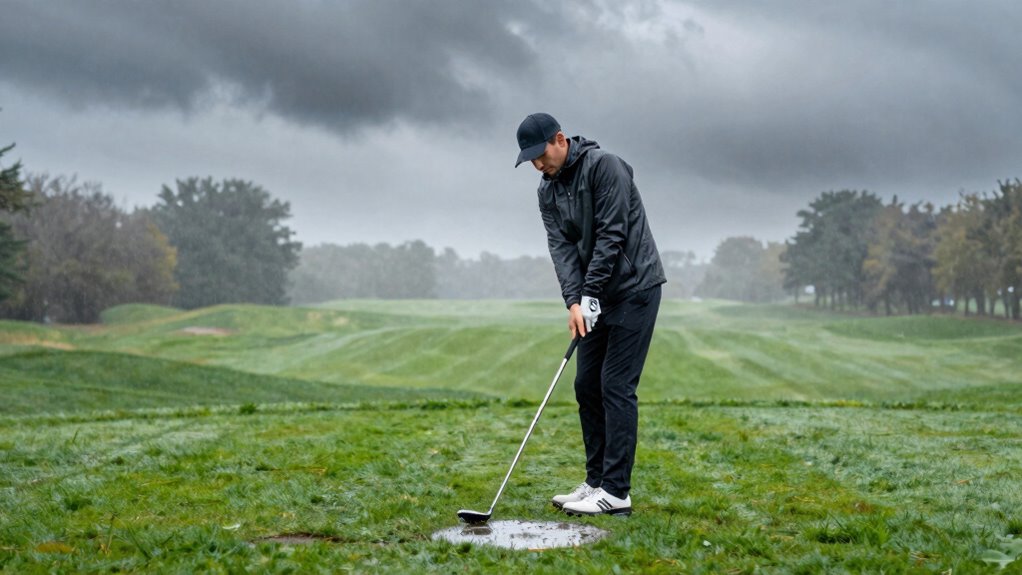
Playing golf in bad weather can be challenging, but it’s a common experience for beginners learning the game. When the skies turn dark or rain starts to fall, it’s tempting to pack up and head home. However, understanding how to handle these conditions can improve your game and keep you safe on the course. The key is to prioritize golf safety by being prepared and knowing when to play or pause. Weather can change quickly, so it’s essential to pay attention to forecasts and course warnings. If thunderstorms roll in, it’s safest to stop playing immediately, as lightning poses a serious risk. Avoid seeking shelter under trees or near water, which can attract lightning, and wait until the storm passes. Being aware of weather safety tips can help you make better decisions in unpredictable conditions. Additionally, staying informed about weather patterns can help you anticipate changes and plan your rounds accordingly. Properly recognizing weather changes on the course is crucial to avoiding unexpected hazards and staying safe. Having the right weather gear makes a significant difference. Investing in a quality waterproof jacket, pants, and shoes will help keep you dry and comfortable. A hat with a brim can shield you from rain or sun, and a pair of waterproof gloves can improve your grip if your hands get wet. Don’t forget to carry a small, compact umbrella—one that’s easy to hold or fit into your golf bag. Proper weather gear not only protects you from the elements but also helps maintain your focus and swing consistency, even in less-than-ideal conditions. Being aware of weather-related hazards can further enhance your safety and enjoyment on the course. Additionally, choosing appropriate clothing designed for wet weather can prevent discomfort and cold-related issues during long rounds. When you’re equipped with the right gear, you’re more likely to enjoy the game despite the weather.
As an affiliate, we earn on qualifying purchases.
Frequently Asked Questions
How Should I Prepare My Equipment for Bad Weather Rounds?
To prepare for bad weather rounds, start by choosing appropriate golf apparel, like waterproof jackets and breathable layers, to stay dry and comfortable. Protect your equipment by using rain covers for your golf bag and keeping clubs dry. Also, check your equipment maintenance routine—clean and dry clubs thoroughly after play to prevent rust. Being well-prepared guarantees you stay focused and enjoy your game, even in challenging weather conditions.
What Safety Precautions Are Recommended During Thunderstorms?
During thunderstorms, you should immediately seek shelter—preferably indoors—avoiding open fields or lone trees. Remember, lightning safety is no joke; it strikes unpredictably. If no shelter’s around, crouch low with minimal contact with the ground. Use shelter options like sturdy clubhouses or cars. Stay alert, avoid metal objects, and wait at least 30 minutes after the last thunderclap before resuming play. Safety first, even if it means missing that perfect shot!
How Can I Improve My Grip in Wet Conditions?
To improve your golf grip in wet conditions, focus on maintaining a firm yet comfortable hold on the club. Use a towel to keep your hands dry before each shot, and consider switching to gloves with a better grip. Adjust your grip pressure—don’t squeeze too tight—so your swing isn’t hindered. Practicing with wet balls and clubs helps you adapt, ensuring your golf grip stays secure even in damp, challenging weather.
Is It Better to Delay My Game or Play Through?
If the weather forecast predicts severe conditions, it’s better to delay your game for safety. Playing through rain, wind, or storms can be dangerous and affect your performance. Make sure you wear proper golf attire, like waterproof clothing and shoes, to stay comfortable if you decide to play. Check the weather forecast regularly, and if conditions seem risky, postpone your round to enjoy a safer, more enjoyable game later.
How Do Rain and Wind Affect My Swing and Ball Flight?
Rain and wind can profoundly impact your swing mechanics and ball trajectory. Wind can push your ball off course, requiring you to adjust your aim and club selection. Rain makes the course slippery, affecting your balance and swing consistency. It also shortens ball flight, as moisture dampens the ball’s lift. To adapt, you might need to swing more controlled and focus on maintaining steady swing mechanics to keep your shots accurate despite the weather challenges.
As an affiliate, we earn on qualifying purchases.
Conclusion
Don’t let bad weather turn your golf game into a disaster. Embrace the challenge, stay prepared, and remember that even the worst round can teach you more than sunshine ever could. With patience and a positive attitude, you’ll come out stronger—like a knight emerging from a storm. So next time rain or wind threatens your game, face it head-on. After all, every great golfer has battled the elements and come out victorious!
As an affiliate, we earn on qualifying purchases.
As an affiliate, we earn on qualifying purchases.
Fall Picks
fall essentials
As an affiliate, we earn on qualifying purchases.