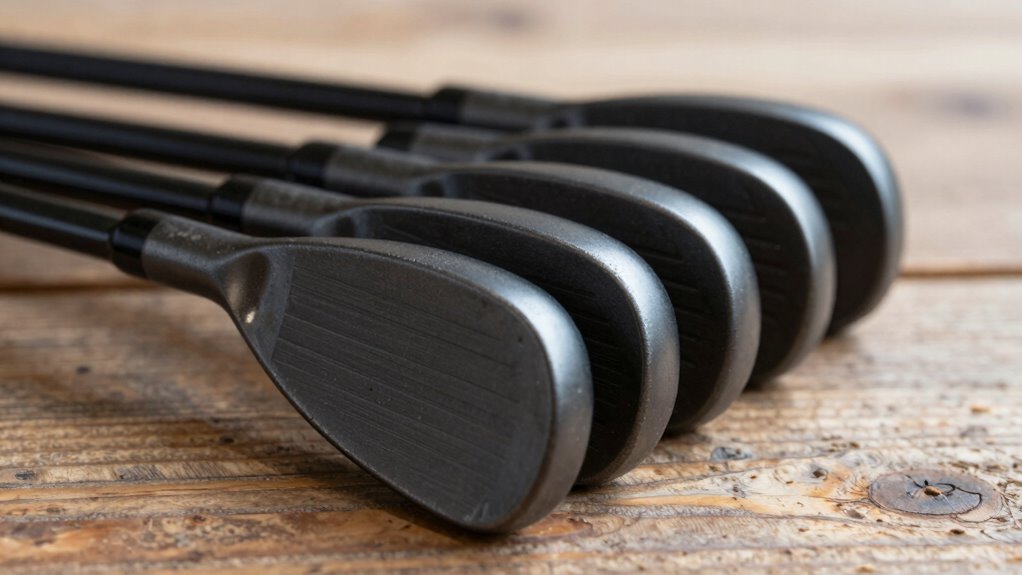

Forged irons are made from a single piece of soft steel, like 1025 or 1020 carbon steel, which gives you better feel and feedback on impact. This material is more malleable, allowing for precise shaping and customization for your swing style. The softer steel responds well to subtle shot control and shaping, making them favored by skilled players. While they may be less durable than cast irons, understanding these traits can help you choose the right clubs—explore further to learn more about their benefits.

Get travel and outdoor gear delivered free with Prime
- Fast, free delivery on millions of items
- Prime Video, Amazon Music and more included
- Member-only deals all year
Key Takeaways
- Forged irons are made from a single piece of soft steel, offering better feel and shot feedback.
- They are typically more responsive, allowing skilled players to shape shots with greater control.
- Softer materials make forged irons more prone to dents and wear over time.
- Customization options are extensive due to the malleability of the forging process.
- They are preferred by advanced players for their finesse and precise shot control.
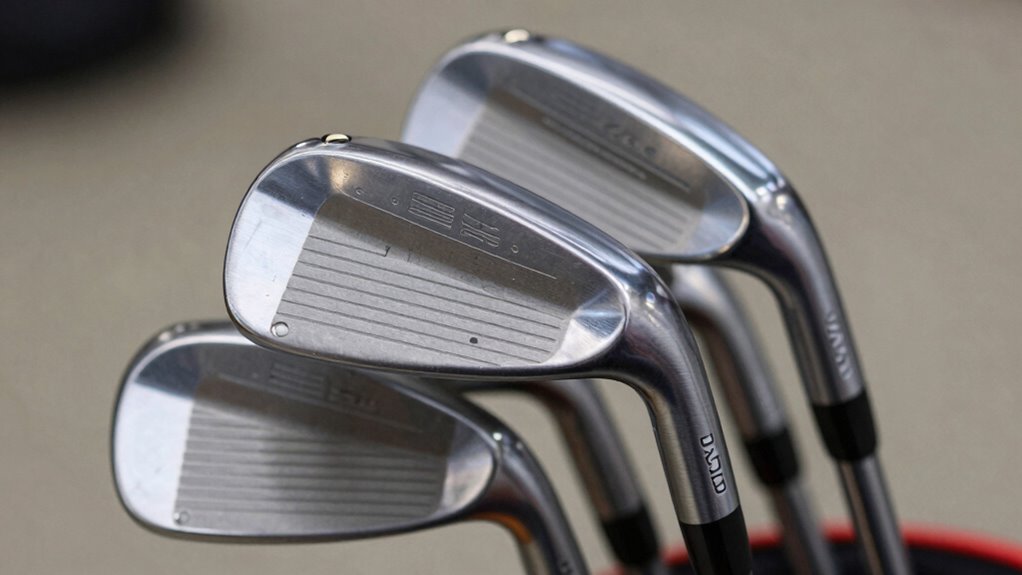
Have you ever wondered what makes forged irons a popular choice among golfers? It’s often because of their feel and control, but understanding what sets them apart requires a look at the basics. When choosing between different types of irons, club fitting plays a vital role. Properly fitted forged irons can greatly improve your game, ensuring the clubs match your swing speed, angle of attack, and overall playing style. Getting fitted means working with a professional who can analyze your swing and recommend the right specifications, such as shaft length, grip size, and lie angle, all of which influence how the club feels and performs.
One of the most notable distinctions of forged irons lies in their material differences. Most forged irons are crafted from a single piece of soft steel, such as 1025 or 1020 carbon steel, which allows for greater precision during manufacturing. This softer metal provides a more responsive, tactile feedback when you strike the ball, giving you a better sense of contact. The material’s malleability means that manufacturers can shape the clubhead with intricate details, resulting in a more refined and customizable design. This contrasts with cast irons, which are made by pouring molten metal into molds; cast clubs tend to be more durable and affordable but often lack the same level of feel and finesse.
The material differences also influence how the club ages and reacts over time. Forged irons tend to be more susceptible to nicks and dents because of their softer composition. However, many players prefer this trade-off because it offers a more direct connection to the ball, allowing for better shot control. The softer material also enables skilled players to manipulate ball flight more easily through subtle adjustments in their swing. Because of these characteristics, forged irons are often favored by low-handicap and professional golfers who prioritize feel and shot shaping over durability or forgiveness. Additionally, the material properties of forged irons allow for greater customization, which can be tailored to a player’s specific needs and preferences. Understanding these material characteristics helps players select clubs that align with their playing style and skill level. Recognizing the significance of club customization options can further enhance your performance and satisfaction with your equipment, especially when considering how the material composition impacts the club’s overall feel and longevity.
Products Worth Considering

GoPro Hero12 Black Waterproof Action Camera with 5.3K60 Video and 27MP Photos

Samsonite Winfield 2 20-Inch Hardside Carry-On Spinner Luggage, Charcoal

Bose QuietComfort Ultra Earbuds (2nd Gen), Deep Plum
As an affiliate, we earn on qualifying purchases.
Frequently Asked Questions
Are Forged Irons Suitable for Beginners?
Yes, forged irons can be suitable for beginners, but you should consider your skill level. They offer better feel and control, which helps improve your game over time. However, their softer construction might require more precision, so if you’re a total novice, game-improvement irons could be easier to hit consistently. Ultimately, your comfort and practice habits will impact whether forged irons are the right choice for your beginner considerations.
How Do Forged Irons Differ From Cavity-Back Irons?
Forged irons differ from cavity-back irons mainly in manufacturing processes and design. Forged irons are made from a single piece of metal, offering better feel and control. They often come with more customization options, allowing you to tailor the club to your swing. Cavity-back irons, on the other hand, are mass-produced with a cavity in the back for forgiveness. Your choice depends on your skill level and what you prefer in feel and performance.
Can Forged Irons Improve My Game Instantly?
Certainly, forged irons can instantly improve your game, especially when custom fitted to match your swing speed. Precision-fitting guarantees the clubs suit your unique swing, maximizing control and comfort. While they don’t magically transform your skills overnight, they enhance consistency and confidence, giving you a better chance to perform well. With tailored technology and proper fitting, forged irons can be a game-changer, helping you play more powerfully and accurately from the first swing.
What Materials Are Used in Forging Golf Irons?
You’ll find that forged golf irons are made using high-quality materials like carbon steel or soft steel, which help create a precise blade design. The material composition allows for better feel and control, giving you more confidence with each swing. The forging process shapes these materials into a sleek, durable club that enhances your game. So, understanding the materials helps you appreciate how forged irons can improve your performance on the course.
Are Forged Irons More Durable Than Cast Irons?
While forged irons tend to offer a refined feel, they are generally more delicate than cast irons, making them slightly less durable for everyday play. The manufacturing process allows for more precise club customization, enhancing performance, but it can also result in a softer metal that’s more prone to wear. If you prioritize durability, cast irons might suit your game better, though forged irons excel in control and feedback.
Conclusion
Think of forged irons as a finely crafted sword, each one forged with care and skill, designed to cut through the game’s challenges. They’re not about flashy hype but about reliability and precision—your trusted blade in the rough. Just as a sword’s true power lies in its craftsmanship, the real strength of forged irons is in their durability and feel. So, choose wisely, and wield your club with confidence, knowing it’s built for the journey ahead.