

Poor posture can seriously hurt your golf swing. Slouching or overarching your spine weakens power and control, while unbalanced weight distribution causes instability. Tensing up the upper body leads to stiff, jerky swings, and incorrect hip or knee positioning hampers fluidity and power. Additionally, neglecting proper head and neck placement affects balance and consistency. Fixing these mistakes can boost your accuracy and distance—stick with it, and you’ll uncover how small adjustments offer big improvements.

Get travel and outdoor gear delivered free with Prime
- Fast, free delivery on millions of items
- Prime Video, Amazon Music and more included
- Member-only deals all year
Key Takeaways
- Slouching or overarching the spine reduces swing power and accuracy by limiting core stability and range of motion.
- Poor weight distribution and misaligned posture cause instability and inconsistent shots.
- Tensing upper body muscles leads to stiff, jerky swings, decreasing fluidity and control.
- Incorrect hip and knee positioning disrupt rotation and balance, limiting swing efficiency.
- Improper head and neck placement impair stability, causing stiffness and reducing swing consistency.
As an affiliate, we earn on qualifying purchases.
Slouching or Overarching the Spine

Slouching or overarching your spine during your swing can markedly reduce your power and accuracy. When you lack spinal flexibility, it’s harder to maintain a neutral spine position, which is essential for a consistent swing. Overarching your spine causes unnecessary tension, limiting your range of motion and impairing fluidity. Conversely, slouching diminishes core stability, making it difficult to generate torque and control your shot. To improve, focus on exercises that enhance your spinal flexibility and strengthen your core muscles. A stable core supports proper posture, allowing you to keep your spine aligned throughout the swing. Incorporating posture correction techniques can further assist in maintaining optimal spinal alignment. Remember, maintaining a balanced, neutral spine position is vital for maximizing power, accuracy, and consistency in your game. Additionally, understanding the importance of Free Floating can help you develop a more natural and unrestricted swing motion. Practicing mindful body awareness during your swings can also help you maintain proper spinal posture and prevent these common mistakes. Developing spinal flexibility through targeted exercises can significantly improve your swing mechanics and overall performance.
golf swing trainer with posture support
As an affiliate, we earn on qualifying purchases.
As an affiliate, we earn on qualifying purchases.
Poor Weight Distribution and Posture Alignment

Poor weight distribution and posture alignment can profoundly undermine your swing’s effectiveness. When your weight isn’t balanced properly, especially shifting too much onto your toes or heels, your swing becomes unstable and inconsistent. Ensuring proper core stability helps you maintain a centered posture, allowing smoother transfer of power through your swing. Additionally, good shoulder mobility is essential; restricted shoulder movement can cause misalignment and limit your range of motion, leading to poor posture at address. Focus on evenly distributing your weight between both feet and aligning your spine correctly. Developing core strength and shoulder flexibility will help you maintain proper posture throughout your swing, resulting in better control, increased power, and more accurate shots. Incorporating proper posture habits can further optimize your swing mechanics and consistency. Regularly practicing posture awareness can also help you identify and correct misalignments before they impact your game. Paying attention to muscle balance in your training can also prevent compensation patterns that negatively affect your swing. For example, addressing muscle imbalances can lead to a more symmetrical and efficient swing motion, and understanding the benefits of glycolic acid exfoliating toner can help you maintain healthy skin, which can boost your confidence on and off the course.
golf core strength exercises equipment
As an affiliate, we earn on qualifying purchases.
As an affiliate, we earn on qualifying purchases.
Tensing Up the Upper Body

Tensing up the upper body during your swing can severely limit your fluidity and power. When you tighten your muscles, especially in the upper body, you create unnecessary muscle tension that hampers your natural motion. This tension leads to stiff, jerky swings instead of smooth, controlled ones. To improve, focus on staying relaxed and loose in your shoulders, arms, and chest. Relaxed muscles allow your upper body to move freely through the swing, generating better timing and more consistent contact. Remember, excessive tension doesn’t add power; it restricts it. Keep your upper body soft and supple to maximize fluidity, control, and ultimately, your overall performance on the course. Incorporating muscle relaxation techniques into your pre-shot routine can further enhance your swing fluidity and help maintain your focus under pressure. Additionally, understanding how vetted wave and wind conditions can impact your swing can prepare you to adjust your technique for better results. Practicing proper posture alignment can also help prevent unnecessary tension and promote a smoother swing.
golf shoulder mobility stretch bands
As an affiliate, we earn on qualifying purchases.
As an affiliate, we earn on qualifying purchases.
Incorrect Hip and Knee Positioning
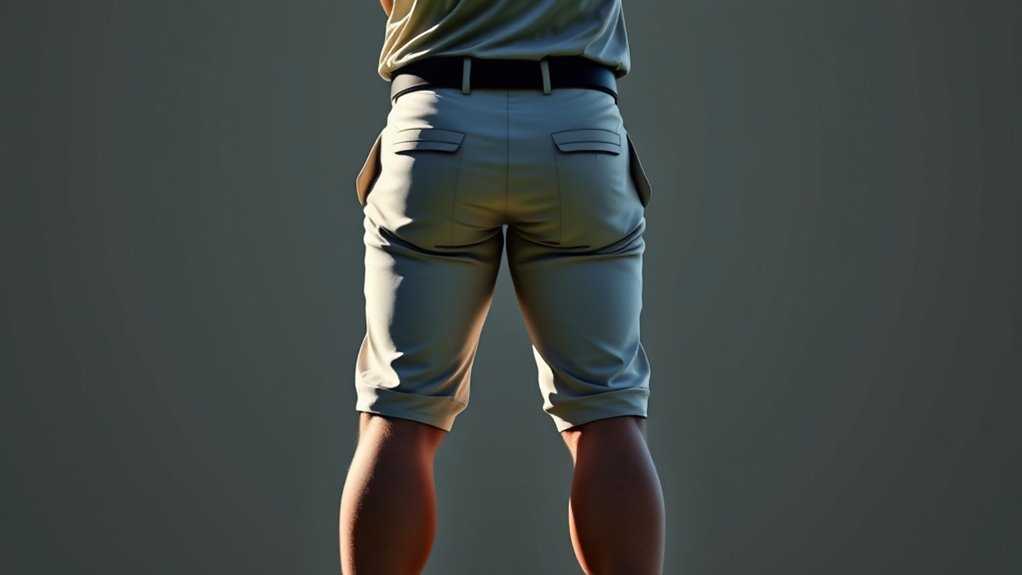
Incorrect hip and knee positioning can considerably disrupt your swing’s fluidity and power. If you don’t maintain proper hip hinge and knee bend, your body won’t move efficiently through the shot. A common mistake is standing too upright, which limits your ability to rotate smoothly. Instead, focus on hinging your hips correctly—bending slightly at the hips while keeping your back straight. Your knees should be flexed just enough to stay balanced without locking or over-bending. This stance ensures your weight shifts naturally during the swing and allows for better rotation. When your hips and knees are aligned properly, you generate more power and maintain better control. Correcting these positions helps you swing more efficiently and reduces unnecessary strain on your body.
Neglecting Proper Head and Neck Placement

Neglecting proper head and neck placement can considerably impair your swing’s consistency and accuracy. When your head tilt isn’t correct, it throws off your balance and alignment, making it harder to make solid contact. Excessive neck tension can also restrict your movement, causing stiffness that hampers your swing fluidity. If you keep your head too high or too low, or allow unnecessary tension in your neck, you’ll struggle to stay centered and focused through the shot. Maintaining a relaxed neck and a neutral head position helps you stay stable and aligned with your target. Always check that your head is steady, with minimal tilt, and avoid tensing your neck muscles. Doing so will improve your swing’s repeatability and increase your chances of hitting consistent, accurate shots. Paying attention to your posture and body alignment can further enhance your swing stability and overall performance. Focusing on proper posture can also prevent common mistakes that lead to inconsistent swings. Additionally, being mindful of muscle tension in your neck area can help maintain better control and fluidity during your swing. Incorporating awareness of tension and relaxation techniques can make a significant difference in your game. Developing an understanding of postural awareness can help you maintain proper positioning throughout your swing, leading to more consistent results.
Frequently Asked Questions
How Does Posture Impact My Swing Consistency?
Your posture directly impacts your swing consistency by ensuring proper spinal alignment and shoulder positioning. When you maintain good posture, your body moves more fluidly, allowing for a smoother, more controlled swing. Poor posture causes misalignment, leading to inconsistent contact and less power. Focus on keeping your spine straight and shoulders relaxed, which helps you stay balanced and repeat your swing with greater accuracy and confidence.
What Exercises Can Improve My Golf Posture?
To improve your golf posture, focus on core stability exercises like planks and side planks, which strengthen your core and support proper alignment. Incorporate flexibility exercises such as hamstring stretches, hip openers, and shoulder rotations to increase mobility. Consistently practicing these exercises helps you maintain a balanced posture, enhances your swing consistency, and reduces the risk of injury. Make them part of your regular routine for noticeable improvements on the course.
Can Poor Posture Cause Long-Term Injuries?
While it’s often unnoticed, poor posture can quietly contribute to long-term injuries, especially if you neglect injury prevention and posture awareness. Over time, misalignment and improper support strain muscles and joints, increasing the risk of chronic pain or more serious issues. Staying mindful of your posture helps protect your body, ensuring you enjoy the game without sacrificing your health. Prioritize proper alignment and regular posture checks to keep injuries at bay.
How Do I Maintain Good Posture Under Pressure?
To maintain good posture under pressure, stay mentally focused and use breathing techniques to stay calm. Take slow, deep breaths to reduce tension and clear your mind. Keep your awareness on your body, ensuring your spine remains aligned and your shoulders relaxed. Regularly check your posture during play, and remind yourself to breathe deeply, helping you stay steady and confident even when the stakes are high.
Are There Specific Drills to Correct These Posture Mistakes?
Yes, specific posture drills and correction routines can markedly improve your swing. Focus on exercises like wall angels, shoulder blade squeezes, and hip hinge drills to build awareness and stability. These routines help reinforce proper alignment and muscle memory, making good posture automatic. Consistently practicing these drills will lead to better swing mechanics over time, proving that targeted correction routines are essential for overcoming posture mistakes and enhancing your golf game.
Conclusion
By correcting these common posture mistakes, you can open your full swing potential. For example, Sarah, a golfer struggling with consistency, adjusted her hip positioning and noticed immediate improvements. Remember, small changes like maintaining proper head alignment or avoiding tension in your upper body can make a big difference. Pay attention to your posture during practice, and you’ll see your swing become more powerful and accurate, helping you lower your scores and enjoy the game more.
Fall Picks
fall essentials
As an affiliate, we earn on qualifying purchases.