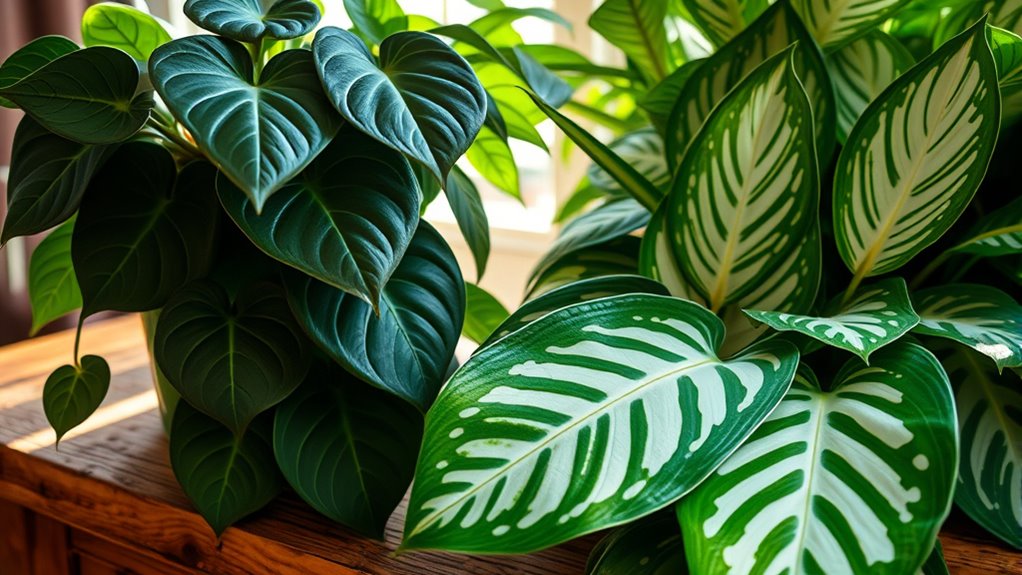

Many common houseplants pose serious dangers to your pets. Plants like dieffenbachia, pothos, and philodendron contain toxins that cause mouth irritation, swelling, vomiting, or even more severe issues. Sago palms and lilies are especially deadly, with lilies causing kidney failure in cats. Aloe vera, ivy, cyclamen, and peace lilies also threaten pet health. If you’re surprised by these risks, discovering how to protect your furry friends is just a step away.
Key Takeaways
- Many popular houseplants like Dieffenbachia, Pothos, and Philodendron contain toxins causing severe mouth, throat, and digestive issues in pets.
- Lilies, especially dangerous to cats, can cause kidney failure from even tiny ingestion of petals, pollen, or stems.
- Sago palms are extremely toxic, and ingestion can lead to liver failure or death in pets, despite their harmless appearance.
- Handling or propagating toxic plants releases dangerous sap and crystals that can harm both pets and humans if ingested or touched.
- Choosing pet-safe plants like ferns or succulents can prevent accidental poisoning and ensure a pet-friendly indoor environment.

Pet-Safe Houseplants: A Guide to Growing Plants with Pets
As an affiliate, we earn on qualifying purchases.
As an affiliate, we earn on qualifying purchases.
The Hidden Dangers of Dieffenbachia
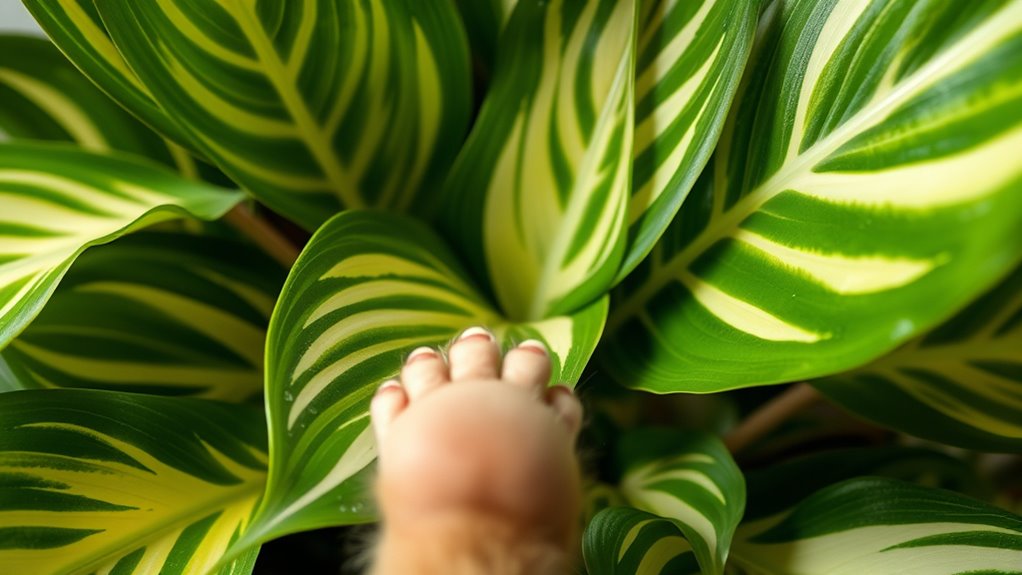
While Dieffenbachia is a popular houseplant for its attractive foliage, it hides a dangerous secret: its sap contains calcium oxalate crystals that can be highly toxic to pets. If your pet chews on the leaves or stems, they risk severe irritation and swelling in the mouth and throat. When propagating Dieffenbachia, be cautious, as broken stems or leaves can release sap into the soil, creating a risk if your pet digs or ingests contaminated soil. Soil toxicity is a real concern because calcium oxalate crystals can leach into the potting mix, making it hazardous. To keep your furry friends safe, avoid placing Dieffenbachia in accessible areas, and always handle the plant carefully during propagation to prevent sap exposure. Understanding plant toxicity can help you make informed choices about pet-safe houseplants.
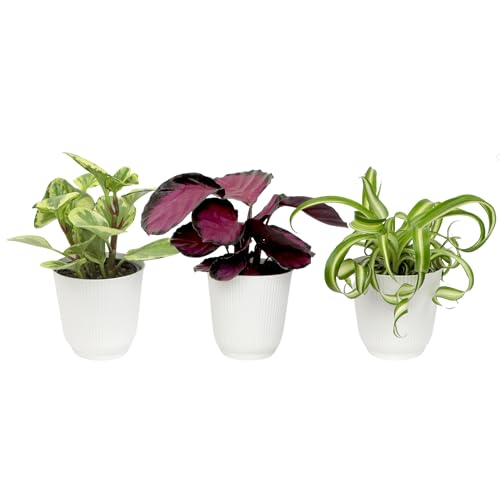
Pet Friendly House Plant Decor 3-Pack, Dog & Cat Safe Plants in 4" White Pots for Home & Office, Grower's Choice Live Houseplants, Approx. 9" Tall, Peperomia, Calathea & More by Plants for Pets
PET FRIENDLY HOUSE PLANTS: Our delightful collection of non-toxic house plants features prayer plant, spider plant, rubber plant,…
As an affiliate, we earn on qualifying purchases.
As an affiliate, we earn on qualifying purchases.
Why Sago Palms Are a Pet’s Worst Nightmare
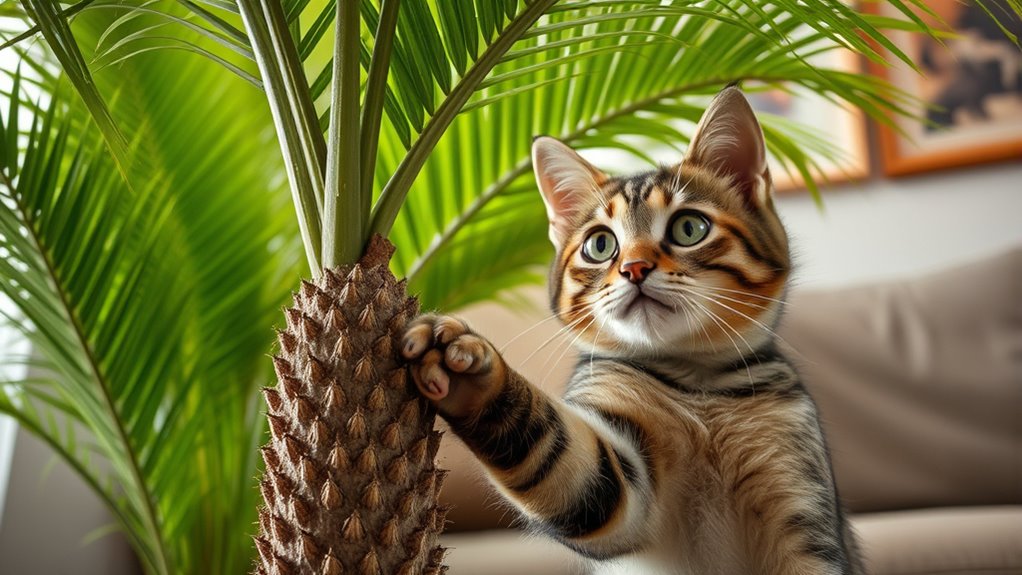
Sago palms may look harmless and decorative, but they’re actually one of the most dangerous plants you can have around pets. Their toxicity is severe, and ingestion can lead to liver failure or death. When incorporating sago palms into your garden design, keep them out of your pet’s reach. Imagine a lush, carefully planned space—here’s what makes sago palms especially hazardous: 1. Bright green, fern-like leaves that tempt curious noses. 2. Thick trunk that resembles a mini palm, hiding the danger inside. 3. Sharp, spiky edges that can cause physical injury. 4. Seeds that resemble small, tempting berries, perfect for plant propagation but deadly if eaten. Recognizing the toxicity of sago palms is crucial for responsible gardening. Always remember, no amount of garden beauty is worth risking your pet’s life.

Altman Plants Pet Friendly Plant Pack (3PK) Real Succulents, Pet Safe Plants & Succulent Plants, Live Succulents, Pet Friendly Plants, Live Plants & House Plants in 3.5" Pots with Succulent Soil Mix
PET FRIENDLY SUCCULENTS: Our dog and cat safe plants are meant for animal lovers with curious pets
As an affiliate, we earn on qualifying purchases.
As an affiliate, we earn on qualifying purchases.
The Toxic Threat of Pothos and Devil’s Ivy
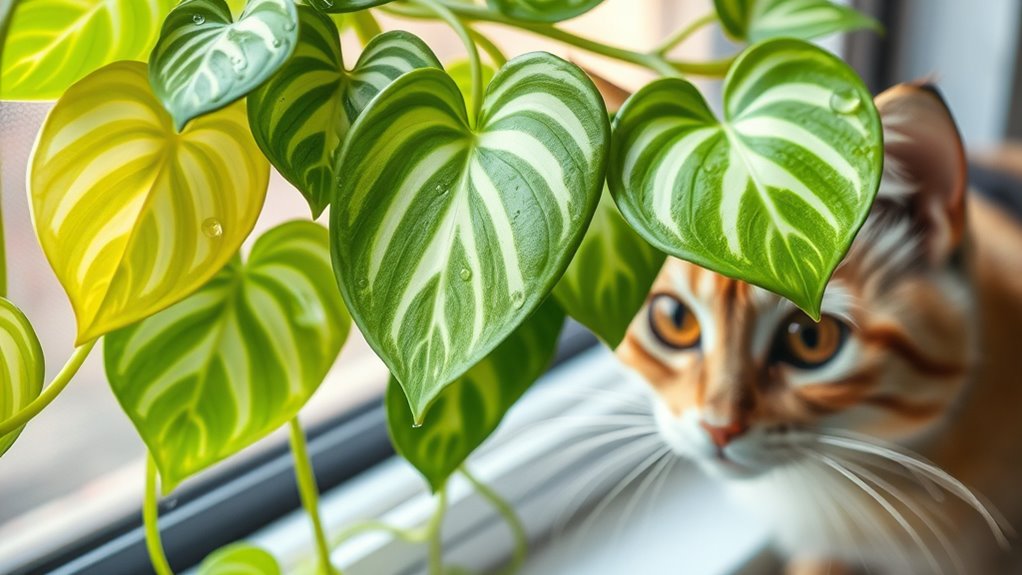
Pothos and Devil’s Ivy are popular houseplants known for their low maintenance and attractive, trailing foliage, but their appeal comes with a dangerous caveat: they are highly toxic to pets. If your pet nibbles on their leaves, it can cause vomiting, oral irritation, or more severe reactions. When propagating these plants, be cautious to keep cuttings out of your pet’s reach, as ingestion can still pose risks. Beyond the danger to your pet, these plants can also impact indoor air quality, releasing compounds that may irritate sensitive individuals. To protect your furry friends, consider safer alternatives or secure these plants in places pets can’t access. Remember, preventing exposure is key to keeping your pets safe from the toxic threat of Pothos and Devil’s Ivy. Understanding plant toxicity is essential for pet owners to ensure a safe indoor environment.
Pet Friendly House Plant Decor 3-Pack, Dog & Cat Safe Plants in 4" White Pots for Home & Office, Grower's Choice Live Houseplants, Approx. 9" Tall, Peperomia, Calathea & More by Plants for Pets
PET FRIENDLY HOUSE PLANTS: Our delightful collection of non-toxic house plants features prayer plant, spider plant, rubber plant,…
As an affiliate, we earn on qualifying purchases.
As an affiliate, we earn on qualifying purchases.
Lilies: Beautiful But Deadly for Cats
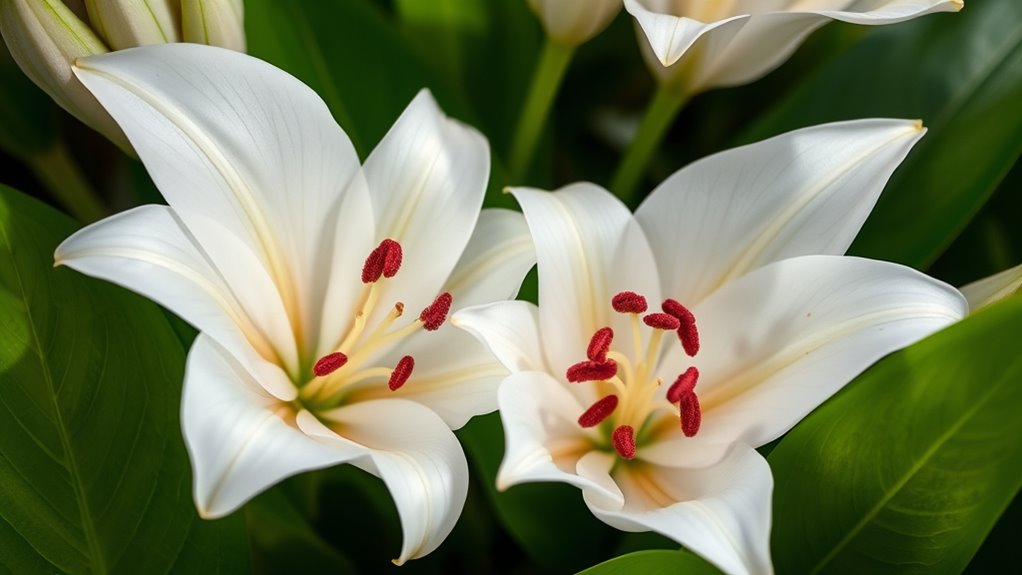
Lilies are stunning flowers that can brighten up any home, but they pose a serious danger to cats. If you bring lilies into your house for flower arrangements or outdoor gardening, be aware of their toxicity. Cats can be harmed if they nibble on even a small part of a lily. Visualize your space filled with these elegant blooms, and imagine your curious feline approaching. Here are four dangerous parts of lilies:
- Pollen on the stamens
- Lily petals
- Stems and leaves
- Flower buds
These parts contain toxins that can cause kidney failure in cats. Always keep lilies out of reach, especially if your cat loves exploring your garden or sniffing flower arrangements. Protect your feline friends by choosing pet-safe plants instead. Incorporating visual and auditory cues into your environment can also help reduce a pet’s curiosity about potentially hazardous plants. Additionally, understanding plant toxicity can aid in making safer choices for your home. Being aware of poisonous plant parts can help you identify other risky plants to avoid. Recognizing the importance of early intervention can also be vital if your pet shows signs of poisoning.
The Perilous Nature of Aloe Vera
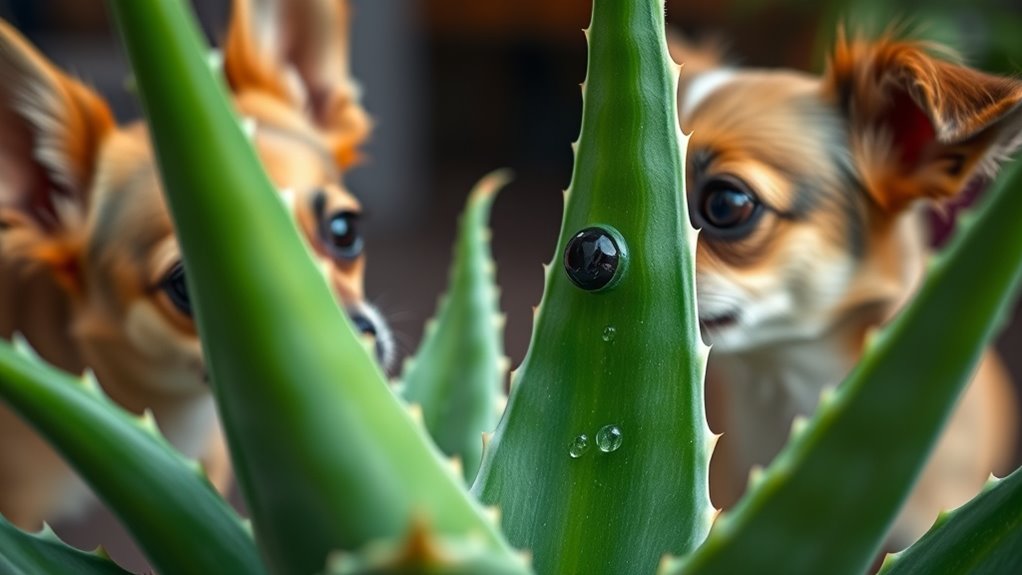
Aloe Vera contains toxic compounds that can harm your pets if ingested. Symptoms of poisoning include vomiting, diarrhea, and lethargy, so it’s essential to recognize the risks. Fortunately, there are safe houseplants you can choose that won’t put your furry friends in danger. For example, some popular alternatives are pet-friendly plants that are safe for households with animals.
Toxic Components in Aloe
While aloe vera is often praised for its soothing properties for humans, its toxic components pose serious risks to pets. The plant contains compounds like saponins and anthraquinones, which can cause poisoning if ingested. These substances are concentrated mainly in the leaves’ latex, a yellowish sap. When you handle or propagate aloe plants, it’s easy to overlook these dangers, especially if your pet nibbles on the leaves. To visualize, consider:
- The thick, fleshy leaves filled with toxic latex
- The jagged edges that attract curious pets
- The vibrant green exterior hiding harmful substances
- The root system that can transfer toxins during plant propagation
Being aware of plant toxicity symptoms can help pet owners recognize early signs of poisoning and seek prompt veterinary care. Understanding pet toxicity awareness helps prevent accidental ingestion, making aloe a risky addition to homes with curious animals. Additionally, the plant’s toxicity awareness can help pet owners make safer choices for their living spaces.
Symptoms of Poisoning
When pets chew on aloe vera leaves, they risk experiencing a range of harmful symptoms due to the plant’s toxic compounds. You might notice vomiting, diarrhea, or abdominal pain as their body reacts to the irritants. In more severe cases, pets could develop tremors or changes in behavior, signaling a serious poisoning risk. It’s important to keep aloe vera out of reach, especially if you’re propagating new plants, which can involve handling cuttings that may still contain toxins. Indoor humidity levels can also influence plant health, but don’t forget that overgrown or stressed plants are more likely to be chewed on, increasing poisoning risks. Recognizing these symptoms early can help you seek prompt veterinary care and prevent further harm. Additionally, understanding common plant toxins can help you better identify which houseplants pose dangers to your pets. Being aware of plant toxicity factors can further aid in creating a safe environment for your furry friends. Proper plant care and regular monitoring can reduce the likelihood of accidental ingestion and ensure your pets stay healthy. Educating yourself about houseplant safety can also help prevent potential poisoning incidents before they happen.
Safe Alternatives for Pets
Are you searching for beautiful, pet-safe houseplants to brighten your home? Consider these options for pet-safe gardening and safe houseplant compost that won’t harm your furry friends:
- Spider Plant – Its arching leaves and tiny babies make a charming display, perfect for a pet-friendly space.
- Areca Palm – Tall, lush, and non-toxic, it adds tropical elegance without risking your pet’s health.
- Boston Fern – Its feathery fronds create a soft, natural look, safe for curious pets. Incorporating plant toxicity awareness into your gardening knowledge can help you make safer choices for your pets.
- Parlor Palm – Compact and low-maintenance, it thrives in shaded spots, offering beauty and safety. Ensuring your houseplant compost is free from harmful chemicals can further protect your furry friends. Additionally, selecting pet-safe fertilizers can help maintain healthy plants without risks. Staying informed about AI-powered content creation can also assist gardeners in exploring innovative ways to care for their houseplants.
Choose these to keep your home vibrant, beautiful, and pet-friendly, ensuring your houseplant compost and gardening efforts are safe for everyone.
Philodendron: An Attractive Yet Hazardous Plant
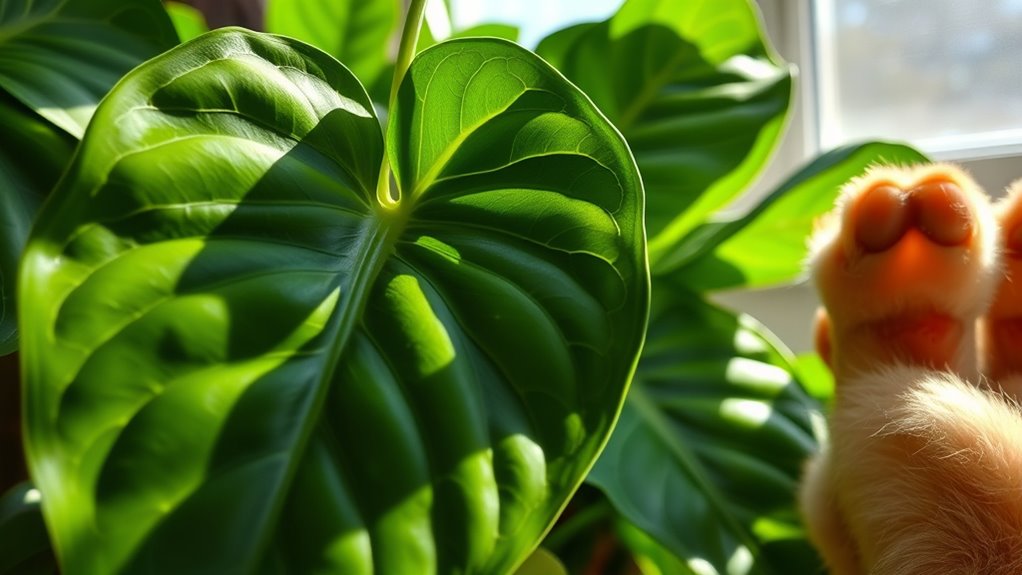
Philodendron plants are popular for their attractive, lush foliage that can brighten any indoor space. However, they pose a serious risk to your pets if ingested. The plant’s sap contains calcium oxalate crystals, which can cause irritation and swelling in your pet’s mouth, throat, and stomach. Despite their beauty, philodendrons are hazardous, especially if your pet chews on them. If you want to propagate your plant, be cautious, as broken leaves or stems can release toxins. Additionally, philodendrons can improve indoor air quality by filtering airborne pollutants, but this benefit doesn’t outweigh the danger to your furry friends. Keep this plant out of reach, or consider pet-safe alternatives to maintain both safety and aesthetic appeal. The horsepower of electric dirt bikes indicates their impressive power, but such strength is unnecessary and dangerous for household plants around pets. plant toxicity levels vary among different houseplants, making it essential to identify and manage potential risks. Always be aware of toxic plant effects to ensure a safe environment for your pets.
The Risks of Ivy in Your Home
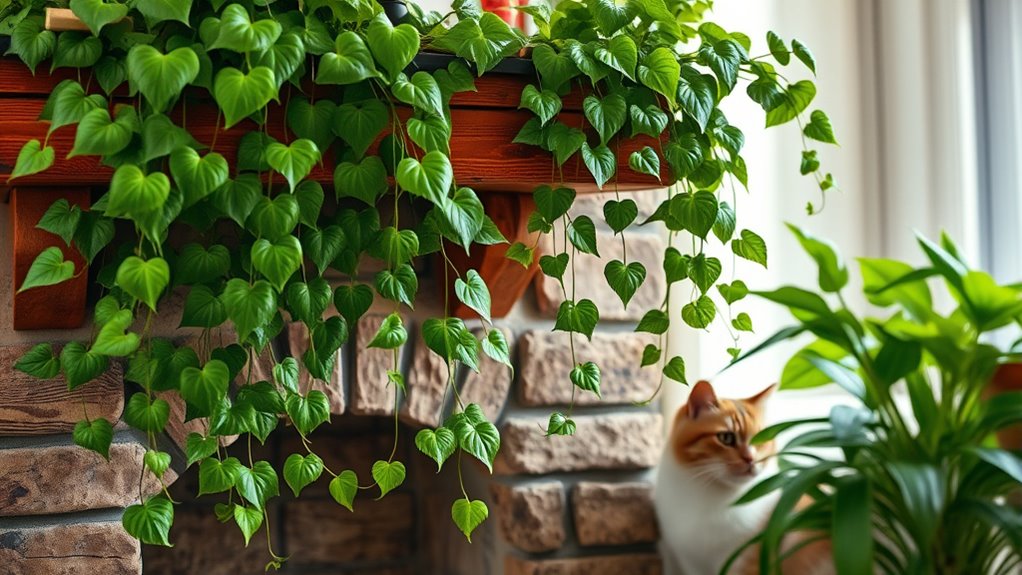
While ivy can add a charming touch to your home decor, it also poses significant health risks to your pets. If ingested, ivy can cause severe symptoms like vomiting, diarrhea, and difficulty breathing. Its toxic sap can also irritate your pet’s skin or eyes. Be cautious during plant propagation; handling ivy’s leaves releases toxins that can be harmful if touched or ingested. Maintaining indoor humidity is essential, as high moisture levels encourage ivy’s growth, increasing your pet’s temptation to nibble. Additionally, understanding the energy lifecycle of houseplants can help you make safer choices for your home environment. Visualize your home with:
- Lush, trailing vines wrapping around furniture
- Tiny leaves that resemble miniature shields
- Pet paw prints near pots of ivy
- Drooping vines within reach of curious noses
Stay vigilant—ivy’s beauty masks serious dangers for your furry friends.
Azaleas and Rhododendrons: Colorful but Toxic

Despite their vibrant colors and decorative appeal, azaleas and rhododendrons pose serious health risks to your pets. If you’re designing a garden or arranging indoor plant care, be mindful of these toxic plants. They contain grayanotoxins, which can cause vomiting, weakness, or even more severe symptoms if ingested. To help you identify risky plants at a glance, here’s a quick overview:
| Plant Type | Toxic Symptoms | Safe Alternatives |
|---|---|---|
| Azaleas | Vomiting, diarrhea | Ferns |
| Rhododendrons | Drooling, weakness | Spider plants |
| Garden Design Tips | Keep away from pets | Use pet-friendly greenery |
| Plant Care Reminder | Regularly check for hazards | Consult experts for advice |
| Pet-Friendly Options | Choose non-toxic plants | Peace lilies, succulents |
The Danger of Peace Lilies
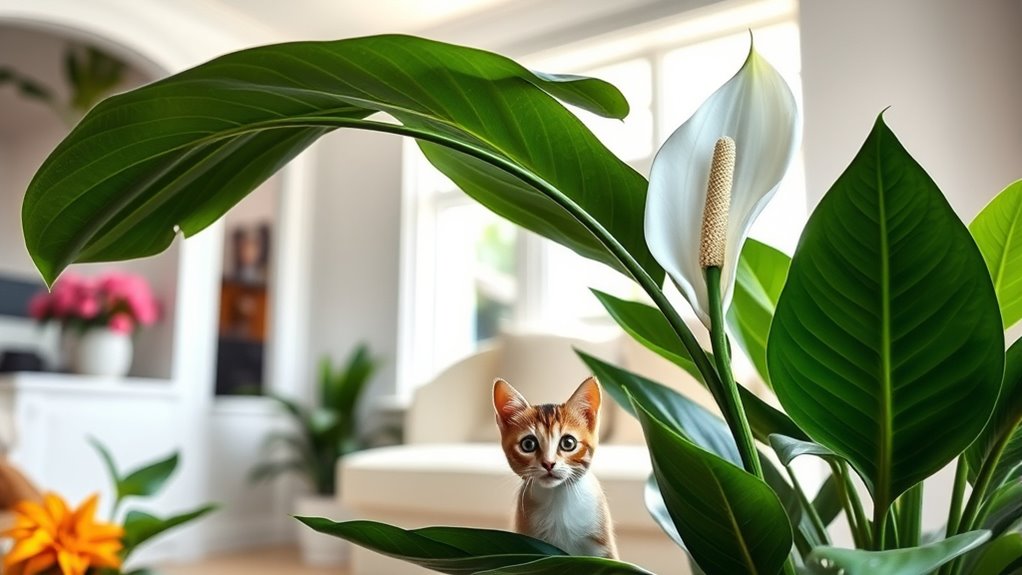
Peace lilies are popular indoor plants because of their attractive appearance and air-purifying qualities, but they can pose serious health risks to your pets. Their plant toxicity can cause severe reactions if ingested. Imagine your curious cat or dog:
- Chewing on glossy green leaves, releasing toxins into their mouth.
- Swallowing parts of the plant, leading to upset stomachs.
- Licking their paws after contact, risking oral irritation.
- Displaying symptoms like drooling, vomiting, or difficulty breathing.
These signs highlight the importance of pet safety around peace lilies. The plant’s toxicity makes it essential to keep these plants out of reach or opt for pet-safe alternatives. Protect your furry friends from unnecessary harm caused by common household plants.
How Cyclamen Can Be Poisonous to Pets

Cyclamen, a popular flowering houseplant known for its vibrant blooms, can be highly toxic to pets if ingested. The plant contains compounds called terpenoids that can cause vomiting, diarrhea, seizures, and even death in pets. If you’re into plant propagation, be cautious when handling cyclamen, as the roots and tubers are especially poisonous. To keep your pets safe, practice pet-safe gardening by placing cyclamen out of their reach or opting for non-toxic alternatives. Always wash your hands after handling the plant and avoid allowing your pets to nibble on it. Educate yourself about the potential dangers, and remember that even pet-friendly gardening practices can’t fully eliminate risks if plants are accessible to curious animals.
Frequently Asked Questions
Can Houseplants Cause Long-Term Health Issues in Pets?
Yes, houseplants can cause long-term health issues in pets due to plant toxicity. If your pet ingests toxic plants regularly, it may develop chronic health problems like organ damage or persistent gastrointestinal issues. To protect your pet’s health risks, identify and remove hazardous plants from your home. Always research plant safety and consult your vet if you suspect your pet has been exposed to a toxic plant.
What Symptoms Indicate My Pet Has Ingested Toxic Plants?
When it comes to plant toxicity, “better safe than sorry” rings true. If your pet ingests a toxic plant, look for symptoms like vomiting, diarrhea, drooling, or difficulty breathing. You might also notice lethargy, tremors, or loss of appetite. Recognizing these signs quickly is crucial for symptom recognition. If you suspect your pet has eaten something harmful, contact your veterinarian immediately to prevent serious health issues.
Are There Safe Alternatives to Toxic Houseplants for Pet Owners?
Yes, there are safe alternatives to toxic houseplants for pet owners. You should look for pet safe plants like spider plants, Boston ferns, and areca palms. These toxic plant substitutes provide greenery without risking your pet’s health. Always double-check plant safety before bringing new plants home, and keep toxic plants out of reach. By choosing pet safe plants, you create a beautiful, safe environment for both you and your furry friends.
How Quickly Can a Plant Poisoning Affect My Pet’s Health?
Ironically, it might take just moments for plant absorption to release toxins in your pet. Once the toxin onset begins, symptoms like vomiting or lethargy can appear within a few hours or even sooner. The speed depends on the plant, the amount ingested, and your pet’s size. So, stay vigilant, act fast if you suspect poisoning, and remember: quick response can save your pet’s life.
What Steps Should I Take if My Pet Eats a Poisonous Houseplant?
If your pet eats a poisonous houseplant, act quickly by contacting your veterinarian or emergency pet poison helpline right away. Follow their instructions carefully for plant poisoning and get your pet to the vet as soon as possible. Keep the plant or a sample for identification. Your prompt emergency response can help minimize the effects of plant poisoning and ensure your pet gets the care it needs immediately.
Conclusion
Even if you love having houseplants, your pet’s safety comes first. It’s tempting to fill your home with greenery, but many popular plants hide hidden dangers. Luckily, you don’t have to give them all up—just be mindful and choose pet-safe options. After all, your furry friend’s health is worth a little extra effort. With a little research, you can enjoy beautiful plants without risking your pet’s life.