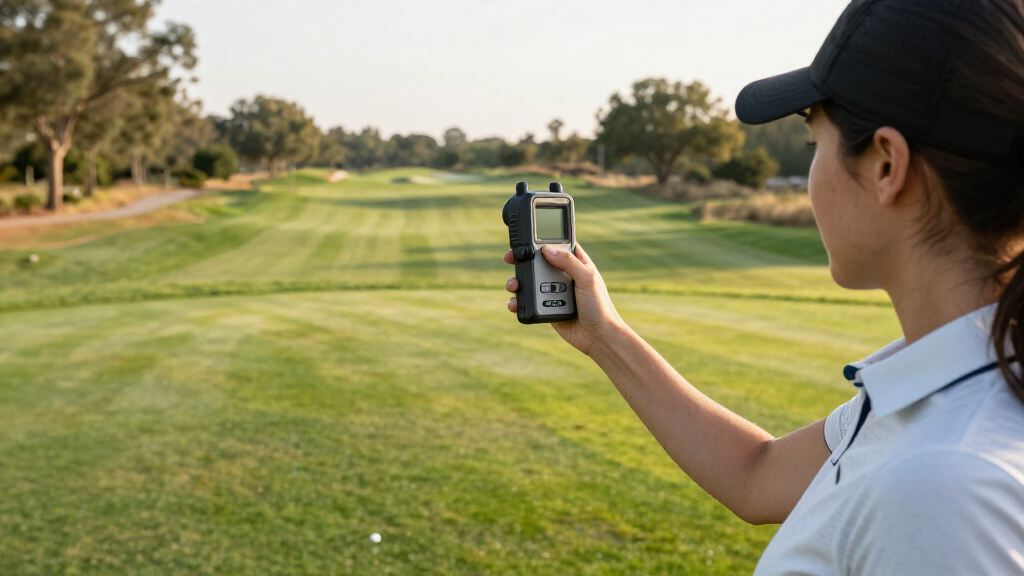

Portable golf rangefinders have become one of the easiest ways to shave strokes, but the category splits into two camps: compact laser units that fit in your pocket and GPS-style devices that trade precision for simplicity. The Bushnell Tour V7 Shift stands out as the best overall pick thanks to its slope compensation, tournament-legal switch, and magnetic cart mount in a body small enough for a Sunday round. If budget leads your decision, the Acer Pro and REVASRI slope model deliver pin-lock vibration and slope switching at less than a third of premium pricing. The main tradeoff you’ll face is accuracy and build quality versus price, plus the choice between laser precision and GPS convenience. Read on for the full breakdown of all ten models and which one fits your game.

Get travel and outdoor gear delivered free with Prime
- Fast, free delivery on millions of items
- Prime Video, Amazon Music and more included
- Member-only deals all year
Complete the kit


Key Takeaways
- Bushnell‘s Tour V7 Shift and Tour V6 Shift dominated on rangefinding precision and build quality, with the V7 earning best overall for its updated optics and slightly faster flag acquisition.
- The Acer Pro and both REVASRI models proved that sub-$150 slope-switch rangefinders now perform close to premium units at short range, though their glass and low-light performance fall short.
- Every model in this lineup except the Bushnell Phantom 3 is a laser rangefinder — the Phantom 3 is the only GPS option, making it the clear pick for golfers who dislike aiming optics at flags.
- An external or switchable slope feature appeared on nine of ten models, confirming that tournament legality is now standard even at budget prices — but only Bushnell and Callaway make the switch truly one-handed.
- Magnetic cart mounts, once a premium feature, show up on the Blue Tees Series 3 Max+ and both Bushnell Tour models, which matters if you ride a cart and hate digging through pockets.


| portable golf rangefinder | Range | Magnification | Battery |
|---|---|---|---|
| Bushnell Golf Phantom 3 Slope | — | — | — |
| Bushnell A1-Slope Laser Rangef | Up to 1,300 yards | 6x | — |
| Bushnell Golf Tour V7 Shift La | 1,300 yards | 6x | CR2 (included) |
| Bushnell Golf Tour V6 Shift La | 1,300 yards | 6x | — |
| Acer Pro Golf Rangefinder with | 5 to 1,200 yards | 7x | 750mAh rechargeable, USB-C |
| REVASRI Golf Rangefinder with | 1000 yards | — | Built-in Li-ion, USB-C chargeable |
| Blue Tees Golf Series 3 Max+ G | up to 1000 yards | 6X | Rechargeable via USB-C |
| REVASRI Golf Rangefinder with | 5-1000 yards | — | Built-in, USB-C rechargeable |
| Redtiger Golf Rangefinder with | — | 7x | — |
| Callaway 300 Pro Golf Laser Ra | up to 1000 yards | 6x | Replaceable (included) |
More Details on Our Top Picks
Bushnell Golf Phantom 3 Slope GPS, Red/Blue
Before comparing lasers, it helps to understand why a GPS unit belongs in this lineup at all. The Phantom 3 doesn’t shoot flags — it reads preloaded course maps and gives you front, middle, and back yardages automatically, which is a genuine advantage when walking rounds without a caddie. The large 3-inch touchscreen is dramatically easier to read than any monocular viewfinder, including the Bushnell A1-Slope’s smaller eyepiece. Slope-adjusted numbers come standard here, where the laser models require a toggle. The tradeoff is precision: you won’t get exact pin distances like the Tour V7 Shift delivers, and full functionality leans on a paired smartphone. Weather sealing is also unconfirmed, unlike the waterproof Tour V6 Shift.
Pros:- Automatic front/middle/back yardages with no aiming required
- Large 3-inch touchscreen that’s easier to read than laser eyepieces
- Slope-adjusted yardages included by default
- Magnetic cart mount and 18-hour battery for full-day rounds
Cons:- Green averages rather than exact flag distances limit wedge precision
- Requires a paired smartphone for full functionality
- No confirmed waterproofing for rainy rounds
Best for: Walkers and riders who prefer instant front/middle/back yardages without aiming at flags
Not ideal for: Golfers who need exact pin distances for wedge shots — GPS gives green averages, not flag-locked numbers
- Screen Size:3 inches, capacitive touchscreen
- Battery Life:Up to 18 hours, rechargeable
- Courses:Preloaded worldwide with GreenView pin placement
- Slope Adjustment:Yes
- Mounting:Magnetic cart mount
- Connectivity:USB, Bluetooth
- Weight:78 g
Our verdict“This pick makes the most sense for golfers who value effortless, glanceable yardages over pin-point laser accuracy.”
Bushnell A1-Slope Laser Rangefinder
If the Tour V6 Shift feels like too much glass to carry, the A1-Slope is the answer for golfers who prioritize pocketability. It is genuinely pocket-sized, a category the Tour V7 Shift and Acer Pro don’t compete in, and it still delivers the full 1,300-yard range and 6x magnification of its bigger siblings. Slope adjustment is here too, with a tournament-legal toggle for competition days. The compromises are real: smaller optics mean a dimmer, tighter view than the Tour V7’s dual-color OLED, and flag acquisition takes a beat longer without the V6’s vibration confirmation. Compared with the Acer Pro’s 7x magnification, target framing is noticeably more modest. Still, for golfers who forget their rangefinder unless it lives in a pocket, this form factor wins.
Pros:- Truly pocket-sized and lightweight for effortless carrying
- Full 1,300-yard range despite the compact body
- Tournament-legal slope toggle
- Magnetic mount for cart access
Cons:- Smaller optics mean a dimmer view than premium Tour models
- No vibration confirmation for locked flags
- Rechargeable battery needs regular topping up
Best for: Walkers and minimalists who want a rangefinder that disappears into a pocket between shots
Not ideal for: Golfers with shaky hands or aging eyes — small optics make steady flag acquisition harder than on the Tour models
- Magnification:6x
- Range:Up to 1,300 yards
- Slope Technology:Yes, tournament-legal toggle
- Battery Life:50+ rounds, rechargeable
- Mounting:Magnetic mount
- Includes:Carrying case, USB-C cord, microfiber cloth, quick start guide
Our verdict“This model is better suited to golfers who value portability above all and can live without premium optics and vibration lock.”
Bushnell Golf Tour V7 Shift Laser Rangefinder with Slope Technology
The dual-color OLED display is what separates the Tour V7 Shift from everything else in this roundup. Where the Tour V6 Shift and the A1-Slope render numbers on a standard reticle, the V7’s bright readout stays legible in low light and late-day glare — a genuine outcome for golfers who play twilight rounds. PinSeeker target acquisition locks flags quickly, and the yardage recall feature is useful on the range in a way the Acer Pro’s speed-mode extras aren’t. The LINK pairing with launch monitors for club suggestions adds a tech layer no other pick here offers. The tradeoffs: the CR2 battery must be replaced rather than recharged via USB-C like the Acer Pro, and the price sits at the top of this group, making it hard to justify for occasional players.
Pros:- Dual-color OLED that stays readable in low light
- Fast, reliable PinSeeker flag acquisition
- Yardage recall for practice sessions
- Launch monitor pairing for personalized club suggestions
Cons:- CR2 battery requires replacement rather than convenient recharging
- Premium price point well above value picks like the Acer Pro
Best for: Serious golfers who play in varied light conditions and want the clearest readout available
Not ideal for: Casual weekend players — the premium display and LINK features cost money they’ll rarely use
- Range:1,300 yards
- Magnification:6x
- Display:Dual-color OLED
- Technology:Slope-adjusted, LINK-enabled
- Battery:CR2 (included)
- Includes:Divot tool, carry case, microfiber cloth, CR2 battery
Our verdict“This option stands out for dedicated golfers who will actually use the superior display and smart features every round.”
Bushnell Golf Tour V6 Shift Laser Rangefinder with Slope Compensation
This is the balanced pick of the roundup, and the reasoning is straightforward. The Tour V6 Shift combines waterproof construction — which the Phantom 3 GPS can’t claim — with flag lock and vibration confirmation, the tactile assurance that you’ve hit the pin rather than the trees behind it. Slope compensation is tournament-legal via its switch, the 1,300-yard range matches the Tour V7 Shift, and the magnetic cart mount keeps it within reach on every shot. Compared with the V7, you give up the dual-color OLED and launch monitor pairing, but you gain a two-year warranty and weatherproofing for roughly the same core performance. Against budget options like the Acer Pro, the difference is refinement: faster lock, cleaner optics, and build quality that survives cart-life abuse.
Pros:- Waterproof build that survives rain and cart spills
- Fast flag locking with both visual and vibration confirmation
- Tournament-legal slope switch
- Two-year warranty backing the purchase
Cons:- Priced well above entry-level rangefinders
- Uses replaceable batteries rather than USB-C recharging
- Golf-specific design with little crossover use
Best for: Regular golfers who want one durable, tournament-ready rangefinder that handles rain, carts, and competition
Not ideal for: Budget-conscious buyers or once-a-month players who won’t notice the difference from a sub-$150 alternative
- Range:1,300 yards
- Magnification:6x
- Slope Compensation:Yes, tournament-legal switch
- Waterproof:Yes
- Flag Lock:Visual and vibration confirmation
- Mounting:Magnetic cart mount
- Warranty:2 years
Our verdict“The most sensible single purchase for frequent players who need durability, fast flag lock, and tournament compliance in one device.”
Acer Pro Golf Rangefinder with Slope Switch, Pin Lock Vibration, 1200 Yards
The Acer Pro’s pitch is simple: premium features at a value price. You get 7x magnification — more than the 6x on both Bushnell Tour models — plus ±0.5-yard accuracy, pin lock vibration, slope switch, IP54 waterproofing, and USB-C recharging in one package. The Tour V7 Shift matches none of that convenience at its price, and the Tour V6 Shift requires replacement batteries where the Acer Pro plugs in overnight. Anti-shake technology helps stabilize the higher magnification, though optics clarity still trails the Bushnell units at distance. The mode menu is the real catch: with slope, speed, scan, and horizontal/vertical options, casual users may fumble settings mid-round. Its 1,200-yard range is slightly shorter than the Bushnells’ 1,300, though no golfer will ever notice.
Pros:- 7x magnification exceeding the 6x on most rivals
- ±0.5-yard accuracy with pin lock vibration
- USB-C rechargeable battery — no replacements needed
- IP54 waterproofing and complete accessory package
Cons:- Multi-mode interface is complex for casual users
- Optical clarity trails Bushnell Tour models at long range
- Battery capacity may need frequent charging with heavy use
Best for: Value-focused golfers who want maximum features per dollar and don’t mind learning a menu system
Not ideal for: Players who want a grab-and-shoot device — the multi-mode interface demands more button-pressing than a Bushnell Tour model
- Range:5 to 1,200 yards
- Magnification:7x
- Accuracy:±0.5 yards
- Battery:750mAh rechargeable, USB-C
- Waterproofing:IP54
- Modes:Flag lock, slope, horizontal/vertical distance, speed, continuous scan
- Units:Yards and meters
Our verdict“The strongest choice for golfers who want near-premium capability without paying Bushnell Tour prices.”
REVASRI Golf Rangefinder with Slope, Pin Lock Vibration, 1000Y Range
At 4.3 ounces, this is the lightest option in the entire roundup, and that portability is the whole story here. Compared with the Redtiger’s bulkier frame, the REVASRI disappears into a pocket or the included carabiner pouch, which matters if you walk the course and count every ounce. Measurement speed of 0.5 seconds means you’re not standing over a shot waiting for a reading, and the slope on/off toggle keeps it tournament-legal when needed. The tradeoffs are real, though: magnification is unspecified, and there’s no stated water resistance — unlike the Callaway 300 Pro or Redtiger, which at least carry an IP54 rating. Think of this as the minimalist’s choice rather than the feature-maxed one.
Pros:- Lightest model in the roundup at 4.3 ounces
- Fast 0.5-second readings with ±1 yard accuracy
- Slope on/off switch for tournament play
- Carabiner pouch makes it genuinely pocket-portable
Cons:- No stated magnification level, making target clarity a question mark
- No waterproofing or durability claims
- Battery life is unspecified
Best for: Walkers and travelers who want the lightest possible rangefinder clipped to their bag
Not ideal for: Golfers who play in rain or need strong magnification for long approaches — durability and optics details are thin here
- Range:1000 yards
- Accuracy:±1 yard
- Measurement Speed:0.5 seconds
- Weight:4.3 ounces
- Dimensions:3.8 x 2.6 x 1.3 inches
- Battery:Built-in Li-ion, USB-C chargeable
- Mode:Slope on/off
Our verdict“Buy this if ounce-counting portability outranks magnification and weatherproofing on your priority list; skip it if you play in the elements.”
Blue Tees Golf Series 3 Max+ Golf Rangefinder with Slope Switch, 1000 Yards, 6X Magnification
The standout feature here isn’t the respectable 1000-yard range or the 6x magnification — it’s the auto-ambient display that adjusts to lighting conditions. If you’ve ever squinted at a dim readout during a late-afternoon round, you’ll understand why this matters more than another 100 yards of range. The magnetic strip for cart mounting puts it in the same convenience camp as the Redtiger and Callaway 300 Pro, but the Blue Tees edges both on price-versus-display quality. The slope switch handles tournament legality cleanly. What holds it back from a higher slot is simple: it costs noticeably more than the REVASRI models while offering a similar core feature set, so you’re paying a premium mainly for that display and the 2-year warranty.
Pros:- Auto-ambient display adapts to changing light
- Slope switch for tournament-legal play
- Magnetic strip attaches securely to cart frames
- 2-year warranty with full accessory bundle
Cons:- Priced well above basic slope rangefinders
- USB-C charging dependency — a dead battery ends your round
- 6x magnification is adequate but not class-leading next to the Redtiger’s 7x
Best for: Golfers who play varied lighting conditions — early mornings, dusk, or tree-lined courses — and value a readable screen
Not ideal for: Budget-focused buyers who don’t care about display quality; the REVASRI models cover the basics for less
- Range:up to 1000 yards
- Magnification:6X
- Slope Measurement:Yes, with slope switch
- Battery:Rechargeable via USB-C
- Water Resistance:Yes
- Warranty:2 years
Our verdict“This pick makes the most sense for golfers who prioritize a display they can actually read in any light, at a mid-premium price.”
REVASRI Golf Rangefinder with Slope, Magnetic Mount, and Vibration – 1000 Yards
This model is the value sweet spot of the roundup: you get the full modern feature checklist — ±1 yard accuracy, slope compensation, flag lock with vibration, magnetic cart mount, and USB-C recharging — at a price comfortably below the Blue Tees Series 3 Max+ and far below the Callaway 300 Pro. Compared with its REVASRI sibling (the B09GLP62SS), it trades about an ounce of extra weight for the magnetic mount, a fair swap for most cart riders. The 5-yard minimum range is a nice touch for chip shots and short-game practice that cheaper units often fumble. The honest downsides: it’s golf-only, offers no weather resistance claims, and its multi-mode interface demands some patience to learn before it feels intuitive on the course.
Pros:- Full feature set (slope, flag lock, vibration, magnetic mount) at a budget price
- ±1 yard accuracy across a 5–1000 yard range
- USB-C rechargeable — no coin batteries to buy
- Magnetic mount for cart access
Cons:- Golf-only design with no stated waterproofing
- Multiple modes take time to learn
- Slightly heavier than the ultralight REVASRI model
Best for: Value hunters who want slope, magnetic mounting, and vibration lock without paying brand-name premiums
Not ideal for: Hunters or all-weather golfers — it’s golf-specific with no stated weather resistance, and the mode system has a learning curve
- Range:5-1000 yards
- Accuracy:±1 yard
- Dimensions:4.13 x 2.95 x 1.5 inches
- Weight:5.43 ounces
- Battery:Built-in, USB-C rechargeable
- Features:Slope compensation, flag lock, vibration, magnetic mount
Our verdict“If you want maximum features per dollar and mostly ride in a cart, this is the smartest spend in the lineup.”
Redtiger Golf Rangefinder with Slope On/Off, 7X Magnification, 1200 Yards
This is the optic of the group: 7x magnification paired with a 1200-yard maximum range means distant flags come into a focus that 6x rivals like the Blue Tees Series 3 Max+ and Callaway 300 Pro simply can’t match. The 30,000-measurement battery rating is the other headline — that’s seasons of play on a single charging routine, versus the anxiety of unknown battery life on the REVASRI units. The magnetic belt clip is a thoughtful inclusion for walkers who don’t use a cart. Be realistic about the compromises: IP54 water resistance handles mist but not a downpour, and at this size it’s noticeably bulkier than the 4.3-ounce REVASRI — this is a bag-pocket device, not a trouser-pocket one.
Pros:- Class-leading 7x magnification for distant targets
- 1200-yard range exceeds the 1000-yard standard here
- 30,000-measurement battery life rating
- Magnetic belt clip plus 2-year warranty
Cons:- IP54 rating won’t survive sustained heavy rain
- Bulkiest and heaviest feel among these five picks
- 7x view is steadier to shake without a brace
Best for: Golfers with strong course vision needs — long par 3s, hilly layouts — who want the clearest distant-flag view available
Not ideal for: Minimalists and walkers prioritizing compact size — it’s the bulkiest unit here, and heavy-rain players should look at fully waterproof options like the Bushnell Tour V6
- Magnification:7x
- Maximum Range:1200 yards
- Slope Switch:Yes
- Water Resistance:IP54
- Charging:USB-C
- Battery Life:30,000 measurements
- Warranty:2 years
Our verdict“Choose this for the best long-distance clarity and battery endurance in the group; skip it if compactness or serious weather protection matters more.”
Callaway 300 Pro Golf Laser Rangefinder with External Slope Switch
The Callaway 300 Pro earns its place on trust and polish rather than spec-sheet dominance. Its external slope switch is the most transparent tournament-legalty solution here — a rules official can see at a glance that slope is off, something the menu-based toggles on the REVASRI and Redtiger can’t offer. Pin-locking technology and 6x magnification deliver the reliable, repeatable performance Callaway’s reputation is built on, and the hard case plus magnetic cart mount round out a premium package. But be clear-eyed about what you’re paying for: this is the priciest model in this batch while matching the Blue Tees on range and magnification, and it runs on replaceable batteries rather than the USB-C rechargeable convenience every other pick here offers.
Pros:- External slope switch provides visibly verifiable tournament legality
- Trusted Callaway accuracy with pin-locking technology
- Hard protective case included
- Magnetic cart mount for on-course access
Cons:- Highest price among these five models
- Replaceable battery adds ongoing cost and spares to carry
- External switch can catch or feel awkward during handling
Best for: Tournament players and brand-loyal golfers who want visible slope compliance and proven accuracy
Not ideal for: Value-focused buyers — the Redtiger and Blue Tees match or beat its specs for less — and anyone who prefers rechargeable convenience over disposable batteries
- Range:up to 1000 yards
- Magnification:6x
- Slope:External slope switch
- Battery:Replaceable (included)
- Mounting:Magnetic cart mount
- Included Components:Case, lens cloth, quick start guide, rangefinder
Our verdict“Worth the premium for competitive golfers who need provable slope compliance and a big-name warranty; everyone else gets similar performance cheaper elsewhere in this lineup.”

How We Picked
I ranked these portable golf rangefinders on four buyer-facing criteria: ranging accuracy and speed, portability and handling, slope functionality and tournament legality, and value relative to price. Accuracy and speed carried the most weight because a rangefinder that hesitates on a flagstick or reads the trees behind the green costs you strokes and patience. Portability came second — every model here had to fit comfortably in one hand or a pocket, with bonus points for magnetic mounts and one-handed operation.
The ranking logic follows role separation rather than raw specs. Premium Bushnell laser models took the top spots because their flag-lock vibration and JOLT feedback are measurably more reliable than budget equivalents. Mid-tier options like the Blue Tees Series 3 Max+ and Callaway 300 Pro earned strong placements for balancing features and cost, while the budget Acer, Redtiger, and REVASRI units were judged against their price bracket — a $120 unit isn’t penalized for lacking $500 optics, but it is held to a standard of consistent yardage and durable housing.
Factors to Consider When Choosing Portable Golf Rangefinders
Choosing between portable golf rangefinders comes down to matching technology and size to how you actually play. These are the factors that separate a smart purchase from an expensive mistake.Laser vs. GPS: Which Technology Fits Your Game
Laser rangefinders measure the exact distance to whatever you aim at, which makes them more precise but dependent on a steady hand and clear line of sight. GPS units like the Bushnell Phantom 3 pull preloaded course data and show distances to front, middle, and back of every green without aiming at anything — a real advantage on blind shots or hilly layouts where you can’t see the flag. The common mistake buyers make is assuming laser is always better; golfers with unsteady hands or aging eyes often get faster, more usable numbers from GPS. Lasers win for approach-shot precision and practice sessions, while GPS wins for convenience and pace of play. If you play unfamiliar courses often, GPS removes the guesswork entirely. Many serious golfers eventually carry both, but if you’re buying one, base the choice on whether you can reliably hold a device steady on a flag from 150 yards.
Slope Compensation and Tournament Legality
Slope-adjusted yardage is the single most useful feature in modern rangefinders because it accounts for elevation changes — a 150-yard shot uphill might play 165. The catch is that slope功能 isn’t legal in tournament play unless the device lets you switch it off, which is why a visible slope on/off mechanism matters more than the slope calculation itself. External switches, like those on the Callaway 300 Pro and Bushnell Tour models, are easier to operate mid-round than buried menu settings. A frequent buyer error is paying extra for slope and then forgetting it’s on during a competition, which can result in disqualification. Check whether your club’s events follow USGA rules allowing slope-enabled locals, and if you never play tournaments, ignore this concern entirely and always leave slope on.
Size, Weight, and Where You’ll Carry It
Portability means different things depending on whether you walk with a pushcart, ride, or carry a stand bag. A compact unit weighing under 8 ounces disappears into a pocket; heavier models with rubber armor tend to live in a cart mount or cup holder, which makes a magnetic strip surprisingly valuable. Magnetic mounts on the Blue Tees Series 3 Max+ and Bushnell Tour series let you slap the unit onto a cart frame for instant access — a small detail that changes how often you actually use the device. Walkers should prioritize pocket-friendly dimensions and a case that clips to a bag strap. Also consider one-handed operation: you’ll often hold your club in the other hand, so models requiring two hands to power on or adjust get annoying by the back nine.
Optics Quality: Magnification Isn’t the Whole Story
Buyers fixate on magnification numbers, but 6X versus 7X matters far less than glass quality and display clarity. A 7X unit like the Redtiger sounds superior on paper, yet higher magnification amplifies hand shake, making flag acquisition harder rather than easier for many golfers. What actually separates premium optics is light transmission, display contrast, and how crisp the yardage readout appears against a bright sky — areas where Bushnell’s Tour line clearly outperforms budget brands. Cheaper units also struggle in low light during early tee times or dusk rounds, when the display can wash out entirely. If you play most of your golf in bright midday conditions, budget glass is fine. If you’re a dawn golfer, spending more on optics pays off every single round.
Realistic Range Claims vs. Useful Range
Manufacturers advertise maximum ranges — 1000, 1200, even 1300 yards — but those numbers measure distance to large reflective objects, not flagsticks. The spec that actually matters is flag-acquisition range, typically 250 to 400 yards, which covers virtually every shot a normal golfer faces. A 1300-yard claim from the Bushnell Tour V6 sounds impressive but is irrelevant when your longest approach is 220. What range claims do indicate is sensor quality: units with longer maximum ranges usually lock flags faster and more reliably at the distances you’ll actually use. Don’t pay a premium for range you’ll never need, but do be suspicious of no-name units with big range numbers and no flag-lock vibration, since that combination often signals sloppy targeting.
Battery Type and Long-Term Cost
Rechargeable USB-C batteries, like those in the REVASRI and Redtiger models, are cheaper over time and convenient — until the device dies mid-round with no way to swap in a fresh cell. CR2 lithium batteries, used by most Bushnell and Callaway units, last months per charge but cost $8-10 to replace and can be hard to find at smaller courses. Consider how often you play and whether you’ll remember to charge the unit; a dead rechargeable is more common than owners admit. Also check the battery indicator — budget models sometimes give little warning before shutdown. Whichever type you choose, store a spare in your bag, because a rangefinder without power is just an expensive paperweight.
Frequently Asked Questions
Do I really need slope compensation, or is it a gimmick?
Slope compensation is genuinely useful if you play courses with elevation changes, because a 150-yard uphill shot can play 10-15 yards longer and most golfers under-club as a result. It’s not a gimmick, but it’s also not useful on flat courses — if your home track is pancake-flat, save the money. The reason it’s still worth choosing a slope-capable model is resale value and versatility: courses change, you travel, and slope-switch models now cost barely more than non-slope versions. Just confirm the unit has a physical or clearly visible way to disable slope, since playing a slope-active device in a tournament round violates the rules and can get you disqualified. If you never compete, leave it on permanently and enjoy the adjusted numbers.
Why is the Bushnell Tour V7 so much more expensive than budget brands like REVASRI or Acer?
You’re paying for three things: optical glass quality, sensor speed, and build durability. Bushnell’s lenses transmit more light and produce a clearer image, which makes locking a flag from 200+ yards noticeably faster and more confident. Budget units will give you the same yardage once they lock, but they can take an extra second or two to acquire the flag and may struggle against wooded backgrounds. Bushnell housings also tend to survive years of bag rattling and weather exposure, while budget models commonly develop button or display issues within a couple of seasons. If you play 5 rounds a year, the budget brands are the smarter buy; at 40+ rounds a year, the premium price averages out to pennies per round.
Is the Bushnell Phantom 3 GPS better than a laser rangefinder for high handicappers?
For many high handicappers, yes — and the reason has nothing to do with distance precision. Lasers require you to hold steady on a small flagstick up to 200 yards away, and shaky hands or imperfect vision can turn each reading into a frustrating few seconds. The Phantom 3 removes that step entirely, showing front, middle, and back yardages automatically as you approach each green, which also speeds up play. The tradeoff is that GPS gives you green depth, not the exact pin distance, so approach precision suffers on long or unusually shaped greens. If your misses are measured in tens of yards rather than feet, that tradeoff barely matters. Golfers with single-digit handicaps who pin-seek will still want a laser.
How important is flag-lock vibration, and does it work the same on cheap models?
Flag-lock vibration confirms the device has locked onto the pin rather than something behind it, which prevents the most common rangefinder error: shooting the trees past the green and clubbing up 20 yards too many. It matters a lot, and no — it doesn’t work equally well across price points. Premium units like the Bushnell Tour series lock almost instantly and vibrate with certainty, even when trees or hills clutter the background. Budget models like the Redtiger and Acer eventually lock, but can hunt for the flag for several seconds or occasionally lock the wrong object without a clear warning. The practical difference shows up most on long par 3s and approaches where the flag is small in the viewfinder. If instant confidence matters to your pace of play, that alone justifies premium pricing.
Are cheap rangefinders under $150 accurate enough to trust on the course?
On distance accuracy itself, yes — modern budget lasers from REVASRI, Acer, and Redtiger are typically accurate within a yard, which is closer than most golfers can execute anyway. Where they fall short is acquisition speed, glass clarity, low-light performance, and long-term durability, not the final number. A budget unit that takes three seconds to lock the flag still gives you a trustworthy yardage once it does. The real risk with the cheapest units is inconsistent quality control, so buy from a seller with a solid return window and test it against known distances at a driving range in your first week. For casual and newer golfers, a $120 rangefinder is one of the best value purchases in the sport. Serious players will feel the difference daily, which is why they pay up.
Conclusion
The right portable golf rangefinder depends less on specs and more on how you play. Best overall goes to the Bushnell Tour V7 Shift, which pairs tournament-legal slope switching with the fastest flag acquisition and best optics in this lineup — the pick for golfers who want one device to last years. Best premium honors go to the Bushnell Tour V6 Shift, which offers nearly identical performance with a 1300-yard range at a slightly lower price now that the V7 has arrived.
Best value is the Acer Pro, whose slope switch, pin-lock vibration, and 1200-yard range undercut premium models by hundreds of dollars while staying accurate inside a yard. Best for beginners is the Bushnell Phantom 3 GPS, since front-middle-back green numbers require no aiming skill and keep pace of play fast while you’re learning. For specific needs: the REVASRI with magnetic mount suits cart riders on a budget, the Blue Tees Series 3 Max+ is the sweet spot for golfers wanting premium features at mid-tier pricing, and the Callaway 300 Pro fits players who want a trusted brand name with an external slope switch. Whatever your budget, every model here will give you better numbers than eyeballing — the difference is how fast, how clearly, and for how many years.
Columbus Day / Indigenous Peoples' Day Picks
long weekend sales
As an affiliate, we earn on qualifying purchases.