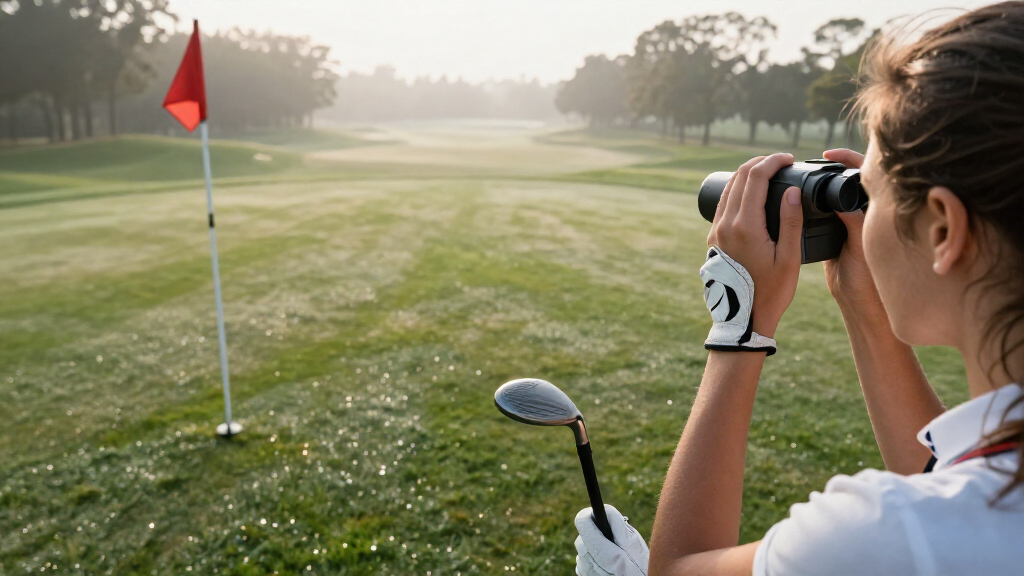
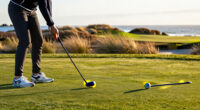
The Bushnell Golf Tour V6 Shift is my best overall golf rangefinder pick for golfers who want a trusted laser format with slope control, while the Callaway 300 Pro stands out for its external slope switch and the Bushnell Tour Hybrid for pairing laser and GPS information. The key tradeoffs are straightforward: tournament-friendly controls versus slope-adjusted practice reads, compact handling versus added features, and a dedicated laser versus a more versatile setup. The right choice depends on how you play and which functions you will actually use. Read on for my full comparison of all 15 options and guidance on choosing among them.

Get travel and outdoor gear delivered free with Prime
- Fast, free delivery on millions of items
- Prime Video, Amazon Music and more included
- Member-only deals all year
Complete the kit


Key Takeaways
- The Bushnell Tour V6 Shift is my overall pick because it combines a familiar laser rangefinder design with slope functionality that can be switched off for regulation play.
- The Callaway 300 Pro makes slope compliance easier to manage with an external switch, a useful distinction for golfers who move between practice rounds and competition.
- The Tour Hybrid serves a different need from a laser-only model by pairing laser targeting with GPS information, but golfers who want a simpler handheld tool may not need that extra layer.
- Several models advertise long maximum ranges, but distance claims alone do not settle the choice; golfers should prioritize reliable flag acquisition and clear controls over a number they rarely use.
- The lineup spans different levels of complexity: compact and straightforward options suit golfers who want quick yardages, while slope, triangulation, and hybrid functions make more sense for players who will actively use them.
| BirdiePulse Golf Rangefinder with Slope and Magnetic Mount |  | Best Rechargeable Pick | Measuring range: 5–1,300 yards | Magnification: 6.5× maximum | Flag-lock range: Up to 300 yards | VIEW LATEST PRICE | See Our Full Breakdown |
| Callaway 300 Pro Golf Laser Rangefinder with External Slope Switch |  | Best for Tournament Flexibility | Measuring range: 5–1,000 yards | Magnification: 6× | Accuracy: ±1 yard | VIEW LATEST PRICE | See Our Full Breakdown |
| Bushnell Golf Tour V6 Shift Laser Rangefinder |  | Best for Flag-Lock Confirmation | Stated range in product highlights: Up to 1,300 yards | Measuring range in specifications: Up to 400 yards | Magnification: 6× | VIEW LATEST PRICE | See Our Full Breakdown |
| Bushnell Golf Tour V6 Shift Laser Rangefinder with Slope Compensation |  | Best for All-Weather Cart Golf | Measuring range: 5–1,300 yards | Magnification: 6× | Water resistance: Waterproof | VIEW LATEST PRICE | See Our Full Breakdown |
| Blue Tees Golf Series 3 Max+ Rangefinder with Slope Switch |  | Best for Display Adaptability | Maximum range: 1,000 yards | Magnification: 6× in title and description; 7× maximum in specifications | Accuracy: ±1 yard | VIEW LATEST PRICE | See Our Full Breakdown |
| ACEGMET PFS5 Golf Rangefinder with Slope and Triangulation |  | Best for Practice and Shot Planning | Maximum range: 1,300 yards | Accuracy: ±1 yard | Magnification: 7× | VIEW LATEST PRICE | See Our Full Breakdown |
| REDTIGER Golf Rangefinder with Slope On/Off, 7x Magnification, 1200-Yard Range |  | Best for Mode Variety | Listed measurement range: 5–1,200 yards; product text also lists 5–1,000 yards | Accuracy: 0.5 yards | Magnification: 7× | VIEW LATEST PRICE | See Our Full Breakdown |
| Taknari Golf Rangefinder with Slope, Magnetic Mount, and 1200-Yard Range |  | Best for Straightforward Tournament Switching | Maximum range: 1,200 yards | Accuracy: ±0.5 yard | Magnification: 7× | VIEW LATEST PRICE | See Our Full Breakdown |
| Bushnell Golf Tour Hybrid Laser Rangefinder |  | Best Premium Hybrid Laser and GPS | Measuring range: 5–1,300 yards | Flag-range accuracy: Within 1 yard out to 500 yards | GPS courses: Over 38,000 preloaded courses | VIEW LATEST PRICE | See Our Full Breakdown |
| MOESAPU F-1000S Golf Rangefinder with Slope |  | Best for Lightweight, Rechargeable Use | Measurement range: 5–1,200 yards | Accuracy: ±0.7 yard | Measurement time: 0.5 seconds | VIEW LATEST PRICE | See Our Full Breakdown |
| Acer Golf Rangefinder with Slope, 800-Yard Range, 6x Magnification, Flagpole Lock, and USB-C Rechargeable Battery |  | Best for Multi-Sport Use | Maximum range: 800 yards | Accuracy: ±0.5 yard | Magnification: 6x | VIEW LATEST PRICE | See Our Full Breakdown |
| Bushnell Golf A1-Slope Laser Rangefinder |  | Best Compact Pick | Measuring range: 5–1,300 yards | Flag accuracy range: 1–350 yards | Magnification: 6× | VIEW LATEST PRICE | See Our Full Breakdown |
| Bushnell Golf Tour V7 Shift Laser Rangefinder |  | Best for Yardage Readability | Measuring range: 1,300 yards | Magnification: 6× | Display: Dual-color OLED | VIEW LATEST PRICE | See Our Full Breakdown |
| REVASRI Golf Rangefinder with Slope, Pin Lock Vibration, and 1000-Yard Range |  | Best Lightweight Rechargeable Value | Measuring range: 5–1,000 yards | Accuracy: ±1 yard | Magnification: 6.5× | VIEW LATEST PRICE | See Our Full Breakdown |
| Bushnell Golf Tour V6 Shift Laser Rangefinder with Slope Compensation |  | Best for Cart-Based Play | Measuring range: 5–1,300 yards | Magnification: 6× | Slope feature: Slope compensation with external on/off switch | VIEW LATEST PRICE | See Our Full Breakdown |
| golf rangefinder | Magnification | Water resistance | Weight | Battery |
|---|---|---|---|---|
| BirdiePulse Golf Rangefinder w | 6.5× maximum | Waterproof | — | — |
| Callaway 300 Pro Golf Laser Ra | 6× | IPX4 | 8 ounces | Lithium |
| Bushnell Golf Tour V6 Shift La | 6× | IPX6 | 8.5 ounces | CR2 lithium |
| Bushnell Golf Tour V6 Shift La | 6× | Waterproof | 1.2 pounds | Lithium-ion; included battery details vary by product section |
| Blue Tees Golf Series 3 Max+ R | 6× in title and description; 7× maximum in specifications | Water resistant | 16 ounces | Rechargeable lithium |
| ACEGMET PFS5 Golf Rangefinder | 7× | — | — | 450 mAh USB-C rechargeable; CR2 backup |
| REDTIGER Golf Rangefinder with | 7× | Listed as both IP54 and IPX4 | 6.4 ounces | — |
| Taknari Golf Rangefinder with | 7× | IP54 | — | — |
| Bushnell Golf Tour Hybrid Lase | — | Waterproof | 1.2 pounds | Lithium-ion |
| MOESAPU F-1000S Golf Rangefind | 7× | IP54 | 0.27 pounds | — |
| Acer Golf Rangefinder with Slo | 6x | — | 11.2 ounces | Rechargeable lithium-ion; USB-C |
| Bushnell Golf A1-Slope Laser R | 6× | Waterproof | 5.1 ounces | Rechargeable lithium-ion; rated for 50+ rounds |
| Bushnell Golf Tour V7 Shift La | 6× | Waterproof | 1.2 pounds | CR2 lithium |
| REVASRI Golf Rangefinder with | 6.5× | IP54 | 4.3 ounces | Rechargeable lithium-ion; USB-C charging |
| Bushnell Golf Tour V6 Shift La | 6× | Waterproof; IPX6 | 16 ounces | CR2 lithium |
More Details on Our Top Picks
BirdiePulse Golf Rangefinder with Slope and Magnetic Mount
The BirdiePulse stands out for golfers who want USB-C charging and a broad feature set without relying on a replaceable battery. Its stated range reaches 1,300 yards, while flag-lock vibration up to 300 yards helps confirm a target on the green. Slope and straight-line modes, plus yard, meter, and feet readings, make it adaptable for practice or different measurement preferences. Compared with the Callaway 300 Pro, it adds rechargeable power and more unit options, but the Callaway provides a stated ±1-yard accuracy figure. The BirdiePulse also uses a plastic body, so it is a less compelling fit for golfers prioritizing a more rugged feel. Its magnetic mount is handy on a cart, though golfers who walk may get less benefit from it.
Pros:- USB-C rechargeable design avoids routine battery replacement.
- Slope and straight-line modes support both practice and non-slope readings.
- Flag-lock vibration provides confirmation when targeting a flag within 300 yards.
- Built-in magnet keeps it accessible on a golf cart.
Cons:- Flag-lock range is limited to 300 yards.
- Plastic construction may feel less robust than buyers seeking a more durable body expect.
Best for: Golfers who want USB-C rechargeable power, slope and straight-line modes, and convenient cart storage.
Not ideal for: Players who prioritize a published accuracy specification or a more rugged-feeling construction; the BirdiePulse lists plastic material and no accuracy figure.
- Measuring range:5–1,300 yards
- Magnification:6.5× maximum
- Flag-lock range:Up to 300 yards
- Modes:Slope and straight-line (LOS)
- Measurement units:Yards, meters, and feet
- Charging:USB Type-C rechargeable
- Water resistance:Waterproof
- Dimensions:1.61 × 2.83 × 4.17 in
- Warranty:1 year
Our verdict“Choose the BirdiePulse if rechargeable convenience and flexible measurement modes matter more to you than a published accuracy figure.”
Callaway 300 Pro Golf Laser Rangefinder with External Slope Switch
The Callaway 300 Pro is a straightforward choice for golfers who want ±1-yard stated accuracy and a visible way to disable slope. Its external switch makes the change easy to check before tournament play, while pin-lock vibration confirms a reading without relying on the display alone. Compared with the rechargeable BirdiePulse, the Callaway uses a lithium battery and offers 6× magnification rather than 6.5×, but it does provide a defined accuracy figure. Its 1,000-yard range is shorter on paper than the 1,300-yard claims for both listed Bushnell Tour V6 Shift versions. That gap is unlikely to matter for ordinary golf shots, though this model is less appealing if maximum range or waterproofing is a priority: its rating is IPX4. The magnetic mount adds useful cart access.
Pros:- Stated ±1-yard accuracy offers a clear precision specification.
- External slope switch makes it easy to disable slope for tournament play.
- Pin-locking vibration confirms a targeted flag reading.
- Integrated magnetic cart mount keeps the unit within reach.
Cons:- IPX4 water resistance is more limited than the IPX6 rating listed for the Bushnell Tour V6 Shift.
- Its 1,000-yard stated range is shorter than the 1,300-yard claims on the Bushnell V6 Shift listings.
- Uses a lithium battery rather than USB-C rechargeable power.
Best for: Golfers who play events where slope must be disabled and want an external switch plus a stated accuracy figure.
Not ideal for: Players who want USB-C charging, waterproof protection, or the longest stated range in this group.
- Measuring range:5–1,000 yards
- Magnification:6×
- Accuracy:±1 yard
- Pin-locking range:Up to 300 yards
- Weight:8 ounces
- Dimensions:4 × 2.7 × 1.4 in
- Water resistance:IPX4
- Battery:Lithium
Our verdict“Pick the Callaway 300 Pro if tournament-ready slope control and a stated accuracy figure matter more than rechargeable power or maximum range.”
Bushnell Golf Tour V6 Shift Laser Rangefinder
The Tour V6 Shift earns a distinct place for golfers who want both vibration and visual flag-lock confirmation, along with slope that can be switched off for tournament rounds. Its listed IPX6 rating gives it a stronger stated water-resistance level than the Callaway 300 Pro, which is rated IPX4. The comparison is complicated by conflicting range details: product highlights claim up to 1,300 yards, while the specifications list up to 400 yards. I would treat that mismatch as a meaningful purchasing risk rather than assume the longer figure applies. The magnetic mount is practical for cart users, and the included CR2 battery means no charging cable is needed, though it does require battery replacement over time. Compared with the newer-looking Tour V6 Shift listing in this batch, the central advantage here is not a clearly verified range but its confirmation and weather-resistance features.
Pros:- Flag lock uses both vibration and visual confirmation.
- Slope mode can be switched off for tournament play.
- IPX6 rating is stronger than the Callaway 300 Pro’s listed IPX4 rating.
- Magnetic mount makes storage on a golf cart convenient.
Cons:- Range information conflicts: highlights state up to 1,300 yards, while specifications list up to 400 yards.
- CR2 battery requires replacement rather than USB-C recharging.
- At 8.5 ounces, it is heavier than the listed 8-ounce Callaway 300 Pro.
Best for: Cart golfers who value visual and vibration flag-lock cues and want a listed IPX6 water-resistance rating.
Not ideal for: Buyers who need an unambiguous range specification or prefer rechargeable power; the listed range conflicts between product details.
- Stated range in product highlights:Up to 1,300 yards
- Measuring range in specifications:Up to 400 yards
- Magnification:6×
- Water resistance:IPX6
- Weight:8.5 ounces
- Battery:CR2 lithium
- Slope control:Slope can be switched off
- Warranty:2 years
Our verdict“Choose this Tour V6 Shift for its dual flag-lock cues and IPX6 rating only if you are comfortable resolving the conflicting range claims before buying.”
Bushnell Golf Tour V6 Shift Laser Rangefinder with Slope Compensation
This Tour V6 Shift listing is the clearer Bushnell choice for golfers who want a 5–1,300-yard stated range paired with waterproof construction. Its slope compensation can be turned off for tournament play, and Pinseeker vibration plus a visual ring gives more than one cue when the device locks onto the flag. Compared with the other Tour V6 Shift in this batch, its range information is consistent within the supplied description and specifications; that model lists conflicting 1,300- and 400-yard figures. The tradeoff is weight: the listed 1.2 pounds is far above the 8.5-ounce figure for the other V6 Shift, so walking golfers may prefer a lighter option such as the Callaway 300 Pro. Battery details also vary between product sections, which makes the exact included battery worth checking.
Pros:- Waterproof design suits rounds in wet conditions.
- Stated range of 5–1,300 yards is clear in the supplied specifications.
- Pinseeker uses vibration and a visual ring to confirm flag lock.
- Slope compensation can be disabled for tournament play.
Cons:- Listed weight of 1.2 pounds is substantially heavier than the Callaway 300 Pro’s 8-ounce listing.
- Included battery details differ between product sections.
- Plastic construction may not appeal to buyers looking for a more premium-feeling body.
Best for: Cart golfers who want waterproof protection, a stated 1,300-yard range, and flag-lock feedback they can see and feel.
Not ideal for: Walkers seeking a lightweight rangefinder or buyers who need certainty about the included battery; the listed weight is 1.2 pounds and battery details vary.
- Measuring range:5–1,300 yards
- Magnification:6×
- Water resistance:Waterproof
- Weight:1.2 pounds
- Dimensions:4.5 × 1.6 × 3.1 in
- Battery:Lithium-ion; included battery details vary by product section
- Slope control:Slope compensation can be switched off
- Warranty:2-year manufacturer warranty
Our verdict“Choose this V6 Shift if you mainly ride in a cart and want waterproofing and a clear 1,300-yard specification, rather than a lightweight walking setup.”
Blue Tees Golf Series 3 Max+ Rangefinder with Slope Switch
The Blue Tees Series 3 Max+ suits golfers who value a display that adjusts contrast for changing light, especially when a dim screen makes quick readings harder. It pairs that feature with slope adjustment that can be switched off, vibration flag lock, a magnetic strip, and USB-C charging. Compared with the BirdiePulse, its stated maximum range is shorter at 1,000 yards, but the included weather-proof case and two-year warranty make it a more complete package on paper. There is a specification inconsistency to weigh: the title and description say 6× magnification, while the specifications list a 7× maximum. At 16 ounces, it is also notably heavier than the Callaway 300 Pro at 8 ounces, so it is less attractive for golfers who carry their gear around the course.
Pros:- Display contrast adjusts for different lighting conditions.
- USB-C rechargeable lithium battery avoids routine battery replacement.
- Slope adjustment can be switched off for tournament play.
- Vibration flag lock and magnetic storage support quick use from a cart.
Cons:- Magnification is inconsistent across the supplied details: 6× in the title and description, 7× maximum in specifications.
- At 16 ounces, it is twice the listed weight of the Callaway 300 Pro.
- Its 1,000-yard maximum range is shorter than the BirdiePulse’s stated 1,300 yards.
Best for: Golfers who want USB-C charging, adaptable display contrast, and a slope switch for both practice and tournament rounds.
Not ideal for: Walkers prioritizing low weight or buyers who need a confirmed magnification figure; this model is listed at 16 ounces and its magnification details conflict.
- Maximum range:1,000 yards
- Magnification:6× in title and description; 7× maximum in specifications
- Accuracy:±1 yard
- Battery:Rechargeable lithium
- Charging port:USB-C
- Water resistance:Water resistant
- Weight:16 ounces
- Warranty:2 years
Our verdict“Pick the Series 3 Max+ if adaptable display contrast and USB-C charging matter more to you than low weight or a consistent magnification specification.”
ACEGMET PFS5 Golf Rangefinder with Slope and Triangulation
The PFS5 stands out for Triangulation Coach Mode, which measures between two points rather than only giving a direct line to the flag. That can help golfers work through layup distances and practice course-management decisions—something the REDTIGER C001’s listed modes do not specifically provide. Its slope and environmental adjustments, vibration, and red flash also give several cues for interpreting and confirming a reading. The tradeoff is a 450-yard flag-lock range, shorter than the Bushnell Tour Hybrid’s stated 500-yard flag range, even though the PFS5’s overall maximum reaches 1,300 yards. Its rechargeable battery has a CR2 backup option, but that means managing a second battery type if you want backup power. I’d choose it for its practice-oriented tools, not for the longest stated pin-lock distance.
Pros:- Triangulation Coach Mode measures between two points for practice and course planning.
- Slope and environmental adjustments add context to distance readings.
- Vibration and red flash provide confirmation when the flag locks.
- USB-C rechargeable battery includes a CR2 backup option.
Cons:- Flag-lock range is specified only up to 450 yards, shorter than the Bushnell Tour Hybrid’s stated 500 yards.
- The CR2 backup is a separate battery option to keep track of.
- A 1,300-yard maximum range does not mean the flag-lock function works at that distance.
Best for: Golfers who want to practice layups and compare distances between course landmarks as well as measure flags.
Not ideal for: Players who prioritize long-range flag locking or want a single battery system with no separate backup battery to manage.
- Maximum range:1,300 yards
- Accuracy:±1 yard
- Magnification:7×
- Flag-lock range:Up to 450 yards
- Flag-lock speed:0.1 seconds
- Battery:450 mAh USB-C rechargeable; CR2 backup
- Dimensions:2.75 × 4.19 × 1.5 inches
- Warranty:24 months
Our verdict“Choose the PFS5 if triangulation and practice features matter more to you than the longest specified flag-lock range.”
REDTIGER Golf Rangefinder with Slope On/Off, 7x Magnification, 1200-Yard Range
The REDTIGER C001 makes the most sense for golfers who want several measurement options in one device: flag locking, slope, horizontal and height ranging, speed measurement, and continuous scan. Its slope on/off switch is useful for players who want to disable slope for tournament rounds, while the magnetic mount and belt clip offer flexible carrying choices. Compared with the MOESAPU F-1000S, which also lists speed and continuous scan, the REDTIGER adds horizontal and height ranging; the MOESAPU, by contrast, specifies a fog mode. I’d be cautious about relying on the C001’s stated maximum range because its product text conflicts between 1,200 yards and 5–1,000 yards. The water-resistance information also conflicts, listing both IP54 and IPX4, so its protection level is less clear than Taknari’s stated IP54.
Pros:- Offers flag locking, slope, horizontal and height ranging, speed, and continuous scan.
- Physical slope switch supports tournament play when slope readings are not allowed.
- USB-C charging and a magnetic belt clip provide convenient carrying and charging.
- Lightweight at 6.4 ounces.
Cons:- Product information conflicts on maximum range, listing both 1,200 yards and 5–1,000 yards.
- Water resistance is listed as both IP54 and IPX4.
- Plastic construction may be less appealing to buyers seeking a more robust-feeling body.
Best for: Golfers who want multiple measurement modes, a physical slope switch, and both a belt clip and magnetic carrying option.
Not ideal for: Buyers who need consistent published range and water-resistance specifications before choosing a device.
- Listed measurement range:5–1,200 yards; product text also lists 5–1,000 yards
- Accuracy:0.5 yards
- Magnification:7×
- Measurement modes:Slope, flag locking, horizontal and height ranging, speed, continuous scan
- Display:Transflective LCD
- Water resistance:Listed as both IP54 and IPX4
- Weight:6.4 ounces
- Charging:USB-C, 5V/2A
- Warranty:Two years
Our verdict“Pick the REDTIGER if mode variety and flexible carrying matter most, but skip it if conflicting specifications are a deal-breaker.”
Taknari Golf Rangefinder with Slope, Magnetic Mount, and 1200-Yard Range
Taknari offers a straightforward set of golf-focused essentials: 7× magnification, pin-lock vibration, scan mode, and a physical slope switch. That switch makes it easy to turn slope off for tournament rounds, a feature it shares with the REDTIGER C001 and MOESAPU F-1000S. Taknari’s stated ±0.5-yard accuracy is tighter than the MOESAPU’s ±0.7-yard figure, while its listed battery capacity—up to 30,000 measurements per charge—gives buyers a useful endurance estimate. The tradeoff is a one-year warranty, shorter than the two years listed for the REDTIGER and ACEGMET. Its IP54 rating covers dust and light rain, not full waterproofing, so I would not treat it as an all-weather device. It suits golfers who want clear controls and core features without the ACEGMET’s extra triangulation mode.
Pros:- Physical slope switch allows slope compensation to be disabled for tournament play.
- Pin lock uses vibration to confirm a target.
- USB-C charging and a magnetic mount support convenient on-course use.
- Lists up to 30,000 measurements per charge.
Cons:- IP54 protection is not full waterproofing.
- One-year warranty is shorter than the two-year coverage listed for the REDTIGER and ACEGMET.
- Does not list the ACEGMET PFS5’s triangulation feature.
Best for: Golfers seeking a simple rangefinder with a physical tournament slope switch, vibration pin lock, and a stated measurement count per charge.
Not ideal for: Players who need full waterproofing, a longer warranty, or advanced practice tools such as triangulation.
- Maximum range:1,200 yards
- Accuracy:±0.5 yard
- Magnification:7×
- Objective lens:25 mm
- Slope mode:On/off switch
- Water resistance:IP54
- Battery capacity:Up to 30,000 measurements per charge
- Charging:USB-C rechargeable
- Warranty:1 year
Our verdict“Choose Taknari for a simple, tournament-switchable setup, provided light-rain protection and a one-year warranty fit your needs.”
Bushnell Golf Tour Hybrid Laser Rangefinder
The Tour Hybrid is the distinct choice here for golfers who want laser readings and GPS yardages in the same unit. The laser targets the pin, while GPS supplies front, center, and back distances across more than 38,000 preloaded courses without membership fees. That gives it a broader view of the hole than the laser-only ACEGMET PFS5, whose standout extra is triangulation rather than course mapping. Slope compensation applies to both laser and GPS, and Visual JOLT signals a flag lock; slope can be disabled for tournament play. The tradeoffs are its 1.2-pound listed weight and the limit that flag-range accuracy is specified within one yard only out to 500 yards. It also requires course GPS data, so golfers who prefer a compact, laser-only device may find its hybrid approach unnecessary.
Pros:- Combines laser pin readings with GPS front, center, and back yardages.
- Preloaded data covers over 38,000 courses without membership fees.
- Slope compensation covers both laser and GPS readings and can be disabled.
- Visual JOLT confirms flag lock, and the unit has a magnetic cart mount.
Cons:- At a listed 1.2 pounds, it is heavier than the 6.4-ounce REDTIGER C001.
- Flag-range accuracy is specified within one yard only out to 500 yards.
- Hybrid laser and GPS functions may be more than golfers who only want direct pin distances need.
Best for: Golfers who want laser pin distances plus GPS front, center, and back yardages without a course-membership fee.
Not ideal for: Players seeking a lightweight, simple laser-only rangefinder or those who do not want to rely on GPS course information.
- Measuring range:5–1,300 yards
- Flag-range accuracy:Within 1 yard out to 500 yards
- GPS courses:Over 38,000 preloaded courses
- Slope compensation:Laser and GPS; can be disabled
- Water resistance:Waterproof
- Weight:1.2 pounds
- Dimensions:4.5 × 1.61 × 3.07 inches
- Battery:Lithium-ion
- Warranty:2 years
Our verdict“Choose the Tour Hybrid if you want GPS hole context alongside laser pin readings; choose a simpler laser model if you value lower weight and fewer functions.”
MOESAPU F-1000S Golf Rangefinder with Slope
The MOESAPU F-1000S keeps its appeal focused on everyday convenience: it weighs 0.27 pounds, charges over USB-C, and offers flag lock with vibration, continuous scanning, and a tournament slope switch. Its 5–1,200-yard range and ±0.7-yard accuracy are suitable for a broad set of golf distances, while fog mode adds an option not listed for Taknari. Compared with the Taknari, the MOESAPU has a slightly wider stated accuracy tolerance, but it lists more modes, including speed and fog. The ACEGMET PFS5 goes further for practice with triangulation, while the MOESAPU’s listed strengths stay closer to routine on-course use. The provided information does not specify battery capacity or measurements per charge, so golfers who need a clear endurance figure may prefer Taknari’s stated 30,000-measurement capacity.
Pros:- Lightweight at 0.27 pounds for easy carrying during a round.
- Slope compensation can be switched off for tournament use.
- Flag lock provides vibration confirmation.
- USB-C charging and modes for speed, continuous scan, and fog are listed.
Cons:- Battery capacity and measurements per charge are not specified.
- Its ±0.7-yard accuracy is less precise on paper than Taknari’s stated ±0.5-yard figure.
- Does not list the ACEGMET PFS5’s triangulation practice mode.
Best for: Golfers who want a light, USB-C rechargeable rangefinder with slope switching, vibration flag lock, and several scan modes.
Not ideal for: Buyers who need a stated battery-life figure or want specialized practice functions such as the ACEGMET PFS5’s triangulation mode.
- Measurement range:5–1,200 yards
- Accuracy:±0.7 yard
- Measurement time:0.5 seconds
- Magnification:7×
- Weight:0.27 pounds
- Water resistance:IP54
- Charging:USB-C rechargeable
- Modes:Flag lock with vibration, slope, distance, speed, continuous scan, fog mode
Our verdict“Choose the MOESAPU if low weight and everyday rangefinder modes matter more than a published battery-life figure or specialized practice tools.”
Acer Golf Rangefinder with Slope, 800-Yard Range, 6x Magnification, Flagpole Lock, and USB-C Rechargeable Battery
The Acer pairs golf-ready flag locking with modes for angle, speed, scanning, and vertical or horizontal distance, making it a more versatile pick than the golf-focused Bushnell A1-Slope. Its 800-yard maximum range is shorter than the Bushnell models’ 1,300-yard claim, but that gap matters less for most golfers seeking readings around the course than the broader set of outdoor functions may matter to someone who also hunts or measures other targets. A vibration confirms flag lock, while the USB-C rechargeable battery avoids replacing disposable cells. The tradeoff is a heavier 11.2-ounce body than the compact Bushnell A1-Slope and REVASRI, and the supplied specs do not list water resistance. I’d choose it for its mix of functions, not for the longest range or lightest carry.
Pros:- Six measurement modes cover golf and several other outdoor uses
- Vibration feedback confirms flagpole lock
- USB-C rechargeable lithium-ion battery
- Stated accuracy of ±0.5 yard
Cons:- 800-yard maximum is shorter than the 1,300-yard claims of the Bushnell A1-Slope and Tour V7 Shift
- At 11.2 ounces, it weighs more than compact options such as the REVASRI
- Product data does not specify water resistance
Best for: Golfers who also want angle, speed, and scanning modes for other outdoor activities and prefer USB-C charging
Not ideal for: Players who prioritize a lightweight, weather-resistant golf-only rangefinder or need a stated range beyond 800 yards
- Maximum range:800 yards
- Accuracy:±0.5 yard
- Magnification:6x
- Modes:Slope compensation, vertical/horizontal distance, angle, speed, and scanning
- Flagpole lock:Vibration alert
- Battery:Rechargeable lithium-ion; USB-C
- Weight:11.2 ounces
- Dimensions:4.2 × 2.5 × 1.5 inches
Our verdict“Choose the Acer if you want a rechargeable rangefinder with useful non-golf modes and can accept its shorter range and heavier build.”
Bushnell Golf A1-Slope Laser Rangefinder
At 5.1 ounces and 3.75 inches long, the A1-Slope is the clearest choice here for golfers who want a rangefinder that takes up little space in a pocket or bag. It still offers slope-adjusted distances, PinSeeker with JOLT vibration, and an on/off switch for tournament play. Compared with the heavier Bushnell Tour V6 Shift, the A1-Slope gives up the V6’s specified flashing visual confirmation and magnetic cart mount in favor of a smaller, lighter form. Its listed range reaches 1,300 yards, though flag accuracy is specified only from 1 to 350 yards—a distinction worth noting when comparing headline range claims. The rechargeable battery is rated for 50-plus rounds, but it needs periodic charging, and slope must be disabled for tournament-legal use.
Pros:- Light 5.1-ounce build is easy to carry during a walking round
- Slope technology can be switched off for tournament play
- PinSeeker with JOLT provides vibration confirmation
- Rechargeable battery is rated for 50-plus rounds
Cons:- Rechargeable battery requires periodic charging
- Flag accuracy range is listed as 1–350 yards despite a 1,300-yard measuring range
- Slope mode must be off for tournament-legal play
Best for: Walkers and golfers who want a lightweight, compact laser with slope mode and a clear tournament switch
Not ideal for: Players who want a magnetic cart mount, disposable batteries, or the Tour V6 Shift’s specified visual flag-lock signal
- Measuring range:5–1,300 yards
- Flag accuracy range:1–350 yards
- Magnification:6×
- Slope technology:On/off
- Flag-lock feature:PinSeeker with JOLT
- Battery:Rechargeable lithium-ion; rated for 50+ rounds
- Water resistance:Waterproof
- Weight:5.1 ounces
- Dimensions:3.75 × 1.42 × 2.36 inches
Our verdict“Pick the A1-Slope if low weight and compact carry matter more than a magnetic mount or the Tour V6 Shift’s visual lock signal.”
Bushnell Golf Tour V7 Shift Laser Rangefinder
The Tour V7 Shift earns its place for golfers who want to distinguish slope-adjusted yardage from actual distance at a glance: its dual-color OLED shows the adjusted number in green and actual distance in red. That presentation gives it a different advantage from the Bushnell Tour V6 Shift, whose listed features emphasize a flashing red ring and vibration for flag lock. The V7 also adds yardage recall, useful when a player wants to check the last reading again, and LINK-enabled club suggestions for golfers with compatible Bushnell or Foresight launch monitors. Those suggestions are not a standalone feature, so buyers without compatible equipment should not count on them. It claims a 1,300-yard measuring range and is waterproof, but its listed 1.2-pound weight is much higher than the A1-Slope’s 5.1 ounces, and it uses a CR2 battery.
Pros:- Dual-color OLED separates slope-adjusted and actual yardage
- Yardage Range Recall brings back the last measured distance
- PinSeeker with Visual JOLT signals flag lock
- Waterproof body and included CR2 battery
Cons:- LINK club suggestions require compatible Bushnell or Foresight launch monitors
- Listed weight of 1.2 pounds is far heavier than the A1-Slope
- Uses a CR2 battery rather than a rechargeable battery
Best for: Golfers who value clearly separated slope and actual-distance readings and already use compatible LINK equipment
Not ideal for: Walkers seeking the lightest carry or golfers who want club suggestions without compatible Bushnell or Foresight launch monitors
- Measuring range:1,300 yards
- Magnification:6×
- Display:Dual-color OLED
- Slope and distance features:Slope-adjusted yardage and Yardage Range Recall
- Flag-lock feature:PinSeeker with Visual JOLT
- Connectivity feature:LINK-enabled club suggestions; compatible Bushnell or Foresight equipment required
- Water resistance:Waterproof
- Battery:CR2 lithium
- Weight:1.2 pounds
Our verdict“Choose the Tour V7 Shift if easy-to-read dual-color yardages and recall matter more to you than a lightweight build or rechargeable power.”
REVASRI Golf Rangefinder with Slope, Pin Lock Vibration, and 1000-Yard Range
The REVASRI combines a 4.3-ounce body with USB-C charging, slope compensation, and vibration feedback, making it a practical lightweight alternative to the heavier Acer. Its 6.5× magnification is higher than the 6× listed for the Acer and Bushnell A1-Slope, while its 1,000-yard range sits between the Acer’s 800 yards and the Bushnell A1-Slope’s 1,300. A slope-off mode supports tournament play, and the stated half-second measurement time points to quick readings. The main compromise is weather protection: its IP54 rating offers limited resistance, unlike the waterproof Bushnell A1-Slope and Tour V7 Shift. The one-year warranty is also shorter than the Bushnell A1-Slope’s two-year coverage. I’d favor it for light carry and charging convenience, not wet-weather confidence.
Pros:- Lightweight 4.3-ounce design suits walking rounds
- USB-C rechargeable lithium-ion battery
- 6.5× magnification and stated 0.5-second measurement time
- Slope mode can be turned off for tournament play
Cons:- IP54 water resistance is limited compared with waterproof Bushnell models
- 1,000-yard range is shorter than the 1,300-yard Bushnell A1-Slope claim
- One-year warranty is shorter than the A1-Slope’s listed two-year warranty
Best for: Walking golfers who want a lightweight, USB-C rechargeable rangefinder with slope and flag-lock vibration
Not ideal for: Golfers who regularly play in wet conditions or want the longer stated range and waterproof rating of the Bushnell A1-Slope
- Measuring range:5–1,000 yards
- Accuracy:±1 yard
- Magnification:6.5×
- Measurement time:0.5 seconds
- Slope feature:Slope compensation with slope-off mode
- Battery:Rechargeable lithium-ion; USB-C charging
- Water resistance:IP54
- Weight:4.3 ounces
- Warranty:1 year
Our verdict“Choose the REVASRI for lightweight carry and USB-C charging, but pick a waterproof Bushnell if weather protection is a higher priority.”
Bushnell Golf Tour V6 Shift Laser Rangefinder with Slope Compensation
The Tour V6 Shift is a strong fit for golfers who keep their rangefinder on a cart: its magnetic mount makes it easy to place within reach, and its waterproof, IPX6-rated build is suited to rounds in unsettled weather. Slope readings can be disabled with the external slope switch for tournament play, while a flashing red ring and vibration give two forms of flag-lock confirmation. Compared with the compact Bushnell A1-Slope, the V6 Shift is substantially heavier at 16 ounces, so it makes less sense for players who carry their bag. Its CR2 battery also means replacing cells rather than recharging by USB-C, unlike the REVASRI. The 1,300-yard maximum and 6× magnification match the Tour V7 Shift’s headline range and magnification, but this model’s listed features center on cart convenience and weather protection rather than a dual-color display or yardage recall.
Pros:- Magnetic cart mount keeps the unit accessible during play
- IPX6 waterproof rating suits wet-weather rounds
- External switch disables slope for tournament play
- Flashing red ring and vibration confirm flag lock
Cons:- At 16 ounces, it is much heavier than the Bushnell A1-Slope and REVASRI
- CR2 battery must be replaced rather than USB-C recharged
- Slope mode must be turned off for tournament-legal play
Best for: Cart riders who want a magnetic mount, waterproof protection, and clear flag-lock confirmation
Not ideal for: Walking golfers who want a light rangefinder or players who prefer USB-C rechargeable power
- Measuring range:5–1,300 yards
- Magnification:6×
- Slope feature:Slope compensation with external on/off switch
- Flag-lock confirmation:Flashing red ring and vibration
- Water resistance:Waterproof; IPX6
- Battery:CR2 lithium
- Weight:16 ounces
- Dimensions:6 × 5 × 4.5 inches
- Warranty:2 years
Our verdict“Pick the Tour V6 Shift if you ride and want cart-ready magnetic access with waterproof protection; choose the A1-Slope for easier walking carry.”
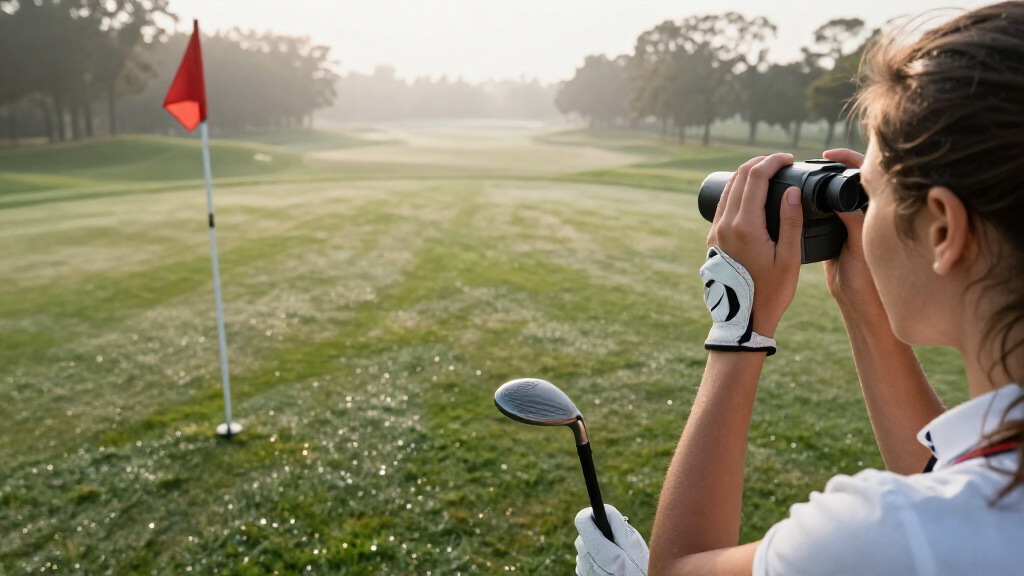
How We Picked
I compared these golf rangefinders through the needs that most affect a round: target acquisition, slope controls, ease of use, carrying convenience, power approach, and versatility. I gave extra weight to features that can change a buying decision, such as an accessible slope switch, vibration or other target-lock assistance, magnetic mounting, and GPS information. A long stated range was treated as one part of the picture, not a substitute for practical flag targeting. I also considered whether a feature adds useful flexibility or simply makes the device more complicated.
The ranking favors models with a clear role and a balance of useful functions, straightforward operation, and golf-specific design. The Tour V6 Shift leads as a well-rounded laser choice; the Callaway 300 Pro places strongly for its external slope control, while the Tour Hybrid earns attention for golfers seeking laser and GPS in one setup. Models with added features or long-range claims can suit particular preferences, but they rank lower when those benefits may be less relevant to a typical golfer. Where models share a name or appear in closely related variants, I treat their stated differences cautiously rather than assuming they perform differently.
Factors to Consider When Choosing Golf Rangefinders
Before choosing among golf rangefinders, decide what problem you want the device to solve. The considerations below focus on buying choices that are easy to miss when comparing feature lists, from competition rules to how a rangefinder fits into your normal routine.
Match Slope Features to Where You Play
Slope-adjusted distances can help with uphill and downhill shots, but they may not be permitted during some competitions. A switchable slope mode is useful only if you can tell at a glance which setting is active and change it without fumbling. Think about whether you play mostly casual rounds, organized events, or both before paying extra for slope functions. If you compete, check the rules that apply to your event rather than assuming every round follows the same equipment policy. A model with an obvious external control can reduce uncertainty, while a hidden menu may slow down a player who changes settings often. Keep the adjusted reading as advice, not a replacement for course knowledge and club selection.
Prioritize Flag Acquisition Over Maximum Range
Advertised maximum range is often measured on a large, reflective target, not a narrow flag against trees or background clutter. For golf, the practical question is how easily you can isolate the pin from hazards behind it. Pin-lock vibration and related targeting aids can help confirm that the device has found the flag, especially for newer users or shaky hands. Magnification can make aiming easier, but higher magnification may also make it harder to keep the target in view. If possible, compare how the viewfinder, focus controls, and target confirmation work together. Do not choose on a large yardage figure alone if most of your shots are well within a shorter range.
Choose a Power Setup You Will Maintain
Battery convenience matters most when a rangefinder is part of your regular golf bag rather than an occasional backup. Rechargeable models can reduce the need to keep spare batteries, but they also need charging before a round and a suitable cable. Replaceable batteries are easy to swap if you carry a spare, though you will need to track battery condition. Consider how long your typical playing stretch is and whether you remember to charge other equipment. A low-battery indicator and accessible charging port may matter more than the battery type by itself. Avoid storing a device for months without checking its charge or battery status before a trip.
Decide Whether Magnetic Mounting Fits Your Cart Routine
A magnetic mount can keep a rangefinder close at hand on a compatible cart, reducing the chance it gets buried in a pocket or golf bag. It is less useful if you usually walk, use a cart without a suitable metal surface, or prefer carrying the device in a case. Check where the magnet attaches and whether the position feels secure for your setup; a feature name alone does not tell you how it will fit your cart. Walkers may get more value from a compact body, a wrist or bag-access routine, and a protective case. Do not leave an expensive optical device exposed if your cart setup makes it easy to bump or drop. Pick the carrying method that matches how you actually move between shots.
Add GPS Only If You Want Course Context
A laser gives a direct distance to the target you aim at, while GPS can supply broader course information such as distances to mapped points. Combining them can be useful if you want both pin targeting and a view of the hole, but it introduces another feature set to learn and keep ready. Golfers who already use a GPS watch or phone app may find a hybrid device redundant. Players who prefer one handheld unit may value having both methods together. Check how GPS information is supplied and whether setup or course data updates fit your habits. Buy the extra capability for a real gap in your routine, not simply because more functions appear to offer more value.
Choose Complexity You Will Use
Features such as triangulation, multiple targeting modes, and extra measurement settings can help specific golfers, but they can also add buttons and decisions during play. Beginners often benefit more from a clear display, simple aiming, and dependable target confirmation than from a long menu of modes. Experienced players may welcome added controls if they use them for particular shots or practice. Before choosing, ask which features you expect to use every round and which would stay untouched. A simpler device can be a better fit if speed and ease of use matter most. More capability makes sense when it solves a recurring problem rather than adding complexity for its own sake.
Frequently Asked Questions
Can I use slope-adjusted yardages in a tournament?
That depends on the rules governing your event and whether the slope function is disabled in a permitted way. A switchable slope mode can make a rangefinder more adaptable, but the control must be clear and used according to the event rules. Check the competition’s local rules before play instead of relying on assumptions about the device. If you regularly compete, practice switching modes before the round so the setting is not a distraction. A non-slope reading can still support club choice when you combine it with your course knowledge.
Is a rangefinder with a 1,200-yard stated range a better golf choice?
Not automatically. Maximum range usually describes performance against a favorable target, while a golf pin is smaller and may sit in front of visual clutter. For most golfers, fast and confident flag acquisition is more useful than being able to measure a distant object they rarely target. Look at magnification, aiming comfort, and target-lock feedback alongside the range claim. A shorter stated range can still be a sensible choice if it meets your normal course needs and is easy to operate.
Should I choose a laser rangefinder or a laser-and-GPS hybrid?
Choose a laser-only model if you mainly want a direct reading to the flag and prefer a focused device. A hybrid can add value if you also want course context from GPS and do not already rely on a watch or phone for that information. The tradeoff is extra setup and features that may not matter to every player. Think about whether you use mapped distances during a round or only aim at the target you want to measure. If GPS would duplicate equipment you already carry, a simpler laser may be the better fit.
Do beginners need pin-lock vibration or other target confirmation?
It can help, especially when a flag sits in front of trees or other background objects, because confirmation makes it easier to trust that the reading is for the pin. It does not replace steady aiming or good target selection, and some golfers may prefer a simpler device. Beginners should weigh this feature against clear controls and a viewfinder that is comfortable to use. If you often have trouble distinguishing the flag from objects behind it, target feedback is a practical aid. If you already acquire the pin quickly, it may be less valuable than compactness or a straightforward slope switch.
Is a magnetic mount worth prioritizing if I walk the course?
Usually, magnetic mounting matters more to golfers who ride in a cart with a compatible attachment point. Walkers may prefer a compact rangefinder that is easy to reach from a pocket or bag and secure between shots. A magnet does not help if there is nowhere convenient to attach it, and leaving the device on a cart can increase its exposure to bumps or drops. If you sometimes walk and sometimes ride, compare the mount with the carrying options you use on foot. Choose based on your usual routine rather than treating the magnet as a must-have feature.
Conclusion
For a balanced laser setup, my best overall recommendation is the Bushnell Golf Tour V6 Shift; golfers who want an easy-to-access slope control should look closely at the Callaway 300 Pro. The best premium-style fit for added versatility is the Bushnell Golf Tour Hybrid if you will use both laser and GPS information, while the REDTIGER, Taknari, and other feature-forward alternatives may appeal to shoppers who prioritize their stated range, magnification, or added targeting functions. For beginners, I would favor a model with straightforward controls and clear target confirmation over the longest feature list. If you mainly walk, put portability ahead of a magnetic mount; if you enter competitions, make slope control and rule compliance central to your choice. Pick the device that solves your most common on-course problem, not the one with the most specifications.
Fall Picks

DJI Osmo Action 4 Essential Combo Waterproof 4K Action Camera
As an affiliate, we earn on qualifying purchases.