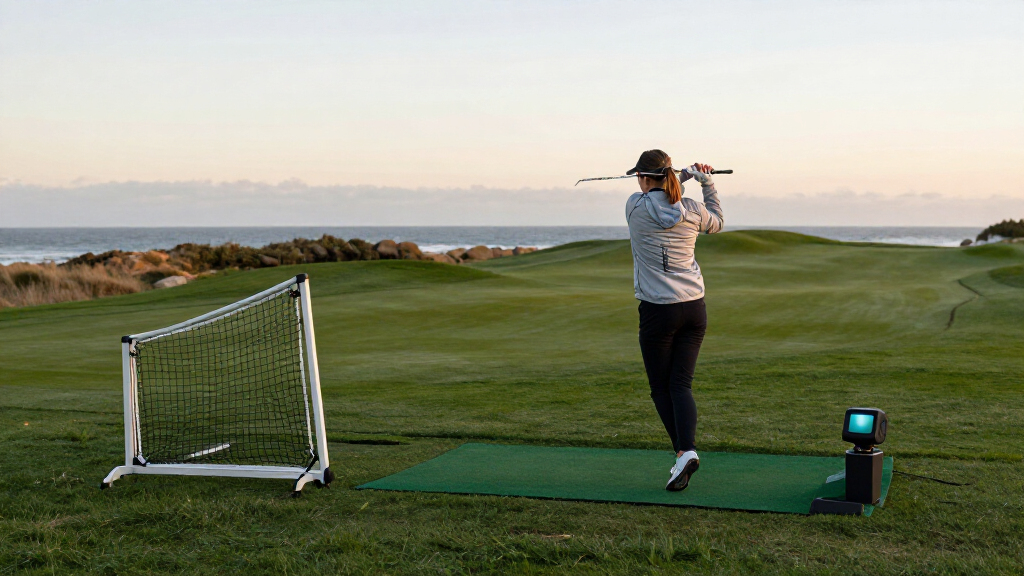

Portable golf launch monitors have become essential tools for golfers seeking precise swing and ball data anywhere on the course or range. The best models deliver accurate metrics, ease of use, and durability in a compact form. The Garmin Approach R10 stands out as the top pick for its combination of performance and portability, while the FlightScope Mevo Gen2 offers excellent value for serious practice. The GOLFBUDDY Shot Mate is ideal for casual players on a budget. As you explore options, consider how accuracy, ease of setup, and features align with your goals—tradeoffs often involve size, price, and data depth. Keep reading for a detailed breakdown of the best portable golf launch monitors of 2027.

Get travel and outdoor gear delivered free with Prime
- Fast, free delivery on millions of items
- Prime Video, Amazon Music and more included
- Member-only deals all year
Complete the kit


Key Takeaways
- The top models balance accuracy with portability, with radar-based systems generally providing more precise data.
- Ease of setup and use is a critical factor, especially for casual or less tech-savvy players.
- Price varies widely, with budget options offering basic data and premium units providing comprehensive metrics and simulators.
- Durability and battery life are often overlooked but vital for reliable outdoor use.
- Some monitors excel at indoor practice, while others are better suited for on-course use — choose based on your primary environment.
| Rapsodo MLM2PRO Mobile Launch Monitor Golf Simulator with 3 Pro V1 RPT Balls |  | Best for Simulator Practice | Tracking system: Dual cameras and Doppler radar | Performance metrics: 15 | Simulated courses: More than 30,000 | VIEW LATEST PRICE | See Our Full Breakdown |
| Blue Tees Golf Rainmaker Portable Golf Launch Monitor |  | Best for Standalone Training Modes | Tracking technology: Doppler radar | Ball and club metrics: More than 20 | Display: 4.3-inch wide-angle TFT | VIEW LATEST PRICE | See Our Full Breakdown |
| PRGR HS 130-A Portable Golf Launch Monitor |  | Best App-Free Pick | Measurements: Clubhead speed, ball speed, smash factor, carry distance, and total distance | Swing memory: Up to 500 swings | Battery: AAA | VIEW LATEST PRICE | See Our Full Breakdown |
| Shot Scope LM1 Launch Monitor |  | Best for Subscription-Free Session Tracking | Measurements: Club speed, ball speed, smash factor, carry distance, and total distance | App: Free Golf GPS app with unlimited session history | Battery runtime: Over 5 hours | VIEW LATEST PRICE | See Our Full Breakdown |
| Rapsodo Mobile Launch Monitor Golf Simulator for iPhone & iPad |  | Best for iPhone Video Feedback | Compatibility: iPhone and iPad | Shot data: Distance, ball speed, club speed, launch angle, and shot shape | Video features: Video replay and shot tracer | VIEW LATEST PRICE | See Our Full Breakdown |
| Rapsodo MLM2PRO Mobile Launch Monitor Golf Simulator – 3 Chrome Tour Balls |  | Best for Detailed Shot Analysis | Tracked metrics: Up to 15 | Tracking technology: Dual Doppler radar and camera | Mounting type: Handheld | VIEW LATEST PRICE | See Our Full Breakdown |
| Garmin Approach R10 Portable Golf Launch Monitor |  | Best for Long Practice Sessions | Battery life: Up to 10 hours | Clubhead speed accuracy: ±3 mph | Ball speed accuracy: ±1 mph | VIEW LATEST PRICE | See Our Full Breakdown |
| TheStack Radar Portable Golf Launch Monitor |  | Best for Speed Training | Measurements: Swing speed, ball speed, estimated carry distance, smash factor | Connectivity: Bluetooth | Item weight: 0.12 kg | VIEW LATEST PRICE | See Our Full Breakdown |
| Garmin Approach R10 Portable Golf Launch Monitor | | Best for a Ready-to-Carry Kit | Battery life: Up to 10 hours | Metrics tracked: Clubhead speed, ball speed, swing tempo, ball spin, launch angle | Compatibility: Smartphone with Garmin Golf app | VIEW LATEST PRICE | See Our Full Breakdown |
| FlightScope Mevo Gen2 Portable Golf Launch Monitor and Simulator |  | Best for Subscription-Free Simulation | Swing data parameters: 18 | Tracking technology: 3D Doppler radar | Camera: Front-facing | VIEW LATEST PRICE | See Our Full Breakdown |
| TAGCMC GX-10 Portable Golf Launch Monitor and Simulator |  | Best Overall for Versatile Indoor/Outdoor Use | Brand: TAGCMC | Model: GX-10 | Color: Black | VIEW LATEST PRICE | See Our Full Breakdown |
| GOLFBUDDY Shot Mate Launch Monitor – Doppler Radar Golf Swing Analyzer |  | Best for All Skill Levels with Long Battery Life | Screen Size: 5 inches | Additional Features: Radar Warning | Display Type: LCD | VIEW LATEST PRICE | See Our Full Breakdown |
| Swinora GX-03 Golf Launch Monitor and Portable Swing Analyzer |  | Best for Indoor Use with Voice Feedback | Brand: Swinora | Model: GX-03 | Color: Black | VIEW LATEST PRICE | See Our Full Breakdown |
| FlightScope Mevo Portable Golf Launch Monitor |  | Best for Range and Course Practice with Competitive Features | Brand: FlightScope | Model: Mevo | Measuring Range: Typical golf swings | VIEW LATEST PRICE | See Our Full Breakdown |
| Garmin Approach R50 Premium Golf Launch Monitor and Simulator |  | Best for Virtual Play and High-End Features | Screen size: 10 inches | Resolution: 800 x 1280 | Battery life: Up to 4 hours | VIEW LATEST PRICE | See Our Full Breakdown |
More Details on Our Top Picks
Rapsodo MLM2PRO Mobile Launch Monitor Golf Simulator with 3 Pro V1 RPT Balls
The MLM2PRO is the strongest fit here for golfers who want more than basic distance and speed readings. Its dual cameras and Doppler radar track 15 metrics, while the simulator library offers access to more than 30,000 courses; the included RPT balls support its shot-measurement setup. Compared with the simpler PRGR HS 130-A, it offers a much richer app-based practice experience, but it also relies more heavily on a compatible phone and connected software. The 21-day premium trial gives buyers a chance to explore those features, though ongoing access terms should be checked before choosing it for regular simulator use. At 16 ounces, it remains portable, but the extra technology and accessories make it a less minimal carry than the PRGR.
Pros:- Dual-camera and Doppler radar system supports detailed shot tracking.
- Measures 15 performance metrics for broader practice feedback.
- Access to more than 30,000 simulated courses.
- Includes a tripod, carrying case, charging cable, and three RPT balls.
Cons:- Relies on a compatible phone and app for its broader simulator experience.
- Premium app access is presented as a trial, so ongoing access terms matter.
- Battery life and long-term durability details are not specified.
Best for: Golfers who want indoor and outdoor practice with video, detailed shot data, and a large virtual-course library.
Not ideal for: Players who want an app-free device, or Android users seeking the iOS-only simplicity of the older Rapsodo Mobile Launch Monitor.
- Tracking system:Dual cameras and Doppler radar
- Performance metrics:15
- Simulated courses:More than 30,000
- Connectivity:Bluetooth
- Supported operating systems:Android and iOS
- Weight:16 ounces
- Included items:Tripod, carrying case, charging cable, and three Pro V1 RPT balls
- Warranty:1 year
Our verdict“Choose the MLM2PRO if simulator features and extensive shot data matter more to you than an app-free, minimal setup.”
Blue Tees Golf Rainmaker Portable Golf Launch Monitor
The Blue Tees Rainmaker distinguishes itself with a built-in 4.3-inch display and three training modes that can work without a mobile connection. That makes it more self-contained at the range than the Rapsodo MLM2PRO, whose richer simulator experience leans on phone and app features. Rainmaker also reports more than 20 ball and club metrics, and its stated compatibility with E6 Connect and GSPro gives indoor simulator users additional options. Its IPX4 water resistance, USB-C charging, and claimed runtime of over six hours suit sessions away from a power outlet. The tradeoff is that many analytics and GPS benefits are tied to a 12-month app package; buyers who want a permanently simple, subscription-free workflow may prefer the Shot Scope LM1.
Pros:- Built-in 4.3-inch display makes readings accessible without relying solely on a phone screen.
- Three training modes include practice, target distance, and swing speed.
- Reports more than 20 ball and club metrics and supports E6 Connect and GSPro.
- IPX4 construction and stated battery runtime of over six hours support varied practice locations.
Cons:- Some expanded analytics and GPS features depend on the included 12-month app package.
- More features and a larger display may be unnecessary for golfers seeking a minimalist monitor.
- Detailed dimensions and weight are not provided in the supplied product information.
Best for: Range and home-simulator golfers who want a readable built-in display, standalone practice modes, and broad simulator compatibility.
Not ideal for: Golfers who want to avoid app memberships or who only need a compact monitor for a few basic speed and distance readings.
- Tracking technology:Doppler radar
- Ball and club metrics:More than 20
- Display:4.3-inch wide-angle TFT
- Battery runtime:Over 6 hours
- Charging:USB-C
- Water resistance:IPX4
- Standalone modes:Practice, target distance, and swing speed
- Simulator compatibility:E6 Connect and GSPro
Our verdict“Pick Rainmaker if you want standalone training controls and simulator compatibility, and are comfortable using its app ecosystem for expanded analysis.”
PRGR HS 130-A Portable Golf Launch Monitor
The PRGR HS 130-A is the lineup’s clearest choice for golfers who value portability and straightforward readings over simulation. It measures clubhead speed even without a ball, stores up to 500 swings, and runs on AAA batteries without Wi-Fi, Bluetooth, or an app. That makes it less dependent on a phone than either Rapsodo model and easier to use for quick speed sessions. The compromise is scope: its listed readings cover speed, smash factor, and carry and total distance, rather than the broader metric sets and course play offered by the Blue Tees Rainmaker and MLM2PRO. Its water-resistant, IP54-rated build adds practical flexibility, but AAA batteries mean keeping spares on hand instead of charging by USB.
Pros:- Measures clubhead speed with or without a ball.
- Stores up to 500 swings for reviewing recent practice.
- Works without Wi-Fi, Bluetooth, or a mobile app.
- Compact, water-resistant design with IP54 protection.
Cons:- AAA batteries need replacement and are less convenient than USB-C charging.
- Metric set is narrower than the Rainmaker and Rapsodo MLM2PRO.
- Does not provide the listed simulator and video features found in app-focused alternatives.
Best for: Golfers focused on clubhead-speed training who want a compact monitor that works without a phone, ball, or wireless connection.
Not ideal for: Players seeking a virtual-course simulator, video-based shot analysis, or a rechargeable device with extensive app metrics.
- Measurements:Clubhead speed, ball speed, smash factor, carry distance, and total distance
- Swing memory:Up to 500 swings
- Battery:AAA
- Connectivity requirement:No Wi-Fi, Bluetooth, or app required
- Water resistance:IP54; water resistant
- Dimensions:3.03 × 1.69 × 5.63 inches
- Material:Plastic
- Additional sports:Baseball, tennis, soccer, and hockey
Our verdict“Choose the PRGR HS 130-A for uncomplicated, phone-free speed practice rather than simulator play or deep shot analysis.”
Shot Scope LM1 Launch Monitor
The Shot Scope LM1 takes a practical middle ground: it tracks core club and ball numbers, pairs with a free Golf GPS app that offers unlimited session history, and avoids making its stated tracking workflow depend on a premium subscription. That makes it a more straightforward alternative to the Blue Tees Rainmaker, whose expanded analytics and GPS package is tied to a 12-month app offer. LM1 also has USB-C charging, more than five hours of stated battery life, weather-resistant construction, and multiple modes for range work or speed training. Its limitation is depth: the listed metrics and basic display do not match the broader analysis and simulator emphasis of the Rapsodo MLM2PRO. I’d favor it for repeatable practice records, not virtual-course features.
Pros:- Tracks club speed, ball speed, smash factor, carry, and total distance in real time.
- Free Golf GPS app includes unlimited session history with no subscription fees.
- USB-C charging and more than five hours of stated battery life.
- Weather-resistant design and multiple practice modes suit range and speed sessions.
Cons:- Basic display and listed metrics provide less analysis depth than the Rapsodo MLM2PRO.
- More than five hours of runtime may not cover extended practice without recharging.
- Supplied information does not list simulator-platform compatibility.
Best for: Golfers who want core launch readings and ongoing session history through a free GPS app, without building practice around a premium membership.
Not ideal for: Simulator-focused players or golfers who want deeper swing analysis, a large course library, or substantially more than five hours of runtime.
- Measurements:Club speed, ball speed, smash factor, carry distance, and total distance
- App:Free Golf GPS app with unlimited session history
- Battery runtime:Over 5 hours
- Charging:USB-C
- Water resistance:IPX3
- Weight:1.4 pounds
- Included component:Carry case
- Warranty:2 years
Our verdict“Choose the LM1 if you want core readings and ongoing session records without a paid app plan, rather than a full simulator setup.”
Rapsodo Mobile Launch Monitor Golf Simulator for iPhone & iPad
This original Rapsodo Mobile Launch Monitor makes the most sense for iPhone and iPad owners who want shot data paired with video replay and shot tracer. Those visual tools can help connect a number such as launch angle to the ball’s flight, a different emphasis from the PRGR HS 130-A, which is better for quick, app-free speed checks. It also covers core figures including distance, ball speed, club speed, and launch angle for indoor or outdoor practice. The main constraint is compatibility: unlike the newer MLM2PRO, this model is specified for iOS only, and some features may require a premium app unlock. Buyers who want Android support or a broader listed metric set should compare the newer unit before choosing this one.
Pros:- Combines shot distance and speed readings with launch-angle feedback.
- Video replay and shot tracer add visual context to practice sessions.
- Portable setup supports indoor and outdoor practice.
- Bluetooth connectivity and GPS are listed.
Cons:- Compatible only with iPhone and iPad according to the supplied product data.
- Requires a compatible Apple device to operate.
- Some features may require a premium app unlock.
Best for: iPhone and iPad golfers who want portable shot readings supported by video replay and a shot-tracer view.
Not ideal for: Android users, golfers without a compatible Apple device, or buyers who want to avoid possible premium app unlocks.
- Compatibility:iPhone and iPad
- Shot data:Distance, ball speed, club speed, launch angle, and shot shape
- Video features:Video replay and shot tracer
- Connectivity:Bluetooth
- Resolution:1920 × 1080
- Dimensions:7.72 × 2.28 × 6.85 inches
- Weight:0.4 kg
- Navigation system:GPS
Our verdict“Choose this Rapsodo if you already use an iPhone or iPad and value video-based feedback more than Android support or app-free operation.”
Rapsodo MLM2PRO Mobile Launch Monitor Golf Simulator – 3 Chrome Tour Balls
The Rapsodo MLM2PRO is the strongest fit here for golfers who want more than basic speed readings. Its dual Doppler radar and camera track up to 15 metrics, including spin, speed, and launch angle, giving practice sessions more diagnostic detail than TheStack Radar, which focuses on speed, estimated carry, and smash factor. It also works indoors and outdoors and pairs with a phone for simulator and training tools, including a trial with access to virtual courses. The tradeoff is that the launch monitor is not a self-contained practice station: you need a compatible iOS or Android device to use its full feature set. I’d also weigh the unspecified battery details against the Garmin Approach R10’s stated runtime of up to 10 hours. Choose this model for richer shot feedback, not for a screen-free setup.
Pros:- Dual radar and camera track a broad set of shot metrics.
- Provides spin, ball speed, and launch-angle data for more targeted practice.
- Portable design supports indoor and outdoor use.
- Premium trial adds access to virtual courses and training tools.
Cons:- Full functionality depends on a compatible iOS or Android device.
- Battery life and power-source details are not specified.
Best for: Golfers who want detailed ball-flight and spin feedback for phone-based indoor or outdoor practice.
Not ideal for: Players who want a launch monitor that works independently of a smartphone or need clearly stated battery runtime.
- Tracked metrics:Up to 15
- Tracking technology:Dual Doppler radar and camera
- Mounting type:Handheld
- Device compatibility:Smartphone; iOS and Android
- Connectivity:Bluetooth
- Item weight:16 ounces
- Included balls:3 Chrome Tour balls
Our verdict“Choose the MLM2PRO if detailed shot analysis matters more to you than standalone operation or clearly documented battery life.”
Garmin Approach R10 Portable Golf Launch Monitor
The Garmin Approach R10 earns this spot for golfers who want a portable unit that can stay out through a long practice day. Its up to 10-hour battery life is longer than the FlightScope Mevo Gen2’s stated six hours, while its metrics include clubhead speed, ball speed, spin, and launch angle. Garmin Golf adds analysis and virtual-play options, so the R10 can support both focused range work and simulated rounds. That app dependence is a real compromise: you need a compatible smartphone, and virtual rounds or tournaments require a subscription. Its listed accuracy figures also set expectations rather than promise exact readings: clubhead speed is specified at ±3 mph, with tighter figures for ball speed and launch angles. I’d choose it over TheStack Radar for broader shot metrics, but not for golfers seeking a simple speed-training device.
Pros:- Up to 10 hours of battery life supports long practice sessions.
- Tracks clubhead speed, ball speed, spin, and launch angle.
- IPX7 waterproof rating suits changing practice conditions.
- Garmin Golf app supports shot analysis and virtual play.
Cons:- A compatible smartphone and Garmin Golf app are needed for full functionality.
- Virtual rounds and tournaments require a subscription.
- Clubhead speed accuracy is specified at ±3 mph.
Best for: Golfers who practice for extended stretches and want a phone-connected monitor with broad shot data and virtual-play options.
Not ideal for: Buyers who want subscription-free virtual rounds, smartphone-free operation, or a monitor for sports beyond golf.
- Battery life:Up to 10 hours
- Clubhead speed accuracy:±3 mph
- Ball speed accuracy:±1 mph
- Launch angle accuracy:±1 degree
- Launch direction accuracy:±1 degree
- Compatibility:Smartphone with Garmin Golf app
- Control:Application and voice
Our verdict“Pick the R10 for long, app-connected golf practice, but choose the Mevo Gen2 if included simulation without a subscription matters more.”
TheStack Radar Portable Golf Launch Monitor
The TheStack Radar takes a narrower approach than the Rapsodo MLM2PRO or Garmin Approach R10: it centers on swing speed, ball speed, estimated carry, and smash factor rather than a larger set of shot-flight metrics. That focus makes it a sensible match for golfers following a speed-training plan who want a lightweight device and Bluetooth transfer to TheStack app. Its compact 0.12 kg weight is easier to pack than the 1.1-pound FlightScope Mevo Gen2, though the Mevo offers 18 swing-data parameters and built-in simulation courses. TheStack’s practice extras also depend on platform: wedge training is unavailable on Android, and the Wedge Mode trial lasts one month. I’d select it for speed-focused sessions, but skip it if you expect a fuller simulator or equal training features across iOS and Android.
Pros:- Measures swing speed, ball speed, estimated carry, and smash factor.
- Very light at 0.12 kg for easy transport.
- Bluetooth sends training data to TheStack app.
- iOS users can access wedge and putting practice features.
Cons:- Wedge training is not available on Android.
- The included Wedge Mode trial lasts one month.
- Its measurement set is narrower than the Rapsodo MLM2PRO or FlightScope Mevo Gen2.
Best for: Golfers following a swing-speed program who want a small Bluetooth monitor and use the app’s supported training features.
Not ideal for: Golfers who need broad ball-flight analysis, built-in simulator courses, or wedge training on Android.
- Measurements:Swing speed, ball speed, estimated carry distance, smash factor
- Connectivity:Bluetooth
- Item weight:0.12 kg
- Package weight:0.14 kg
- Package dimensions:6.89 x 3.23 x 1.38 inches
- App compatibility:iOS 15.0 or later for wedge practice; iOS 15.0 or later and Android for speed training
- Wedge training:Unavailable on Android
Our verdict“Choose TheStack Radar for portable, app-linked speed training, not for a full-featured launch monitor and simulator setup.”
Garmin Approach R10 Portable Golf Launch Monitor
This Garmin Approach R10 listing stands out for its included practice accessories: a tripod stand, phone mount, carry case, and microUSB cable come with the monitor. That makes it a stronger ready-to-carry package than the R10 listing at B095QX1FSR, which specifies useful accuracy figures but does not list the same accessory bundle. The core appeal is familiar: up to 10 hours of battery life, metrics such as clubhead speed, spin, and launch angle, and Garmin Golf app support for indoor or range practice. Virtual rounds across more than 42,000 courses require an active subscription, and the unit still relies on a smartphone for its full feature set. Compared with the FlightScope Mevo Gen2, it offers longer stated battery life but does not include subscription-free simulation courses. Check the package contents if you already own a compatible mount or case.
Pros:- Includes a tripod stand, phone mount, carry case, and microUSB cable.
- Up to 10 hours of battery life supports longer sessions.
- Tracks clubhead speed, ball speed, tempo, spin, and launch angle.
- Garmin Golf supports virtual play on more than 42,000 courses with a subscription.
Cons:- Requires a compatible smartphone and Garmin Golf app for full functionality.
- Some features, including virtual rounds, require an active subscription.
- The listed dimensions are 14 x 20 x 10 inches, so buyers should check their carrying-space needs.
Best for: Golfers who want a portable Garmin setup with a carry case, tripod stand, and phone mount included for range or indoor sessions.
Not ideal for: Players who already own the accessories, want phone-free operation, or prefer simulator courses without a subscription.
- Battery life:Up to 10 hours
- Metrics tracked:Clubhead speed, ball speed, swing tempo, ball spin, launch angle
- Compatibility:Smartphone with Garmin Golf app
- Included accessories:Tripod stand, phone mount, carry case, microUSB cable
- Weight:340 g
- Dimensions:14 x 20 x 10 inches
- Model year:2022
Our verdict“Choose this R10 package if the included mounts and case suit your setup; the Mevo Gen2 is the better fit for subscription-free included simulation.”
FlightScope Mevo Gen2 Portable Golf Launch Monitor and Simulator
The FlightScope Mevo Gen2 is the clearest choice here for golfers who want simulation included without relying on an ongoing subscription: it comes with access to eight E6 courses. Its radar tracks 18 swing-data parameters, while a front-facing camera records swings for review, giving it a broader practice-and-play mix than TheStack Radar’s speed-training focus. It also works indoors and outdoors and weighs 1.1 pounds, so it remains portable, though it is heavier than TheStack’s 0.12 kg unit. Battery life is rated at six hours, shorter than either Garmin Approach R10 listing’s up-to-10-hour figure. Full functionality also depends on a compatible mobile device, and setup may take more effort than a simple speed monitor. I’d favor the Mevo Gen2 for home simulation and recorded swing review, not for the longest sessions between charges.
Pros:- Includes access to eight E6 simulation courses without subscription fees.
- Tracks 18 swing-data parameters with Doppler radar.
- Front-facing camera records swings for review.
- Supports indoor and outdoor practice and works with Android, PC, and iOS.
Cons:- Six-hour battery life is shorter than the Garmin Approach R10’s stated runtime.
- Compatible mobile devices are needed for full functionality.
- Some users may find setup instructions complex.
Best for: Golfers who want portable radar tracking, swing video, and included simulator courses without a course-access subscription.
Not ideal for: Players who need a battery life beyond six hours, want a very lightweight speed-only unit, or prefer a setup with minimal configuration.
- Swing data parameters:18
- Tracking technology:3D Doppler radar
- Camera:Front-facing
- Simulation courses:8 E6 courses
- Battery life:6 hours
- Connectivity:Wi-Fi
- Operating system compatibility:Android, PC, iOS
- Dimensions:5.5 x 1 x 6.88 inches
- Weight:1.1 pounds
Our verdict“Choose the Mevo Gen2 if included simulation and swing video outweigh its shorter battery life and more involved setup.”
TAGCMC GX-10 Portable Golf Launch Monitor and Simulator
The TAGCMC GX-10 stands out for its comprehensive swing metrics and immersive 3D ball-flight visuals, making it a top choice for golfers seeking a versatile device that functions well indoors and outdoors. Unlike the FlightScope Mevo, which offers a lightweight design mainly suited for range work, the GX-10 provides detailed feedback with clubface impact visuals, all without needing a subscription. The main tradeoff is its dependency on a compatible smartphone, which could limit use for tech-averse players. Its detailed metrics and video features help golfers analyze their swings deeply, yet the need for a supported device may be a barrier for some. Verdict: This monitor is ideal for serious golfers who want a feature-rich experience without ongoing costs.- Brand:TAGCMC
- Model:GX-10
- Color:Black
- Material:Metal
- Compatibility:iOS 11+, Android 11+, HarmonyOS 4.0+
- Package dimensions:8.58 x 6.65 x 1.89 inches
- Package weight:1.4 pounds
- Warranty:1 year
Our verdict“Best Overall for Versatile Indoor/Outdoor Use — a strong pick in this lineup.”
GOLFBUDDY Shot Mate Launch Monitor – Doppler Radar Golf Swing Analyzer
The GOLFBUDDY Shot Mate uses Doppler radar to deliver real-time data on club and ball speeds, smash factor, and carry distance, making it highly accurate for a portable device. Compared to the Swinora GX-03, which offers voice feedback and multi-angle views, the Shot Mate emphasizes simplicity and extensive shot storage, suited for those who want detailed stats on the go. Its 10-hour battery life and large full-color LCD make it a reliable companion at the range or course, though it requires some familiarity with golf analysis tools, which could be a hurdle for beginners. The device’s strength lies in its accurate measurements and long operation time, but it may lack some advanced shot metrics coaches look for in more expensive models. Verdict: This pick makes the most sense for golfers who want accurate data and long battery life in a straightforward package.- Screen Size:5 inches
- Additional Features:Radar Warning
- Display Type:LCD
- Item Weight:191 g
- Battery Life:10 hours
- Measurement Range:up to 320 yards
Our verdict“Best for All Skill Levels with Long Battery Life — a strong pick in this lineup.”
Swinora GX-03 Golf Launch Monitor and Portable Swing Analyzer
The Swinora GX-03 excels for indoor practice thanks to its OLED display and voice feedback, making it a smart choice for players who prefer detailed metrics in a compact form factor. Unlike the Garmin Approach R50, which offers high-end virtual course play, the GX-03 focuses on swing analysis and immediate feedback, perfect for home use or limited outdoor space. Its requirement of a minimum 15-foot indoor space might limit use for smaller setups, and it doesn’t track swing path or horizontal club face angle, which could be a drawback for advanced players. Nonetheless, its no-subscription policy and multi-angle views make it accessible for dedicated learners. Verdict: This device is best suited for indoor golfers seeking immediate, voice-based feedback without added costs.- Brand:Swinora
- Model:GX-03
- Color:Black
- Material:Aluminum
- Display:OLED
- Tracked metrics:Attack angle, launch angle, spin rate, ball speed, club speed, carry distance
- Indoor space requirement:15 feet
- Connectivity:Bluetooth
Our verdict“Best for Indoor Use with Voice Feedback — a strong pick in this lineup.”
FlightScope Mevo Portable Golf Launch Monitor
The FlightScope Mevo offers a lightweight, portable Doppler radar setup suitable for range, course, or home use, with the ability to track eight key swing parameters, including spin. Compared to the Garmin Approach R50, which has a larger display and virtual course features, the Mevo emphasizes on-the-go measurement and includes engaging video challenges and competitions. Its small size and ability to measure multiple performance metrics make it appealing for golfers who want quick, accurate feedback during practice or play. The lack of specific compatibility details is a downside, but its focus on swing data and fun features can help motivate improvement. The tradeoff is that it’s primarily a swing analyzer, not a full simulator. Verdict: This device is best for golfers who want a compact, multi-parameter monitor for active practice and friendly competitions.- Brand:FlightScope
- Model:Mevo
- Measuring Range:Typical golf swings
- Output Type:Digital
- Material:Plastic
- Color:White/Red
- Dimensions:3.5 x 1.5 x 2.4 inches
- Weight:1.76 ounces
Our verdict“Best for Range and Course Practice with Competitive Features — a strong pick in this lineup.”
Garmin Approach R50 Premium Golf Launch Monitor and Simulator
The Garmin Approach R50 combines a large 10-inch touchscreen with a three-camera system, offering detailed impact videos, club metrics, and virtual rounds on over 43,000 courses. Compared to the TAGCMC GX-10, which emphasizes swing analysis, the R50 leans toward a comprehensive virtual experience with club data and course play. Its high-resolution display, camera system, and extensive course library make it ideal for serious enthusiasts wanting indoor practice and virtual rounds without leaving home. The main tradeoff is that virtual courses require an active Garmin Golf membership, and face-to-path tracking requires an included sticker, adding to setup complexity. This monitor is best suited for dedicated golfers who value immersive virtual play as part of their training. Verdict: Perfect for golfers who want a full-featured virtual simulator with detailed metrics, provided they’re willing to pay ongoing membership fees.- Screen size:10 inches
- Resolution:800 x 1280
- Battery life:Up to 4 hours
- Connectivity:Bluetooth, Wi-Fi, HDMI
- Display type:LCD
- Courses:More than 43,000
- Camera system:Three cameras
Our verdict“Best for Virtual Play and High-End Features — a strong pick in this lineup.”

How We Picked
We evaluated portable golf launch monitors based on key criteria including measurement accuracy, ease of use, build quality, battery life, and value for money. Devices with more reliable data and user-friendly interfaces ranked higher, especially those that offer quick setup and minimal calibration. We also considered versatility, such as indoor and outdoor functionality, and the availability of useful features like shot tracking and data storage. Our ranking reflects a balance between performance and practicality, prioritizing models that meet the needs of different golfer types while avoiding overly complex or fragile options.Factors to Consider When Choosing Portable Golf Launch Monitors
Choosing the right portable golf launch monitor requires understanding several important factors. Beyond specs, consider how the device fits into your typical practice or playing environment, your budget, and your technical comfort level. The right monitor should enhance your game without adding frustration or expense, so understanding these key considerations can help you make an informed decision.Accuracy and Data Reliability
Precision matters most when it comes to improving your swing and ball striking. Radar-based monitors generally provide more consistent and detailed data than optical systems, making them a better choice for serious players. However, even the best devices can be affected by weather or environmental conditions, so look for models with proven accuracy in various settings. Keep in mind that some budget options may sacrifice a degree of precision, which could impact your ability to make data-driven improvements.
Ease of Use and Setup
A monitor that’s complicated to set up or interpret can frustrate your practice sessions. Opt for models with intuitive interfaces, quick calibration, and straightforward data displays. Wireless connectivity and compatibility with smartphones or tablets streamline the process, allowing you to focus on your swing rather than technical issues. For beginners, simplicity often outweighs the allure of advanced features, so consider how much time you want to dedicate to learning the device’s ins and outs.
Portability and Durability
The primary advantage of portable launch monitors is their mobility, so choose a compact, lightweight model that can easily fit in your golf bag or pocket. Durability is equally important; devices with sturdy casing and weather resistance will withstand outdoor use. Battery life varies, so consider how long you’ll need the device to operate between charges, especially if you plan to use it during long practice sessions or on the course. A balance of size, weight, and robustness ensures your monitor can keep up with your routines.
Features and Data Depth
Advanced features like shot tracking, club data, and simulation capabilities can enhance your practice, but they often come with higher costs. Consider what metrics are most useful for your game—ball speed, launch angle, spin rate, or carry distance—and prioritize devices that deliver these without overwhelming you with unnecessary data. Some models also offer companion apps with practice plans or swing analysis, which can add value, especially for dedicated golfers. Be aware that richer features often involve a steeper learning curve or additional expenses.
Price and Value
Price points vary significantly, from budget-friendly options to high-end units with comprehensive features. More expensive monitors tend to offer higher accuracy, better build quality, and added functionalities like simulators or extensive data storage. However, assess whether these extras align with your goals—if you just want simple feedback, a basic model might be more cost-effective. Conversely, investing in a premium device can pay off if you’re serious about data-driven improvement and simulation features. Avoid paying for bells and whistles that won’t enhance your typical practice routine.
Frequently Asked Questions
Can I use a portable launch monitor indoors?
Many portable launch monitors are designed for both indoor and outdoor use, but their effectiveness indoors depends on environmental factors like lighting and space. Radar-based systems, such as those with Doppler technology, can perform well indoors if there is enough clearance and minimal interference. Optical systems might struggle with limited lighting or reflections. Always check manufacturer specifications to confirm indoor suitability, and consider a model with adjustable settings for different environments to ensure reliable data regardless of where you practice.
Do I need a smartphone or tablet to operate these monitors?
Most modern portable launch monitors connect to smartphones or tablets via Bluetooth or Wi-Fi, which serve as the primary interface for data display and control. This setup makes the device more compact and easier to carry, but it does require a compatible device with the appropriate app. Some models have built-in screens, but these are generally less detailed. If you prefer a standalone device, look for options with integrated displays, though they may sacrifice some portability or data richness.
How durable are these monitors for regular outdoor use?
Durability varies widely among models; rugged cases, weather resistance, and robust construction help ensure longevity during outdoor sessions. Devices exposed to rain, dust, or rough handling should have IP ratings indicating water and dust resistance. Battery life is also a factor—longer-lasting units minimize the need for frequent recharges during extended sessions. Reading reviews about real-world outdoor use can offer insights, but generally, investing in a well-built, weather-resistant monitor provides more reliable performance over time.
Is it worth paying extra for a premium launch monitor?
Premium launch monitors typically offer higher accuracy, more comprehensive data, and additional features like swing analysis, video capture, or simulation. If you’re a serious golfer or working with a coach, these advanced tools can provide significant insights that justify the higher cost. For casual players or beginners, however, a mid-range or budget model often supplies enough data to see improvement without the expense. Consider your goals and how much you’re willing to invest in data-driven practice before opting for a high-end device.
How important is battery life in choosing a portable launch monitor?
Battery life determines how long you can use the device without recharging, making it a key factor for on-course practice or long sessions. Short battery life can interrupt your routine, especially if you forget to bring a charger or spare batteries. Look for models with at least 4-8 hours of runtime, and consider those with quick-charging capabilities. Durability of the battery over time also matters—some devices may see reduced battery life after extensive use, so check reviews for long-term reliability.
Conclusion
For casual golfers or those new to launch monitors, the GOLFBUDDY Shot Mate offers a budget-friendly, straightforward option. Serious players aiming for precision will find the Garmin Approach R10 to be the best overall choice, thanks to its robust data and portability. Tech-savvy enthusiasts or coaches should consider premium models like the FlightScope Mevo Gen2 or Garmin Approach R50 for advanced features and detailed analysis. If durability and outdoor use are your priorities, opt for models with weather resistance and long battery life. Your ideal choice depends on your skill level, goals, and how much you’re willing to invest in your practice routine.
Halloween Picks

Gemmy 5.4 ft The Nun Animatronic Halloween Decoration

10 ft Halloween Inflatable Archway with Built-in LEDs

Max Fun 10-Foot Halloween Dragon and Pumpkin Inflatable Archway with LED Lights
As an affiliate, we earn on qualifying purchases.