
To read greens without overthinking, trust your instincts and keep your process simple. Scan the surface quickly, paying attention to contour lines, color, and texture differences, and use these cues to gauge the slope and break direction. Decide on your line and club confidently, then commit fully to your stroke. Focus on a smooth motion rather than perfection. Stick to this routine, and you’ll improve naturally. If you keep practicing, you’ll develop better feel and certainty on every shot.
Key Takeaways
- Focus on the overall contour and visual cues rather than analyzing every detail intensely.
- Trust your initial instinct after a quick scan rather than overanalyzing.
- Keep your routine simple: observe, choose, commit, and trust your read.
- Use familiar green patterns to develop natural, intuitive reads over time.
- Maintain confidence by practicing green reading regularly and avoiding second-guessing.

Have you ever wondered how professional golfers consistently sink putts with precision? It’s not just luck or instinct—it’s a skill built on understanding the greens and making smart decisions quickly. One key aspect is reading the green accurately without overthinking every detail. Instead of obsessing over every grain of grass or subtle slope, focus on the bigger picture. Start by observing the overall contour of the green. Look for the natural slope, the places where the grass appears slightly different in color or texture, and how the surface seems to roll. These visual cues help you gauge the general direction the ball will break. Recognizing common green contours can help you make more accurate reads.
Next, consider the slope adjustment when you’re choosing your club and planning your shot. If the green looks like it’s sloping gently to the right, you’ll want to aim slightly left of your target to compensate. This is where understanding club selection comes into play: selecting a club that allows you to control the distance and roll is crucial. For example, a putt that’s downhill might require a softer touch, so choosing a putter with the right feel and grip can make a difference. Conversely, if the slope is steep, you might need a slightly stronger stroke or a different club to account for the terrain. Recognizing the importance of visual cues can improve your green reading skills over time.
Adjust your club choice for slope to control distance and roll effectively.
As you step up to your ball, don’t let analysis paralysis creep in. Instead, trust your initial read. Take a few quick visual scans, make a mental note of the slope, and decide on your line. Remember, overthinking can lead to hesitation, so once you’ve made your club selection and adjusted for the slope, commit fully to your stroke. Focus on a smooth, confident stroke rather than perfect mechanics—often, good pace and line matter more than perfect technique. Developing a consistent reading process can help you stay calm and focused under pressure.
Practicing this process helps reduce the mental clutter that often accompanies putting. The more you familiarize yourself with common green contours and how they affect your shot, the more instinctive your reads will become. Over time, you’ll develop a natural ability to gauge slope adjustments and choose the right club without second-guessing yourself. The key is to keep it simple: observe, adjust, select your club, and trust your judgment. In doing so, you’ll find that reading greens becomes less about overthinking and more about reacting confidently to what you see.

Neon Executive Gift Portable Golf Putter Set Kit with Ball Hole-Cup for Travel Indoor Golf Putting Practice
Help you create an indoor putting condition.
As an affiliate, we earn on qualifying purchases.
As an affiliate, we earn on qualifying purchases.
Frequently Asked Questions
How Do Weather Conditions Affect Green Reading?
Weather conditions profoundly impact green reading because environmental factors like wind, humidity, and temperature influence the ball’s roll. Wind can alter your shot’s path, while humidity and temperature affect the grass and soil, changing the pace. You need to take into account these weather impacts to accurately read the green. Adjust your reads accordingly, paying attention to how environmental factors might shift the ball’s true line, ensuring better putts and improved scores.
Should I Trust My First Instinct When Reading a Green?
Trust your first instinct when reading a green, especially if your intuition feels strong. Often, your initial read is based on subconscious analysis of subtle cues, giving you confidence in your instinct. While analysis is helpful, overthinking can lead to doubt. Balance intuition with a quick mental check, but ultimately, believing in your gut can lead to more confident putts and better green reading.
How Often Should I Recalibrate My Green-Reading Routine?
You should recalibrate your green-reading routine whenever you notice inconsistent putts or changes in the greens’ speed, typically every few holes or after equipment adjustments. Staying mindful of golf etiquette, like respecting other players’ lines, helps maintain focus. Regularly reevaluating your approach ensures you trust your instincts, avoid overthinking, and adapt to varying green conditions, ultimately improving your putting accuracy and confidence on the course.
What Are Common Mistakes Beginners Make in Green Reading?
Beginners often make the mistake of relying solely on the putting line instead of considering the reading stance and slope. They might also overlook subtle breaks or rush their read, leading to missed putts. To improve, focus on adopting a consistent reading stance to better gauge break and speed. Avoid overthinking every detail; instead, trust your initial read and adjust your line as needed, keeping your stance steady.
Can Green Reading Techniques Vary Between Courses?
Yes, green reading techniques can vary between courses because of course-specific nuances and equipment variations. You might notice different grass types, slope tendencies, or firmness levels, which demand adjustments in your approach. Pay attention to these subtle differences and adapt your reads accordingly. Using course-specific knowledge and understanding how equipment impacts roll can markedly improve your putting accuracy, helping you avoid overthinking and develop more confidence on each green.
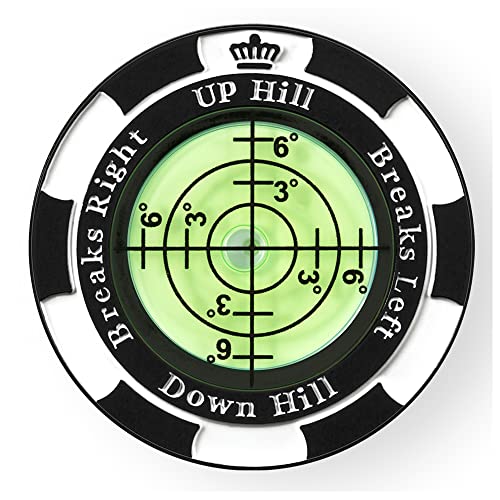
SlopeMaster ProGreen Reader – Golf Ball Marker with High Precision Green Reading Aid Golf Accessories for Men Women(Black)
Accurate Golf Green Reading: The SlopeMaster ProGreen Reader is the ultimate tool for accurately reading the slope of…
As an affiliate, we earn on qualifying purchases.
As an affiliate, we earn on qualifying purchases.
Conclusion
Now that you know how to read greens, trust your instincts, embrace your experience, and stay confident. Observe the slopes, read the subtle breaks, and trust your eye. Don’t overthink every detail—simply focus, adjust, and commit. Practice helps you improve, patience keeps you steady, and confidence makes your putts true. By trusting yourself, you’ll read greens more naturally, play more smoothly, and enjoy your game more. Keep it simple, stay relaxed, and let your skills shine through.

High Precision Golf Tools Leveler Clear&Transparent Ball Marker Golf Slope Meter Easily Use Training Tool Golf Spirit Level
Easy-to-Use Ball Marker:The included golf ball marker allows for quick and easy marking of your ball's position, enhancing…
As an affiliate, we earn on qualifying purchases.
As an affiliate, we earn on qualifying purchases.

Putt-A-Bout Grassroots Par Three Putting Green (9-feet x 3-feet)
Manufactured from PET resin
As an affiliate, we earn on qualifying purchases.
As an affiliate, we earn on qualifying purchases.