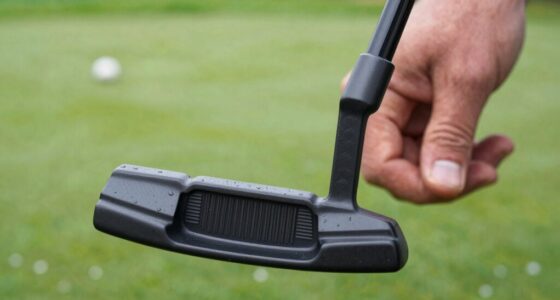
Short putts can feel scarier than they should because nerves, doubt, and overthinking take over, making a simple tap seem overwhelming. Even if you’ve practiced and know the line, mental pressure and past misses can cause tension and shake your confidence. Emotional reactions like fear and worry disrupt your focus, leading to tightness and misreads. Staying calm, trusting your routine, and managing your thoughts can help you overcome these mental barriers—keep exploring to learn how to stay steady under pressure.

Get travel and outdoor gear delivered free with Prime
- Fast, free delivery on millions of items
- Prime Video, Amazon Music and more included
- Member-only deals all year
Key Takeaways
- Tiny distances increase anxiety due to heightened mental pressure and fear of missing, despite the short shot.
- Overthinking and past misses disrupt focus, making routine putts feel more intimidating.
- Emotional reactions and physical tension can impair stroke fluidity, amplifying fear.
- Lack of a consistent pre-shot routine leads to doubt and reduces confidence in executing short putts.
- Focusing on process and maintaining calm helps reduce mental chatter and eases fear.

Even though short putts are often considered the easiest shots on the golf course, many players find them surprisingly intimidating. That tiny distance to the hole can trigger more nerves than a long drive down the fairway. The reason isn’t just about the shot itself; it’s about your mental focus and emotional control. When you step up to a short putt, your mind can start racing with doubt or fear of missing, even if logically, the putt should be straightforward. It’s in these small moments that your emotions take over, making what should be routine feel overwhelming.
Your mental focus is crucial here. If your mind drifts to past misses or worries about the outcome, you’ll lose the clarity needed for a smooth stroke. Instead of concentrating on the line and pace, you start second-guessing yourself, which disrupts your rhythm. To improve, you need to develop a mental routine that helps you shut out distractions and center your attention solely on the task. Visualize the ball rolling into the cup, trust your read, and maintain a steady breathing pattern. This focus keeps your mind from wandering and reduces the chance of tension creeping in. Practicing mental focus techniques can significantly enhance your confidence on these shots. Recognizing the importance of mental resilience can help you stay steady under pressure, especially during these critical moments. Developing a pre-shot routine can further reinforce your mental clarity and help you stay consistent. Additionally, understanding how to manage your emotions effectively can prevent anxiety from taking over during crucial shots. Building emotional regulation skills can also help you maintain your composure in high-pressure situations.
Emotional control is equally vital. When nerves spike, your body tightens up, making your stroke less fluid. You might feel your hands trembling or your heart pounding, which only increases the pressure. The key is to stay calm, regardless of the shot’s importance. Use deep breathing or positive self-talk to manage your emotions. Remind yourself that the shot is just like any other putt—no more, no less. By maintaining composure, you prevent anxiety from sabotaging your stroke.
Many players fall into the trap of overthinking short putts. Instead of trusting their technique, they get caught up in the “what ifs.” This mental chatter fosters doubt and heightens emotional tension. The best players, however, focus on the process rather than the outcome. They trust their practice, stick to their routine, and accept that missing a short putt isn’t the end of the world. This mental resilience helps keep their emotional state steady, making those seemingly intimidating shots feel more manageable.
In the end, the fear of short putts isn’t about the distance but about how you handle your mental focus and emotional control. When you learn to stay present and composed, those once-scary putts become just another simple part of your game.
As an affiliate, we earn on qualifying purchases.
Frequently Asked Questions
How Does Anxiety Affect Short Putt Performance?
Anxiety can make your short putts feel intimidating by causing tension and shaky hands. When you rush your pre-shot routine or skip deep breathing techniques, your nerves intensify. Focusing on a consistent pre-shot routine and practicing slow, controlled breaths helps calm your mind and body. This allows you to stay relaxed, improve your focus, and execute your putt confidently, reducing the fear and making those short putts feel much easier.
Can Visualization Reduce Short Putt Fear?
Yes, visualization can reduce your short putt fear by helping you build confidence. You should use mental imagery to picture successful putts, which reinforces positive outcomes. Combine this with breathing techniques to calm nerves and improve focus. When you practice regularly, visualization becomes second nature, making those short putts feel less intimidating. This mental preparation boosts your confidence and helps you stay relaxed under pressure.
What Mental Tricks Help Calm Nerves Before a Short Putt?
When nerves hit before a short putt, keep your mental focus sharp like a hawk. Use breathing techniques—inhale slow, exhale steady—to calm your mind and body. Visualize a successful shot, trusting your skills. Remind yourself that it’s just a short putt, not a mountain. This mental trick helps you stay present, reduce anxiety, and turn that scary moment into a confident stroke.
Does Grip Pressure Influence Putting Confidence?
Yes, grip tension markedly influences your putting confidence. When you hold the club too tightly, it can lead to tension in your arms and reduce your feel for the shot, making you doubt your stroke. Loosening your grip slightly can provide a confidence boost, helping you stay relaxed and smooth through the ball. A consistent, comfortable grip allows you to trust your mechanics, making short putts feel more natural and less intimidating.
How Do Course Conditions Impact Short Putt Anxiety?
Course conditions considerably impact your short putt confidence. Uneven course surfaces can cause uneven bounces, making you hesitant, while wind effects can alter your aim and pace, increasing anxiety. You might feel more nervous when these factors aren’t predictable, but understanding how surface irregularities and wind influence your ball helps you adapt. By practicing on varied conditions, you build trust in your stroke, reducing that scary feeling even on tough short putts.
As an affiliate, we earn on qualifying purchases.
Conclusion
Remember, a short putt is just like any other stroke—trust your technique and stay relaxed. The more you overthink, the scarier it feels. As the saying goes, “Practice makes perfect.” Keep practicing those short putts, and soon they’ll feel like second nature. Confidence grows with consistency, so believe in your stroke and let go of the fear. The more you face it, the less scary it becomes.
As an affiliate, we earn on qualifying purchases.
As an affiliate, we earn on qualifying purchases.
Fall Picks
fall essentials
As an affiliate, we earn on qualifying purchases.