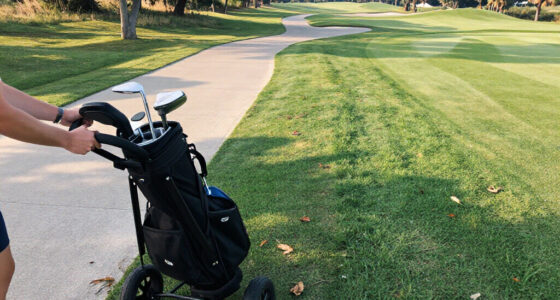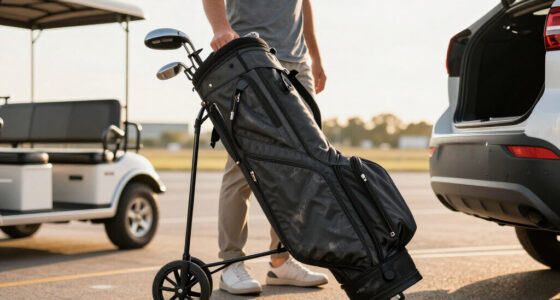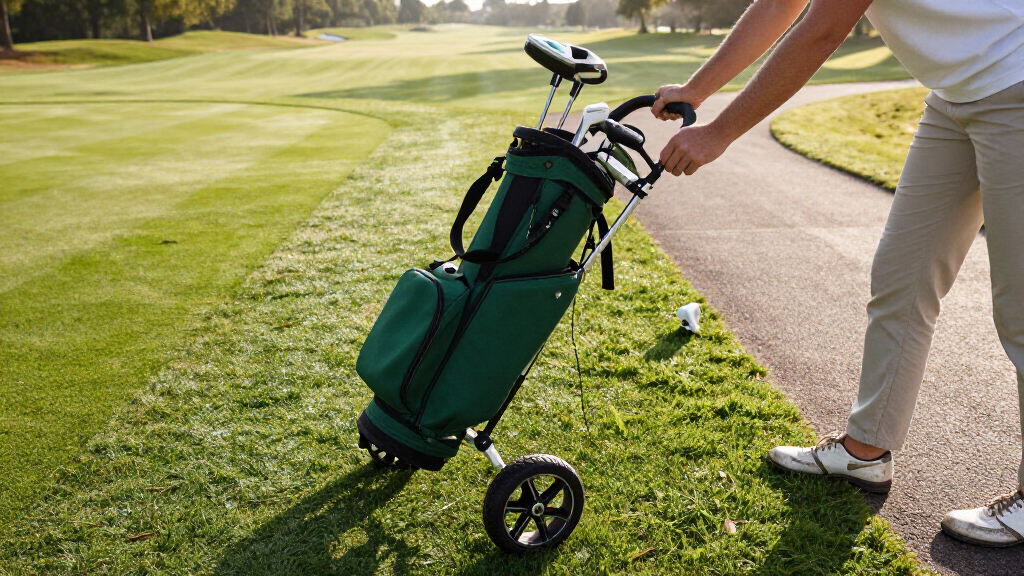
This guide helps beginner golfers choose a portable push cart, set it up, secure a golf bag, and prepare the cart for play and transport. You will finish with a cart that rolls steadily, holds your bag securely, and folds to fit your storage space. Allow 30-60 minutes for shopping research and initial setup, then 5-10 minutes to prepare it before a round.

Get travel and outdoor gear delivered free — and shop member deals
- Fast, free delivery on millions of items
- Access to Prime Big Deal Days deals on October 6–7
- Prime Video, Amazon Music and more included

Caddytek CaddyLite 11.5 V3 Three-Wheel Golf Push Cart
- ✔ Frame: Aluminum
- ✔ Weight: 13.75 lb
- ✔ Wheels: Two 11.5-inch rear wheels; one 10.5-inch front wheel

Qwik-Fold 4-Wheel Golf Push Cart
- ✔ Frame material: Aluminum
- ✔ Weight: 18.7 lb
- ✔ Wheels: Four

EASEGO Golf Push Cart 3 Wheel
- ✔ Frame: Aluminum alloy
- ✔ Weight: 18.7 lb
- ✔ Wheel layout: Three wheels
Difficulty: Beginner | Time: 30-60 minutes to compare and set up; 5-10 minutes before each round
What You’ll Need
Tools & Materials:
- Tape measure or the dimensions of your car trunk or storage space
- Your golf bag and typical round-day accessories
- The cart manufacturer’s instructions
- A clean, level area for assembly and a short roll test
Knowledge:
- Basic familiarity with your golf bag’s size and weight when loaded
- The type of golf courses you usually play and whether you walk or ride
Check your golf course’s cart rules before buying or using a push cart. Models differ in folded size, wheel design, brake position, bag restraints, and compatibility with stand bags and cart bags. Follow the instructions for your chosen model, since assembly and adjustment methods vary.
Caddytek CaddyLite 11.5 V3 Three-Wheel Golf Push Cart
For a portable-cart shortlist, weight is the CaddyLite 11.5 V3’s clearest advantage. At 13.75 pounds, it is substantially lighter than the listed 18.7-pound Qwik-Fold and EASEGO, a difference that matters when lifting the cart into a trunk or carrying it between storage and the car. It still supplies an adjustable handle, foot-operated brake, elastic bag straps, drink and umbrella holders, mesh net, and magnetic pad, so choosing the lighter frame does not mean giving up basic round-day organization.The tradeoff is its three-step quad-fold. Unlike the Qwik-Fold’s one-second opening and folding claim, the Caddytek asks for a more involved setup and pack-down routine. That is a reasonable exchange for golfers who value a lighter lift more than shaving seconds off each transition. Its three-wheel layout includes two 11.5-inch rear wheels and a 10.5-inch front wheel; the wide wheelbase is intended to support balance on varied terrain, but the supplied details do not establish that it will suit every slope or surface.We place it first because the low stated weight directly supports portability, while the included accessories and foot brake keep it useful on course. It is not the strongest choice for golfers who define convenience as instant folding, and the one-year warranty is worth noting. Compared with EASEGO, it gives up some of the other cart’s expansive storage and stated 31-inch wheelbase in favor of a lighter carry. For most golfers choosing a manual cart to transport regularly, that is the more relevant compromise.
Pros:
- Listed weight of 13.75 pounds supports easier lifting than the other two options.
- Adjustable handle and foot-activated brake cover core handling needs.
- Includes mesh net, magnetic pad, umbrella holder, drink holder, and elastic bag straps.
- Three-wheel setup has two 11.5-inch rear wheels and a 10.5-inch front wheel.
Cons:
- Three-step folding takes more setup and pack-down effort than the Qwik-Fold.
- Does not offer EASEGO’s stated 31-inch wheelbase or its broader storage assortment.
- One-year warranty is specified; longer coverage is not listed.
Best for: Golfers who regularly lift a push cart into a vehicle and want a lighter three-wheel model with useful included holders.
Not ideal for: Golfers who want a one-second fold, or who prefer to avoid a multi-step setup before and after a round.
Bottom line: We recommend the CaddyLite 11.5 V3 as the best overall portable pick when a lighter lift matters more than the fastest possible fold.
“We recommend the CaddyLite 11.5 V3 as the best overall portable pick when a lighter lift matters more than the fastest possible fold.”
Qwik-Fold 4-Wheel Golf Push Cart
If getting on and off the course quickly matters more than minimizing carry weight, the Qwik-Fold’s one-second folding claim is its defining advantage. It uses an aluminum frame and weighs 18.7 pounds, matching the EASEGO’s stated weight and coming in five pounds above the Caddytek. That makes it less attractive for frequent lifting, but its fast fold may suit golfers who would rather avoid a sequence of folding steps every time they load or store the cart.The four-wheel layout is another distinction from the two three-wheel designs here. It pairs with an adjustable handle, ball-bearing wheels, foot brake, and built-in umbrella holder, covering the basics without the extensive organizer setup offered by EASEGO or the wider collection of named accessories on the Caddytek. The provided description does not give folded dimensions, so we cannot compare its packed footprint directly with the other models or assume it will fit a particular trunk.We rank it second because portability is more than folding speed: at 18.7 pounds, it is not the easiest option to lift, and the supplied details say little about storage beyond its umbrella holder. Still, it is the most straightforward choice for golfers who prioritize quick transitions and want a four-wheel cart. Compared with the Caddytek, it trades lower weight and several accessory holders for a faster fold; compared with EASEGO, it has fewer stated storage features but an equally quick setup focus. Check the carrying weight against your own lifting needs before choosing it.
Pros:
- Opens and folds in one second according to the product description.
- Aluminum frame with adjustable handle.
- Four-wheel arrangement and ball-bearing wheels.
- Includes a foot brake and built-in umbrella holder.
Cons:
- At 18.7 pounds, it is heavier than the Caddytek for lifting and loading.
- Only an umbrella holder is specified; storage and organizer features are not detailed.
- Folded dimensions are not supplied, limiting direct trunk-fit comparison.
Best for: Golfers who want a fast, simple open-and-fold routine and prefer a four-wheel cart with an adjustable handle and foot brake.
Not ideal for: Golfers who frequently carry their cart and are prioritizing the lightest listed option or detailed storage features.
Bottom line: Choose the Qwik-Fold when fast setup is your priority and its 18.7-pound carry weight is acceptable.
“Choose the Qwik-Fold when fast setup is your priority and its 18.7-pound carry weight is acceptable.”
EASEGO Golf Push Cart 3 Wheel
The EASEGO is the most storage-oriented cart in this comparison. Its top compartment, mesh bag, organizer, and ice bag join holders for a drink, scorecard, pencil, phone, umbrella, and magnetic rangefinder. That amount of built-in organization can reduce the need to juggle small essentials separately. Its adjustable self-fit bag holder also has top and bottom straps, while the adjustable handle accommodates different heights and pushing positions.For terrain-conscious shoppers, EASEGO specifies a 31-inch extra-wide wheelbase, triangular chassis, and foot brake. Those are useful design details to weigh alongside its three-wheel layout, particularly if a narrow-feeling cart is a concern. The model also claims a one-click fold to 15.1 × 27.95 × 14.17 inches. However, the listed weight is 18.7 pounds, the same as the Qwik-Fold and notably above the Caddytek’s 13.75 pounds. The compact folded dimensions therefore do not make it the easiest cart here to lift.We place EASEGO third not because its equipment list is weak, but because its feature-rich design asks for a heavier carry in a roundup centered on portability. The one-click mechanism is appealing beside the Caddytek’s three-step fold, and its listed fold dimensions give shoppers a useful storage reference absent from the Qwik-Fold details. Yet golfers who prioritize transport weight should prefer the Caddytek, while those who want the quickest described fold may choose the Qwik-Fold. EASEGO makes most sense when its wide stance and extensive storage answer specific needs, rather than as a default lightweight pick.
Pros:
- One-click folding design with stated folded dimensions of 15.1 × 27.95 × 14.17 inches.
- 31-inch wheelbase and triangular chassis are designed to support stability.
- Multiple storage features include a top compartment, mesh bag, organizer, and ice bag.
- Adjustable handle and bag holder, plus a foot brake.
Cons:
- Listed weight of 18.7 pounds is five pounds above the Caddytek.
- The many holders and storage areas may be unnecessary for golfers who prefer a minimal setup.
- Its portability advantage is less clear for lifting, despite the compact stated folded dimensions.
Best for: Golfers who want multiple built-in storage options, a self-fitting bag holder, and a stated wide wheelbase, and can manage an 18.7-pound cart.
Not ideal for: Golfers seeking the lightest cart for frequent lifting or who need a simple setup with few accessories.
Bottom line: EASEGO is the best fit for golfers who value a wide stance and abundant organized storage more than low carry weight.
“EASEGO is the best fit for golfers who value a wide stance and abundant organized storage more than low carry weight.”
As an Amazon Associate we earn from qualifying purchases.
Before You Start
Decide how you will transport and store the cart before comparing models. Measure the narrowest opening and available space in your vehicle or storage area, and compare those measurements with the manufacturer’s listed folded dimensions. Check the cart’s weight, maximum bag capacity, handle adjustment range, brake design, and whether accessories you need are included or sold separately. Treat advertised storage capacity and bag compatibility as model-specific; do not assume every cart fits every bag. Assemble the cart on a level surface, and keep fingers clear of hinges and folding joints.
Step-by-Step Instructions
Step 1: Measure your transport and storage space
Measure the trunk opening and the space where the folded cart will sit. Note any obstructions, such as a raised trunk lip, wheel-well intrusion, or other equipment that shares the space. Write down the maximum length, width, and height available, then compare those limits with each cart’s folded dimensions. Check the cart’s weight too if you will regularly lift it into a vehicle.
Tip: Leave room for the cart’s wheels and handle rather than relying on a tight fit. A cart that technically fits may be difficult to lift out or may press against other equipment.
Check: You have clear size and weight limits to use when comparing carts.
Step 2: Match the cart to your bag and course
Check the manufacturer’s bag-compatibility information against the bag you actually use. Look for adjustable upper and lower straps or supports that can hold your bag without blocking its stand legs. Compare wheel type and cart design with the ground you play on: uneven, soft, or hilly paths may call for different features than smooth, level paths. Review the brake, handle adjustment, storage options, and stated capacity, and check course rules before purchase.
Tip: If possible, test the cart with your loaded bag or confirm the retailer’s return policy. A fit that looks fine with an empty bag may shift once clubs and accessories are aboard.
Check: The cart matches your bag, course conditions, transport limits, and expected load.
Step 3: Assemble the frame and wheels
Place the cart parts on a level surface and follow the model’s assembly instructions in order. Open the frame, attach the wheels in the positions shown, and fit any supplied straps, storage tray, or accessories. Confirm that each wheel is fully seated and any retaining pin, clip, or locking mechanism is engaged. Do not force a part that resists fitting; check its orientation in the instructions.
Tip: Keep small pins and clips together while assembling. Do not put your fingers inside a hinge or folding joint while opening or locking the frame.
Check: The frame stays open, the wheels remain attached when gently pulled, and no connection looks loose or misaligned.
Step 4: Adjust the handle and test the brake
Set the handle to a height that lets you push with relaxed shoulders and slightly bent elbows. Use the adjustment mechanism described in the manual and lock it before loading the bag. Identify how the brake engages and releases. On level ground, apply it, try to roll the cart gently, then release it and confirm the wheels turn freely.
Tip: Brake location and operation vary by model. Learn the controls on level ground rather than on a slope during a round.
Check: The handle stays at your chosen height, the brake holds the cart when engaged, and the cart rolls when the brake is released.
Step 5: Load and secure your golf bag
Engage the brake and place the cart on level ground. Set the bag on the lower support with the clubs oriented as recommended by the manufacturer. Position the upper support and fasten both bag restraints around the bag. Tighten them enough to stop the bag from rocking, but not so tightly that they crush the bag or prevent stand legs from opening. Keep club covers, towels, and loose straps clear of the wheels and brake.
Tip: Test the stand legs before tightening the restraints fully if you use a stand bag. Adjust the bag position or strap routing if a leg catches or cannot open.
Check: The bag remains upright when you gently rock the cart, and its stand legs and clubs are unobstructed.
Step 6: Arrange accessories and check balance
Place frequently used items in the cart’s designated storage areas and secure anything that could fall out. Distribute the load so one side is not noticeably heavier than the other. Keep heavy items low when the cart’s design allows it, and avoid exceeding the stated weight capacity. Check that the umbrella, drink holder, or other attachments do not obstruct the handle, brake, wheels, or folding joints.
Tip: A full bag plus water, clothing, and accessories can weigh more than an empty bag by a substantial amount. Use the manufacturer’s capacity limit rather than guessing from the cart’s appearance.
Check: Accessories are secured, the cart does not lean to one side, and controls and wheels have clear space.
Step 7: Roll-test the loaded cart
Release the brake and push the loaded cart slowly across a level, open area. Check that it tracks forward without repeatedly veering, the wheels turn without rubbing, and the bag does not slide or sway. Apply the brake again and verify that it holds. If the cart pulls to one side or feels unstable, stop and check wheel seating, bag position, strap tension, and load balance before taking it onto a course.
Tip: Do not test steering or braking near traffic, steep slopes, or people. Make adjustments only while the cart is stopped and secured.
Check: The loaded cart rolls smoothly, stays aligned under a light push, and remains stationary when the brake is engaged.
Step 8: Fold and store the cart
Remove loose accessories if the instructions call for it, engage the brake, and unload the bag unless the cart is specifically designed to fold with it attached. Use the manufacturer’s folding sequence, keeping your hands away from hinges. Confirm the folded frame locks or stays closed as intended, then lift it using a stable grip and place it in the measured storage space. After a wet round, dry the frame and wheels before storing.
Tip: Do not force the frame closed against an attached accessory, strap, or wheel. Check for anything caught in a joint and follow the release sequence in the manual.
Check: The cart folds without binding, stays folded for transport as designed, and fits the intended storage space.
Common Mistakes to Avoid
- Buying a cart based only on its open size or appearance. — Compare folded dimensions and weight with your vehicle, storage space, and lifting needs before purchasing.
- Assuming the bag will fit because it sits on the supports. — Check the model’s bag-compatibility guidance and test that restraints hold the loaded bag without blocking stand legs.
- Taking the cart onto the course without checking the brake. — Test both brake engagement and release on level ground before every round, especially after assembly or transport.
- Overloading storage compartments or leaving straps near the wheels. — Stay within the stated capacity and secure loose fabric, accessories, and belongings away from moving parts.
Troubleshooting
Problem: The cart pulls to one side during the roll test.
Solution: Stop on level ground. Check that all wheels are fully seated and oriented correctly, look for wheel rubbing, center the bag, and balance accessories. Consult the manual if the frame or wheel alignment still appears uneven.
Problem: The bag twists, slips, or rocks in the supports.
Solution: Reposition the bag on the lower support and adjust the upper and lower restraints. Check whether the cart supports your bag type and whether the bag is within the cart’s capacity.
Problem: The brake does not hold the cart.
Solution: Move to level ground and inspect the brake engagement and wheel area for debris or obstruction. Recheck the control method in the manual. Do not rely on the cart on a slope until the brake works as intended; contact the manufacturer or retailer if it remains faulty.
Problem: The frame will not fold or stay open.
Solution: Unload the bag and remove accessories that may block a joint. Check for trapped straps, dirt, or a lock that has not been released. Follow the exact folding or opening sequence in the manual; do not force the hinges.
What Success Looks Like
Your portable push cart is correctly assembled, fits your bag and transport space, and rolls straight on level ground without loose or rubbing wheels. The loaded bag stays secure, its stand legs and clubs remain clear, accessories are within capacity, and the brake holds the cart when engaged. The frame folds and stores according to its instructions without binding or damage.
Next Steps
Before each round, check the wheel attachments, bag restraints, handle lock, and brake, then remove any loose item that could catch in a wheel. After play, wipe away grass, dirt, and moisture, and inspect the wheels and folding joints. Store the cart dry and folded according to the manual. If a part cracks, a wheel loosens repeatedly, or the brake fails, stop using the cart and contact the manufacturer for the correct repair or replacement part.
Frequently Asked Questions
Can I keep my golf bag attached when folding a portable push cart?
Only if the manufacturer says your model is designed to fold with the bag attached. Otherwise, remove the bag and accessories before folding to prevent damage or pinched straps.
Will one push cart fit every golf bag?
No. Bag width, shape, stand legs, and restraint design differ. Check the cart’s compatibility guidance and test the loaded bag before relying on the setup for a round.
How do I know whether the cart is too heavy for my bag?
Compare the combined load with the cart’s stated capacity. Include clubs and everything carried in the bag and cart storage. If the cart feels unstable, strains its frame, or will not roll freely, remove excess items and check the manual.
Should I engage the brake whenever I stop?
Engage it when you park the cart, load or unload the bag, or adjust the setup. On sloped ground, follow the manufacturer’s guidance and avoid leaving the cart unattended where it could roll.
What should I check if the cart is difficult to push?
Check brake release, wheel seating, wheel debris, bag position, and load balance. Remove items beyond the rated capacity. If the cart still resists movement or a wheel does not turn freely, stop using it until you can identify and correct the problem.
Fall Picks
fall essentials
As an affiliate, we earn on qualifying purchases.