

When playing golf abroad, it’s important to respect local rules, customs, and etiquette. Follow course policies, dress appropriately, and embrace cultural traditions. Keep a good pace of play, be ready to hit when it’s your turn, and communicate politely, especially if there’s a language barrier. Handle equipment and course amenities responsibly, and show respect for the environment and local norms. Want to make sure of a smooth game? Keep exploring these essential do’s and don’ts.
Key Takeaways
- Respect local rules, traditions, and course policies to avoid penalties and show cultural sensitivity.
- Maintain a steady pace of play, be prepared, and stay alert to ensure an enjoyable experience.
- Dress appropriately in accordance with local customs, and communicate politely to overcome language barriers.
- Handle equipment carefully, respect course facilities, and dispose of trash responsibly.
- Use respectful greetings, observe property etiquette, and adapt behavior to local cultural norms.

Golf Etiquette Set – Attach to Golf Bag – Handy Guide to Golf Course Etiquette | Must-Have Golf Accessories for Beginner Golf | Perfect Tee Gift | Junior Golf Aid | Golf Teaching Tool | Golf Rules
- Compact etiquette guide: Attachable to golf bag for quick reference
- Suitable for all golfers: Ideal for men, women, and juniors
- Weather-resistant material: Durable PVC construction for outdoor use
As an affiliate, we earn on qualifying purchases.
As an affiliate, we earn on qualifying purchases.
Respect Local Rules and Regulations

Understanding and following local rules and regulations is essential when playing golf abroad. Each course has its own set of local regulations that you must adhere to, ensuring you respect the traditions and expectations of the area. Course policies might include specific dress codes, designated areas for practice, or rules about where you can take shots. Ignoring these guidelines can disrupt play and may lead to penalties or disqualification. Before starting your round, take a moment to review the posted rules or ask staff for clarification. By respecting local regulations, you demonstrate good sportsmanship and help maintain the integrity of the course. Staying informed and compliant shows respect for the course’s policies and ensures an enjoyable experience for everyone. Proper knowledge of local regulations can help prevent misunderstandings and ensure smooth gameplay throughout your round. Additionally, understanding course-specific rules can contribute to a more respectful and enjoyable environment for all players. Being aware of local customs related to golf can also enhance your experience and foster better relations with fellow players and staff. Familiarizing yourself with these regulations can also prevent unintentional rule violations that might detract from your game, and embracing local etiquette can further enrich your overall experience.

Obla Men's Print Golf Polo Shirts (White Golf Clubs_L)
- Stretchy Fabric: Polyester blend with spandex for flexibility
- Durable and Easy Care: Resists wrinkles, shrinking, and color fading
- Moisture Wicking: Keeps you cool and dry during play
As an affiliate, we earn on qualifying purchases.
As an affiliate, we earn on qualifying purchases.
Maintain Proper Pace of Play

To maintain proper pace of play, you need to keep up with the group ahead and stay aware of your surroundings. Being ready to play when it’s your turn helps keep the game moving smoothly. By staying attentive, you guarantee everyone enjoys the round without unnecessary delays. Incorporating sustainable materials into your gear can also help promote eco-friendly practices on the course. Additionally, understanding Gold IRA markets can serve as a metaphor for maintaining a steady and informed approach to the game, ensuring you are well-prepared for each shot. Staying vigilant about cybersecurity measures can prevent disruptions during digital scorekeeping or online booking systems, keeping the experience seamless. Improving your awareness of field recording techniques can also enhance your ability to adapt to different course environments, making your play more consistent and efficient. Moreover, paying attention to local attractions nearby can enrich your overall experience and motivate you to play efficiently and responsibly.
Keep up With Group Pace
Maintaining a steady pace of play is essential to keeping the game enjoyable for everyone in your group. Good golf course etiquette involves being mindful of your speed and not holding up those behind you. Stay prepared for your shot, and avoid unnecessary delays by readying your club and focusing on your shot when it’s your turn. Playing etiquette also means respecting the rhythm of the group ahead and not rushing excessively, which can disrupt the flow of play. If you notice the group behind catching up, pick up your pace without feeling pressured. Remember, slow play frustrates everyone and can lead to penalties. Keeping up with your group ensures a smooth, enjoyable experience for all and demonstrates respect for the game and fellow golfers. Additionally, energy-efficient equipment can help players reduce delays caused by equipment issues, contributing to a more sustainable round. Being aware of pace of play guidelines provided by the course can also help you stay on track and avoid unnecessary delays. Practicing good digital literacy by using apps for pace tracking can further enhance the efficiency of your game.
Be Ready to Play
Being ready to play your shot helps keep the game moving smoothly. Before your touring tee off, take a moment to do your pre-game preparations, such as lining up your shot and selecting the right club. This guarantees you’re prepared when it’s your turn, avoiding unnecessary delays. As soon as the group ahead is out of range, step up confidently, so the pace remains steady. Keep your equipment organized and within reach, and be mindful of your timing—waiting too long can slow everyone down. Stay alert and focused, so you’re ready to play when it’s your turn. Proper course awareness and preparation can significantly improve the flow of play. Additionally, being familiar with the local golf etiquette helps ensure respectful and smooth interactions with fellow players. By staying prepared, you contribute to a smooth, enjoyable round for everyone, regardless of whether you’re playing locally or abroad. Being aware of your surroundings, including security measures, can also help prevent disruptions and ensure a safe environment during your round. Incorporating smart technology such as GPS rangefinders or course management apps can assist in maintaining proper pace and awareness.

Pro Golf Club Care Kit – Cleaner, Polish, Brush, Groove Sharpener, Grip Cleaner, Magnetic Towel & Leather Bag – Restores Clubs, Removes Rust & Scratches, Renews Tackiness – Golf Gifts for Golfers
- Complete 7-Piece Golf Club Care Set: All essential cleaning tools included
- Deep Clean for Better Performance: Removes rust, dirt, and scratches
- Revives Grip Tackiness: Enhances swing confidence with grip cleaner
As an affiliate, we earn on qualifying purchases.
As an affiliate, we earn on qualifying purchases.
Dress Appropriately for the Course

When dressing for a golf course abroad, you need to respect local clothing standards and cultural sensitivities. Wearing appropriate golf attire shows your awareness of the environment and helps you blend in smoothly. Make sure your clothing choices align with the customs of the country to avoid any unintentional offense. Embracing cultural sensitivities can also enhance your overall experience and foster respectful interactions with fellow players. Additionally, understanding dress codes can prevent misunderstandings and ensure you are properly prepared for your round. Being aware of appropriate attire can further demonstrate your respect for the local traditions and customs. Recognizing the importance of heritage preservation can deepen your appreciation for native cultures and their unique expressions. Being informed about bank swiftifs codes can also be useful when managing your travel finances or making international transactions.
Local Clothing Standards
Ever wondered why dressing appropriately on a golf course abroad matters so much? Local clothing standards often reflect cultural values, so wearing traditional dress or modest modern attire shows respect for the community. In some countries, traditional dress is expected on the course, and failing to adhere can be seen as disrespectful. In others, modern attire like collared shirts and tailored shorts is preferred, but always check local guidelines. Avoid overly casual or revealing clothing that might offend local sensibilities. Dressing appropriately demonstrates your awareness and appreciation of the local culture. It also helps you blend in and enjoy the game without drawing unnecessary attention. Remember, a respectful outfit isn’t just about following rules—it’s about honoring the customs and traditions of the country you’re visiting. Being mindful of cultural values and local customs can enhance your overall experience and interactions with locals. Additionally, understanding clothing standards can prevent misunderstandings and ensure you are viewed as a considerate visitor. Incorporating knowledge about local fashion trends can also help you choose suitable attire that aligns with the setting. Paying attention to golf course dress codes ensures you adhere to specific rules that may be unique to each location.
Cultural Sensitivity in Attire
Cultural sensitivity in attire means more than just following dress codes—it shows respect for the local traditions and social norms. When visiting a foreign golf course, be mindful of traditional dress and avoid clothing that may disrespect cultural symbols. For example, some regions value modest attire or have specific colors and styles that symbolize local heritage. Wearing traditional dress or incorporating subtle cultural symbols can demonstrate your appreciation for the culture. Avoid overly casual or revealing clothing that might offend local sensibilities. Additionally, appropriate attire can help reduce exposure to urban pollutants and allergens, contributing to a healthier experience. By dressing thoughtfully, you communicate respect for the community you’re visiting. Remember, your attire can be a sign of your understanding and appreciation of the culture, helping foster positive interactions and a more enjoyable golf experience abroad.
Appropriate Golf Attire Choices
Choosing the right golf attire is essential to guarantee you’re dressed appropriately for the course and avoid any discomfort or breaches of etiquette. Your outfit should be neat and respectful of local customs. Here are four key tips:
- Wear a clean, collared golf shirt to meet dress code standards.
- Opt for proper footwear—golf shoes with soft spikes or non-slip soles to ensure safety and avoid damage.
- Avoid overly casual items like tank tops, flip-flops, or athletic wear not designed for golf.
- Consider the climate—lightweight fabrics for warmth or moisture-wicking options for hot days.

HahaHome Funny Golf Tees | Golf Accessories for Men – Slice-Ola 10 Pack | Top Golf Gifts for Men & Unique Golf Gifts for Golfers | Premium Golf Stuff & Golf Bag Accessories | Wooden Bamboo Tees
- Essential Golf Accessories: Premium wooden bamboo tees for golfers
- Ideal Golf Gift: Perfect for birthdays, holidays, and Father’s Day
- Humorous Golf Gift: Funny tees for golf enthusiasts and gag gifts
As an affiliate, we earn on qualifying purchases.
As an affiliate, we earn on qualifying purchases.
Communicate Clearly and Politely

When playing golf abroad, clear and polite communication is vital to guarantee a smooth and enjoyable experience for everyone involved. Language barriers can make understanding difficult, so speak slowly and use simple words when needed. Be mindful of gestures and expressions, as they can vary across cultures and might be misinterpreted. Always listen carefully and confirm instructions or rules to avoid misunderstandings. Maintain a friendly tone and show patience, even if there’s a language gap. Smile and use positive body language to convey friendliness. If you’re unsure about a sign or gesture, don’t hesitate to ask politely for clarification. Respectful communication helps build good rapport and ensures everyone enjoys their time on the course.
Handle Your Equipment and Course Amenities Responsibly
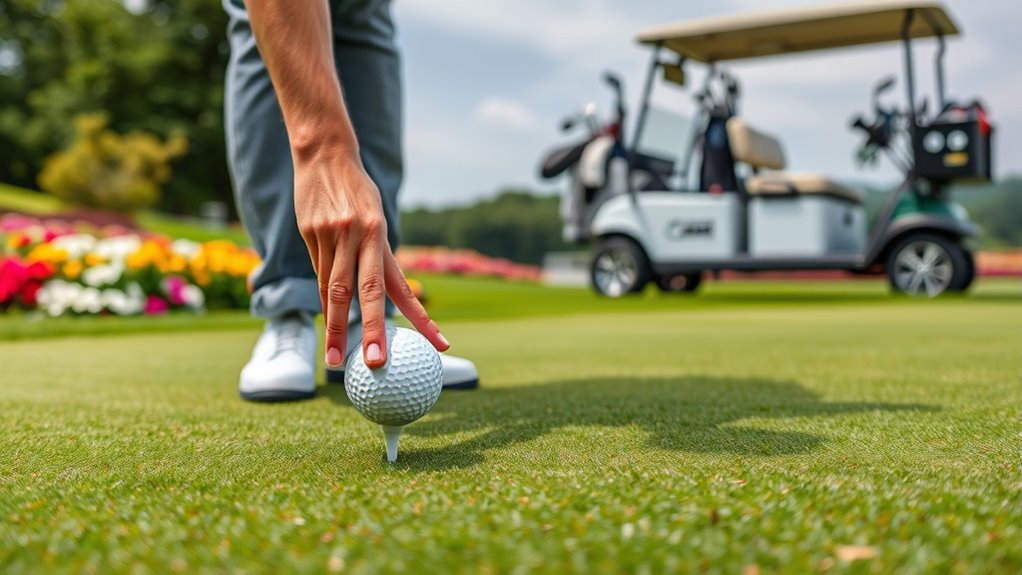
Handling your equipment and course amenities responsibly is essential to maintaining the course’s condition and ensuring a respectful atmosphere. Proper equipment handling includes being gentle with clubs and avoiding unnecessary damage. Respect course amenities by leaving carts and benches as you found them. To do this effectively:
- Return golf carts to designated areas and avoid driving on fragile turf.
- Keep your clubs organized and handle them carefully to prevent damage.
- Use trash bins for disposal, keeping the course clean.
- Respect water stations and replenishment areas without wasting supplies.
Be Mindful of Local Customs and Cultural Norms

Understanding and respecting local customs and cultural norms is essential when playing golf abroad, as it shows appreciation for the host country’s traditions. You should familiarize yourself with traditional greetings, which vary across cultures, and use them appropriately to show respect. Property etiquette is equally important—treat the course and facilities with care, avoiding damage or disrespect. For example, in some countries, it’s customary to bow or nod as a greeting, while in others, a handshake suffices. Here’s a quick guide:
| Cultural Norm | Traditional Greeting | Property Etiquette |
|---|---|---|
| Japan | Bow | Keep bunkers clean |
| Scotland | Handshake or nod | Respect course signage |
| Spain | Kiss on the cheek (if familiar) | Avoid walking on greens |
| India | Namaste | Use designated areas for trash |
Respecting these customs guarantees a positive experience abroad.
Frequently Asked Questions
How Do I Learn Local Golf Etiquette Before Arriving?
You can learn local golf etiquette by researching the destination’s cultural sensitivities and dress codes online or in travel guides. Check the golf club’s website for specific rules, and ask locals or staff for tips. Watching videos or reading forums about golf abroad can also help you understand proper behavior. This way, you’ll respect local customs and enjoy your game without any etiquette mishaps.
Are There Specific Gestures or Phrases to Avoid?
You should avoid certain gestures and phrases that could offend local players, respecting cultural sensitivities and gesture etiquette. For example, avoid pointing with your club or finger, as it may be considered rude. Also, steer clear of loud or disrespectful language, especially when congratulating or discussing play. Always observe how locals communicate, and when in doubt, keep your gestures friendly and subdued to show respect for their customs.
What Should I Do if I Accidentally Break a Rule?
If you accidentally break a rule, apologize promptly and follow apology protocols to show respect. Politely acknowledge the mistake and offer to clarify the rule if needed. It’s important to maintain honesty and integrity, so if you’re unsure, seek rule clarification from a nearby player or official. This approach helps keep the game fair, fosters good relationships, and shows your commitment to proper golf etiquette abroad.
How Can I Adapt to Different Course Layouts Abroad?
A wise golfer knows every course is a new adventure. To adapt to different course layouts abroad, observe how the local course design influences play and adapt your strategies accordingly. Pay attention to terrain variations, such as slopes and hazards, and adjust your shot selection. Stay flexible, ask for tips if available, and keep an open mind—embracing these differences will help you excel on unfamiliar courses.
What Tips Help Overcome Language Barriers on the Course?
To overcome language barriers on the course, you should focus on gesture awareness and simple phrase translation. Use clear, universal gestures for actions like signaling when you’re ready or asking for a ruling. Learn a few key phrases in the local language, such as “good shot” or “help,” and carry a translation card. This approach shows respect, reduces confusion, and helps you communicate effectively with fellow players and course staff.
Conclusion
Just like a well-orchestrated symphony, playing golf abroad requires harmony with your surroundings. By respecting local rules, managing your pace, dressing appropriately, and embracing cultural norms, you create a smooth, enjoyable experience for everyone. Think of etiquette as the rhythm that keeps the game flowing seamlessly across borders. When you play with mindfulness and courtesy, you not only elevate your game but also build bridges of respect that span the world.