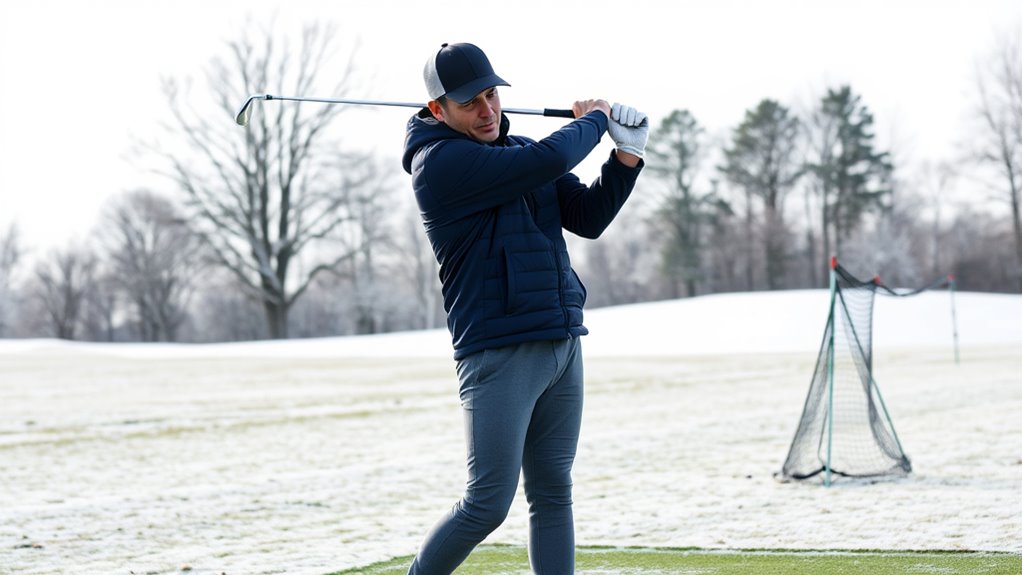

To keep your golf game sharp during winter, focus on indoor practice routines that reinforce swing tempo, grip, and mechanics using mirrors or recordings. Combine targeted fitness routines with resistance bands and rotational exercises to build strength and flexibility. Incorporate mental rehearsal, visualization, and goal setting to boost confidence and stay motivated. Utilizing technology like swing analysis tools helps track progress. Keep engaging your skills consistently, and you’ll discover how to maintain peak performance throughout the off-season.

Get travel and outdoor gear delivered free with Prime
- Fast, free delivery on millions of items
- Prime Video, Amazon Music and more included
- Member-only deals all year
Key Takeaways
- Incorporate indoor practice routines focusing on swing tempo, grip, and mechanics without hitting a ball.
- Use mirrors, recordings, and video analysis to monitor and refine your swing consistency and technique.
- Perform targeted strength, flexibility, and core exercises with resistance bands and weights to maintain physical readiness.
- Practice mental rehearsal, visualization, and breathing techniques to boost confidence and mental resilience during the off-season.
- Track progress with digital tools, set achievable goals, and review data regularly to stay motivated and measure improvement.
As an affiliate, we earn on qualifying purchases.
Indoor Practice Strategies to Maintain Your Swing

When it’s too cold outside to practice, indoor drills become essential for maintaining your golf swing. Focus on your swing tempo to keep your rhythm smooth and consistent, even without hitting a ball. Use a mirror or record your swings to monitor your timing and guarantee your tempo stays steady. Additionally, work on grip consistency by practicing your grip pressure and hand placement regularly. Repeating the same grip helps develop muscle memory, which translates to more reliable shots on the course. Incorporate slow swings or mimic your full swing motion without a ball to reinforce proper mechanics. These drills keep your muscles engaged and your timing sharp, so you won’t lose your feel when the weather warms up. Establishing a consistent routine can also help create calm and maintain focus during your practice sessions. Engaging in innovative training techniques can further enhance your skills during the off-season and prepare you for better performance when play resumes. Exploring modern coaching tools like swing analyzers or virtual lessons can provide valuable feedback and accelerate progress. Incorporating proper recovery strategies ensures your muscles stay healthy and ready for action when you return to the course. Remember, focusing on mental focus and visualization can also significantly improve your performance during off-season training.
As an affiliate, we earn on qualifying purchases.
Effective Fitness Routines for Golfers During Winter
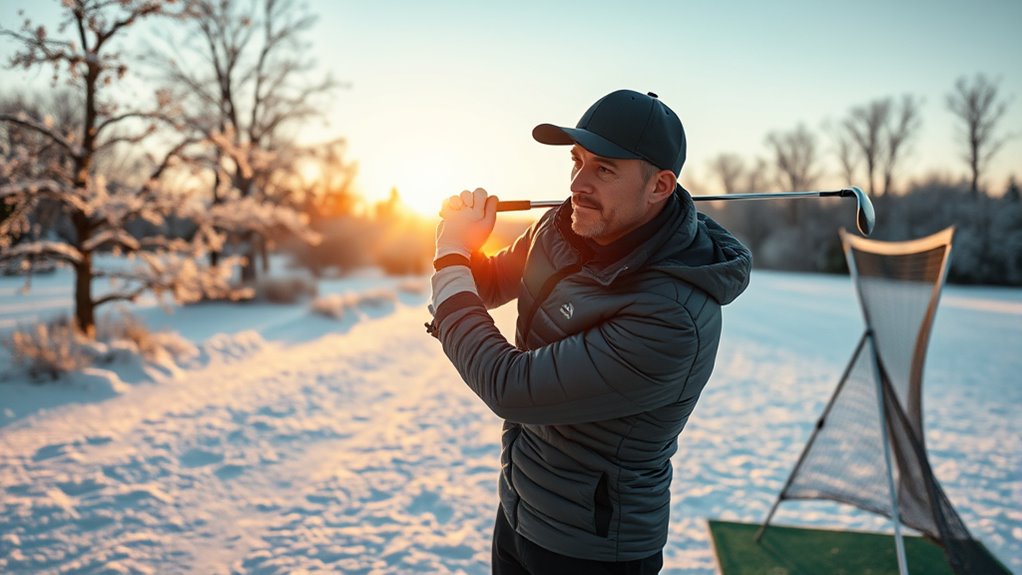
Maintaining your golf performance during winter requires more than just practicing swings indoors; it also calls for effective fitness routines that keep your body in top shape. Focus on exercises that enhance your golf swing by improving core strength, flexibility, and balance. Use fitness equipment like resistance bands, dumbbells, and stability balls to target key muscle groups. Incorporate rotational movements to mimic swing mechanics and build torque. Cardiovascular workouts such as brisk walking or cycling help maintain endurance. Incorporate Free Floating techniques to improve your overall stability and prevent injuries. These techniques can also help you develop a better sense of balance, which is crucial for consistent swings. Incorporating piercing care routines into your off-season wellness plan can prevent discomfort and support overall body health, indirectly benefiting your athletic performance. Consistency is key—schedule workouts at least three times a week to build strength and prevent winter weight gain. Remember, a well-rounded fitness routine not only sharpens your golf swing but also reduces injury risk, ensuring you’re ready to hit the course when spring arrives. Additionally, integrating stability training can further enhance your coordination and control during swings. Engaging in dynamic stretching routines before workouts can also improve flexibility and prepare your muscles for movement.
resistance bands for golf training
As an affiliate, we earn on qualifying purchases.
As an affiliate, we earn on qualifying purchases.
Utilizing Technology to Track and Improve Your Game

In today’s digital age, leveraging technology can substantially enhance your golf game, especially during the winter months when outdoor play is limited. Wearable devices and swing analysis tools give you real-time feedback, helping you identify flaws and track progress. Using a smartwatch or dedicated golf tracker, you can monitor swing speed, tempo, and consistency throughout practice sessions. Swing analysis apps analyze video footage to pinpoint issues like alignment or wrist movement, providing actionable insights. Additionally, some devices offer data on clubhead path and impact angles, aiding in precise adjustments. Incorporate these technologies to maintain your skills and stay motivated during the off-season. Here are some ways to utilize technology effectively:
Enhance your winter golf practice with wearable tech and swing analysis for real-time feedback and skill improvement.
- Wearable devices for swing metrics
- Video swing analysis apps
- Tracking shot distances
- Monitoring practice consistency
- Setting measurable goals
Engaging with StyleGuru.org can also provide insights into optimal training techniques and the latest golf gear innovations to further refine your game.
golf training aid video recording
As an affiliate, we earn on qualifying purchases.
As an affiliate, we earn on qualifying purchases.
Drills and Exercises to Enhance Flexibility and Strength

Enhancing your flexibility and strength is essential for improving your golf swing and overall performance. Incorporate effective stretching routines into your off-season training to increase your range of motion and prevent injuries. Focus on dynamic stretches before workouts and static stretches afterward to maintain muscle elasticity. Strength training exercises like squats, deadlifts, and rotational core movements build power and stability, translating to longer, more accurate shots on the course. Use resistance bands and bodyweight exercises to target key muscle groups involved in your swing. Incorporate proper equipment such as resistance bands or weights to optimize muscle engagement and prevent imbalances. Additionally, understanding the Greek Sceptic approach can help you adopt a more questioning and adaptive mindset towards your training routines, ensuring continuous improvement. Incorporating local automation can also help create personalized training environments, adjusting routines based on your progress and needs. Developing a growth mindset will encourage you to view challenges as opportunities for improvement rather than setbacks. Consistency is key—dedicate a few minutes daily to these drills. Engaging in mindful training techniques can further enhance your focus and body awareness during exercises, leading to better results. By combining stretching routines with strategic strength training, you’ll develop a more resilient, flexible body ready to elevate your golf game when the season resumes.
Mental Preparation and Visualization Techniques Off-Season
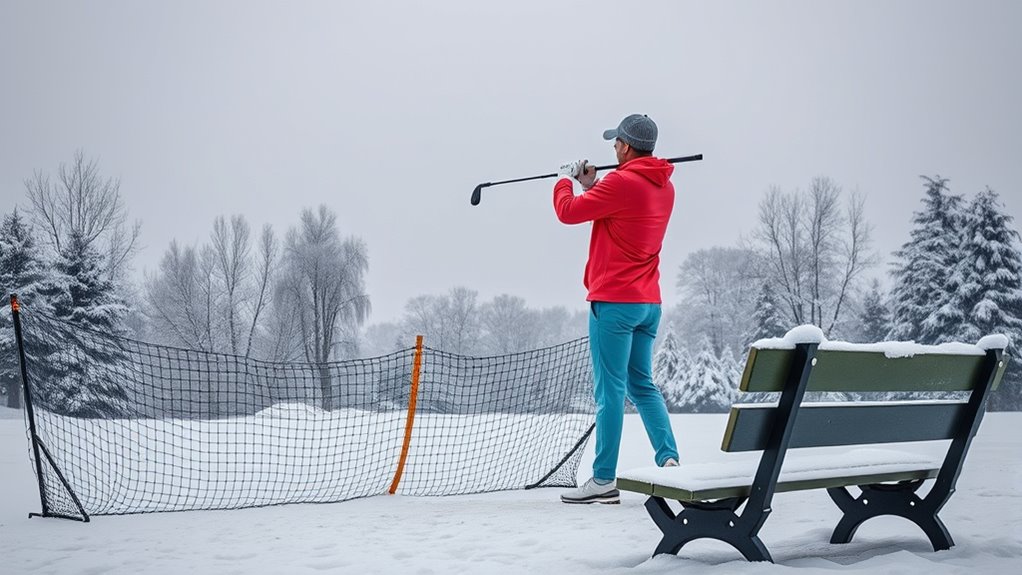
Off-season is the perfect time to sharpen your mental game through preparation and visualization techniques. By practicing mental rehearsal, you can simulate different course scenarios, boosting confidence and focus. Visualization techniques help you imagine successful shots, reinforcing positive habits and calming nerves. To maximize these techniques, try:
Use mental rehearsal and visualization to boost confidence and stay sharp during the off-season.
- Visualizing your ideal swing in detail
- Mentally rehearsing challenging shots
- Imagining yourself executing perfect putts
- Focusing on breathing and staying relaxed
- Reviewing past successes to build confidence
- Remembering the importance of mental resilience in maintaining peak performance
Additionally, incorporating mental conditioning exercises such as meditation or focused breathing can help strengthen your mental toughness during competition. These exercises help you develop a strong mental foundation, keeping you sharp even when you’re off the course. Engaging in consistent visualization practice can further improve your overall game and consistency. Regularly practicing these mental techniques can enhance performance and help form positive habits that carry over into the season. Practicing these techniques regularly can deepen your mental preparedness, ensuring you are ready to perform when the season resumes. Incorporating mental rehearsal and visualization techniques into your winter routine ensures you stay engaged and ready to perform at your best when the season resumes.
Planning Your Golf Goals and Skills Development for the Coming Year

As you plan your golf goals for the upcoming year, it’s important to set realistic objectives that challenge you without causing frustration. Tracking your progress helps you stay motivated and identify areas for improvement. Incorporating goal setting strategies into your routine can help you stay focused and organized, ensuring steady progress throughout the season. Engaging in curiosity-driven practices can also inspire innovative techniques and keep your training fresh. By establishing clear strategies, you’ll make steady gains and enjoy the journey toward better golf. Additionally, exploring the latest in pinball technology and design can provide a creative outlet and mental stimulation during the off-season, keeping your mind sharp and engaged. Incorporating aquatic exercise into your offseason routine can help maintain your flexibility and strength, giving you an edge when the season begins.
Setting Realistic Objectives
Have you ever set lofty golf goals only to find yourself overwhelmed or disappointed? Setting realistic objectives is key to steady improvement. To do this effectively, focus on clear performance metrics that track your progress. When goal setting, guarantee your aims are specific and achievable within your timeframe. Consider these tips:
- Break big goals into smaller, manageable tasks
- Use measurable benchmarks like average score or accuracy
- Adjust goals based on seasonal performance metrics
- Prioritize skill areas needing improvement
- Celebrate small wins to stay motivated
Tracking Progress Strategies
To effectively plan your golf goals and skills development for the coming year, tracking your progress is essential. Use data analysis to evaluate your performance regularly, identifying trends and pinpointing areas for improvement. Set clear progress milestones to measure your advancement over time, such as lowering your handicap or increasing driving distance. Keep detailed records of practice sessions, scores, and technique changes to monitor growth objectively. Reviewing this data helps you stay motivated and adjust your training plan as needed. Consistent tracking ensures you’re working toward realistic objectives and prevents stagnation. By paying attention to these progress milestones, you’ll have a clear roadmap for continuous improvement and a stronger game when the season arrives. Incorporating performance metrics into your routine can further enhance your ability to identify specific strengths and weaknesses, making your off-season training more targeted and effective.
Frequently Asked Questions
How Often Should I Practice Indoors to See Improvement?
You should practice indoors at least 3 to 4 times a week to see steady improvement. Consistent training frequency helps reinforce muscle memory and refine your swing. Focus on a mix of drills and short game practice to maximize results. Keep your sessions focused and intentional, and you’ll notice progress over time. Remember, regular indoor practice keeps your skills sharp and prepares you for the upcoming season.
What Are the Best Winter-Specific Golf Fitness Routines?
You should focus on winter-specific golf fitness routines like winter stretches and snow drills to stay sharp. Incorporate winter stretches to improve flexibility and prevent injury, snow drills to build strength and stability, and balance exercises to enhance your swing. Consistently practicing these routines keeps your muscles engaged, sharpens your skills, and prepares you for the season ahead. Stay active, stay committed, and your game will thrive come spring.
Which Technology Tools Are Most Effective for Tracking Progress?
You should use technology tools like launch monitors and swing analyzers to track your golf swing and performance metrics effectively. These devices give real-time feedback on ball speed, launch angle, and swing path, helping you identify areas for improvement. Apps that record and analyze your data allow you to monitor progress over time, ensuring you stay sharp during the off-season and make adjustments to enhance your game.
How Can I Prevent Injury During Winter Training?
To prevent injury during winter training, you should always do a proper warm-up to prepare your muscles and joints, reducing strain. Wear protective gear like gloves and appropriate footwear to prevent slips and abrasions. Also, listen to your body and avoid overexertion. Incorporate stretching and gradual intensity increases, ensuring your body adapts safely to colder conditions. This approach helps you stay injury-free while maintaining your golf skills.
When Is the Ideal Time to Start Planning Next Season’s Goals?
Think of seasonal goal setting as planting seeds for next year’s success—you want to start early enough to nurture growth. You should begin off-season planning now, during winter, when your focus is on reflection and strategy. This way, you can set clear, achievable goals, track your progress, and stay motivated. Starting early guarantees you’re ready to hit the ground running once the season kicks off.
Conclusion
As winter wraps around you like a cozy blanket, keep your golf game alive by practicing indoors and staying active. Imagine swinging smoothly through crisp, chilly air, your focus sharp and your muscles ready. With each drill and visualization, you’re planting seeds for a vibrant season ahead. When spring arrives, you’ll step onto the course with confidence, your game as fresh as the first snow melting—ready to shine brighter than ever.
Halloween Picks
halloween
As an affiliate, we earn on qualifying purchases.