

The Ryder Cup began in 1927 as a fierce rivalry between British and American golfers, evolving into a symbol of international camaraderie and pride. It features dynamic team formats, legendary players, and memorable moments of resilience and strategy. Controversies, technological advances, and media coverage add drama, shaping its storied history. If you want to uncover how this legendary event continues to grow and inspire, keep exploring its rich legacy and future directions.
Key Takeaways
- Established in 1927, the Ryder Cup is a historic golf competition symbolizing international camaraderie and national pride between Europe and the USA.
- The tournament features evolving formats like foursomes, fourball, and alternate shot to enhance competitiveness and viewer engagement.
- Iconic players and memorable matches have shaped its legendary status, highlighting resilience, strategy, and intense rivalries.
- Challenges such as rule disputes, weather disruptions, and media coverage add drama and excitement to the event’s storied history.
- Future directions focus on sustainability, youth development, and technological innovations to preserve its legacy and expand global impact.
Origins and Early Beginnings of the Ryder Cup

The Ryder Cup’s origins date back to 1927 when British and American golfers first agreed to compete in a team match. This event was driven by historical influences, as golf was rapidly growing in popularity across both regions, fostering pride and competition. The rivalry between Britain and the United States had deep roots, fueled by regional pride and sporting competition. Early matches reflected these regional rivalries, creating a fierce, passionate atmosphere. The idea was to bring together the best golfers from both sides to showcase their skills and national pride. The first official matches were held at the Wentworth Club in England, setting the stage for a legendary contest that would grow into one of golf’s most celebrated events.
The Evolution of the Competition Format

Since its inception, the Ryder Cup has seen significant changes in how the competition is structured, reflecting evolving strategies and player participation. The matchplay formats have shifted from traditional foursomes and fourball to include variations like better ball and alternate shot, keeping the event dynamic. Team selection has also evolved, moving from captain’s picks to more automated qualification processes, ensuring the best players compete. These changes aim to enhance competitiveness and viewer engagement. Additionally, European cloud innovation has inspired organizers to adopt more flexible and adaptive formats to maintain excitement and unpredictability in the competition. The integration of adaptive tournament formats demonstrates how technological advancements influence sporting events, making them more engaging for modern audiences. Furthermore, the use of real-time data analysis has enabled organizers to adapt match strategies on the fly, heightening the competitive edge. The incorporation of digital platforms has allowed for real-time data analysis and fan interaction, further enriching the spectator experience. This ongoing evolution showcases the importance of technology-driven strategies in maintaining the Ryder Cup’s status as golf’s premier team event.
Iconic Players Who Shaped the Ryder Cup
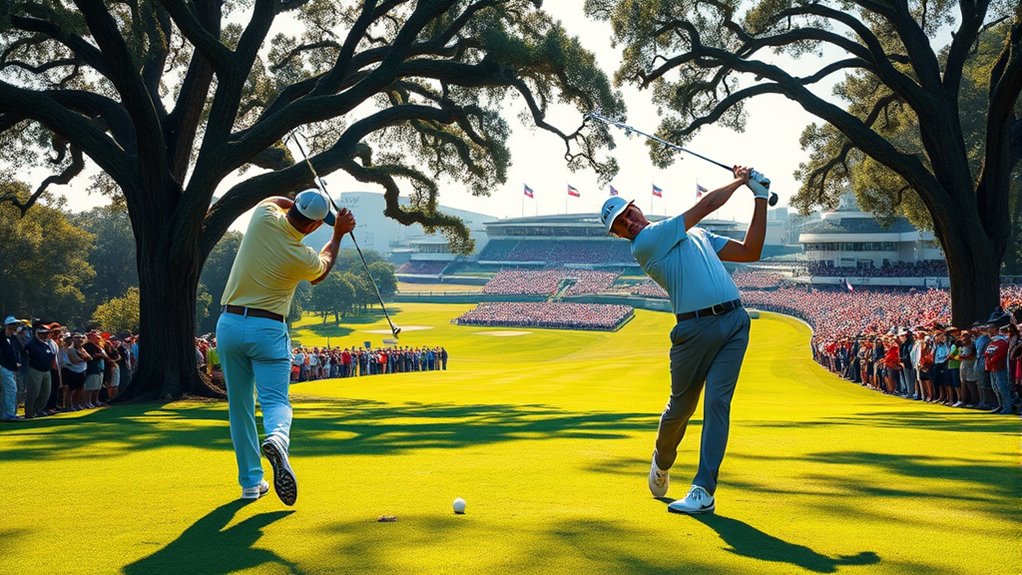
Throughout the evolution of the Ryder Cup’s format, certain players have left an indelible mark on the competition’s history. You can’t discuss this event without mentioning legendary rivalries that fueled intense battles and electrified fans worldwide. Players like Jack Nicklaus and Tom Watson became symbols of fierce competition, each securing iconic victories that defined eras. Their legendary rivalries pushed teams to perform at their best and created unforgettable moments that still resonate today. The use of modern golf equipment and training methods has further elevated the level of play in recent years. These players elevated the Ryder Cup from a simple contest to a showcase of skill, passion, and national pride. Their contributions not only shaped the tournament’s legacy but also inspired generations of golfers. You now see how individual greatness and rivalries forged the storied history of golf’s ultimate team competition.
Memorable Matches and Historic Comebacks

Memorable matches and historic comebacks define the most thrilling moments in Ryder Cup history, showcasing how teams can overturn the odds through resilience and skill. These moments often highlight exceptional team camaraderie and the importance of venue selection, which can influence momentum. You might recall the 2012 victory, where the U.S. staged an incredible comeback on a challenging course, fueled by unwavering team spirit. Such matches inspire fans and players alike, demonstrating that no deficit is insurmountable. Key elements include:
- Last-minute rallies that change the course of the competition
- Unpredictable shifts in momentum
- Players uniting under intense pressure
- Strategic decisions that capitalize on venue strengths
- Team camaraderie fueling comebacks against the odds
Additionally, understanding team dynamics can further explain how collective effort influences the outcome of such high-stakes events. Recognizing the role of psychological resilience can also offer insights into maintaining focus and resilience under pressure, which are essential during pivotal moments in the competition. For example, the ability to adapt and stay focused during critical moments often hinges on mental toughness, a vital component of successful team performances. These examples underscore the passion and resilience that make the Ryder Cup unforgettable, highlighting the importance of psychological resilience in overcoming setbacks.
The Role of Strategy and Team Dynamics

Your success in the Ryder Cup often depends on choosing the right pairings and keeping players motivated. By selecting effective combinations, you can maximize team strengths and turn the tide of matches. Managing morale guarantees everyone stays focused and confident throughout the competition. Incorporating Free Floating strategies can also help adapt to changing match dynamics and maintain team flexibility. Additionally, understanding team dynamics can foster better communication and cohesion among players. Regularly assessing auditory processing challenges within the team can help identify communication barriers that may affect overall performance. Recognizing the importance of team member compatibility can further enhance collaboration and strategic execution. Utilizing travel comfort & accessories techniques, such as effective communication devices, can further enhance team coordination during the event.
Selecting Effective Pairings
Selecting effective pairings in the Ryder Cup requires careful strategy and an understanding of team dynamics. You need to contemplate how players complement each other through pairing strategies and focus on chemistry building. Successful pairings often hinge on shared playing styles, communication, and temperament. To optimize your choices:
- Match aggressive players with steady ones to balance risk and control
- Pair players with proven chemistry from previous competitions
- Consider complementary swing styles for better coordination
- Use pairing strategies that maximize a player’s strengths
- Adjust pairings based on course conditions and player performance
- Recognize the importance of environmental considerations such as course layout and weather conditions to adapt pairing choices effectively, and understanding body language can enhance team synergy and communication during matches. Additionally, considering team cohesion can significantly influence overall performance by fostering better collaboration and morale. Moreover, paying attention to team dynamics can help identify the most effective partnerships for success. Incorporating insights from team communication can further improve coordination and execution during high-pressure situations.
Managing Player Morale
How can team leaders effectively manage player morale during high-stakes matches? By fostering strong team cohesion, you create a supportive environment where players feel valued and motivated. Recognize individual contributions and offer encouragement, especially after setbacks, to maintain confidence. Understanding leadership dynamics is essential—adapt your approach to each player’s personality and needs, whether through direct communication or subtle gestures. Keeping morale high requires balancing competitive drive with camaraderie, ensuring players stay focused yet connected. Clear strategies, like celebrating small victories and emphasizing collective goals, help sustain momentum. When team members trust each other and believe in the leadership, morale naturally improves, leading to better performance under pressure. Additionally, focusing on team dynamics can enhance overall cohesion and resilience within the team. Recognizing how leadership strategies influence team morale is crucial for sustained success. Ultimately, managing morale hinges on your ability to nurture unity and resilience within the team.
The Impact of Technology and Media Coverage

Technology has transformed how you experience the Ryder Cup, especially through live broadcast enhancements that bring the action closer to home. Social media engagement allows fans to connect, share, and follow real-time updates like never before. These tools keep you more connected and involved, changing the way you watch and discuss the tournament. Additionally, innovative use of digital platforms supports mental wellbeing by fostering community and emotional resilience among fans.
Live Broadcast Enhancements
Advancements in broadcast technology have revolutionized how fans experience the Ryder Cup, making live coverage more immersive and accessible than ever before. Today, you enjoy detailed live commentary that captures every swing, shot, and moment in real-time. Enhanced broadcast technology allows for multiple camera angles, slow-motion replays, and drone footage, giving you a thorough view of the action. You can follow players closely with on-screen stats and interactive features. Key innovations include:
- Multi-angle camera feeds
- High-definition and 4K streaming
- Real-time player tracking
- Enhanced audio with immersive sound
- On-demand highlights and replays
These improvements ensure your viewing experience is richer, more engaging, and closer to being on the course, elevating your connection to this historic competition.
Social Media Engagement
Social media has transformed the way fans engage with the Ryder Cup, allowing you to connect instantly with live updates, behind-the-scenes content, and player interactions. Viral hashtags like #RyderCup2024 help rally fans worldwide, fueling excitement and creating a sense of community. These hashtags often trend during key moments, boosting fan engagement and making you feel part of the action. Social media platforms give you direct access to player insights, team reactions, and real-time commentary, enhancing your overall experience. You can share your thoughts, cheer for your team, and participate in digital conversations. This instant connectivity deepens your involvement, turning casual viewers into active supporters and making the Ryder Cup more accessible and dynamic than ever before.
Notable Moments and Controversies

Throughout Ryder Cup history, several moments stand out not just for their significance but also for the controversies they sparked. You’ll recall disqualification scandals where players were disqualified over rule breaches, leading to heated debates. Weather disruptions have also caused chaos, forcing delays and impacting match outcomes. Notable controversies include tense disputes over rulings and contentious shots that divided fans and players alike.
Ryder Cup controversies include disqualifications, weather delays, and heated ruling disputes shaping its legendary history.
- Disqualification scandals that changed team compositions
- Weather disruptions delaying pivotal matches
- Heated disputes over controversial rulings
- Players disputing referees’ decisions
- Tense moments over misinterpreted rules
These incidents highlight how passion and pressure can lead to conflicts, shaping the tournament’s dramatic history. Such moments continue to fuel debates and add to the Ryder Cup’s legendary status.
The Ryder Cup’s Cultural and Global Significance

The Ryder Cup transcends its role as a golf competition to become a powerful symbol of international camaraderie and national pride. It showcases deep-rooted golf traditions that connect players and fans across generations, fostering a sense of shared history. The event’s international influence extends beyond sport, uniting diverse cultures through a common passion for golf. Spectators witness not just athletic skill but also respect for different golfing styles and national identities. The Ryder Cup’s global reach enhances its cultural significance, promoting goodwill among nations. It highlights how sport can serve as a bridge, encouraging connections that go beyond the fairways. Ultimately, this tournament embodies the spirit of unity and tradition that defines golf’s enduring appeal worldwide.
Future Trends and the Continuing Legacy

As the Ryder Cup continues to evolve, emerging trends suggest it will grow even more inclusive and innovative, ensuring its enduring legacy. You can expect a stronger focus on sustainable golf, reducing environmental impact while maintaining tradition. Youth development will become a key priority, nurturing future generations of golfers. The event may incorporate new formats and technology, making it more engaging for fans worldwide. Additionally, partnerships with global initiatives could promote diversity and accessibility within the sport. Finally, digital innovations like virtual reality could revolutionize how fans experience the competition. These trends will help preserve the Ryder Cup’s prestige and relevance, inspiring new players and fans alike to participate in and support this historic team event.
The Ryder Cup is embracing sustainability, technology, youth programs, and global initiatives to ensure its legacy endures.
- Emphasis on sustainable golf practices
- Programs for youth development
- Technological enhancements for engagement
- Global outreach and diversity initiatives
- Innovative formats and fan experiences
Frequently Asked Questions
How Are Team Captains Chosen for the Ryder Cup?
You’re curious about how team captains are chosen for the Ryder Cup. The captain selection process varies between the U.S. and European teams but generally involves a mix of experience, leadership qualities, and recent performance. The captaincy criteria emphasize strategic thinking, team-building skills, and a deep understanding of players’ strengths. Usually, the captains are selected by the respective golf associations, often considering past performances and their ability to motivate and lead the team effectively.
What Are the Criteria for Selecting Players for the Team?
You’re selected for the Ryder Cup team based on strict player selection and qualification criteria. You need to meet performance standards like consistent results on the PGA or European Tour, earn enough points through tournament finishes, and sometimes receive wild card picks from your captain. Your recent form, experience, and ability to perform under pressure also factor in. If you meet these criteria, you stand a good chance of representing your team.
How Does the Ryder Cup Influence Players’ Careers?
The Ryder Cup markedly influences your career by boosting your visibility and prestige. Performing well in the event can lead to individual awards, elevating your status in golf. It also sharpens your understanding of team dynamics, helping you develop essential skills like leadership and communication. This experience often opens doors for sponsorships and invites, shaping your future opportunities and solidifying your reputation on the international stage.
What Are the Environmental Impacts of Hosting the Ryder Cup?
Hosting the Ryder Cup impacts the environment considerably, with thousands of attendees contributing to increased carbon emissions. You can see this through the estimated 20,000 tons of CO2 produced annually. To reduce this, organizers are adopting sustainable practices like eco-friendly landscaping and water conservation. Environmental mitigation efforts, such as wildlife habitat preservation, help lessen the event’s footprint, ensuring the competition promotes sustainability while minimizing ecological harm.
How Do Fans and Spectators Participate in Ryder Cup Traditions?
You participate in Ryder Cup traditions by joining lively fan cheers that energize the atmosphere and showing your team spirit. Spectators often collect souvenirs like flags and caps to remember the event. You can also engage in chants, wave banners, and celebrate with fellow fans, creating a vibrant, communal experience. Your enthusiasm helps make the Ryder Cup memorable, fostering camaraderie and excitement throughout the tournament.
Conclusion
As you reflect on the Ryder Cup’s storied history, one thing remains certain: its next chapter is just over the horizon. Imagine the roar of the crowd, the clutch shots, and unexpected twists that await. Will new legends rise, or will history repeat itself in a dramatic showdown? The future of golf’s ultimate team battle holds secrets yet to be revealed—prepare yourself for moments that could redefine everything you thought you knew.