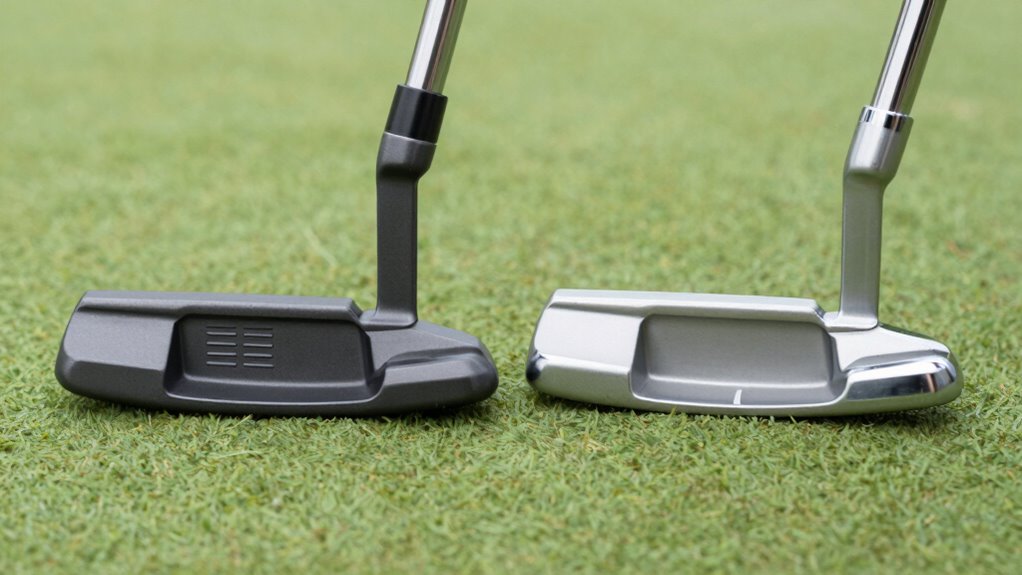
Mallet putters have a larger, heavier head with alignment aids, making them more stable and forgiving, especially for longer or off-center shots. Blade putters are smaller and lighter, offering more control and feedback, ideal for shorter, precise strokes. If you prefer consistency and confidence with alignment, a mallet could suit you better. If you favor finesse and feel, a blade might be the right choice. Keep exploring to discover more about how these options match your game.

Get travel and outdoor gear delivered free with Prime
- Fast, free delivery on millions of items
- Prime Video, Amazon Music and more included
- Member-only deals all year
Key Takeaways
- Mallet putters are larger and heavier, offering better stability and forgiveness, especially for longer or misaligned putts.
- Blade putters are smaller and lighter, providing more feel and precision for short, technical strokes.
- Mallets often have alignment aids to help with consistent aiming; blades focus on finesse and control.
- Choose a mallet if you prefer stability and confidence; select a blade for delicate, accurate putting.
- Modern technology has improved both types, making them more customizable and easier to use for different playing styles.

When choosing a putter, understanding the differences between mallet and blade designs can greatly impact your putting performance. The design of your putter influences how you strike the ball, your accuracy, and how confident you feel on the green. Golf club technology continues to evolve, offering a variety of options that cater to different putting styles and preferences. Recognizing the strengths of each type can help you select the one that best complements your putting techniques.
Mallet putters are typically larger and heavier, featuring a more substantial head shape, often with perimeter weighting. This design provides greater stability during your stroke, making it easier to control your putts, especially from longer distances. The weight distribution in mallets helps reduce twisting on off-center hits, giving you more forgiveness if your stroke isn’t perfectly centered. As a result, many golfers find mallet putters more consistent, especially when they struggle with alignment or face difficulties in maintaining a smooth stroke. Their design often incorporates alignment aids, which can be a big help in visualizing your line and improving your overall putting techniques. Because of their size and weight, mallet putters tend to promote a more deliberate, steady stroke, which can lead to better accuracy and confidence on the green.
Mallet putters offer stability, forgiveness, and alignment aids for greater consistency and confidence on the green.
In contrast, blade putters are sleeker, with a smaller, more traditional shape. They’re generally lighter and offer a more feel-oriented approach, allowing you to better sense the impact of your stroke. Blade putters are favored by players with a more refined, delicate putting style who rely heavily on touch and finesse. Their design encourages a more precise, controlled stroke, making them ideal for those who prefer a shorter, more technical putting technique. The smaller head of a blade putter offers less forgiveness on off-center hits but provides a more direct connection to the ball, giving you better feedback. Many skilled golfers prefer blades because they allow for more nuanced control over speed and line, especially on faster or more challenging greens. Additionally, blade putters often appeal to golfers who prioritize custom fit and feel to optimize their performance. Furthermore, advancements in golf club technology continue to enhance the performance of both types, allowing golfers to choose options that best suit their individual game. Understanding the design principles behind each type can further help you make an informed decision tailored to your unique playing style. Also, modern manufacturing techniques have contributed to improving the consistency and feel of both mallet and blade putters, providing even more options for discerning golfers.
As an affiliate, we earn on qualifying purchases.
Frequently Asked Questions
Which Type of Putter Is Better for Beginners?
For beginners, mallet putters are often better because they offer better putter alignment, helping you aim more accurately. They also tend to have a larger, more stable head, which improves grip comfort and balance. This makes it easier to develop a consistent stroke. Blade putters, while more traditional, can be harder to control initially. So, starting with a mallet gives you more confidence and helps improve your overall putting game.
How Do I Choose Between a Mallet and Blade Putter?
Think of choosing a putter like picking a dance partner; comfort and confidence matter. If you prefer a stable, easy-to-align club that boosts stroke consistency, a mallet might be your best fit. If you like a more traditional feel and precise control, a blade could suit you better. Test both for balance and alignment; your choice should feel natural, helping you sink those putts with ease.
Are There Differences in Maintenance for Each Putter Type?
You’ll find that maintenance for mallet and blade putters is pretty similar. To keep your putter in top shape, regularly check the putter alignment and make sure the face isn’t warped. Cleaning the grip for comfort and grip comfort is essential, and replacing worn grips helps maintain control. Both types benefit from gentle cleaning and storage in a dry place, so focus on these upkeep basics regardless of your putter style.
Can I Switch Between Mallet and Blade During a Game?
You definitely can switch between mallet and blade putters during a game. Just keep in mind, your putter alignment and stroke consistency may feel a little different with each. Mallet putters tend to offer more stability, while blades can give you better control. Trying both can help you find your sweet spot, but switching mid-game might take a moment to adjust, so stay patient and keep practicing.
What Are the Common Materials Used for Mallet and Blade Putters?
You’ll find that common putter head materials include stainless steel, aluminum, and soft materials like copper and brass, offering different feel and weight. For grip material options, you can choose from rubber, synthetic, or leather grips, depending on your comfort and control preferences. These materials influence your feel and performance, so select based on how you want to connect with your putter and the feel during your stroke.
As an affiliate, we earn on qualifying purchases.
Conclusion
Choosing between mallet and blade putters is like selecting the right paintbrush for your masterpiece—you want the one that feels just right and helps you craft your perfect shot. Both styles have their strengths, so consider your comfort and aiming style. Experiment a bit, trust your gut, and remember, the right putter can turn your putting stroke into a smooth, confident dance. Ultimately, it’s about finding the tool that helps you sink those putts with ease.
As an affiliate, we earn on qualifying purchases.
As an affiliate, we earn on qualifying purchases.
Halloween Picks
halloween
As an affiliate, we earn on qualifying purchases.