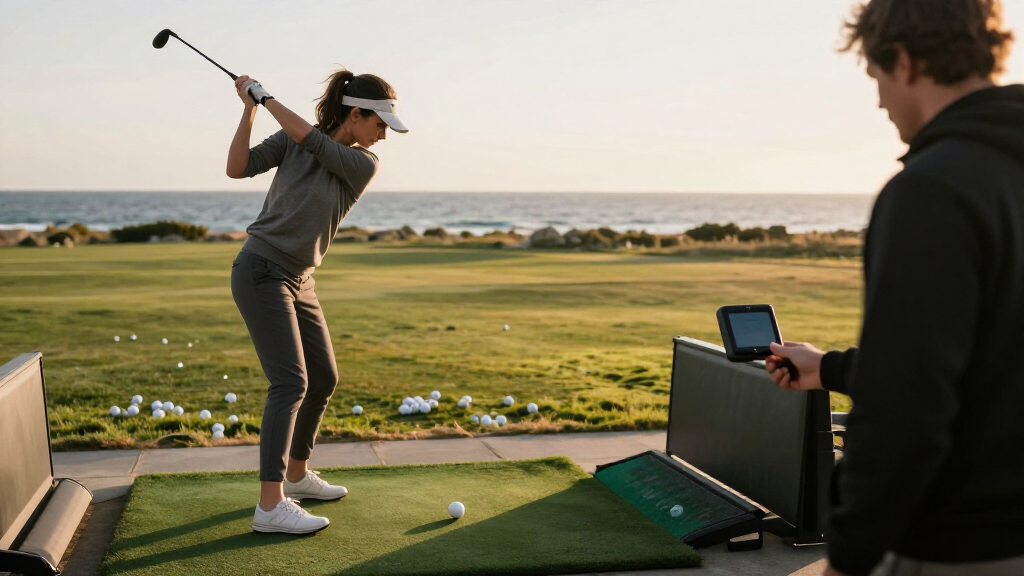

The best portable golf launch monitor overall in this roundup is the Garmin Approach R10, a strong fit for golfers who want practice feedback and simulator options in a compact format. The Rapsodo MLM2PRO stands out for golfers who want more detailed practice and simulation features, while the PRGR HS 130-A appeals to players seeking a simpler, screen-based swing and ball-speed tool. The main tradeoff is between easy, self-contained feedback and app-connected systems with broader practice features. Indoor space, phone compatibility, setup, and the type of data you will actually use can matter as much as portability. Read on for how the 15 options differ and which one best matches your practice routine.

Get travel and outdoor gear delivered free with Prime
- Fast, free delivery on millions of items
- Prime Video, Amazon Music and more included
- Member-only deals all year
Complete the kit



Key Takeaways
The Garmin Approach R10 leads as an all-around pick because it combines portable practice use with simulator features; golfers who prefer direct on-device feedback may favor the PRGR HS 130-A instead.
The Rapsodo MLM2PRO is the more feature-rich Rapsodo choice for golfers interested in a connected practice and simulation setup, while the original MLM1 is the more straightforward phone-based option.
Shot Scope LM1 appears in three bundle configurations; compare included accessories and package contents before choosing, since the core device name alone does not explain the bundle differences.
Simple radar units serve a different job from app-centered systems: options such as the PRGR HS 130-A and GOLFBUDDY Shot Mate prioritize accessible swing metrics, while Rapsodo and Garmin offer a broader connected experience.
Portability does not guarantee indoor fit. Radar placement, available ball-flight space, phone requirements, and lighting can affect whether a monitor works well in a garage or spare room.
| Blue Tees Golf Rainmaker Portable Golf Launch Monitor |  | Best for Simulator Flexibility | Tracking: Doppler radar | Metrics: More than 20 ball and club metrics | Display: 4.3-inch wide-angle TFT | VIEW LATEST PRICE | See Our Full Breakdown |
| Rapsodo Mobile Launch Monitor (MLM1) for iPhone and iPad |  | Best for iPhone-Based Practice | Compatible devices: iPhone and iPad | Operating system: iOS | Tracking: Radar and device camera | VIEW LATEST PRICE | See Our Full Breakdown |
| Rapsodo MLM2PRO Mobile Golf Launch Monitor and Simulator with 3 Chrome Tour Balls |  | Best for Detailed Shot Analysis | Technology: Doppler radar and dual cameras | Shot metrics: Up to 15, including spin rate, spin axis, carry distance, club speed, club path, and launch angle | Compatibility: iOS and Android devices | VIEW LATEST PRICE | See Our Full Breakdown |
| Garmin Approach R10 Portable Golf Launch Monitor |  | Best for Long Practice Sessions | Water resistance: IPX7 | Battery life: Up to 10 hours | Connectivity: Bluetooth | VIEW LATEST PRICE | See Our Full Breakdown |
| SkyTrak ST MAX Golf Launch Monitor with 1-Year Software |  | Best for Buyers Prioritizing Included Software | Package dimensions: 13.43 × 11.57 × 5.55 inches | Item weight: 5 pounds | Battery: 1 lithium polymer battery included | VIEW LATEST PRICE | See Our Full Breakdown |
| The Stack Radar Portable Golf Launch Monitor |  | Best for Speed Training | Measurements: Swing speed, ball speed, estimated carry distance, and smash factor | Technology: Doppler radar | Connectivity: Bluetooth | VIEW LATEST PRICE | See Our Full Breakdown |
| Shot Scope LM1 Portable Golf Launch Monitor – Power Bundle |  | Best for Range Sessions Without App Fees | Measurements: Club speed, ball speed, smash factor, carry distance, and total distance | Technology: Doppler radar | Screen: 3.5-inch color display | VIEW LATEST PRICE | See Our Full Breakdown |
| GOLFBUDDY Shot Mate Launch Monitor |  | Best for Standalone Display and Shot Storage | Radar technology: Doppler radar | Measurements: Club speed, ball speed, smash factor, and carry distance | Screen: 5-inch TFT LCD | VIEW LATEST PRICE | See Our Full Breakdown |
| Swinora GX-03 Golf Launch Monitor and Portable Swing Analyzer |  | Best for Broad Swing and Ball Metrics | Tracked metrics: Attack angle, launch angle, spin rate, ball speed, club speed, and carry distance | Display: OLED | Material: Aluminum | VIEW LATEST PRICE | See Our Full Breakdown |
| Garmin Approach R10 Portable Golf Launch Monitor (Renewed) | | Best for Simulator and Video Practice | Model: Garmin Approach R10 | Measurements: Club head speed, ball speed, swing tempo, spin, and launch angle | Water resistance: IPX7 | VIEW LATEST PRICE | See Our Full Breakdown |
| Shot Scope LM1 Portable Golf Launch Monitor Bundle |  | Best Ready-to-Train Bundle | Measurement technology: Doppler radar | Metrics: Club speed, ball speed, smash factor, carry distance, total distance | Display: 3.5-inch color display | VIEW LATEST PRICE | See Our Full Breakdown |
| PRGR HS 130-A Portable Golf Launch Monitor |  | Best for App-Free Simplicity | Technology: Doppler radar | Metrics: Club head speed, ball speed, smash factor, carry distance, total distance | Swing memory: Up to 500 swings | VIEW LATEST PRICE | See Our Full Breakdown |
| Voice Caddie SC200Plus Portable Golf Launch Monitor and Swing Analyzer |  | Best for Immediate Feedback | Technology: Doppler radar with atmospheric pressure sensors | Feedback: LCD display and voice output | Swing-speed mode: Measures swing speed without a ball | VIEW LATEST PRICE | See Our Full Breakdown |
| Rapsodo MLM2PRO Golf Launch Monitor and Swing Analyzer with 3 Pro V1 Balls |  | Best for Video and Advanced Metrics | Shot tracking technology: Doppler radar and dual cameras | Metrics tracked: 15, including spin rate, carry distance, club speed, and launch angle | Display: 3.01-inch touchscreen | VIEW LATEST PRICE | See Our Full Breakdown |
| Shot Scope LM1 Launch Monitor |  | Best for Subscription-Free Practice Tracking | Metrics: Club speed, ball speed, smash factor, carry distance, total distance | Training and session modes: Speed training, on-course, and practice range | Battery life: More than 5 hours | VIEW LATEST PRICE | See Our Full Breakdown |
| portable golf launch monitor | Connectivity |
|---|---|
| Blue Tees Golf Rainmaker Porta | — |
| Rapsodo Mobile Launch Monitor | Bluetooth |
| Rapsodo MLM2PRO Mobile Golf La | Bluetooth |
| Garmin Approach R10 Portable G | Bluetooth |
| SkyTrak ST MAX Golf Launch Mon | — |
| The Stack Radar Portable Golf | Bluetooth |
| Shot Scope LM1 Portable Golf L | Bluetooth |
| GOLFBUDDY Shot Mate Launch Mon | — |
| Swinora GX-03 Golf Launch Moni | Bluetooth |
| Garmin Approach R10 Portable G | Cable |
| Shot Scope LM1 Portable Golf L | — |
| PRGR HS 130-A Portable Golf La | No Wi-Fi, Bluetooth, or app required |
| Voice Caddie SC200Plus Portabl | — |
| Rapsodo MLM2PRO Golf Launch Mo | — |
| Shot Scope LM1 Launch Monitor | — |
More Details on Our Top Picks
Blue Tees Golf Rainmaker Portable Golf Launch Monitor
The Rainmaker suits golfers who want a portable unit for both range sessions and home simulator practice. Its Doppler radar tracks 20+ ball and club metrics, while compatibility with E6 Connect and GSPro gives it a broader simulator path than the Rapsodo MLM1, which relies on an iPhone or iPad and requires a premium upgrade for simulator courses. A 4.3-inch display, magnetic remote, and carrying case also make it less dependent on checking a phone for every basic readout. The tradeoff is ongoing software access: premium app membership lasts 12 months, and virtual play depends on a compatible simulator platform. At 1.48 kg, it is portable for a golf bag or car, but heavier than the 0.4 kg Rapsodo MLM1. Its IPX4 rating is useful for light exposure, not a reason to leave it out in wet weather.
Pros:- Tracks more than 20 ball and club metrics for detailed practice feedback.
- Supports indoor and outdoor use and works with E6 Connect and GSPro.
- Built-in 4.3-inch display and detachable magnetic remote reduce reliance on a phone for readings.
- Includes a carrying case and a rechargeable battery rated for over six hours.
Cons:- The included premium app membership covers only the first 12 months.
- At 1.48 kg, it is heavier than compact options such as the Rapsodo MLM1.
- IPX4 water resistance does not make it suitable for sustained rain or wet storage.
Best for: Golfers who want one monitor for indoor practice, outdoor sessions, and simulator play through E6 Connect or GSPro.
Not ideal for: Travelers prioritizing the lightest setup, or buyers who want simulator courses without choosing and supporting a compatible platform.
- Tracking:Doppler radar
- Metrics:More than 20 ball and club metrics
- Display:4.3-inch wide-angle TFT
- Simulator compatibility:E6 Connect and GSPro
- Water resistance:IPX4
- Battery runtime:Over 6 hours
- Charging:USB-C
- Package weight:1.48 kg
- Warranty:2 years
Our verdict“Choose the Rainmaker if you want a displayed, multi-metric practice unit with E6 Connect and GSPro support and can accept its weight and platform-dependent simulator setup.”
Rapsodo Mobile Launch Monitor (MLM1) for iPhone and iPad
The Rapsodo MLM1 is a compact choice for golfers who want shot feedback tied to video rather than a larger display or a standalone simulator setup. It combines radar with an iPhone or iPad camera to show carry distance, speed, launch angle, and shot shape, then adds GPS mapping, video replay, and a shot tracer to help connect a swing clip with its result. At 0.4 kg, it is much lighter than the Blue Tees Rainmaker, though the Rainmaker has its own 4.3-inch screen and broader stated metric count. The key constraint is platform: this model is for iOS users, not Android golfers. Simulator courses and game modes also require a premium upgrade, so it makes more sense as a phone-based practice aid than as an all-in-one virtual golf system.
Pros:- Combines radar and an iPhone or iPad camera for shot and video feedback.
- Reports ball speed, club speed, launch angle, carry distance, and shot shape.
- GPS satellite view, video replay, and shot tracer help review where and how shots went.
- At 0.4 kg, it is lighter than the Blue Tees Rainmaker.
Cons:- Compatible only with iPhone and iPad running iOS.
- Simulator courses and game modes require a premium upgrade.
- Using the camera-based features means bringing a compatible device and setting it up alongside the monitor.
Best for: iPhone or iPad golfers who want portable shot tracking with video replay, GPS shot mapping, and a shot tracer.
Not ideal for: Android users, or golfers seeking included simulator courses without a premium upgrade.
- Compatible devices:iPhone and iPad
- Operating system:iOS
- Tracking:Radar and device camera
- Connectivity:Bluetooth
- Measurements:Ball speed, club speed, launch angle, carry distance, and shot shape
- Features:GPS satellite view, video replay, and shot tracer
- Dimensions:7.72 × 2.28 × 6.85 in
- Weight:0.4 kg
Our verdict“Pick the MLM1 if you already use an iPhone or iPad and value video-linked practice more than broad simulator compatibility or a built-in display.”
Rapsodo MLM2PRO Mobile Golf Launch Monitor and Simulator with 3 Chrome Tour Balls
For golfers who want more than basic carry and speed readings, the MLM2PRO pairs Doppler radar with dual cameras to track up to 15 metrics, including spin rate, spin axis, club path, and launch angle. That broader analysis gives it a different role from the iPhone-only MLM1: the MLM2PRO works with both iOS and Android and includes swing review and simulator practice features. It is a strong fit for players who want to study shot shape and delivery, not simply check distances at the range. The tradeoff is reliance on connected devices and time-limited premium access; its 45-day trial does not mean premium features are included indefinitely. The supplied information also gives two different metric counts, so buyers should treat the stated total as up to 15 rather than expect every metric in every setup.
Pros:- Doppler radar and dual cameras support detailed shot and swing analysis.
- Tracks up to 15 metrics, including spin rate, spin axis, and club path.
- Works with both iOS and Android devices, unlike the iOS-only Rapsodo MLM1.
- Includes three Chrome Tour balls and a 45-day premium trial.
Cons:- Premium features are offered through a limited-time trial, so continued access may require a separate plan.
- The listed information conflicts between 13 core metrics and up to 15 metrics.
- Phone connectivity is part of the setup for its app, simulator, and review features.
Best for: Practice-focused golfers using iOS or Android who want spin, club-path, and swing-review data alongside simulator features.
Not ideal for: Golfers who only need quick distance checks, want premium simulator access without a subscription decision, or prefer a unit independent of a phone.
- Technology:Doppler radar and dual cameras
- Shot metrics:Up to 15, including spin rate, spin axis, carry distance, club speed, club path, and launch angle
- Compatibility:iOS and Android devices
- Connectivity:Bluetooth
- Display:LCD, 1280 × 800 resolution
- Weight:16 ounces
- Included balls:3 Chrome Tour balls
- Premium trial:45 days
Our verdict“Choose the MLM2PRO if detailed spin and swing analysis across iOS or Android matters more than a simple, phone-light range tool.”
Garmin Approach R10 Portable Golf Launch Monitor
The Garmin Approach R10 stands out for a combination that is practical at the range: up to 10 hours of battery life and an IPX7 water-resistance rating. That gives it a more weather-tolerant, longer-session profile than the Blue Tees Rainmaker, whose listed runtime is over six hours and rating is IPX4. The R10 tracks more than a dozen metrics, while the Garmin Golf app adds dispersion analysis and swing video clips for golfers who want to review patterns after practice. Its small 0.9-inch display means the app on a compatible smartphone does much of the viewing work, so it is less self-contained than the Rainmaker’s 4.3-inch screen. Virtual rounds across more than 42,000 courses require an active subscription, making the R10 a better match for data-led practice than buyers seeking included, ongoing course access.
Pros:- Up to 10 hours of battery life supports extended sessions away from a charger.
- IPX7 water resistance is stronger than the Blue Tees Rainmaker’s IPX4 rating.
- Tracks more than a dozen metrics and offers app-based dispersion analysis and swing video clips.
- Garmin Golf app supports virtual rounds on more than 42,000 courses with an active subscription.
Cons:- App features require a compatible smartphone.
- Virtual courses and tournaments require an active subscription.
- The 0.9-inch display is much smaller than the Rainmaker’s 4.3-inch screen.
Best for: Golfers who practice for long stretches outdoors and want app-based shot dispersion and swing-video analysis.
Not ideal for: Players who do not want to rely on a compatible smartphone or pay for an active subscription to access virtual rounds.
- Water resistance:IPX7
- Battery life:Up to 10 hours
- Connectivity:Bluetooth
- Compatible device:Smartphone
- Display:0.9 inches
- Club head speed accuracy:±3 mph
- Ball speed accuracy:±1 mph
- Launch angle accuracy:±1 degree
- Launch direction accuracy:±1 degree
Our verdict“Choose the Approach R10 for long, outdoor practice sessions and Garmin app analysis if smartphone dependence and subscription-based virtual play suit your setup.”
SkyTrak ST MAX Golf Launch Monitor with 1-Year Software
The SkyTrak ST MAX is the least fully specified portable option in this group, so I would shortlist it only if its included one year of Core Foresight software is the deciding factor. The product details confirm a lithium polymer battery and a five-pound item weight, but they do not state tracking technology, measured metrics, battery runtime, water resistance, or device compatibility. That leaves important questions for a portable launch monitor unanswered. By comparison, the Garmin Approach R10 lists battery life, weather protection, and measurement accuracy, while the Rapsodo MLM2PRO identifies its radar-and-camera system and tracked metrics. The ST MAX may suit a buyer already focused on its software package, but the supplied information is not enough to judge how easily it travels or what feedback it provides. I would verify those details before choosing it over better-documented alternatives.
Pros:- Includes one year of Core Foresight software.
- A lithium polymer battery is included.
- Its stated package dimensions give buyers a basis for checking storage and transport fit.
Cons:- The supplied details do not identify tracked metrics or the launch-monitor tracking technology.
- Battery runtime and water-resistance rating are not specified.
- At 5 pounds, it is heavier than the 16-ounce Rapsodo MLM2PRO.
Best for: Golfers specifically seeking a SkyTrak unit bundled with one year of Core Foresight software who can confirm its setup and tracking details before buying.
Not ideal for: Buyers comparing portability, battery endurance, weather resistance, or shot metrics, since those details are not provided here.
- Package dimensions:13.43 × 11.57 × 5.55 inches
- Item weight:5 pounds
- Battery:1 lithium polymer battery included
- Software included:1 year of Core Foresight
- Department:Unisex-Adult
- Tracking technology:Not specified in the provided product data
Our verdict“Consider the ST MAX only if its included Core Foresight year fits your plan and you can verify its portability and measurement details before purchase.”
The Stack Radar Portable Golf Launch Monitor
I’d choose The Stack Radar when the main goal is building repeatable swing speed rather than collecting a broad set of launch data. Its compact Doppler unit measures swing speed and ball speed, then estimates carry distance and smash factor; Bluetooth sends training data to The Stack app for guided and gamified practice. Compared with the GOLFBUDDY Shot Mate, it offers less on-device feedback and no stated shot-storage capacity, but it is notably lighter at 0.12 kg. App compatibility is a real dividing line: speed training works with iOS and Android, while the wedging and putting features require iOS 15.0 or later. Carry is an estimate, so golfers seeking detailed ball-flight analysis should look at the Swinora GX-03 instead.
Pros:- Measures both swing speed and ball speed for speed-focused practice.
- Very light at 0.12 kg, making it easy to carry to a range or course.
- Bluetooth links training data to The Stack app.
- Guided and gamified practice features support a more structured session.
Cons:- Carry distance is estimated rather than presented as a directly measured result.
- Wedging and putting app features require iOS 15.0 or later.
- Provides a narrower set of stated metrics than the Swinora GX-03.
Best for: Golfers focused on speed training and structured practice who want a very lightweight radar device and use iOS or Android for speed training.
Not ideal for: Android golfers who want the wedging and putting app features, or players who need measured rather than estimated carry data and broader shot analysis.
- Measurements:Swing speed, ball speed, estimated carry distance, and smash factor
- Technology:Doppler radar
- Connectivity:Bluetooth
- Item weight:0.12 kg
- Package weight:0.14 kg
- Package dimensions:6.89 x 3.23 x 1.38 inches
- Speed training compatibility:iOS 15.0 or later and Android
- Wedging app compatibility:iOS 15.0 or later
Our verdict“Choose The Stack Radar if portable speed training matters more to you than broad launch data or cross-platform access to every app feature.”
Shot Scope LM1 Portable Golf Launch Monitor – Power Bundle
The Shot Scope LM1 Power Bundle makes a practical case for golfers who want core distance and speed feedback without an ongoing app subscription. Its Doppler radar reports club speed, ball speed, smash factor, carry, and total distance, while lifetime app access and unlimited session history make it easier to revisit practice data. Compared with the The Stack Radar, the LM1 offers a broader stated set of distance metrics and a built-in color display, but weighs 300 g rather than 0.12 kg. The bundle adds a protective case and a 5,000 mAh charger, useful for longer days away from an outlet. Its battery lasts about five hours per charge, and the 3.5-inch screen is less suited to reviewing detailed data than the GOLFBUDDY Shot Mate’s 5-inch display.
Pros:- Reports club speed, ball speed, smash factor, carry, and total distance.
- Includes lifetime app access with unlimited session history and no monthly subscription.
- IPX3 rating supports indoor and outdoor practice.
- Power bundle includes a protective case, 5,000 mAh charger, wall adapter, and USB-C cable.
Cons:- Battery life is about five hours per charge.
- The 3.5-inch display gives less room for viewing details than the GOLFBUDDY Shot Mate.
- At 300 g, it is heavier than the highly portable The Stack Radar.
Best for: Golfers who want club and ball speed plus carry and total distance, along with saved sessions and charging accessories for range use.
Not ideal for: Players who need long sessions without recharging or want a larger screen for reviewing shot details.
- Measurements:Club speed, ball speed, smash factor, carry distance, and total distance
- Technology:Doppler radar
- Screen:3.5-inch color display
- Battery life:About 5 hours per charge
- Dimensions:4 x 1 x 5.7 inches
- Weight:300 g
- Connectivity:Bluetooth
- Water resistance:IPX3
- Included power accessories:USB-C charging cable, protective case, cleaning cloth, 5,000 mAh charger, and wall adapter
Our verdict“Pick the Shot Scope LM1 Power Bundle if you value saved practice history and included charging gear more than a large display or long battery life.”
GOLFBUDDY Shot Mate Launch Monitor
The Shot Mate suits golfers who would rather read feedback on the unit than depend on a phone during every practice session. Its 5-inch TFT LCD shows real-time swing and ball metrics, and the monitor stores up to 1,000 shots for later review. A 10-hour battery also outlasts the Shot Scope LM1 Power Bundle, whose stated battery life is about five hours. Shot Mate tracks club speed, ball speed, smash factor, and carry using Doppler radar, with practice and target modes for focused sessions. The tradeoff is a stated measurement range of up to 320 yards, which may limit its appeal to golfers who want a wider range. Its display is useful for quick feedback, but not a substitute for detailed analysis on a larger device or app.
Pros:- 5-inch TFT LCD presents real-time feedback directly on the monitor.
- Stores up to 1,000 shots for reviewing practice sessions.
- Up to 10 hours of battery life supports extended use.
- Tracks club speed, ball speed, smash factor, and carry with Doppler radar.
Cons:- Measurement range is limited to 320 yards.
- The screen may still feel small for detailed data analysis.
- Its focus on on-device feedback offers a different workflow from app-centered options such as the Swinora GX-03.
Best for: Range and indoor-practice golfers who want on-device feedback, long battery life, and a large stored sample of shots.
Not ideal for: Players who regularly need measurements beyond 320 yards or want a screen suited to detailed, multi-metric analysis.
- Radar technology:Doppler radar
- Measurements:Club speed, ball speed, smash factor, and carry distance
- Screen:5-inch TFT LCD
- Battery life:10 hours
- Item weight:191 g
- Measurement range:Up to 320 yards
- Shot storage capacity:1,000 shots
- Training modes:Practice and target modes
Our verdict“Choose the Shot Mate if you want long-lasting, phone-independent feedback and shot storage for everyday practice.”
Swinora GX-03 Golf Launch Monitor and Portable Swing Analyzer
The Swinora GX-03 stands out in this group for the breadth of its stated swing and ball metrics: it tracks attack angle, launch angle, spin rate, ball speed, club speed, and carry distance. That makes it a better fit for golfers who want more than the speed-and-distance focus of The Stack Radar or the Shot Mate. An OLED display handles on-device viewing, while the Bluetooth app adds multi-angle practice views, trajectory display, voice feedback, and adjustable distance compensation from 80% to 120%, with no subscription fee. The extra analysis comes with a larger setup demand: indoor use requires at least 15 feet of space, including 10 feet of ball flight. It also does not measure horizontal club face angle or swing path, so it is not a complete swing-mechanics picture.
Pros:- Tracks six stated metrics, including attack angle, launch angle, and spin rate.
- App includes multi-angle views, shot trajectory display, and voice feedback.
- No subscription fee for app features.
- Environmental sensors and adjustable distance compensation help adapt shot data to conditions.
Cons:- Indoor use requires at least 15 feet of total space, including 10 feet of ball flight.
- Does not measure horizontal club face angle or swing path.
- Bluetooth use recommends placing the phone in front of the device.
Best for: Data-oriented golfers who can provide the required indoor space and want a wide set of ball-flight and swing measurements without an app subscription.
Not ideal for: Golfers practicing in tight indoor spaces or players whose analysis depends on horizontal club face angle or swing-path measurements.
- Tracked metrics:Attack angle, launch angle, spin rate, ball speed, club speed, and carry distance
- Display:OLED
- Material:Aluminum
- Connectivity:Bluetooth
- Compatibility:iOS and Android
- Distance compensation:80% to 120%
- Indoor space requirement:At least 15 feet total: device 5 feet behind the ball with 10 feet of ball flight
- Included components:Golf launch monitor and tripod
- Warranty:1 year
Our verdict“Choose the GX-03 if you want broader swing and ball-flight data than the simpler speed-focused monitors and have room to set it up.”
Garmin Approach R10 Portable Golf Launch Monitor (Renewed)
The renewed Garmin Approach R10 is the strongest match here for golfers who want practice analysis to extend beyond a single session at the range. Paired with the Garmin Golf app, it tracks metrics such as club head speed, ball speed, tempo, spin, and launch angle, and can record swing video clips with metrics. Its support for virtual rounds across more than 42,000 courses adds a simulator option, though an active subscription is needed for virtual rounds and tournaments. Compared with the GOLFBUDDY Shot Mate, the R10 leans more heavily on a smartphone and app rather than its own screen; that app-centered approach brings video and course play but adds setup dependence. Up to 10 hours of battery life and IPX7 water resistance suit range use, while the 90-day limited warranty is a shorter coverage period to weigh with a renewed unit.
Pros:- Tracks a range of swing and ball-flight metrics, including tempo, spin, and launch angle.
- Training features include club statistics, a shot-dispersion chart, and swing video clips with metrics.
- Up to 10 hours of battery life.
- IPX7 water resistance supports use in wet conditions.
Cons:- App-based features require a compatible smartphone and Garmin Golf app.
- Virtual rounds and tournaments require an active subscription.
- The renewed unit has a 90-day limited warranty.
Best for: Golfers who want app-based swing analysis, video clips, and the option to play virtual courses, and are comfortable using a renewed device.
Not ideal for: Buyers who want a standalone display, do not want app or subscription dependence for virtual play, or prefer a longer stated warranty.
- Model:Garmin Approach R10
- Measurements:Club head speed, ball speed, swing tempo, spin, and launch angle
- Water resistance:IPX7
- Battery life:Up to 10 hours
- Connectivity:Cable
- Item weight:340 g
- Included accessories:Tripod stand, phone mount, carry case, microUSB cable, and documentation
- Warranty:90-day limited warranty
- Virtual course library:More than 42,000 courses; active subscription required for virtual rounds
Our verdict“Pick the renewed Approach R10 if video-supported app analysis and virtual golf matter more to you than standalone operation or subscription-free course play.”
Shot Scope LM1 Portable Golf Launch Monitor Bundle
The Shot Scope LM1 Bundle is a practical pick for golfers who want core swing feedback without building a kit around the monitor. It reports club speed, ball speed, smash factor, and distance on a 3.5-inch color display, while the included case and portable charger help it stay useful for range sessions away from an outlet. Its five-plus-hour battery life and no-subscription companion app make it simpler to keep practicing than the Rapsodo MLM2PRO, whose richer camera-based analysis comes with premium software features.
The tradeoff is that this LM1 focuses on basic metrics rather than video or spin analysis, and it needs to sit five feet behind the ball. IPX3 protection is suited to light exposure, not a wet-weather session. I’d choose it for a complete portable setup, not for advanced shot diagnosis.
Pros:- Reports club speed, ball speed, smash factor, carry, and total distance
- Bundle includes a protective case and 5000mAh portable charger
- Companion app has no subscription fee
- Over five hours of battery life and a readable color display
Cons:- Requires placement five feet behind the ball, which needs room to set up
- IPX3 water resistance offers only limited protection from rain
- Does not provide the dual-camera video and broader analysis features of the Rapsodo MLM2PRO
Best for: Range golfers who want core shot metrics, a carrying case, and backup charging power in one portable bundle.
Not ideal for: Golfers seeking video capture, spin data, or detailed course simulation; the Rapsodo MLM2PRO offers a more advanced analysis approach.
- Measurement technology:Doppler radar
- Metrics:Club speed, ball speed, smash factor, carry distance, total distance
- Display:3.5-inch color display
- Battery life:More than 5 hours
- Water resistance:IPX3
- Connectivity and compatibility:Bluetooth; Android and iOS
- Dimensions and weight:4 x 1 x 5.7 inches; 300 g
- Bundle accessories:Protective case, USB-C cable, cleaning cloth, user manual, PlayBetter 5000mAh portable charger
Our verdict“Choose this bundle if you want a portable, ready-to-train setup with useful core metrics and charging accessories, rather than advanced video analysis.”
PRGR HS 130-A Portable Golf Launch Monitor
The PRGR HS 130-A makes the most sense for golfers who want a small monitor that works without phone setup. Its Doppler radar measures club head speed with or without a ball, so it can support speed training as well as ordinary range practice. It also stores up to 500 swings and runs on AAA batteries. Compared with the Shot Scope LM1 Bundle, it gives up the larger color display and included rechargeable power bank, but it avoids Bluetooth and companion-app dependence altogether.
That simplicity comes with limits: the 135–270-yard listed measuring range may not suit every shot or player, and AAA batteries mean carrying spares rather than recharging an internal battery. Its plastic body is light and compact, but this is a straightforward feedback tool, not a video or simulator system like the Rapsodo MLM2PRO.
Pros:- Measures club head speed with or without a ball
- Works without Wi-Fi, Bluetooth, or a companion app
- Stores up to 500 swings
- Compact 4.9-ounce design is easy to carry
Cons:- Runs on AAA batteries rather than a rechargeable battery
- Listed measuring range is 135–270 yards
- Does not provide the app-connected analysis or video features available with models such as the Rapsodo MLM2PRO
Best for: Golfers and multi-sport speed trainers who want a pocket-sized radar unit that measures swings without a ball or phone connection.
Not ideal for: Players who want a rechargeable monitor, app-based shot history, or advanced video and simulator features.
- Technology:Doppler radar
- Metrics:Club head speed, ball speed, smash factor, carry distance, total distance
- Swing memory:Up to 500 swings
- Power:AAA batteries
- Weight:4.9 ounces
- Dimensions:3.03 x 1.69 x 5.63 inches
- Measuring range:135–270 yards
- Connectivity:No Wi-Fi, Bluetooth, or app required
Our verdict“Pick the PRGR if a compact, connection-free speed and shot monitor matters more to you than rechargeable power or advanced analysis.”
Voice Caddie SC200Plus Portable Golf Launch Monitor and Swing Analyzer
The Voice Caddie SC200Plus suits golfers who want feedback at the hitting area without checking a phone after every shot. Its LCD readout and voice output deliver results in real time, and swing-speed mode works without a ball, which makes it useful for controlled speed sessions as well as regular practice. The up-to-20-hour battery life is a clear advantage over the Shot Scope LM1 models, which are listed at more than five hours.
It also stores shot data and club statistics, though the supplied details don’t specify a full metric list or screen dimensions. Compared with the PRGR HS 130-A, the SC200Plus adds spoken feedback and atmospheric pressure sensors, but it is heavier at eight ounces and less pocket-sized. The product dimensions supplied are inconsistent, so I would not rely on those measurements when planning a tight carry setup.
Pros:- Provides real-time feedback through both an LCD and voice output
- Swing-speed mode works without a golf ball
- Stores shot data and club statistics
- Up to 20 hours of battery life
Cons:- At eight ounces, it is heavier than the pocket-sized PRGR HS 130-A
- Available product details do not clearly specify the full metrics list
- Supplied dimension information is inconsistent, making carry-fit planning harder
Best for: Practice-range golfers who want hands-free spoken feedback, stored shot data, and long battery life without needing a ball for speed drills.
Not ideal for: Buyers who need confirmed compact dimensions or a clearly specified set of tracked metrics before choosing a portable device.
- Technology:Doppler radar with atmospheric pressure sensors
- Feedback:LCD display and voice output
- Swing-speed mode:Measures swing speed without a ball
- Data features:Shot data storage and club statistics
- Battery life:Up to 20 hours
- Weight:8 ounces
- Use:Indoor and outdoor training
- Warranty:1 year from purchase date
Our verdict“Choose the SC200Plus if long runtime and spoken, immediate feedback matter more than the smallest size or fully specified dimensions.”
Rapsodo MLM2PRO Golf Launch Monitor and Swing Analyzer with 3 Pro V1 Balls
The Rapsodo MLM2PRO is the most analysis-focused option here. Its Doppler radar and dual cameras track 15 metrics, including spin rate, carry, club speed, and launch angle, while recording swings from multiple angles. That gives golfers more material for diagnosing ball flight than the Shot Scope LM1 Bundle or PRGR HS 130-A, both of which center on core speed and distance numbers rather than camera-backed review.
This extra detail brings more setup and software dependence. Simulated courses and training features are available through a 45-day premium trial, and some functions require a paid membership afterward. At 16 ounces, it is also heavier than the compact PRGR. I’d favor it for golfers willing to use a phone and software for deeper practice; it is less appealing if a simple, self-contained display is the priority.
Pros:- Tracks 15 metrics, including spin rate, carry, club speed, and launch angle
- Combines Doppler radar with dual cameras and multi-angle swing recording
- Includes a tripod, carrying case, charging cable, and three Pro V1 balls
- Offers simulated courses and training features during a 45-day premium trial
Cons:- Some software features require a premium membership
- At 16 ounces, it is heavier than the PRGR HS 130-A
- Software update support date is listed as unknown
Best for: Golfers who want video-backed swing review, a broad set of shot metrics, and access to simulator and training features through a compatible phone.
Not ideal for: Players who prefer a simple standalone monitor without membership-dependent features or who prioritize the lightest carry weight.
- Shot tracking technology:Doppler radar and dual cameras
- Metrics tracked:15, including spin rate, carry distance, club speed, and launch angle
- Display:3.01-inch touchscreen
- Connectivity and compatibility:Bluetooth; Android and iOS
- Weight:16 ounces
- Included items:Tripod, carrying case, charging cable, 3 Pro V1 golf balls
- Premium trial:45 days
- Warranty:1 year
Our verdict“Choose the MLM2PRO if video and a wider set of shot metrics justify its greater software dependence and heavier carry.”
Shot Scope LM1 Launch Monitor
This Shot Scope LM1 is a strong fit for golfers who want core launch data paired with ongoing practice records rather than video analysis. It measures club and ball speed, smash factor, carry, and total distance, adds a dedicated speed-training mode, and supports on-course, range, and training sessions. Its free GPS app includes lifetime shot history without subscription fees, giving it a broader tracking role than the PRGR HS 130-A, which stores swings on the device but does not require or provide an app.
The tradeoff is a focus on fundamentals: unlike the Rapsodo MLM2PRO, it does not list dual cameras, spin rate, or multi-angle video. The stated five-plus-hour battery life is adequate for portable practice but shorter than the Voice Caddie SC200Plus’s listed runtime. IPX3 weather resistance also calls for care around rain, and the supplied dimensions are large enough that I’d verify carry space before packing it.
Pros:- Measures club speed, ball speed, smash factor, carry, and total distance
- Includes a dedicated speed-training mode and supports several session types
- Free golf GPS app offers lifetime shot history without subscription fees
- Includes a carry case and has a two-year warranty
Cons:- Does not list the video capture or spin-rate analysis offered by the Rapsodo MLM2PRO
- IPX3 rating provides limited protection in wet weather
- Listed dimensions of 8 x 8 x 12 inches may be awkward for compact carry
Best for: Golfers who want core launch metrics, speed-training sessions, and a no-subscription GPS app with long-term shot history.
Not ideal for: Players who need video, spin measurements, or a particularly compact monitor for frequent carry in a small bag.
- Metrics:Club speed, ball speed, smash factor, carry distance, total distance
- Training and session modes:Speed training, on-course, and practice range
- Battery life:More than 5 hours
- Weather resistance:IPX3
- App:Free golf GPS app with lifetime shot history and no subscription fees
- Measurement units:mph/yards or km/h/meters
- Dimensions and weight:8 x 8 x 12 inches; 1.4 pounds
- Warranty and included component:2 years; carry case
Our verdict“Pick this LM1 if subscription-free shot history and speed training are more useful to you than camera-based analysis or a small carry footprint.”
How We Picked
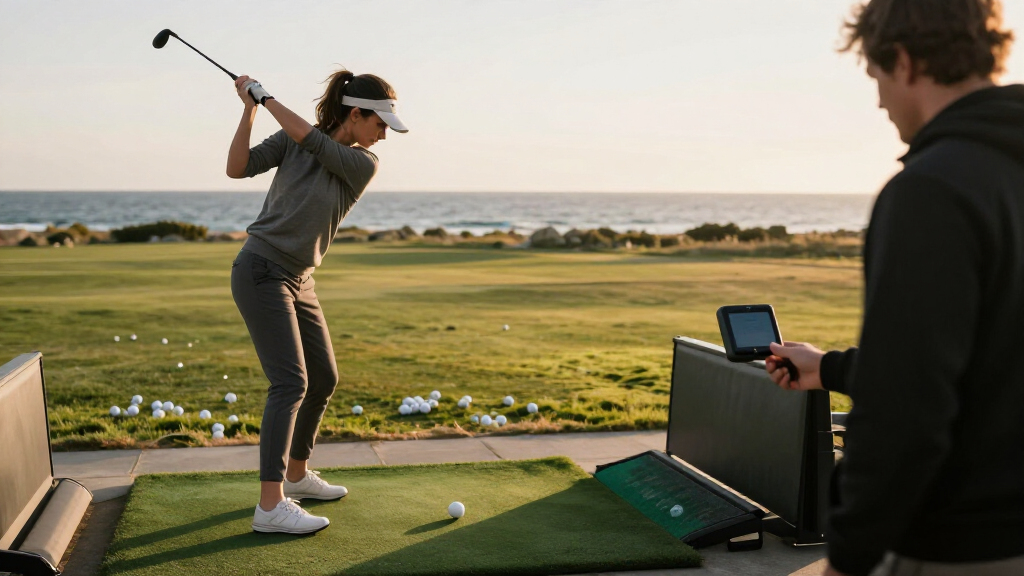
I ranked these portable golf launch monitors by how well their design fits real practice settings: range sessions, home hitting areas, and travel. I gave priority to clear, useful feedback, manageable setup, portability, and the breadth of practice modes, while distinguishing devices that show core swing metrics from systems built around phone apps or simulation. Build and battery considerations also matter because a portable monitor is only useful when it is practical to carry, position, and use repeatedly.
The order reflects the balance of those factors rather than the longest feature list. The Garmin Approach R10 and Rapsodo MLM2PRO rank highly for golfers seeking broader practice options, while simpler displays and radar tools make more sense for focused feedback without a larger app-centered setup. I treated renewed units and differently packaged bundles as distinct buying choices, but not as automatically better devices; buyers should compare condition and included accessories. Product naming and bundle contents can vary, so I favor the decision factors that remain useful across configurations.
| portable golf launch monitor | Connectivity |
|---|---|
| Blue Tees Golf Rainmaker Porta | — |
| Rapsodo Mobile Launch Monitor | Bluetooth |
| Rapsodo MLM2PRO Mobile Golf La | Bluetooth |
| Garmin Approach R10 Portable G | Bluetooth |
| SkyTrak ST MAX Golf Launch Mon | — |
| The Stack Radar Portable Golf | Bluetooth |
| Shot Scope LM1 Portable Golf L | Bluetooth |
| GOLFBUDDY Shot Mate Launch Mon | — |
| Swinora GX-03 Golf Launch Moni | Bluetooth |
| Garmin Approach R10 Portable G | Cable |
| Shot Scope LM1 Portable Golf L | — |
| PRGR HS 130-A Portable Golf La | No Wi-Fi, Bluetooth, or app required |
| Voice Caddie SC200Plus Portabl | — |
| Rapsodo MLM2PRO Golf Launch Mo | — |
| Shot Scope LM1 Launch Monitor | — |
Factors to Consider When Choosing Portable Golf Launch Monitors
Choosing a portable launch monitor starts with the practice space and the feedback you will use, not the biggest list of metrics. A device that suits an outdoor range may be awkward in a low-ceiling room, while an app-based system can add depth but also demands a compatible phone and more setup. These broader factors help narrow the field before you choose between individual models.
Match the Measurement Method to Your Practice Space
Portable monitors commonly rely on radar or camera-based tracking, and the method affects placement and the space needed to read a shot. Radar units generally need room behind the golfer and a clear view of the ball flight, so a short indoor setup may limit their usefulness. Camera-based systems can depend more on lighting, alignment, and a visible hitting area. Avoid assuming that a compact body means the monitor can work in any room. Check the maker’s placement and space guidance against your actual ceiling height and hitting distance. If most practice happens indoors, prioritize reliable setup in that environment over flexibility you may rarely use outside.
Choose Data You Will Act On
A long metric list can sound valuable, but data helps only when it changes what you practice. Ball speed, carry estimates, and club or swing measures can answer different questions, so decide whether you want distance gapping, speed work, or feedback on strike and delivery. A beginner may get more from a simple display and repeatable sessions than from a large dashboard. More experienced players may welcome deeper app analysis, but only if they will review it between swings. A common mistake is to pay attention to every available number at once. Pick two or three metrics tied to a clear practice goal, then favor a monitor that presents them consistently.
Factor in Phone, App, and Subscription Dependencies
App-connected monitors can provide session history, visual feedback, and simulator functions, but those features may depend on a compatible phone or tablet. Confirm operating-system compatibility and whether the functions you want require an account, membership, or separate software before buying. A built-in screen can be more convenient when you want quick feedback without placing a phone nearby. On the other hand, a phone-based interface may make charts and shot records easier to review. Do not treat the word “simulator” as proof that every course or practice feature comes with the device. Check what is included and what requires additional software.
Think Through Carrying, Power, and Setup
Portability is a combination of size, power, setup time, and how many accessories travel with the unit. A compact monitor may still be inconvenient if it needs a phone mount, charging cable, reflective markers, or specific balls for certain functions. Consider whether you typically practice at one familiar range or move between locations, since repeatable alignment matters more when setup changes each time. Battery life affects long sessions and travel days, while a clear display can reduce phone use in bright outdoor conditions. Check the complete kit rather than judging the monitor by its dimensions alone. If the device takes too long to position, you may use it less often.
Decide Whether a Bundle or Renewed Unit Fits
Bundles can add useful balls or accessories, but package names do not always make clear which items are included. Compare the contents of the Shot Scope LM1 configurations and the two Rapsodo MLM2PRO listings rather than assuming the devices differ because the bundle titles do. A renewed unit may suit a buyer comfortable checking condition, included parts, and return terms; it is not the same choice as a standard new listing. Accessories matter most when they support a feature you plan to use, not simply because they increase the kit size. Read the exact listing details before choosing between packages. This avoids paying for duplicates or missing an accessory required for your intended setup.
Pay More Only for Features That Change Your Routine
Advanced practice and simulation functions can justify a more involved setup when you regularly analyze sessions or want virtual play at home. They add less value if your main goal is checking a few swing numbers during occasional range visits. Before moving to a feature-heavy system, ask how often you will use its app tools, stored sessions, and simulator modes. If you mainly want speed or carry feedback, a simpler monitor may be easier to operate and easier to keep in your golf bag. If you want practice records or a home simulator path, connectivity can matter more than the smallest footprint. Match the device to a routine you already expect to maintain, rather than buying for features you might not use.
Frequently Asked Questions
Can I use a portable golf launch monitor in a garage or spare room?
Often, but the room must suit the monitor’s tracking method and placement requirements. Radar models may need clear space behind the golfer and enough ball flight for readings, while camera-based systems can be sensitive to lighting and alignment. Measure the hitting area, ceiling clearance, and distance available before buying. Also check whether the device needs a phone, special balls, or other accessories indoors. If your space is tight, choose based on the manufacturer’s indoor setup guidance rather than the word “portable.”
Should I choose an app-based monitor or one with its own display?
An app-based monitor is a better fit if you want session records, visual analysis, or connected practice features and are comfortable using a compatible phone or tablet. A built-in display is convenient for quick readings without managing a second device during a range session. The tradeoff is that a standalone screen may present less detail than a companion app, while an app adds setup and compatibility checks. Think about how you review practice: if you rarely look back at saved sessions, direct feedback may be enough. Confirm which features work without an account or extra software.
Do I need a simulator to get value from a portable launch monitor?
No. A launch monitor can help structure range sessions with measurements such as ball speed, carry estimates, or other swing feedback even if you never play a virtual course. Simulator features are most useful when you have a suitable indoor hitting area and plan to use the software regularly. They can also bring added setup, device compatibility, or software requirements. Decide first whether your goal is better practice feedback or home simulation. If practice is the priority, a simpler unit may fit better than paying attention to simulator claims.
Are the different Shot Scope LM1 listings different monitors or different bundles?
The roundup includes three LM1 listings, including a Power Bundle and a standard bundle, so package contents may be a key difference. Do not assume the monitor itself has changed based on the listing title. Compare the included accessories, quantity and type of balls, and any other components shown in each product listing. Check whether the bundle items support features you will use or simply duplicate equipment you own. The best fit is the package that matches your practice setup, not necessarily the one with the most items.
Is a renewed Garmin Approach R10 a sensible alternative to the standard listing?
A renewed listing can be a reasonable option for a buyer who is comfortable checking its stated condition, included accessories, and return or warranty terms. It should not be treated as identical to a standard listing without reviewing those details. Compare the total package and support terms, then decide whether the condition tradeoff suits how often you expect to use the monitor. If you want the clearest path to a complete setup, the standard listing may be simpler. Either way, confirm the phone and software requirements before choosing.
Conclusion
For most golfers seeking one portable monitor for varied practice, I recommend the Garmin Approach R10 as the best overall, with the Rapsodo MLM2PRO as the best premium-style choice for players who want a richer connected and simulator-focused setup. The PRGR HS 130-A is my best value-style pick for straightforward feedback, while the original Rapsodo MLM1 is a sensible beginner-friendly option for golfers who want phone-based practice tools without starting with the MLM2PRO’s broader feature set. For golfers who want a more self-contained screen, compare the PRGR and GOLFBUDDY Shot Mate; for speed-focused practice, consider The Stack Radar. Before choosing among Shot Scope LM1 or Rapsodo bundles, verify what each package includes, and select the standard or renewed Garmin listing based on condition and support terms. The right pick is the one that fits your practice space and gives you feedback you will use consistently.
Halloween Picks
halloween
As an affiliate, we earn on qualifying purchases.